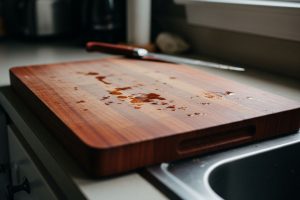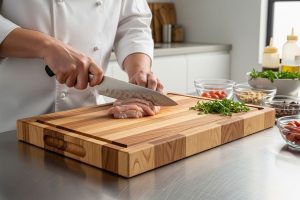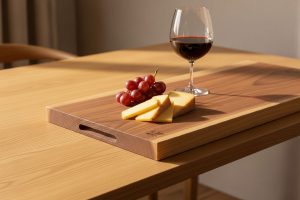
If you’re deciding between an acacia vs bamboo cutting board, the choice comes down to what matters most in your kitchen. Acacia offers hardwood durability, knife-friendliness, and a premium look, while bamboo stands out for its eco-friendly growth, lighter weight, and affordable price. Both are popular, but they perform differently in durability, food safety, maintenance, and value. This guide breaks down every key factor so you can confidently choose the board that fits your cooking style and lifestyle.
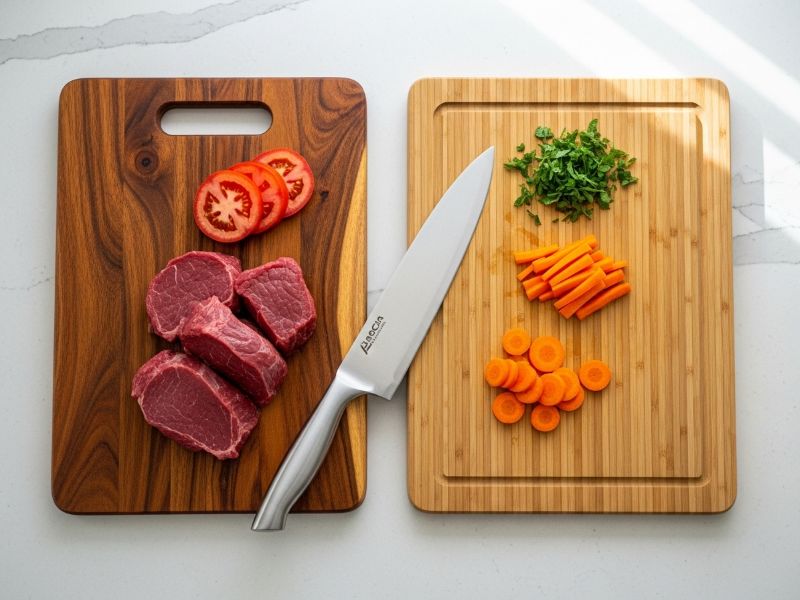
Quick Review Table
| Factor | Acacia Cutting Board | Bamboo Cutting Board |
|---|---|---|
| Durability | Dense hardwood, long-lasting, resists warping | Hard but may splinter, shorter lifespan |
| Knife-Friendliness | Softer surface, gentle on knife edges | Silica content, can dull knives faster |
| Food Safety | Natural oils, antibacterial, safe surface | Naturally antimicrobial, quality depends on glue |
| Maintenance | Needs oiling, hand-wash only | Needs quick drying, avoid soaking |
| Aesthetics | Warm brown tones, rustic elegance | Light color, modern, uniform look |
| Price | Mid to premium range, higher investment | Affordable, widely available, budget option |
| Sustainability | Slower regrowth hardwood, responsible sourcing | Rapidly renewable (3-5 years), eco-friendly |
Next, we’ll break down each category in detail to show how acacia and bamboo truly compare.
Durability – Which Cutting Board Lasts Longer?
When comparing bamboo vs acacia cutting board options, durability often becomes the deciding factor. After all, nobody wants to replace their cutting board every year. Let’s examine how these materials actually hold up under real kitchen conditions.
Acacia Durability
Acacia stands out as a hardwood powerhouse, with a Janka hardness rating between 1,500 and 2,300 lbf – higher than maple (1,450) and teak (1,070). This density gives acacia boards superior impact resistance, fewer surface scratches, and strong protection against warping or cracking. When maintained with regular oiling, the wood’s natural structure also limits moisture penetration, helping the board stay flat and stable over time.
In real kitchens, acacia cutting boards often last 5-10 years, far outpacing bamboo. Many home cooks report their boards still looking nearly new after years of use, with only light knife marks adding character. For those who value durability and long-term performance, acacia wood offers exceptional return on investment compared to bamboo.
Bamboo Durability
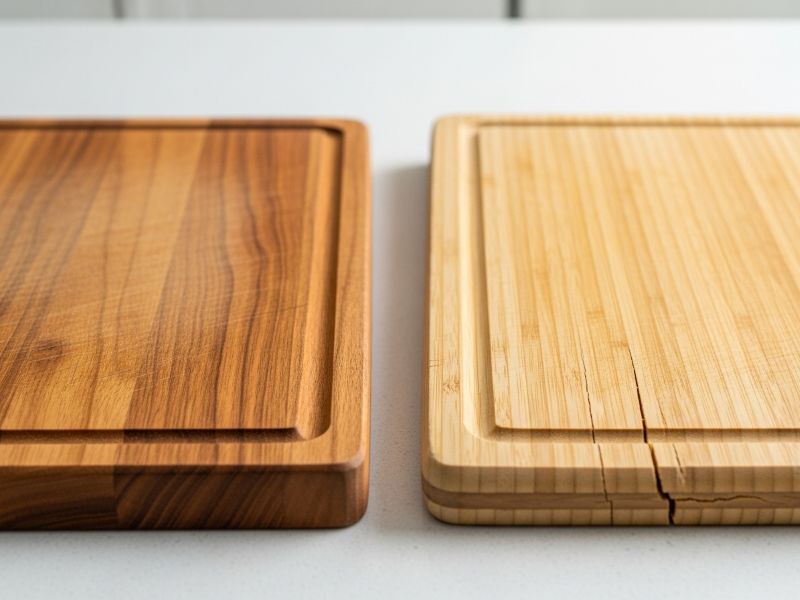
Bamboo cutting boards may be nearly as hard as maple (~1,380 lbf), but their construction tells a different story. Made from compressed grass fibers bonded with adhesives, bamboo boards are prone to weakness at the glue lines. Under regular use, especially with exposure to water and heat, these layers often begin to separate within just 3-4 years.
This short lifespan is further challenged by bamboo’s high silica content, which makes the surface brittle and more likely to splinter or crack along the edges. NSF and FDA guidelines caution against soaking bamboo boards in hot water, as it accelerates fiber breakdown and adhesive failure-issues frequently echoed in user reviews.
Knife-Friendliness – Which Protects Your Blades Better?
The question of whether acacia or bamboo cutting board options are better for your knives might surprise you. Despite acacia’s higher hardness rating, it actually treats knife edges more gently than bamboo. Here’s why this counterintuitive fact matters for your kitchen tools.
Acacia and Knife Edges
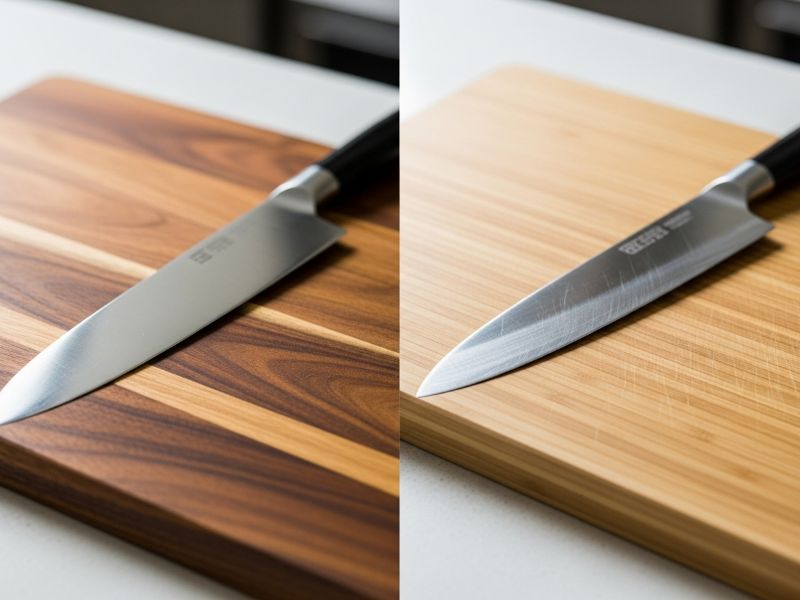
Acacia may rank high on the Janka scale (1,500-2,300 lbf), but its elastic grain makes it more forgiving than its hardness suggests. The fibers compress slightly under a knife’s edge, absorbing impact instead of resisting it, which minimizes friction and slows blade dulling. Compared with bamboo, acacia is noticeably more knife-friendly – though woods like teak, maple, and walnut are still gentler overall.
This balance explains why acacia is a popular middle ground: durable enough for years of use, yet soft enough to help knives stay sharp longer. Many home cooks and chefs report that blades retain their edge up to 20-30% longer on acacia boards than on bamboo or plastic, making it a strong option for reducing sharpening frequency without paying a premium for higher-end woods.
Bamboo and Knife Edges
Bamboo has a lower Janka hardness than acacia, yet it is harsher on knives. The reason lies in its natural silica content – essentially microscopic glass – that acts like sandpaper against blade edges. Over time, this abrasive quality makes knives lose sharpness much faster.
On top of that, bamboo’s laminated construction adds uneven glue lines that create hard and soft spots. These variations increase friction and can even cause micro-chipping, especially on thin Japanese blades. As a result, knives typically need sharpening nearly twice as often on bamboo boards compared to acacia, making bamboo less knife-friendly despite its softer rating.
Food Safety – Can You Trust Acacia and Bamboo for Meal Prep?
Food safety remains paramount when selecting any cutting board. Both acacia wood vs bamboo cutting board materials offer natural antimicrobial properties, but their safety profiles differ in important ways that affect daily use and long-term hygiene.
Acacia Food Safety
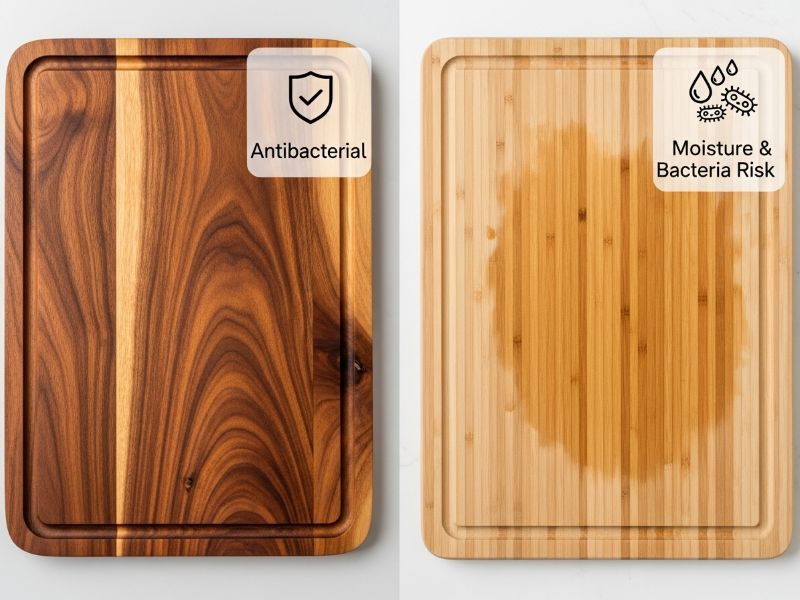
Acacia wood contains natural antibacterial compounds like tannins and polyphenols, which help inhibit bacterial growth. Research from the USDA shows that dense hardwoods such as acacia can reduce bacterial populations by up to 99% within hours, even without washing.
Its tight grain structure makes acacia less porous, leaving fewer places for food and moisture to hide. Bacteria that seep into the fibers become trapped and die off in the dry wood, giving acacia boards a natural self-cleaning ability that enhances food safety between uses.
Bamboo Food Safety
Bamboo contains “bamboo-kun,” a natural antimicrobial agent that helps resist bacterial growth, giving it a reputation as a hygienic cutting surface.
However, bamboo boards rely on adhesives to bond fibers, and quality varies. Lower-grade boards may use unsafe glues, while even food-safe versions can trap moisture at glue lines, allowing bacteria and odors to develop if not dried properly. The FDA recommends immediate drying after washing to keep bamboo boards safe.
Maintenance & Dishwasher Safety
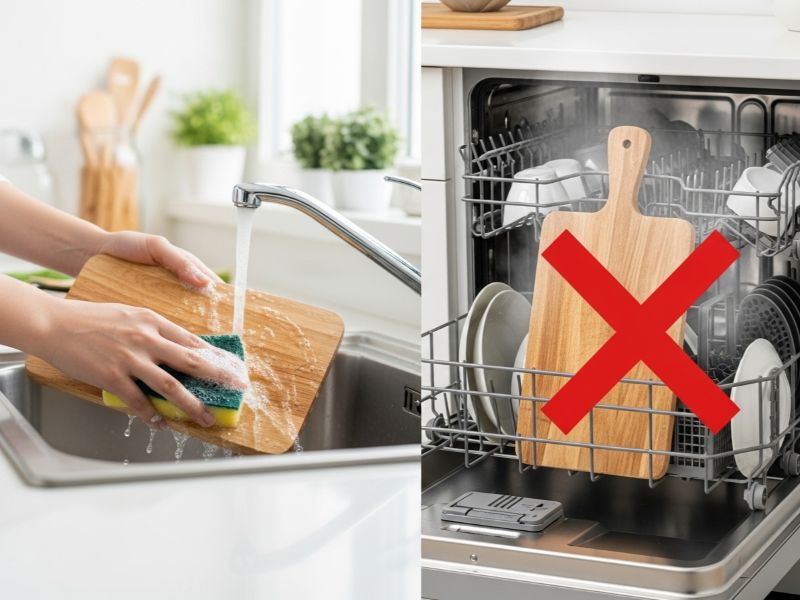
Neither acacia nor bamboo cutting boards are dishwasher safe. High heat, moisture, and detergents cause warping, cracking, and in bamboo’s case, delamination. Both the FDA and NSF recommend hand-washing only to maintain safety and durability.
Acacia Board Care
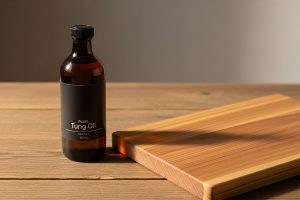
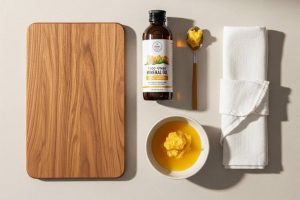
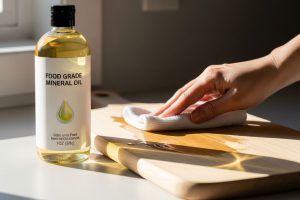
Acacia boards need regular oiling to stay durable and prevent cracks. A monthly coat of food-grade mineral oil or beeswax keeps the wood from drying out, preserves the grain, and maintains a smooth surface that’s gentle on knives. Skipping this step can lead to dull, dry patches that shorten the board’s lifespan.
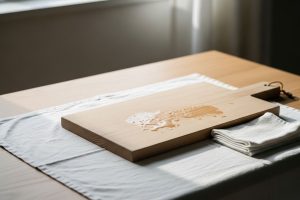
For cleaning, wash quickly with warm water and mild soap, then dry immediately. Avoid soaking or leaving the board wet, and store it upright for proper air circulation. With these simple habits, acacia boards can remain beautiful, safe, and functional for many years.
Bamboo Board Care
Bamboo boards are prone to moisture damage because of their laminated construction. Water can seep into glue lines, weakening the adhesive and causing layers to separate, so quick washing and thorough drying are essential.
Although bamboo needs oiling less often than acacia-about every 2-3 months-it’s still important to prevent surface roughness and splintering. Always dry the board upright in a ventilated space, never stack it damp or leave it flat, as trapped moisture can lead to warping, mold, or delamination.
Aesthetic & Versatility – More Than Just a Cutting Surface
Modern kitchens expect cutting boards to be both practical and presentable. Beyond prep work, they double as serving pieces, making the aesthetic differences between bamboo and acacia more important than ever.
Acacia Appeal
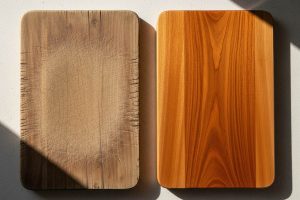
Acacia wood brings warmth and richness to the kitchen with tones that range from honey gold to deep chocolate. Its varied grain patterns ensure every board looks unique, adding natural character that suits both rustic and modern interiors. Many home cooks appreciate how an acacia board feels substantial and sturdy, a trait that conveys long-term quality.
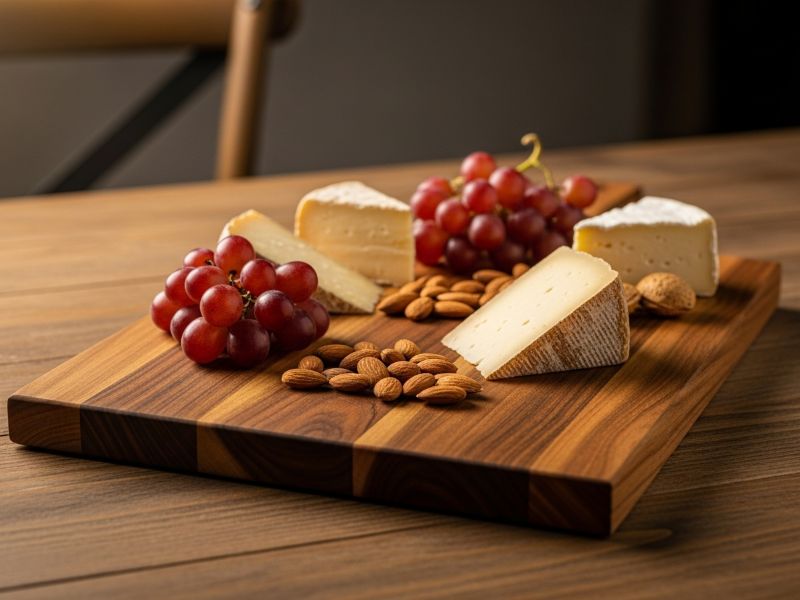
Beyond function, acacia also serves as a versatile presentation piece. The wood’s elegance makes it easy to transition from chopping vegetables to serving cheeses or charcuterie, elevating everyday meals and casual gatherings into something more refined. This balance of beauty and utility often turns an acacia board into a countertop showpiece rather than a tool tucked away in a cabinet.
Bamboo Appeal
Bamboo brings a light, clean aesthetic that fits perfectly in minimalist and modern kitchens. Its pale blonde to honey tones brighten spaces and create a fresh, contemporary look that feels open and uncluttered. The uniform color also makes bamboo boards visually appealing for everyday use or styled food photography.
Thanks to its consistent grain pattern, bamboo delivers a sleek, intentional appearance that suits Scandinavian and Japanese-inspired design principles. This sense of order and simplicity resonates with style-conscious cooks, while bamboo’s eco-friendly image adds extra appeal for those who want sustainability reflected in their kitchen choices.
Price & Value
Acacia Pricing & Value
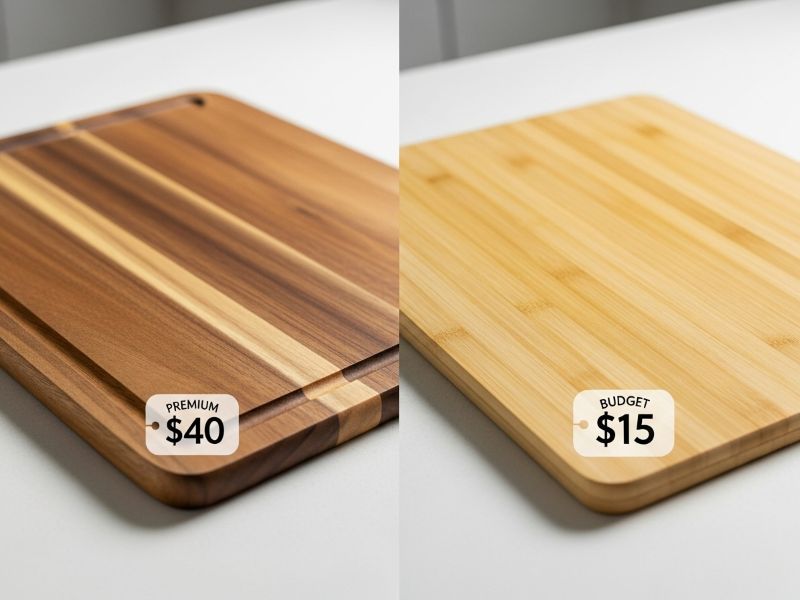
Acacia cutting boards fall into the mid to premium range, with edge grain around $30-$70 and end grain $50-$150+. They are more expensive than bamboo, but compared to other hardwoods like walnut or maple, acacia is relatively affordable and accessible.
The long lifespan of 5-10 years makes acacia a smart long-term investment. A $60 board used for seven years costs less per year than replacing bamboo boards every two years, and its better knife-friendliness saves on sharpening. End grain versions, while pricier, are especially valued by serious cooks for durability and blade protection.
Bamboo Pricing & Value
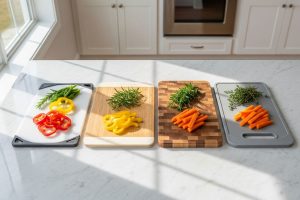
Bamboo boards are the budget-friendly option, with single boards priced around $10-$20 and multipacks of 3-5 for $20-$50. This low cost makes bamboo ideal for first kitchens or anyone shopping on a budget.
With a typical lifespan of only 2-3 years, bamboo works best as a short-term or semi-disposable choice. Many cooks use multiple boards for different foods-meat, vegetables, bread – because bamboo’s low price makes this food safety practice practical and affordable. In contrast, acacia costs more upfront but delivers far greater value over time.
Sustainability
Acacia Sustainability
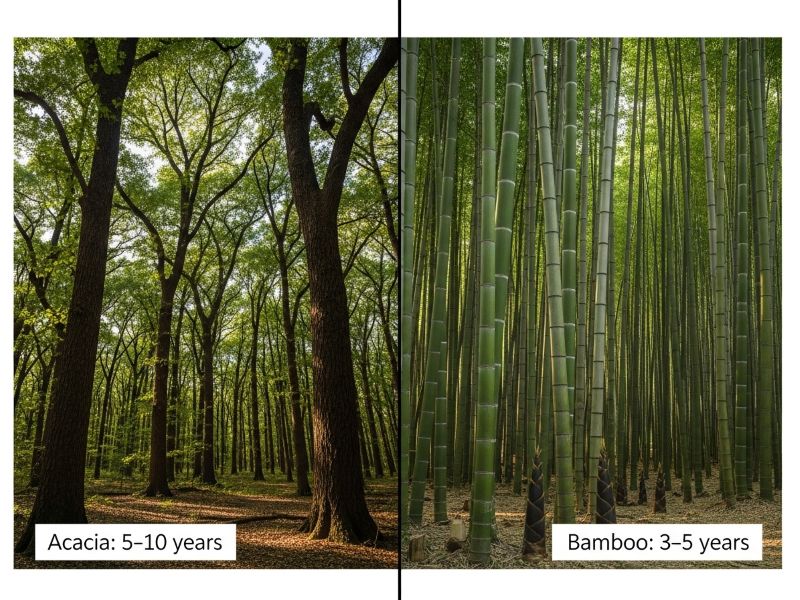
Acacia is one of the fastest-growing hardwoods, reaching harvest maturity in 10-20 years – much quicker than oak (40-60 years) or walnut (30-40 years). This makes it a relatively renewable hardwood option.
Most acacia used in cutting boards comes from managed plantations, not old-growth forests, helping reduce ecological pressure. Combined with its 5-10 year lifespan, acacia boards require fewer replacements and generate less waste, balancing their slower growth rate compared to bamboo.
Bamboo Sustainability
Bamboo is technically a grass, reaching harvest maturity in just 3 – 5 years and regenerating from its root system without replanting. This makes it one of the most renewable natural materials available.
Over 65% of global bamboo is grown in Asia, with China as the largest producer and Vietnam rising as a high-quality source. Its fast growth, low resource needs, and biodegradability give bamboo an exceptionally strong environmental profile, despite the added carbon footprint of transport to Western markets.
Koppen Solutions – Cutting Boards Engineered for Modern Kitchens
While traditional acacia and bamboo boards each have their merits and limitations, Koppen has engineered solutions that address the common pain points of both materials. By combining Vietnamese craftsmanship with innovative technology, these boards deliver performance that exceeds standard expectations.
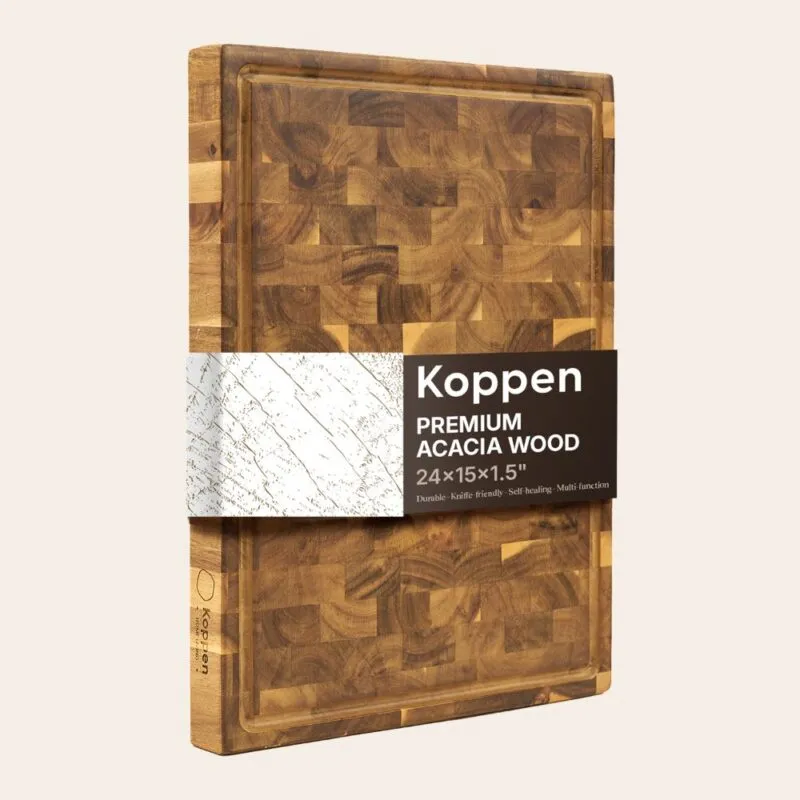
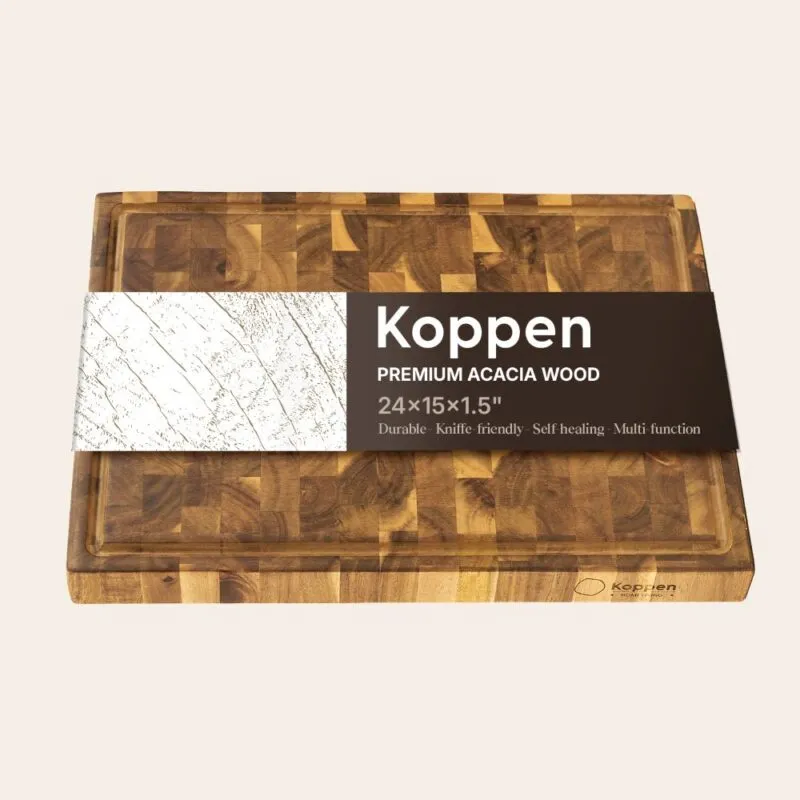
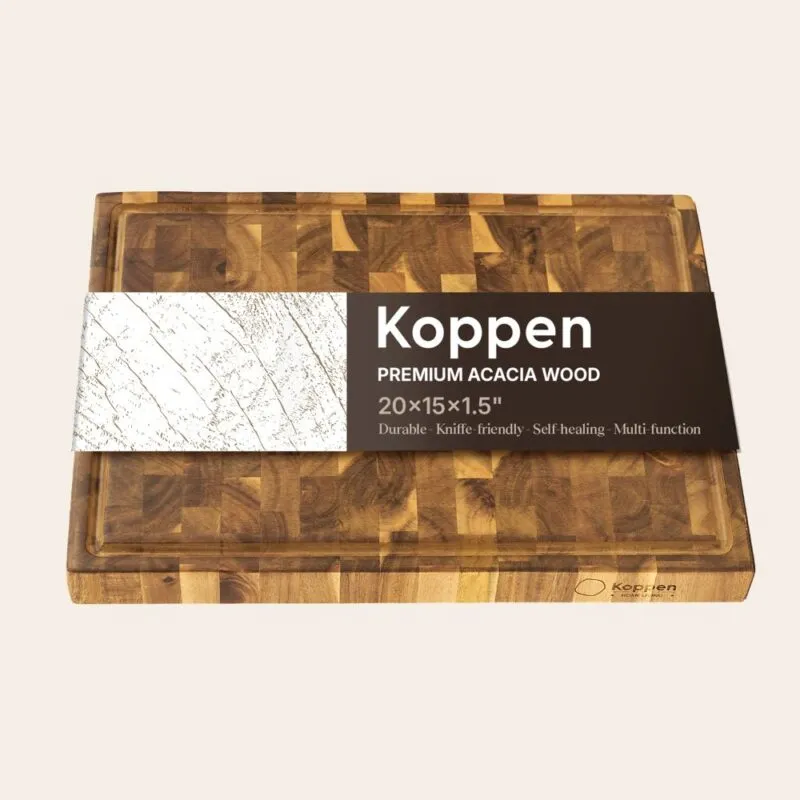
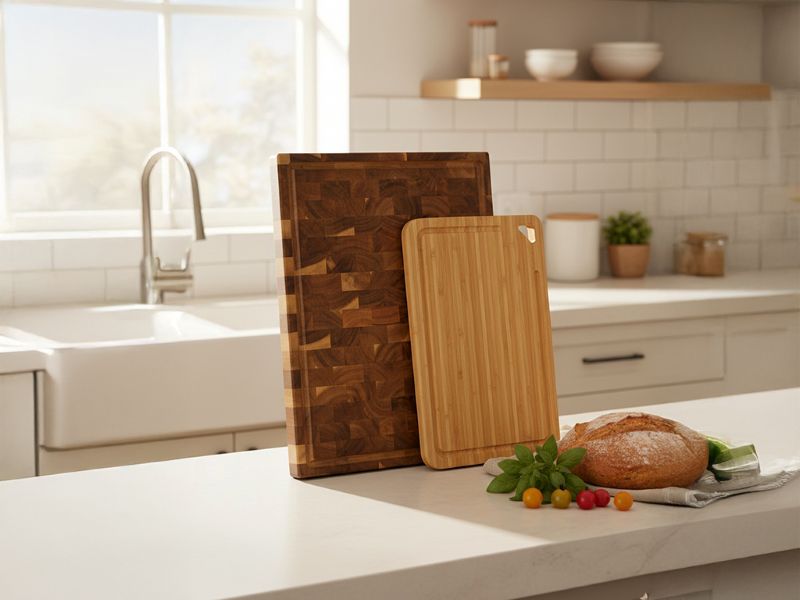
Koppen Acacia End Grain Cutting Board
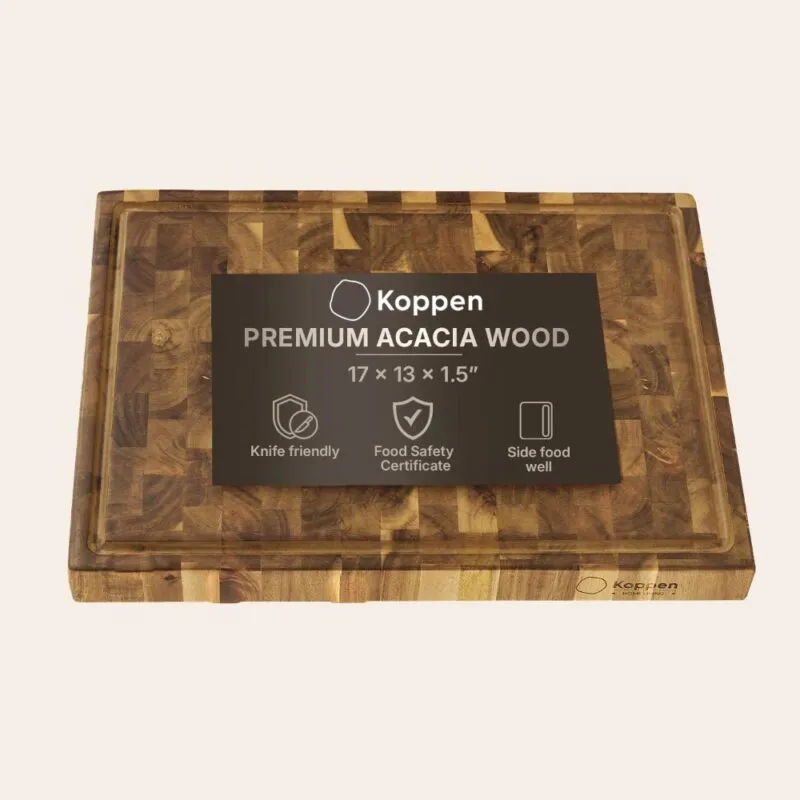
Koppen’s acacia end grain boards showcase the pinnacle of traditional woodworking enhanced by modern precision. Sourced from carefully selected Vietnamese acacia and assembled in an end grain checkerboard pattern, these boards represent the ultimate expression of the “Master of Wood” philosophy.
The end grain construction positions wood fibers vertically, allowing knife blades to slip between fibers rather than cutting across them. This design reduces knife wear while creating a self-healing surface that minimizes visible cut marks. Professional chefs often prefer end grain boards for their ability to maintain both knife sharpness and board appearance over years of heavy use.
With proper maintenance, Koppen’s acacia end grain boards can last 10+ years, making them a true lifetime investment. The elegant checkerboard pattern also transforms these boards into stunning serving pieces, seamlessly transitioning from prep work to presentation.


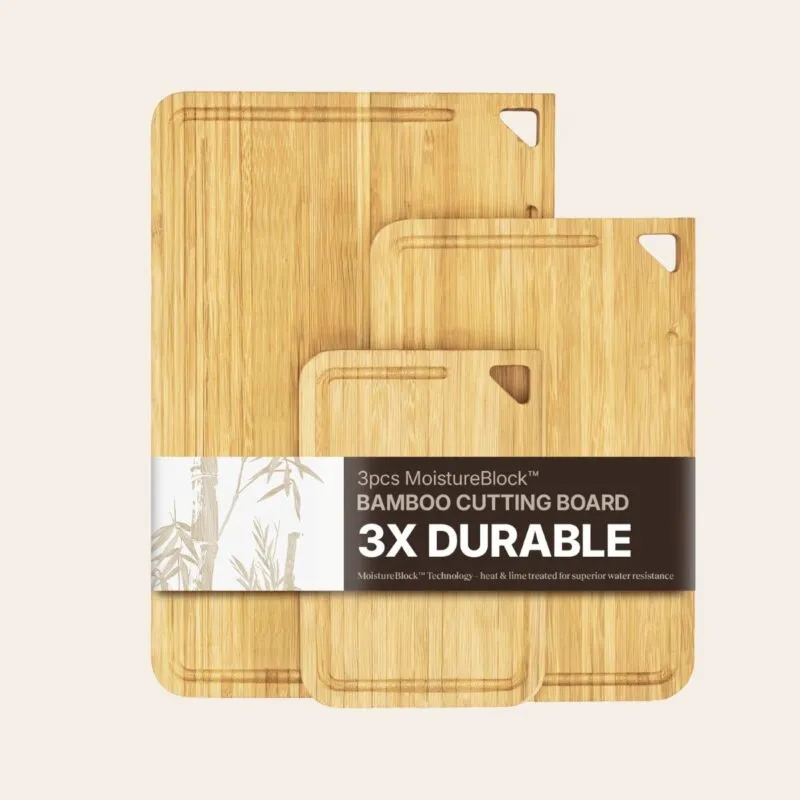
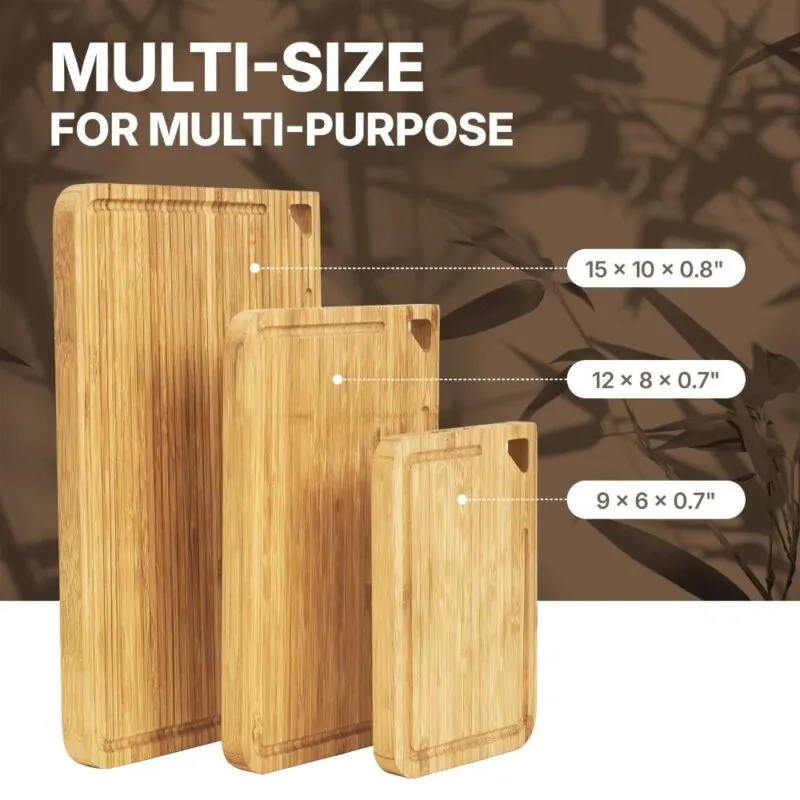
Koppen MoistureBlock™ Bamboo Tech Cutting Board
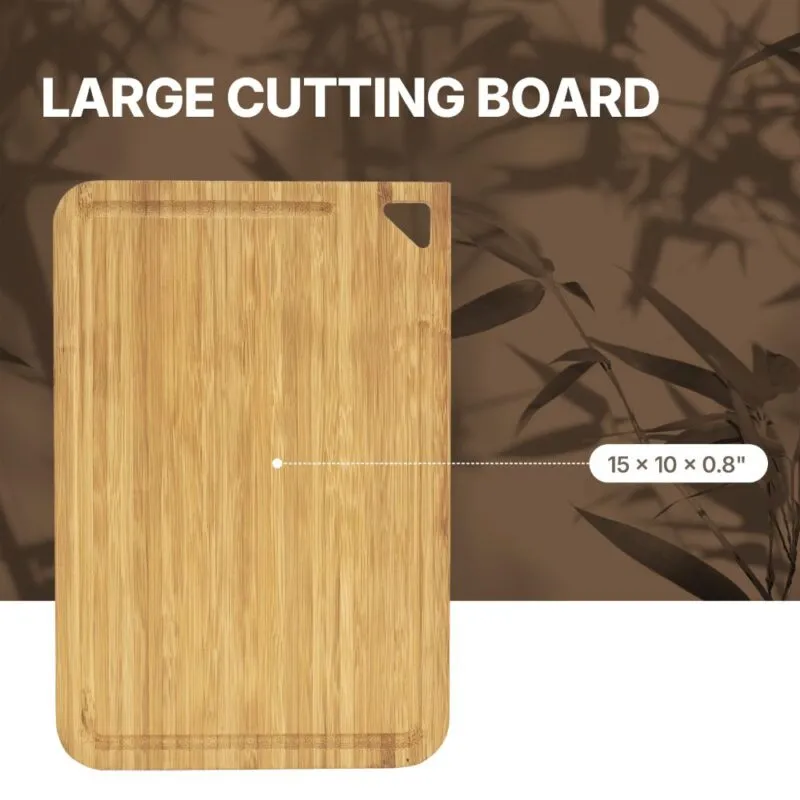
Koppen’s MoistureBlock™ technology revolutionizes bamboo cutting board performance. Through thermo-treatment and nano-calcium integration, these boards reduce water absorption by 60% and increase surface hardness by 20 – 30%, directly addressing bamboo’s traditional weaknesses.
The three-layer construction provides exceptional stability, preventing warping and delamination common in conventional bamboo boards. With this 3-layer design, MoistureBlock™ boards are uniquely dishwasher-safe – a breakthrough for busy home cooks who need convenience.
While they may still benefit from occasional oiling, these boards retain their natural antibacterial properties and maintain durability far beyond standard bamboo. The caramel-toned finish adds an upscale look suitable for both home and professional kitchens. By extending lifespan up to 3× longer and solving the core issues of bamboo boards, Koppen delivers a bamboo solution without the compromises.

Final Verdict – Which Cutting Board Should You Choose?
Choose acacia if you want a durable, premium board that protects your knives and doubles as a stylish serving piece. It suits home cooks who see their board as a long-term investment and don’t mind regular oiling.
Choose bamboo if you value eco-friendliness, light weight, and affordability. It’s a practical choice for casual cooking or for those who prefer multiple boards for different foods, even if replacements are needed every few years.
For the best balance, Koppen’s engineered boards solve common pain points. The Acacia End Grain offers unmatched longevity and knife protection, while the MoistureBlock™ Bamboo Tech delivers bamboo’s sustainability with triple the durability and dishwasher compatibility. The key is selecting the option that aligns with your kitchen habits and lifestyle — because the best cutting board is the one you’ll actually use and maintain properly for years to come.
Read more:
Acacia vs Maple Cutting Board: Which One Should You Choose?
Acacia vs Walnut Cutting Board – Which One Fits Your Kitchen Needs?