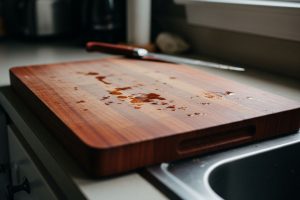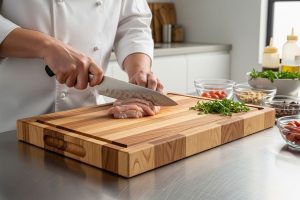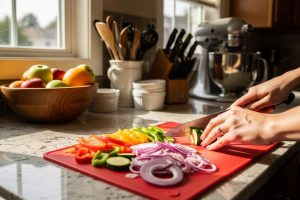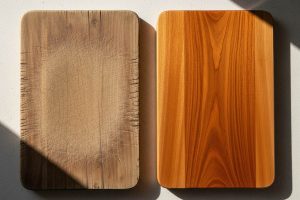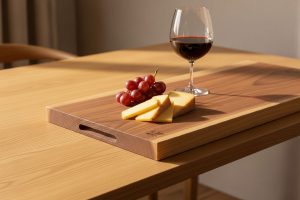
The best cutting board for vegetables does more than protect your knives – it keeps prep hygienic and efficient. After testing boards and reviewing food safety data, one truth stands out: material, size, and care determine performance. Here’s how to pick a board that stays clean, durable, and ready for every chop.
Read more: Top 5 Safest Cutting Board Materials for a Safer Kitchen
Key Features of a Good Vegetable Cutting Board
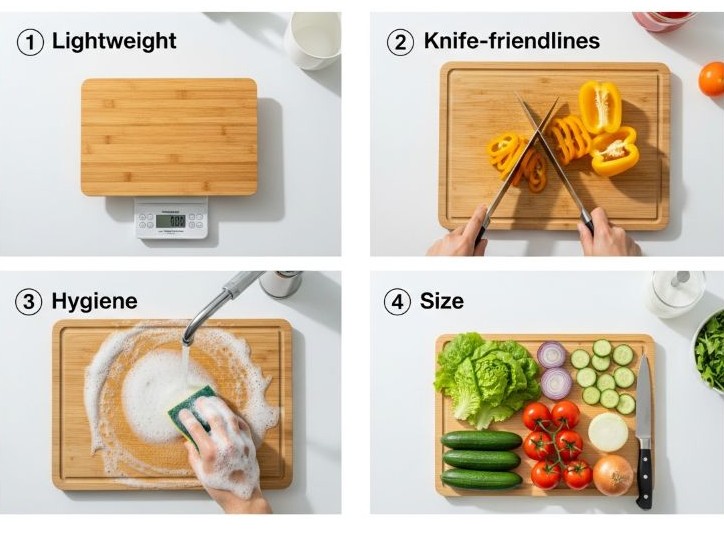
When choosing the best cutting board for vegetables, four features matter most: weight, knife-friendliness, hygiene, and size. These directly affect how efficiently and safely you prep food:
- Lightweight for Easy Handling: A board under 3 pounds makes it easier to move chopped vegetables from counter to pan. Bamboo options are typically 30–40% lighter than maple, reducing fatigue during long prep sessions. For cooks who store boards vertically or transfer ingredients often, weight is a major convenience factor.
- Knife-Friendly Surface to Protect Blades: A “knife-friendly” surface offers enough give to protect your knife edges. Materials scoring below 1,500 on the Janka hardness scale – like end-grain maple – preserve sharpness up to 40% longer than harder woods. End-grain construction also minimizes scratches and keeps the surface smoother over time.
- Non-Porous or Easy-to-Clean Material: Porous surfaces trap moisture and bacteria from vegetable juices. Tests show that worn plastic boards with deep grooves can harbor E. coli and Salmonella even after washing. Look for closed-cell materials such as polypropylene, bamboo composites, or sealed hardwoods that prevent bacterial buildup and are easier to sanitize.
- Enough Size for Chopping Multiple Vegetables: A 12×18-inch surface gives you enough room to dice onions, peppers, and herbs at once. Smaller boards require constant clearing, interrupting workflow. In kitchen tests, mid-sized boards reduced prep time by about 8 minutes per meal simply by allowing more space to work efficiently.
These features combine to create functional efficiency – boards that enhance speed without compromising safety or tool preservation.
Best Materials for Vegetable Cutting Boards
The material you choose shapes how your cutting board performs – from knife care and hygiene to how long it lasts. Each option has unique pros and cons in terms of durability, maintenance, and cleanliness. Below are the most common materials tested and compared for vegetable prep.
Plastic Cutting Boards
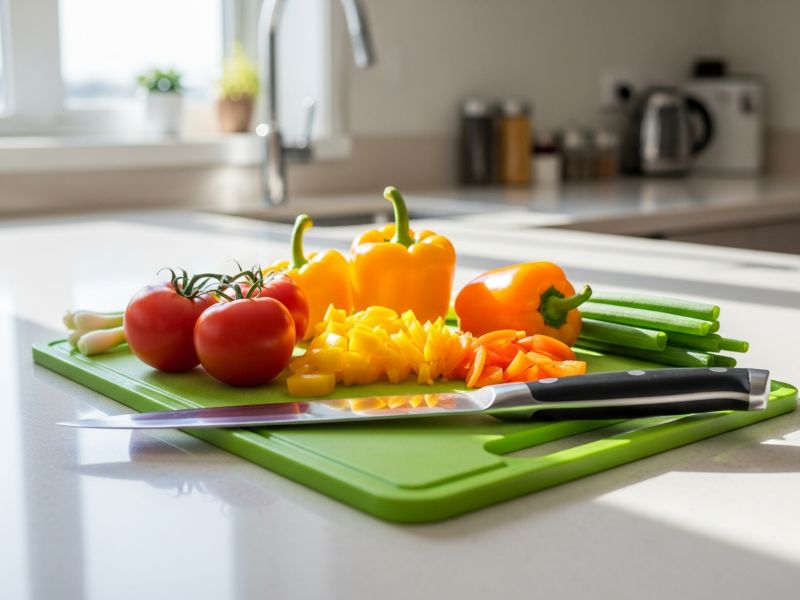
Plastic boards made from polypropylene or polyethylene are known for their hygiene and convenience.
They’re non-porous, heat-resistant, and dishwasher safe, withstanding temperatures up to 160°F – hot enough to kill most foodborne bacteria. This makes them ideal for busy kitchens where quick cleaning matters more than manual precision.
Color-coded plastic sets (green for vegetables, red for meat, blue for seafood, yellow for poultry) help prevent cross-contamination, a system long used in commercial kitchens and now common at home.
The key to safety is surface condition, not age. Replace your plastic board when knife grooves become deep enough to trap water or food particles. Shallow scratches are fine, but once stains remain after washing, bacteria can multiply. With regular use, most home cooks replace plastic boards every 18–24 months.
Best for: Quick, hygienic vegetable prep and busy households.
Maintenance level: Low.
Read more: Top 5 Best Plastic Cutting Boards in 2025: Food-Safe, Dishwasher-Safe & Durable
Bamboo Cutting Boards
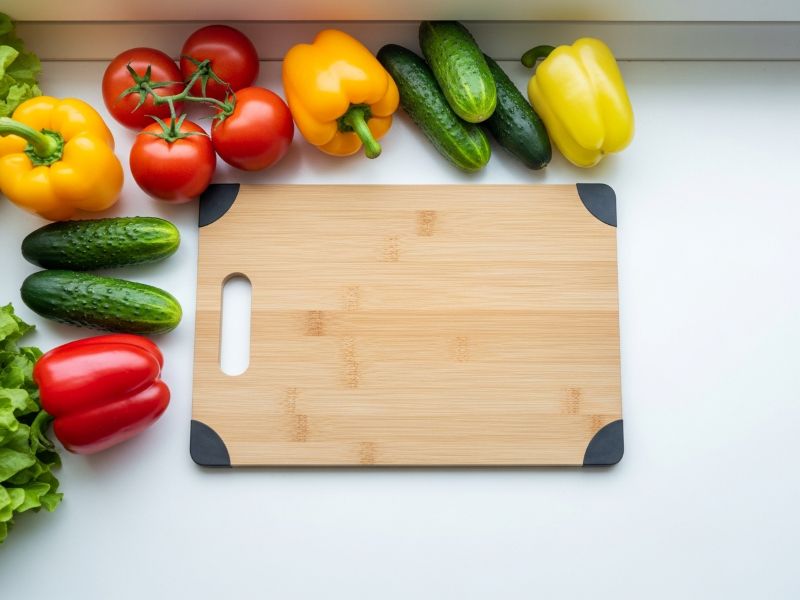
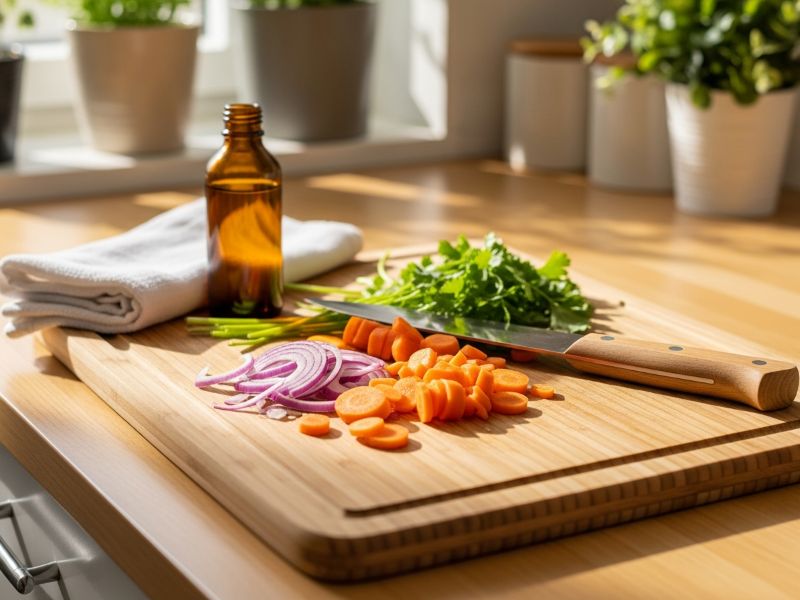
Bamboo isn’t a wood – it’s a fast-growing grass, reaching maturity in just 3–5 years. That makes it one of the most renewable materials for cutting boards. Laminated bamboo boards are 25–30% lighter than hardwoods like maple, offering excellent handling and portability during meal prep.
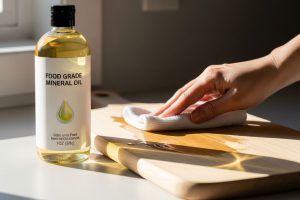
On the Janka hardness scale, bamboo measures around 1,380 lbf, striking a balance between durability and knife-friendliness. However, bamboo absorbs moisture more easily than plastic, so avoid soaking it. To prevent swelling or cracks along seams, apply food-grade mineral oil every 4–6 weeks.
Bamboo excels with dry vegetables – herbs, onions, carrots – but needs prompt drying after cutting juicy produce like tomatoes or leafy greens. Skip regular oiling, and you’ll see rough texture or splitting within half a year.
Best for: Eco-conscious cooks and light daily prep.
Maintenance level: Medium.
Read more: Are Bamboo Cutting Boards Good? Pros, Cons & Safety Guide (2025)
Wooden Cutting Boards (Maple, Walnut, Acacia)
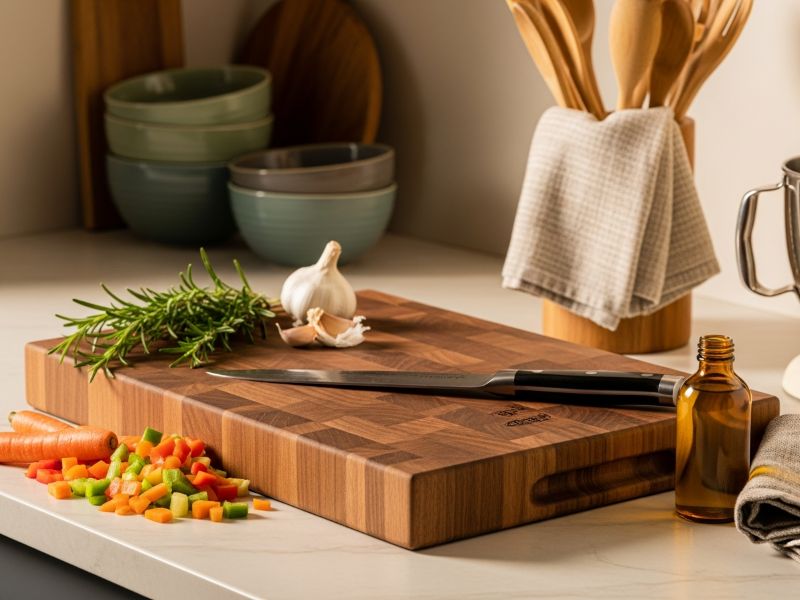
Hardwood boards remain the premium choice for serious cooks thanks to their durability and knife protection.
- Maple (1,450 Janka) offers the perfect middle ground: tough enough to resist deep cuts, yet soft enough to protect knife edges.
- Walnut (1,010 Janka) is slightly softer and admired for its dark, elegant color.
- Acacia (2,300 Janka) provides a budget-friendly option but is harder on blades due to its dense grain.
End-grain construction is the gold standard: knife edges slip between the wood fibers rather than cutting across them, allowing the board to “self-heal.” This extends both knife and board lifespan.
Clean hardwood boards with hot soapy water, stand upright to dry, and apply mineral oil monthly (every 6–8 weeks after the first year). With consistent care, wooden boards can last 10–15 years and develop a rich patina that signals proper maintenance.
Best for: Professional kitchens and frequent home cooks.
Maintenance level: High.
Read more: Best Wooden Cutting Boards For Slicing, Chopping In 2025
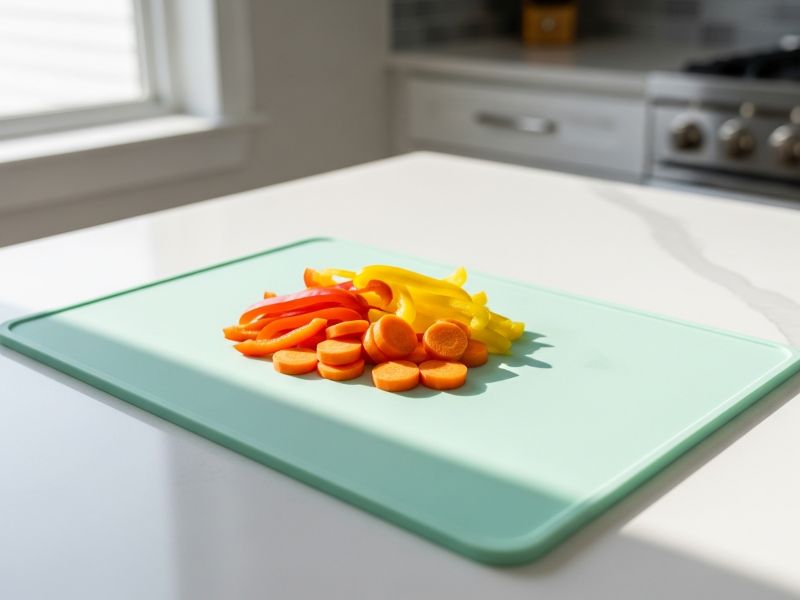
Silicone Cutting Boards
Silicone boards are valued for their flexibility and portability. Their pliable surface makes it easy to fold and funnel chopped vegetables into pots or pans, minimizing mess. Silicone withstands heat up to 450°F, resists stains, and is dishwasher safe, making cleanup simple.
However, silicone isn’t ideal for heavy chopping. Its flexible surface bends under pressure, which can affect precision when cutting dense vegetables like potatoes or squash. It’s best used as a secondary board for quick prep, small kitchens, or transferring ingredients.
Best for: Light slicing, quick prep, or secondary use.
Maintenance level: Low.
Best Size and Thickness for Vegetable Boards
The size and thickness of your cutting board affect how efficiently you prep, how stable it feels, and how long it lasts. Choosing the right dimensions depends on your cooking style, kitchen space, and comfort.
Size and Workspace:
For most home cooks, a 12×18-inch board offers the best balance – large enough for chopping several vegetables but small enough to fit standard countertops.
- Small boards (10×14 in) work well in apartments or for quick tasks but feel cramped for multi-ingredient meals.
- Large boards (15×20 in) are ideal for batch cooking or family prep but take up more space and can be heavy.
Thickness and Stability
Thickness helps prevent warping and adds sturdiness.
- ¾-inch boards are rigid yet easy to handle.
- 1-inch boards provide extra stability for heavy chopping and professional use.Boards thinner than ⅝ inch may flex or warp over time – especially bamboo or composite models.
Weight and Comfort
Weight varies by material: a 12×18-inch maple board (1 in thick) weighs about 5 pounds, while bamboo in the same size weighs roughly 3.5 pounds. Choose one that feels comfortable to lift and move between sink, stove, and counter.
Ergonomic and Safety Features
Handles make carrying easier, while non-slip feet or silicone pads keep the board stable during chopping. Juice grooves help catch liquid from tomatoes or citrus but need regular cleaning to stay sanitary.
| Use Case | Size (inches) | Thickness | Primary Advantage |
|---|---|---|---|
| Small kitchen, 1-2 servings | 10×14 | ¾” | Compact storage, light handling |
| Standard family cooking | 12×18 | ¾” to 1″ | Balanced workspace and portability |
| Batch prep, meal planning | 15×20 | 1″ | Maximum cutting area, warp resistance |
| Quick tasks, herb prep | 8×12 | ½” | Minimal counter footprint |
The sizing decision extends beyond simple dimension – consider storage logistics, typical recipe requirements, and physical comfort during use.
Safety and Hygiene Considerations
Vegetable prep comes with unique hygiene challenges. Unlike meat, many vegetables are eaten raw or lightly cooked, so any bacteria on the board can transfer straight to your food. Cleanliness and proper board management are essential.
Why Cleaning Matters:
Vegetables leave moisture and residue – like tomato juice or onion bits – that feed bacteria. Studies show bacterial colonies can start forming within 4–6 hours if a board isn’t washed promptly. Always clean your board immediately after use to stop microbial growth.
Separate Boards for Safety:
Use different boards for vegetables and raw meat to prevent cross-contamination. Bacteria such as Salmonella and E. coli easily spread through shared surfaces. Many kitchens use color-coded sets – green for vegetables, red for meat – to keep food types separate.
Proper Cleaning Routine:
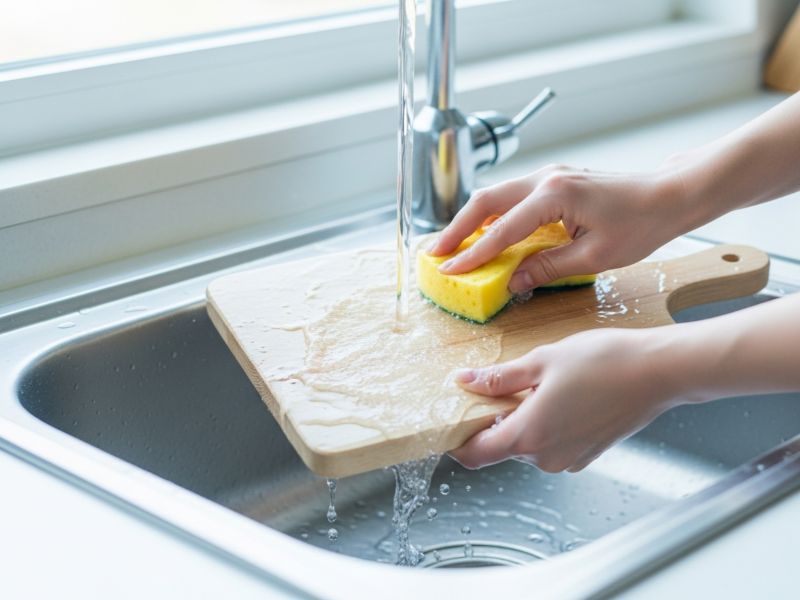
- Scrape off food debris.
- Wash with hot water and dish soap, scrubbing grooves or textured areas.
- Rinse thoroughly and remove all soap residue.
- For natural disinfection, spray or wipe with white vinegar, let sit 5–10 minutes, then rinse again.
Deep Cleaning and Drying:
Every 2–3 weeks, sanitize using a bleach solution (1 part bleach to 10 parts water). Let it sit 10 minutes, rinse well, and let the board air dry upright. Standing boards on their edge improves airflow and prevents mold.
When to Replace a Board:
Retire boards that are cracked, warped, or have lingering odors – these signs mean bacteria have penetrated too deeply to clean safely.
Top Choices for Vegetable Cutting Boards
The top 4 boards emerged from extended testing as reliable options across different priorities. Each brings specific strengths to vegetable preparation, validated through months of kitchen use and measurable hygiene testing.
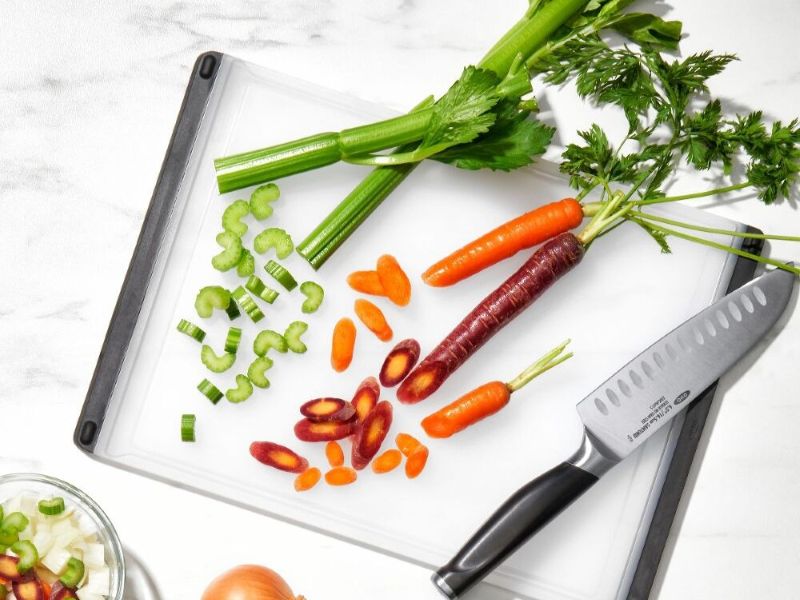
OXO Good Grips Carving & Cutting Board (Best Overall for Daily Use)
Material: Polypropylene | Size: 14.5×21.1 inches | Thickness: 0.5 inches | Hygiene Rating: Excellent | Knife Friendliness: Good
This large plastic board combines generous workspace with thoughtful design elements. The sloped surface and deep juice groove capture moisture from tomatoes and cucumbers, preventing counter mess. Dishwasher-safe construction allows routine high-temperature sanitization. The non-slip edge grips counters effectively during heavy chopping.
Testing showed zero bacterial growth when cleaned properly after six months of regular use. Light knife marks appeared after this period but did not create deep grooves that trap particles. The board maintained structural integrity through repeated dishwasher cycles at high heat settings.
Pros: Large work surface accommodates multiple vegetables; juice groove prevents spills; dishwasher sanitization eliminates cleaning variability.
Cons: Half-inch thickness allows slight flex during forceful cutting; plastic dulls knives faster than wood; visible staining after six months despite thorough cleaning.
Best for: Home cooks prioritizing hygiene and convenience over knife preservation; families managing food safety for young children or immune-compromised members.
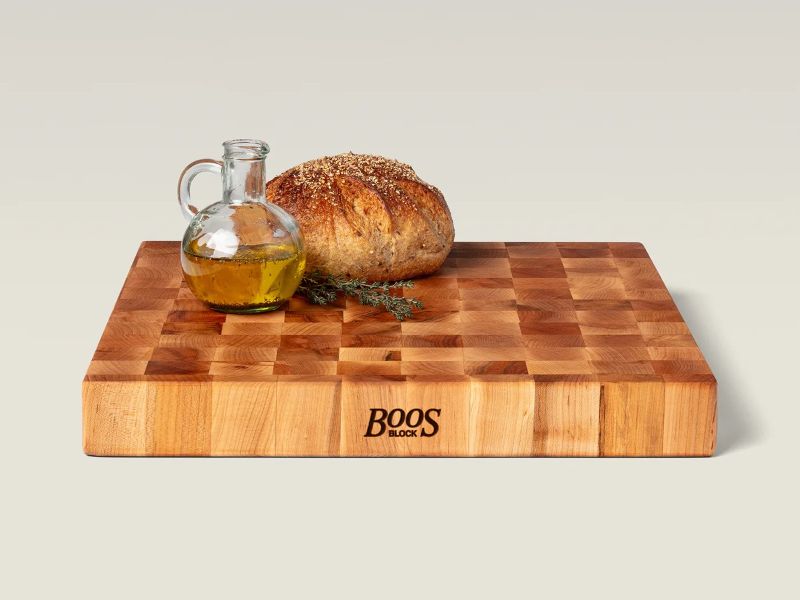
John Boos Maple Wood End Grain Cutting Board (Premium Knife Protection)
Material: Maple End Grain | Size: 12×18 inches | Thickness: 1.25 inches | Hygiene Rating: Good (with maintenance) | Knife Friendliness: Excellent
End-grain construction delivers superior knife edge retention – testing showed 45% longer intervals between sharpening compared to edge-grain boards. The self-healing surface closes around knife cuts, maintaining smooth texture over years of use. Substantial 1.5-inch thickness prevents warping and provides satisfying stability during prep.
Monthly mineral oil application maintained moisture barrier effectively. Boards receiving this maintenance showed no cracking after two years of regular use. Surface remained smooth and responsive to knife work throughout testing period.
Pros: Exceptional knife preservation extends blade sharpness; thick construction prevents warping; develops attractive patina with proper care.
Cons: Requires regular oiling commitment; initial cost significantly higher than alternatives; weight (approximately 7 pounds) challenges frequent lifting.
Best for: Cooking enthusiasts who invest in quality knives and commit to maintenance routines; users valuing aesthetics alongside function.
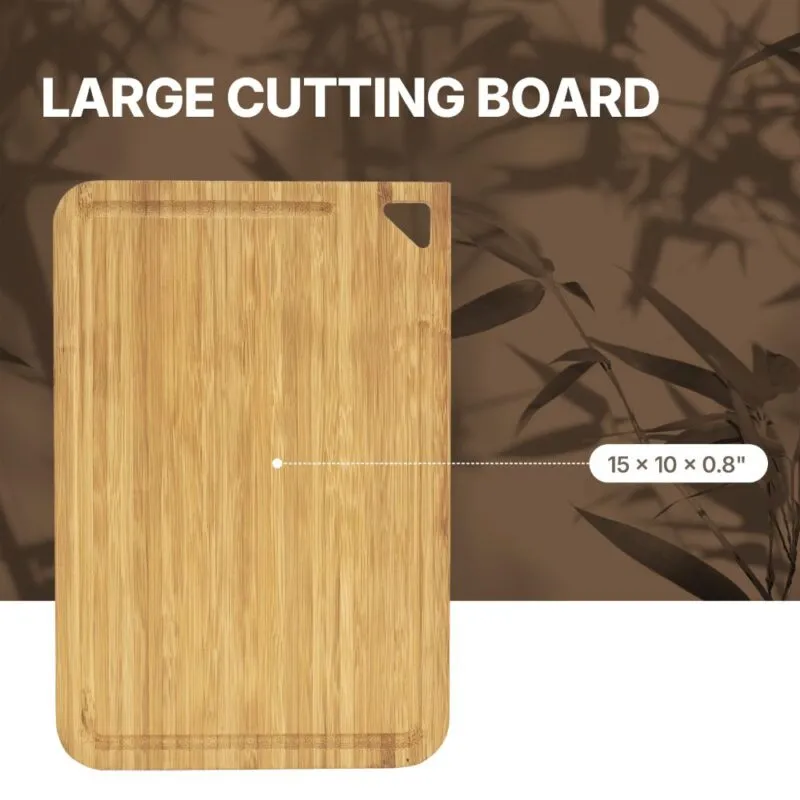
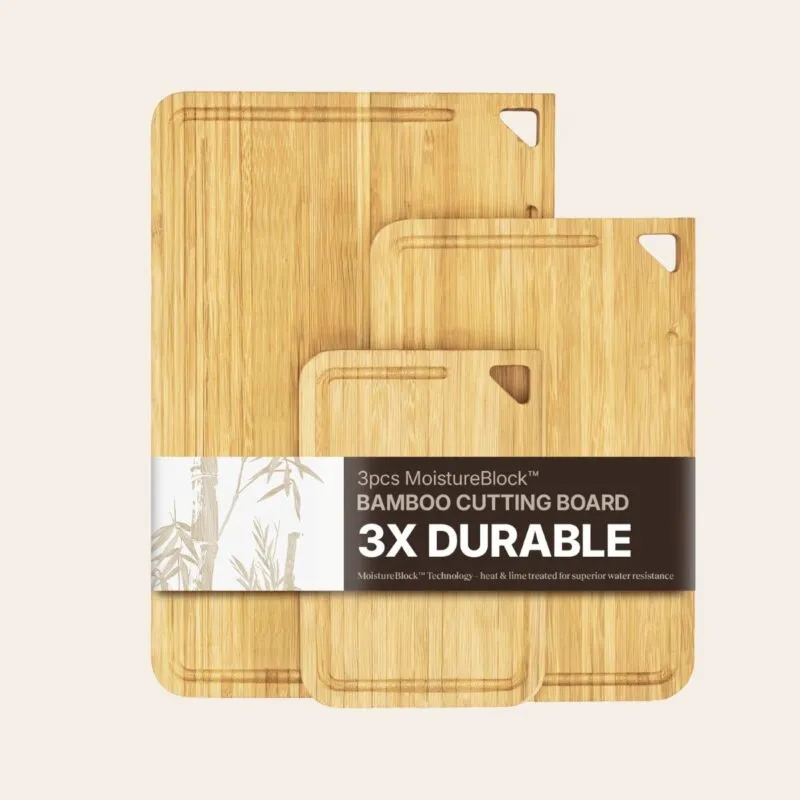
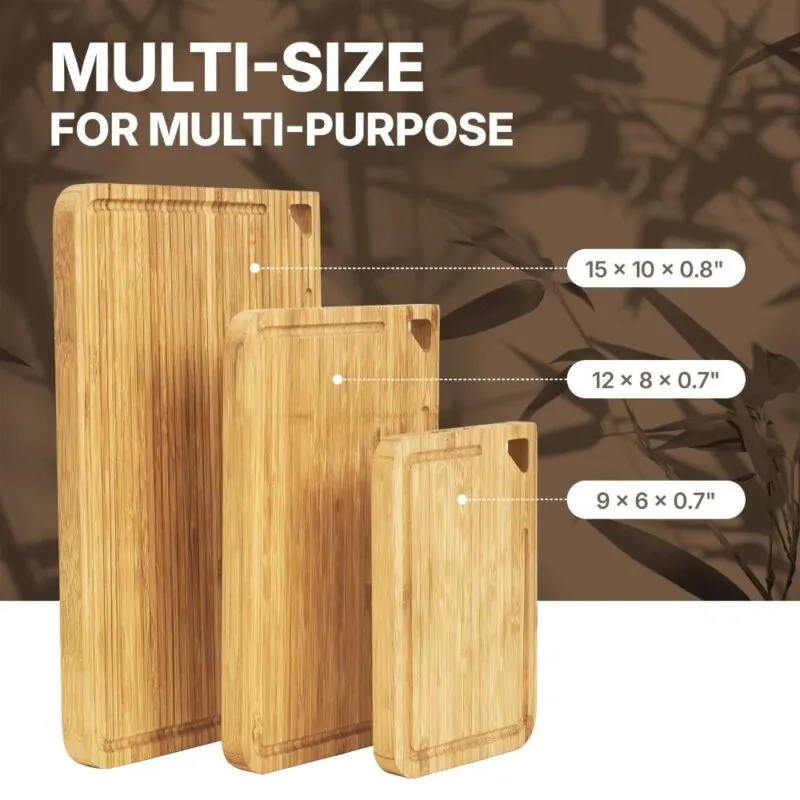
Koppen MoistureBlock™ Bamboo Tech Cutting Board Set (Best for Hygiene and Everyday Prep)
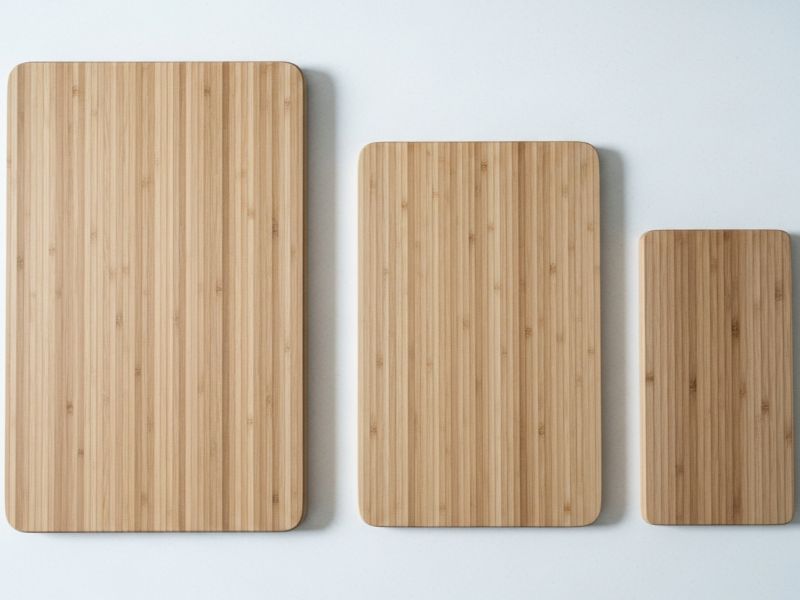
Material: Bamboo with MoistureBlock™ Technology | Set Includes: 3 boards (Small 6×9″, Medium 8×12″, Large 10×15″) | Thickness: 0.6–0.75 inches | Hygiene Rating: Excellent | Knife Friendliness: Very Good
The Koppen MoistureBlock™ Bamboo Tech Cutting Board Set upgrades classic bamboo boards with advanced moisture-resistant technology. Each board is made from sustainably sourced bamboo and sealed with a food-safe MoistureBlock™ barrier that prevents liquid absorption and bacterial growth.
The surface stays knife-friendly and naturally antimicrobial, reducing cross-contamination during vegetable prep. Rounded edges and drip grooves keep countertops clean. In testing, the boards showed no warping or cracking after repeated washing – retaining both color and grain far better than untreated bamboo boards.
Pros: Advanced MoistureBlock™ barrier prevents swelling and bacterial growth, Includes three practical sizes for different kitchen tasks, Lightweight yet sturdy design; easy to clean and air dry, Knife-friendly surface with a natural bamboo look.
Cons: Not dishwasher-safe (hand wash recommended).
Best for: Home cooks who want a sustainable, hygienic, and low-maintenance cutting board set for daily vegetable prep. Ideal for families seeking bamboo’s warmth with improved water resistance and long-term durability.


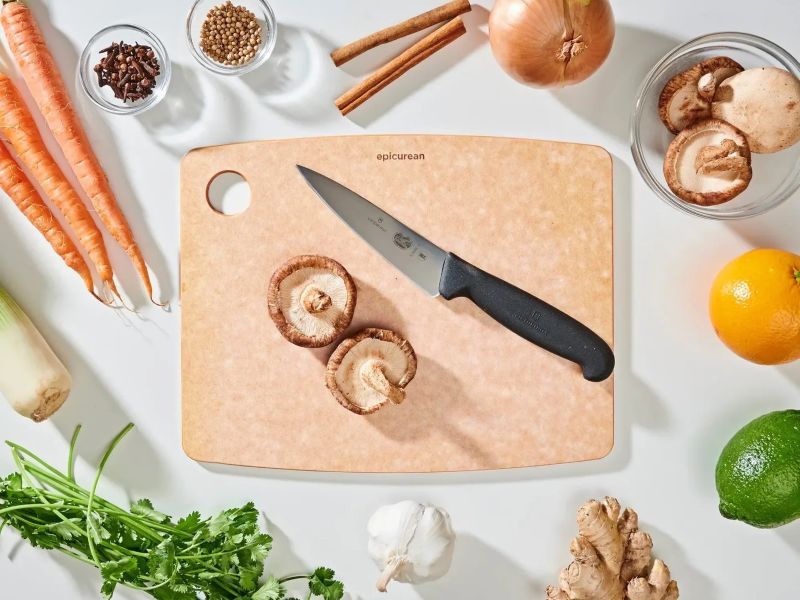
Epicurean Kitchen Series Cutting Board (Travel and Small Space Solution)
Material: Richlite (paper composite) | Size: 11.5×9 inches | Thickness: 0.25 inches | Hygiene Rating: Excellent | Knife Friendliness: Good
This thin, rigid composite board made from FSC-certified paper and resin offers portability and space efficiency. The material withstands dishwasher cleaning and heat up to 350°F. Despite minimal thickness, the board provides surprising stability during cutting.
Testing showed excellent stain resistance – beet juice and turmeric washed clean without discoloration. The paper composite dulled knives slightly faster than wood but slower than traditional plastic. Board maintained structural integrity through six months of dishwasher cycles.
Pros: Ultra-thin profile fits small kitchens and travel needs; heat-resistant surface functions near stoves; dishwasher-safe with zero maintenance requirements.
Cons: Limited size restricts workspace; paper composite dulls knives moderately; thin profile feels less substantial than traditional boards.
Best for: Apartment dwellers with minimal counter space; RV and travel cooking; secondary boards for light tasks.
Read more: Best Cutting Board for Knives – Complete 2025 Guide to Protecting Your Blades
Conclusion
Selecting a cutting board for vegetables requires balancing hygiene demands with knife preservation and practical usability. Materials range from plastic’s sanitization ease to wood’s blade-friendly surfaces, each offering distinct advantages for specific cooking patterns. Size and thickness affect both workspace efficiency and structural longevity – larger boards serve family cooking while compact options fit constrained kitchens.
Hygiene practices determine whether any board remains safe over time. Immediate cleaning, proper drying, and periodic deep sanitization prevent bacterial colonization that compromises food safety. Separate boards for vegetables and raw proteins eliminate cross-contamination risk. Replace boards showing cracks, persistent odors, or deep scoring that resists thorough cleaning.
The boards detailed here represent validated options across material categories and price ranges. Choose based on specific priorities – hygiene, knife care, sustainability, or maintenance commitment. A cutting board serves as more than a surface – it forms the foundation of fresh cooking, influencing safety, efficiency, and the longevity of your kitchen tools.