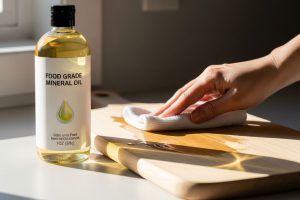
Choosing the right cutting board often comes down to a simple but crucial question: acacia or maple? Both woods are widely trusted, but they deliver very different strengths in the kitchen. Acacia stands out for its rich grain patterns, affordability, and durability that suits everyday cooking. Maple, on the other hand, is the professional’s standard – renowned for its balanced hardness, knife protection, and long-standing reputation in butcher blocks.
In this guide, we’ll compare acacia and maple head-to-head – covering durability, knife-friendliness, maintenance, aesthetics, sustainability, and price – so you can decide which board best fits your cooking style and budget.
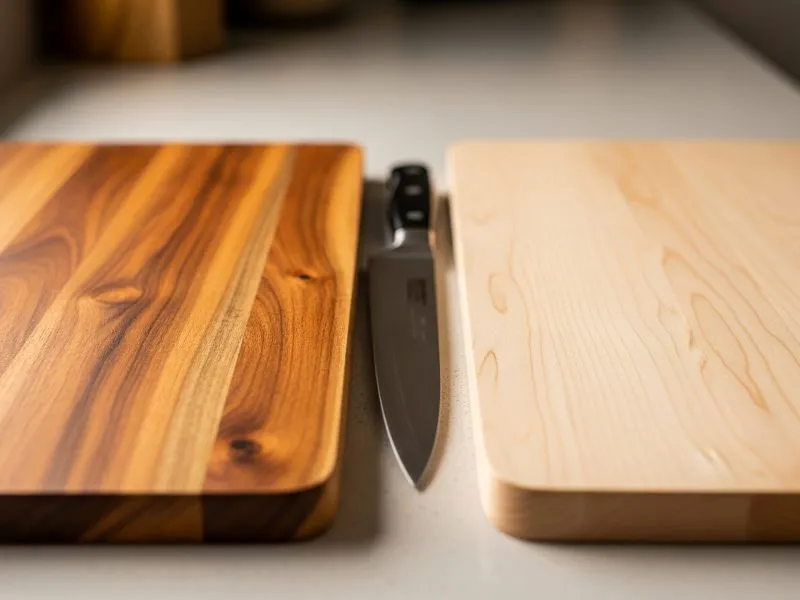
Quick Comparison: Acacia vs Maple
Acacia vs Maple Cutting Board: Quick Comparison
| Feature | Acacia | Maple |
| Hardness & Knife Care | 1,700–1,800 lbf (very hard, dense). Excellent scratch resistance but slightly harsher on knives (edge grain). End-grain acacia is gentler. | 1,450 lbf (moderately hard). Softer surface, widely regarded as the most knife-friendly hardwood. |
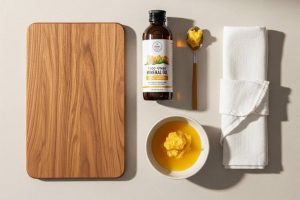
| Moisture & Maintenance | Naturally oily, dense grain → high water resistance, less prone to warping. Requires oiling every 1–2 months. | Lower natural oil content, absorbs water faster. Needs oiling every 3–4 weeks for best results. |
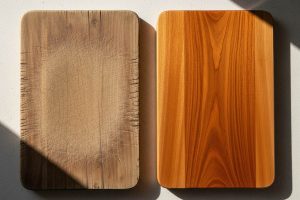
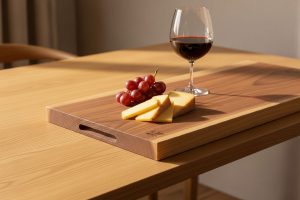
| Aesthetics | Wide variation in tones: honey blonde to deep reddish brown. Dramatic, exotic grain patterns. Doubles as a decorative serving tray. | Light cream to pale brown. Clean, uniform butcher-block look. Mostly used for heavy prep/butchering. |
| Durability & Longevity | With proper care: 5–10 years. Good stain resistance and stable against warping. | With proper care: 10–15+ years. Especially long-lasting in end-grain butcher blocks; heirloom quality. |
| Weight & Handling | Slightly lighter, easier to move around. | Heavier, sturdier, more stable during chopping but harder to lift. |
| Price & Value | $25-100 → affordable premium choice. | $80-200+ → higher upfront cost, but long-term investment. |
| Availability & Sustainability | Widely available worldwide, often from fast-growing plantations (7-15 years). | Primarily from North America, slower-growing (30-40 years) but offset by very long lifespan. |
This maple vs acacia cutting board comparison reveals distinct advantages for each wood. Acacia offers superior moisture resistance and striking visual appeal at accessible prices, while maple delivers the professional standard with optimal knife care and proven longevity.
Acacia Cutting Boards: Pros & Cons
Acacia represents a family of tropical hardwoods flourishing across Australia, Southeast Asia, and Africa. These fast-growing trees reach harvest maturity in just 10-15 years, compared to decades for traditional hardwoods. This rapid regeneration makes acacia an increasingly popular sustainable choice, reducing pressure on slow-growth forests while delivering premium quality.
Pros
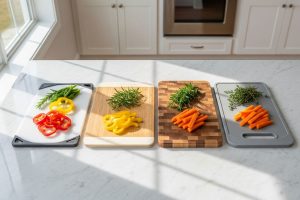
Affordable Premium Quality: Acacia delivers hardwood performance without the premium price tag, making it practical to purchase multiple boards for proper food safety separation – one for meats, another for vegetables, and perhaps a dedicated bread board.
Natural Water Resistance: The wood’s inherent oils create exceptional moisture resistance, reducing warping and cracking risks even in humid kitchens. This natural protection means less frequent oiling compared to other hardwoods.
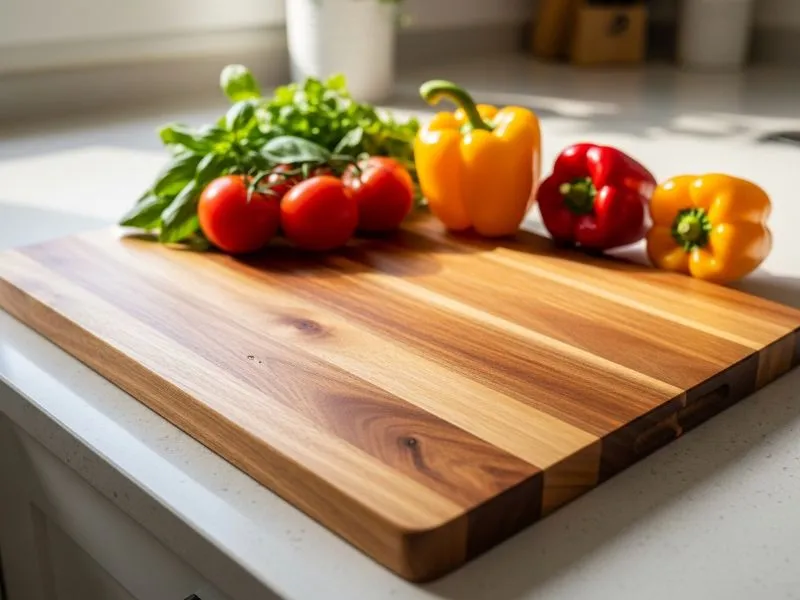
Striking Visual Appeal: Each acacia board showcases unique grain patterns ranging from golden honey to deep reddish-brown. These natural variations hide knife marks better than uniform woods while adding character to your kitchen.
Sustainable Sourcing: Fast growth rates ensure abundant supply without depleting old-growth forests, appealing to environmentally conscious consumers.
Cons
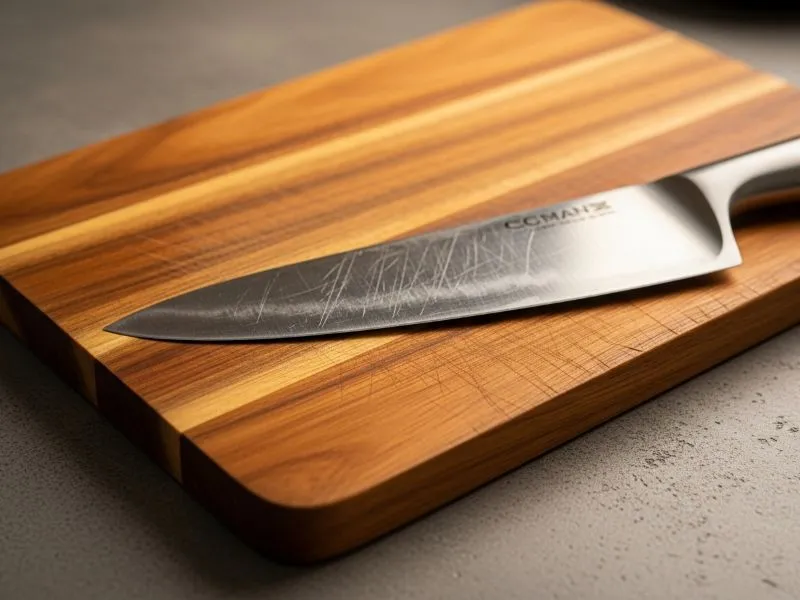
Harder on Knives: The dense grain structure, while excellent for durability, may require more frequent knife sharpening, especially with softer steel blades. However, choosing an end-grain acacia board largely solves this issue, as the wood fibers “heal” around cuts and are gentler on knife edges.
Quality Variations: Multiple acacia species exist in the market, leading to inconsistent quality between manufacturers. Research brands carefully.
Color Maintenance: Some boards require regular oiling to maintain their rich colors and prevent graying over time.
Maple Cutting Boards: Pros & Cons
Hard maple, particularly sugar maple, grows naturally throughout the northeastern United States and Canada. These slow-growing trees require 30-40 years to reach harvest size, contributing to maple’s premium positioning. For generations, maple has defined the American butcher block standard, earning USDA recommendations and appearing in professional kitchens nationwide.
Pros
Industry Gold Standard: USDA-recommended and chef-approved, maple represents the benchmark for professional cutting board performance. Its consistent quality and proven track record span decades of commercial kitchen use.
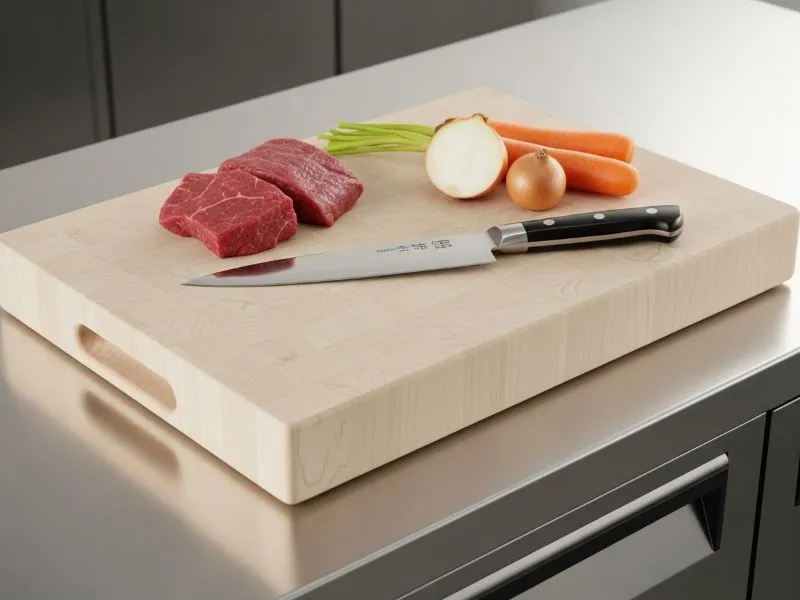
Perfect Balance: Maple achieves ideal harmony between durability and knife care. The moderately hard surface resists deep cuts while remaining gentle enough to preserve sharp edges, particularly crucial for expensive Japanese knives or high-carbon steel blades.
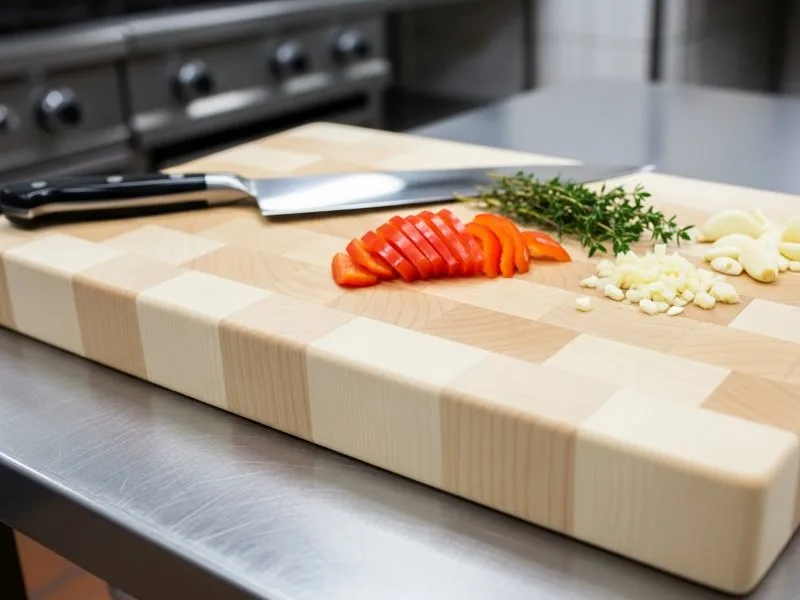
Classic Aesthetic: The light, uniform grain creates a clean, professional appearance that complements any kitchen style from traditional to modern. This neutral palette ages gracefully with proper care.
Professional Trust: End-grain maple boards remain the top choice among professional chefs who demand reliable, consistent performance during intensive daily use.
Cons
Higher Maintenance Requirements: Limited natural oils mean maple absorbs moisture more readily, requiring diligent oiling every 3-4 weeks to prevent drying and cracking.
Premium Pricing: Quality maple boards command higher prices, reflecting slower growth rates and established reputation.
Visible Wear: The lighter color shows stains and knife marks more prominently than darker woods, requiring more attention to maintain pristine appearance.
Head-to-Head Comparison
Durability & Maintenance
Acacia boards have natural oils that give them superior water resistance, making them more forgiving if you skip conditioning. Maple, with its stable cellular structure, delivers decades of reliable performance when maintained properly. Maintenance differs: acacia needs oiling every 6–8 weeks, while maple performs best with monthly conditioning.
Knife-Friendliness
Maple is the gold standard for knife-friendly surfaces, ideal for premium knives that need edge protection. Acacia end-grain boards, however, close the gap significantly – the vertical fibers allow blades to slip between them, offering near-maple performance while keeping acacia’s durability and price advantage.
Food Safety
Both woods meet FDA/USDA standards and, when maintained properly, are actually safer than plastic thanks to wood’s natural moisture-wicking and antimicrobial properties. Maple’s tighter grain gives it a slight edge in professional kitchens, but for home use, both are equally safe.
Aesthetic Considerations
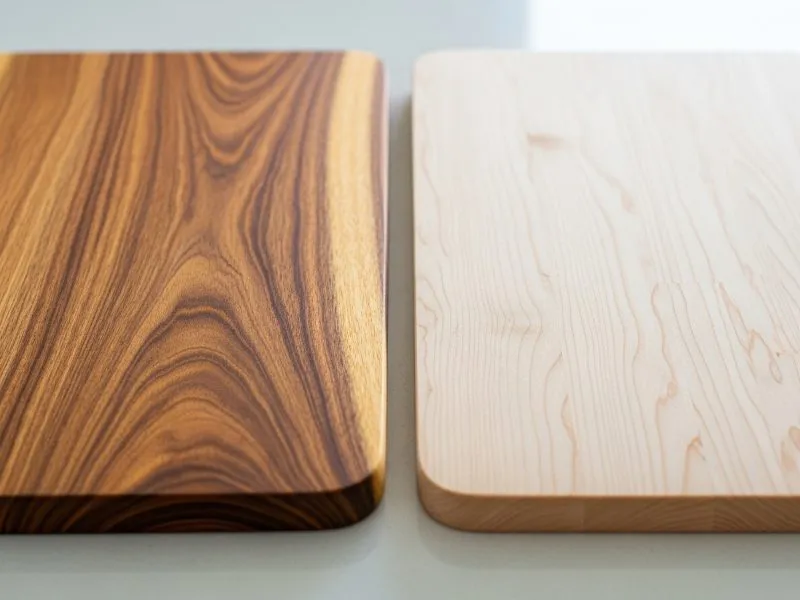
Acacia: bold, dramatic grain, with honey-to-dark chocolate tones that add warmth and uniqueness. Each board feels distinct, making it as much a decorative piece as a kitchen tool.
Maple: light, uniform appearance, offering a clean professional look that develops a warm patina over time. Its subtle elegance suits both modern and traditional kitchens, aging gracefully with use.
Price & Value
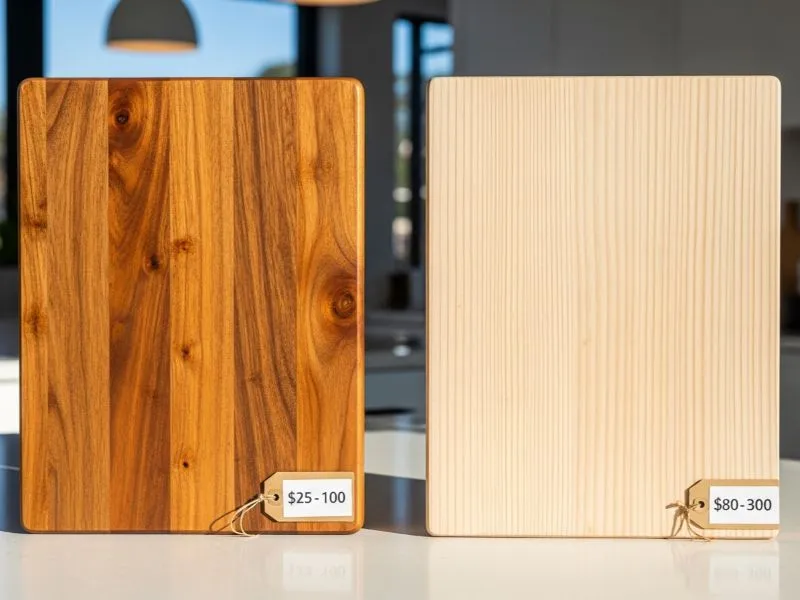
Acacia: affordable premium – $25 – 100 for quality boards, excellent balance of style and performance.
Maple: premium investment – starting at $80, with professional end-grain blocks reaching $200–300, reflecting its reputation and slower growth.
Sustainability & Environmental Impact
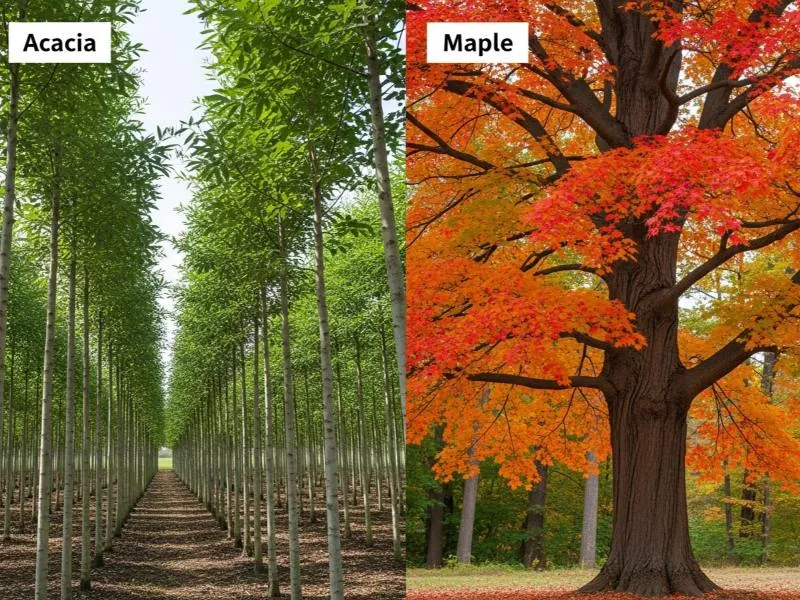
The sustainability question heavily favors acacia’s rapid growth cycle. Reaching harvest maturity in 10-15 years means acacia plantations can produce multiple harvests during one maple tree’s growth period. This efficiency translates to lower environmental impact per board produced and more stable, affordable pricing for consumers.
Maple’s 30-40 year growth cycle demands careful forest management to maintain supply without depleting resources. While slower regeneration increases costs, it also encourages manufacturers to maximize material usage and produce heirloom-quality boards designed for multi-generational use.
Use Case Recommendations
Choose Acacia If You:
- You want a durable, beautiful cutting board that forgives occasional maintenance lapses. Perfect for busy families juggling multiple responsibilities.
- You prioritize value and want to buy multiple boards for safe food separation (meats, veggies, bread). The affordable pricing makes this practical where cost often limits good food safety practices.
- You appreciate distinctive grain patterns that turn a board into kitchen art. Acacia’s natural variations from honey gold to deep chocolate complement both rustic and modern aesthetics.
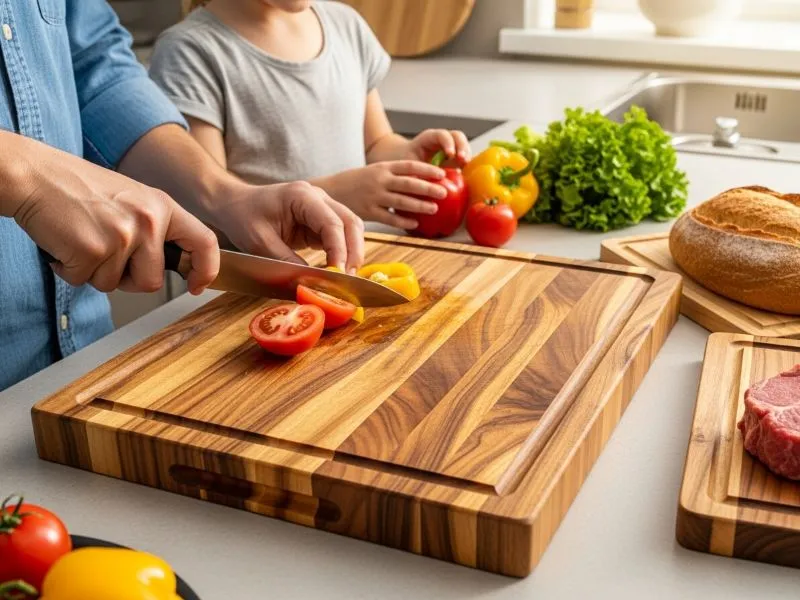
Pro Tip: Go for end-grain acacia boards if knife care is a concern. The end-grain construction protects blades almost like maple while keeping acacia’s durability and price advantage.
Choose Maple If You:
- You’re a chef or serious home cook who needs the perfect balance between hardness and knife preservation. Maple excels for daily intensive use.
- You want a professional-grade butcher block with a stable, reliable workspace. Maple’s proven record in commercial kitchens guarantees superior home performance.
- You value long-term durability and industry standards — maple is the traditional choice trusted by professionals for decades, ensuring your investment lasts for years.
Conclusion
The maple vs acacia cutting board debate ultimately has no universal winner – only the best choice for your specific kitchen needs. Acacia combines durability, affordability, and striking aesthetics, making it ideal for practical home cooks seeking premium performance without premium prices. Maple represents the professional standard, delivering unmatched knife care and time-tested reliability for those who view cooking as craft.
Consider your cooking frequency, knife collection value, maintenance commitment, and budget when deciding. Both woods offer sustainable, safe, and beautiful additions to any kitchen. Whether you choose acacia’s exotic appeal or maple’s classic refinement, investing in quality wood cutting boards enhances both cooking performance and kitchen aesthetics for years to come.
Read More: Acacia and Walnut cutting board