The Acacia vs Teak Cutting Board debate centers on value vs. longevity. Acacia delivers eco-friendly affordability, while teak excels in strength, stability, and beauty. This guide shows which board deserves a spot in your kitchen.

Pros and Cons of Acacia Cutting Boards
Acacia wood has gained recognition among home cooks seeking a balance between performance and value. This hardwood brings specific characteristics that influence its suitability for daily kitchen use, from meal preparation to presentation.
Pros
Acacia cutting boards deliver exceptional value through several key advantages that make them attractive to budget-conscious cooks.
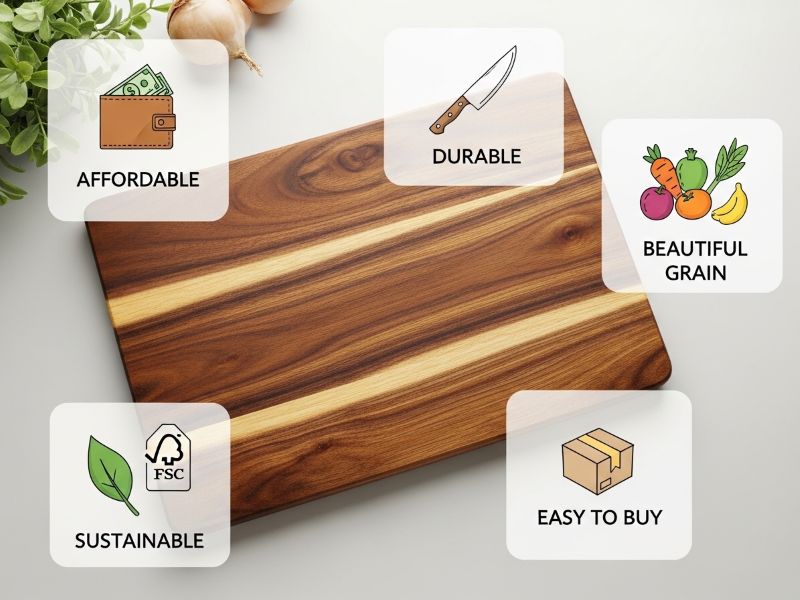
- Affordability stands as acacia’s primary strength: Compared to teak’s premium pricing, acacia boards typically cost 40-60% less while maintaining professional-grade performance. This accessibility allows home cooks to invest in quality wood without straining budgets.
- The hardness factor provides remarkable durability: With a Janka hardness rating of approximately 1,700 pounds-force, acacia resists dents, scratches, and knife marks better than softer woods. This density ensures boards maintain their smooth surface through years of chopping, dicing, and slicing.
- Visual appeal comes naturally through acacia’s grain patterns: The wood displays rich chocolate and golden streaks that create rustic charm in any kitchen. These varied patterns ensure each board carries a unique character, making them conversation pieces during entertaining.
- Sustainability credentials support environmentally conscious purchasing: Acacia grows rapidly in managed plantations, reaching harvest maturity in 10-20 years compared to teak’s 40-60 year cycle. Many suppliers source from FSC-certified forests, providing peace of mind for eco-aware consumers.
- Wide availability simplifies purchasing decisions: Acacia boards appear in kitchen stores, online marketplaces, and specialty retailers across price ranges. This accessibility means finding replacement boards or matching sets remains straightforward.
Read more: Is Acacia Wood Good for Cutting Boards?
Cons
Despite its advantages, acacia presents challenges that require consideration before purchase.
- Water resistance limitations demand regular maintenance: Unlike teak’s natural oils, acacia lacks built-in moisture protection, requiring monthly oiling with food-grade mineral oil or specialized wood conditioners. Skipping this maintenance leads to drying, cracking, and shortened lifespan.
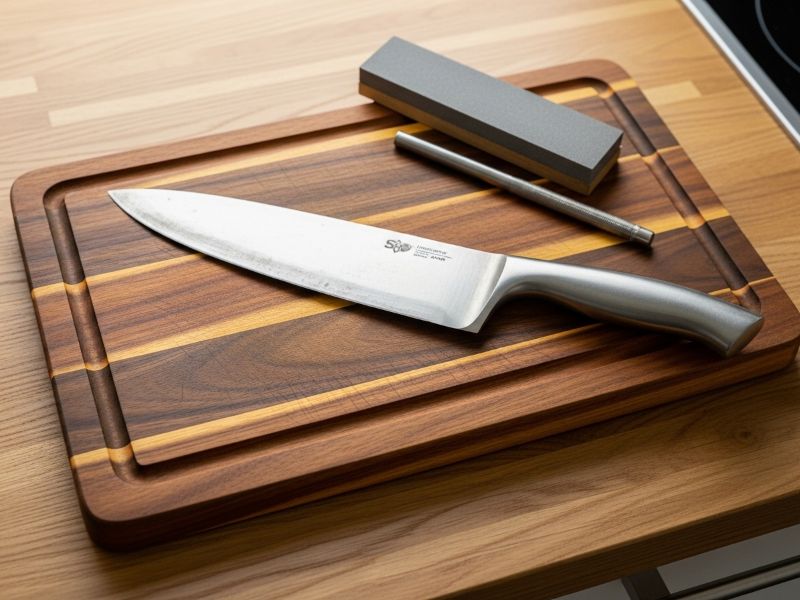
- Knife stress concerns affect blade longevity: The same hardness that resists dents can transfer impact stress to knife edges, potentially dulling blades faster than softer cutting surfaces. Professional chefs often report increased sharpening frequency when using very hard boards.
- Quality inconsistency creates purchasing uncertainty: The “acacia” label encompasses multiple species with varying characteristics. Some boards may be softer or more porous than others, making it difficult to predict performance without handling individual pieces.
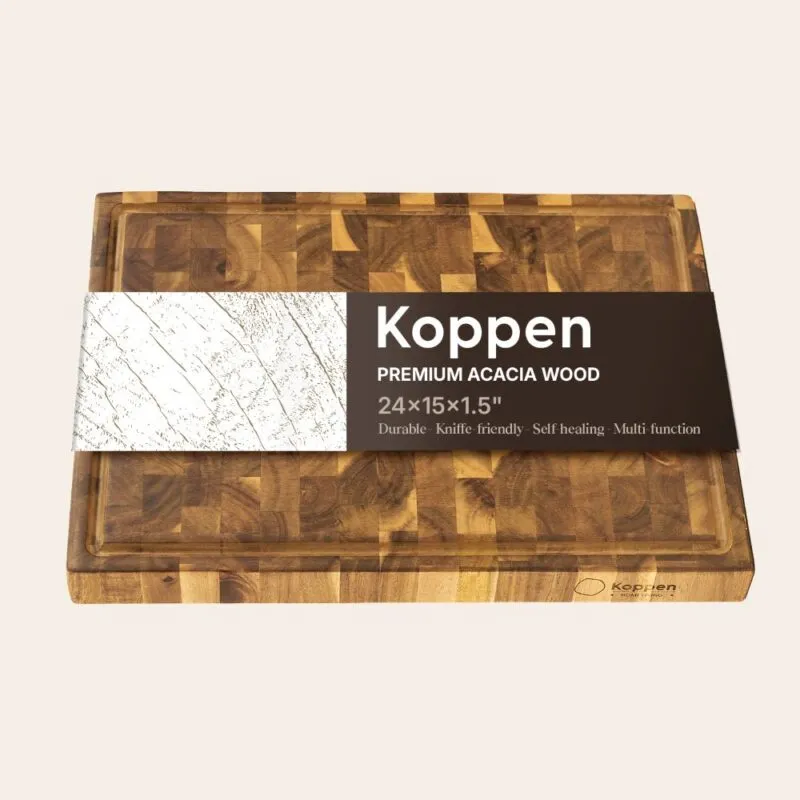
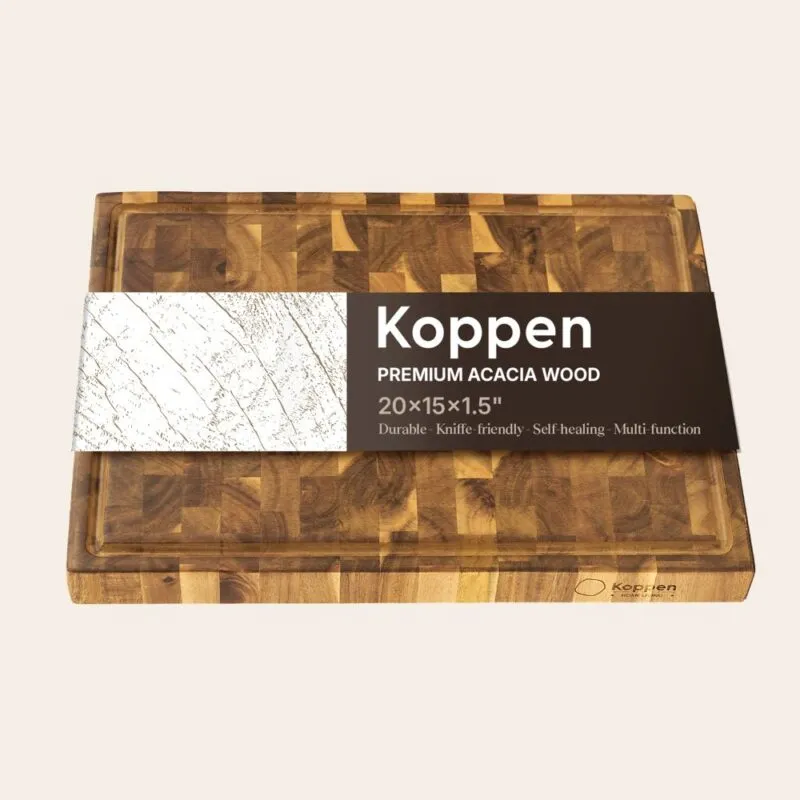
Koppen Acacia End Grain Cutting Board
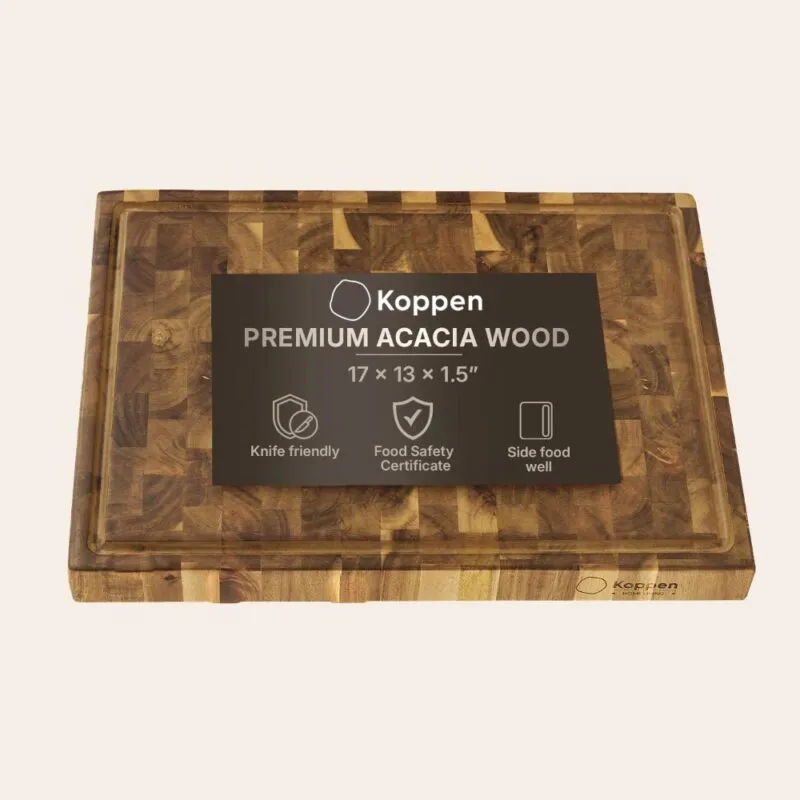
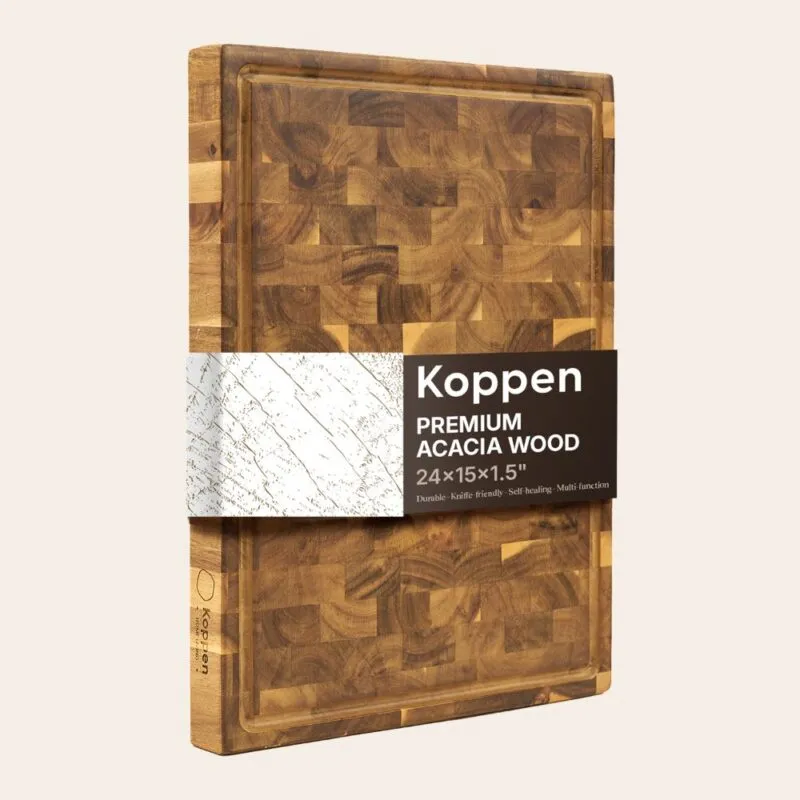
The Koppen Acacia End Grain Cutting Board eliminates the common weaknesses of regular acacia boards. Its end grain construction creates a self-healing surface that’s durable yet gentle on knife edges, while resisting warping and moisture damage. Thoughtful details like integrated side handles, a deep juice groove, and a rear food collection well keep your prep space clean and efficient.
Available in three sizes (17×13×1.5″, 20×15×1.5″, 24×15×1.5″) and two elegant finishes — Natural Acacia and Dark Walnut — this board is as stylish as it is functional. Certified safe for direct food contact by Bureau Veritas under FDA and EU standards, it offers lasting beauty, strength, and peace of mind for every kitchen.


Read more:
Acacia vs Bamboo Cutting Boards: Pros, Cons
Acacia vs Maple Cutting Board: Which One Should You Choose?
Acacia vs Walnut Cutting Board – Which One Fits Your Kitchen Needs?
Pros and Cons of Teak Cutting Boards
Teak represents the premium tier of cutting board materials, bringing decades of marine and outdoor furniture expertise to kitchen applications. This wood’s reputation stems from unique properties that address common cutting board challenges.
Pros
Teak’s premium status reflects genuine performance advantages that justify higher investment costs.
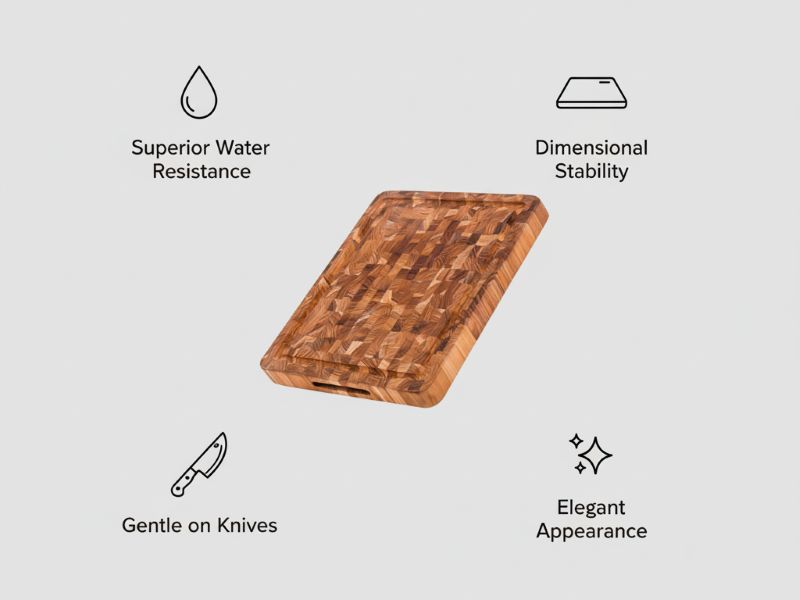
- Natural oil content provides superior water resistance: Teak contains oils that repel moisture, reducing absorption that leads to warping, cracking, and bacterial growth. This built-in protection means boards require less frequent oiling and maintain stability in humid kitchen environments.
- Dimensional stability prevents warping issues: The wood’s natural properties resist expansion and contraction during temperature and humidity changes. Professional kitchens value this reliability, as boards maintain flat surfaces critical for safe, efficient food preparation.
- Gentler surface preserves knife sharpness: While durable, teak’s moderate hardness (Janka rating around 1,155 lbf) provides enough give to protect knife edges during cutting. Chefs report extended periods between sharpenings when using quality teak boards.
- Elegant golden-brown appearance enhances kitchen aesthetics: Teak’s uniform grain and warm color complement both modern and traditional kitchen designs. The wood’s natural aging process develops an attractive patina that many consider more beautiful than the original finish.
Cons
Teak’s premium characteristics come with corresponding drawbacks that influence purchasing decisions.
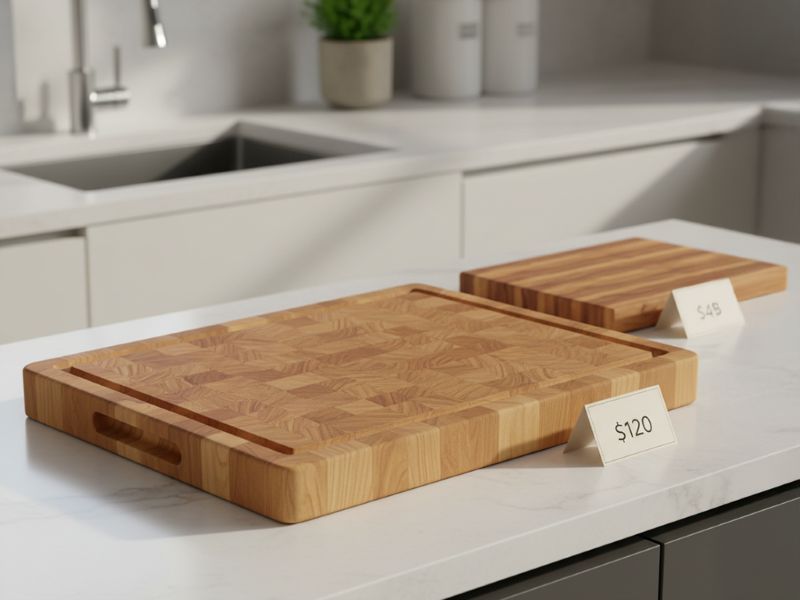
- High cost limits accessibility for budget-conscious buyers: Quality teak cutting boards typically start around $80 and can exceed $200 for larger sizes. This investment may strain household budgets, especially when multiple boards are needed.
- Silica content accelerates knife dulling despite a softer surface: Teak naturally contains silica deposits that act like microscopic sandpaper on knife edges. While the wood itself is gentler than acacia, these minerals can offset the softness advantage.
- Sustainability concerns affect environmentally conscious consumers: Wild teak harvesting has created deforestation issues in traditional growing regions. While plantation-grown teak exists, distinguishing sustainably sourced boards requires research and often increases costs.
- Weight and handling characteristics create practical challenges: Teak boards are typically heavier than acacia alternatives, making them more difficult to move and store. The smooth surface can become slippery when wet, requiring careful handling to prevent accidents.
Read more: Is Teak Good for Cutting Boards?
Acacia vs Teak Cutting Board – Which is Better?
Understanding the practical differences between these woods requires examining specific performance factors, costs, and use cases that influence daily kitchen experiences.
Quick Comparison at a Glance
| Factor | Acacia | Teak |
|---|---|---|
| Hardness | Very hard (1,700 lbf) – resists dents | Moderately hard (1,155 lbf) – balanced |
| Knife-Friendliness | May stress knives due to hardness | Gentler but contains dulling silica |
| Water Resistance | Requires regular oiling | Natural oils provide protection |
| Aesthetics | Dark, varied grain patterns | Golden-brown, uniform appearance |
| Maintenance | High – monthly oiling needed | Low – occasional oiling sufficient |
| Price Range | $20-60 for quality boards | $80-200+ for comparable sizes |
| Sustainability | Fast-growing, renewable resource | Plantation vs. wild harvest concerns |
| Availability | Widely available in stores | Limited to specialty retailers |
This comparison reveals that neither wood dominates across all categories, making the choice dependent on individual priorities and kitchen requirements.
Performance Factors
Durability and hardness create the foundation for long-term value:
Acacia’s superior Janka rating translates to better resistance against daily wear. Test kitchens report acacia boards maintaining smooth surfaces after 18 months of intensive use, while softer woods show knife grooves and surface roughening. However, teak’s dimensional stability often results in longer overall lifespan despite surface wear, as boards remain flat and usable when properly maintained.
Knife-friendliness requires balancing blade health with board longevity:
Professional knife sharpening services report mixed results from both woods. Acacia’s hardness transfers cutting force back to knife edges, potentially shortening sharpening intervals from monthly to bi-weekly for active home cooks. Teak’s silica content creates microscopic dulling even during light use, though the softer surface absorbs more impact energy. The optimal choice depends on knife quality and sharpening frequency preferences.
Water resistance and maintenance directly impact hygiene and convenience:
Teak boards maintain their protective properties for 6-8 weeks between oiling cycles, while acacia requires attention every 3-4 weeks to prevent moisture damage. Kitchen hygiene studies show properly maintained boards from both materials resist bacterial growth effectively, but neglected acacia boards develop surface cracks that harbor contaminants more readily than teak.
Food safety considerations extend beyond basic cleanliness:
Teak contains natural compounds with antimicrobial properties, providing additional protection against bacterial growth. Acacia’s tight grain structure resists bacterial penetration when properly maintained, but surface damage from knife cuts can create hiding spots for contaminants. Both woods require thorough cleaning and complete drying after use, but teak offers more forgiveness for occasional maintenance lapses.
Aesthetics, Cost, Sustainability
Kitchen design compatibility influences visual harmony and resale value:
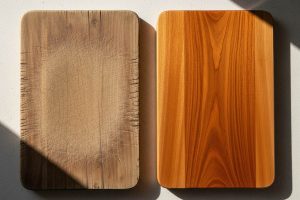
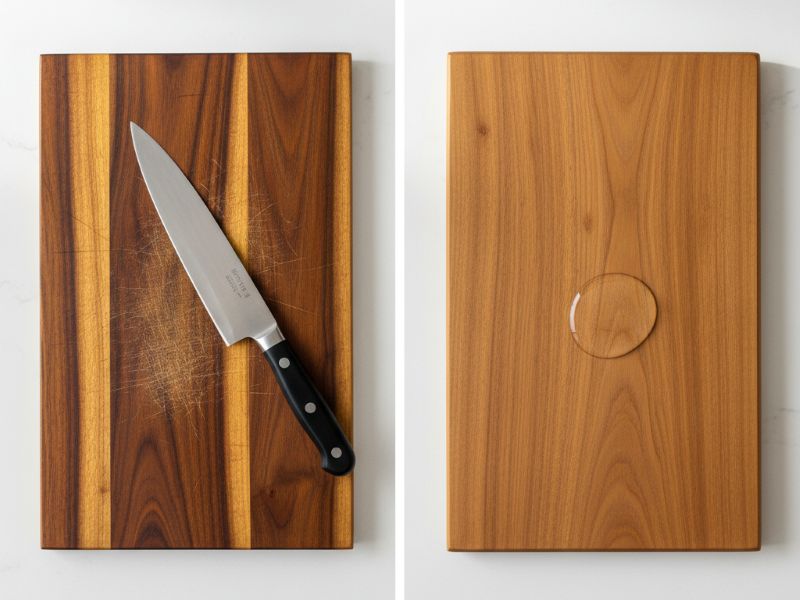
Cutting boards influence both kitchen style and usability. Acacia brings darker tones and varied grain patterns, ideal for rustic or industrial kitchens, with each board showing unique character. Teak offers golden-brown uniformity that matches modern, minimalist, or traditional kitchens where consistency matters. Designers often recommend acacia for dark cabinetry and teak for lighter finishes, but personal taste ultimately decides.
Investment analysis reveals different value propositions over time:
Price points differ based on material and build quality. Acacia boards range from $20 – 60, making them budget-friendly for casual cooks. Teak boards typically cost $80 – 200+, but their exceptional durability and lower maintenance justify the higher price for serious home cooks. On average, acacia lasts 5 – 7 years, while teak often exceeds 10 years, making teak competitive in long-term value despite higher upfront costs.
Environmental impact considerations reflect growing consumer awareness:
Both woods offer eco-conscious benefits, but sourcing is critical. Acacia grows quickly, reaching maturity within a few years, making it highly renewable. FSC certification ensures sustainable forestry practices. Teak can also be sustainable if plantation-grown, supporting reforestation and carbon storage. However, wild-harvested teak raises deforestation concerns, particularly in Southeast Asia. Responsible suppliers provide certification and traceability, though this often increases price.

Best Use Cases
Different cooking styles and kitchen setups favor each wood type based on specific performance characteristics and user priorities.
- Professional chefs and serious home cooks benefit from teak’s stability and low maintenance requirements: Commercial kitchens value boards that remain flat during heavy use and resist warping in high-humidity environments. The reduced oiling schedule allows focus on cooking rather than equipment maintenance.
- Budget-conscious home cooks find acacia provides excellent value without compromising food safety: Families preparing meals daily appreciate the durability and attractive appearance at accessible prices. The required maintenance becomes routine when integrated into weekly kitchen cleaning schedules.
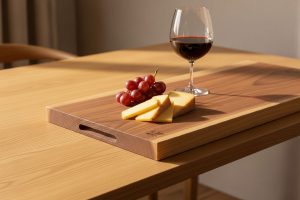
- Decorative serving applications favor acacia’s visual character and cost-effectiveness: Cheese boards, charcuterie platters, and serving pieces benefit from acacia’s varied grain patterns that complement food presentation. The lower investment risk makes experimentation with different sizes and shapes more affordable.
- Heavy-duty food preparation suits teak’s dimensional stability and knife-friendly surface: Professional-level meal prep, catering operations, and cooking enthusiasts who process large quantities benefit from teak’s consistent performance under demanding conditions.
Alternative considerations become relevant for specific needs: Maple offers similar performance to acacia with better knife-friendliness, while walnut provides teak-like aesthetics at moderate prices. Bamboo boards suit eco-conscious buyers seeking sustainable options, though they lack the durability and appearance of hardwood alternatives.

Final Verdict: Which Cutting Board Wins?
When comparing acacia vs teak cutting boards, there’s no single winner – it all comes down to your cooking style, budget, and maintenance preferences.
- Acacia is ideal for home cooks who value affordability, rustic aesthetics, and sustainability. With proper care, it offers years of reliable use at an accessible price point.
- Teak suits those seeking premium durability, water resistance, and minimal upkeep. While the upfront cost is higher, its long lifespan and convenience make it a worthwhile investment.
Both woods perform exceptionally when responsibly sourced and well maintained. The right choice depends on what matters most in your kitchen – cost, convenience, or style. For expertly crafted boards made to last, explore Koppen’s collection, where design meets durability.