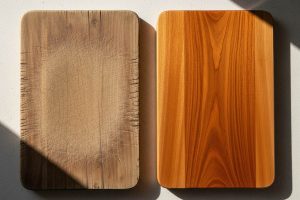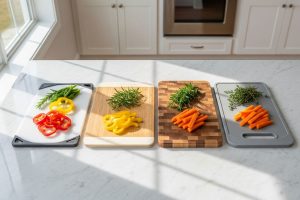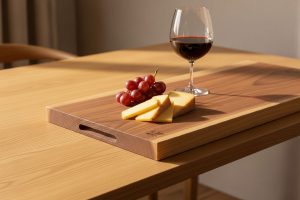
Acacia and walnut are two of the most popular woods for cutting boards, but they offer very different benefits. Acacia is affordable, tough, and built for daily use, while walnut is premium, gentle on knives, and doubles as a stylish serving piece. This guide compares both side by side-so you can choose the cutting board that truly fits your kitchen needs.
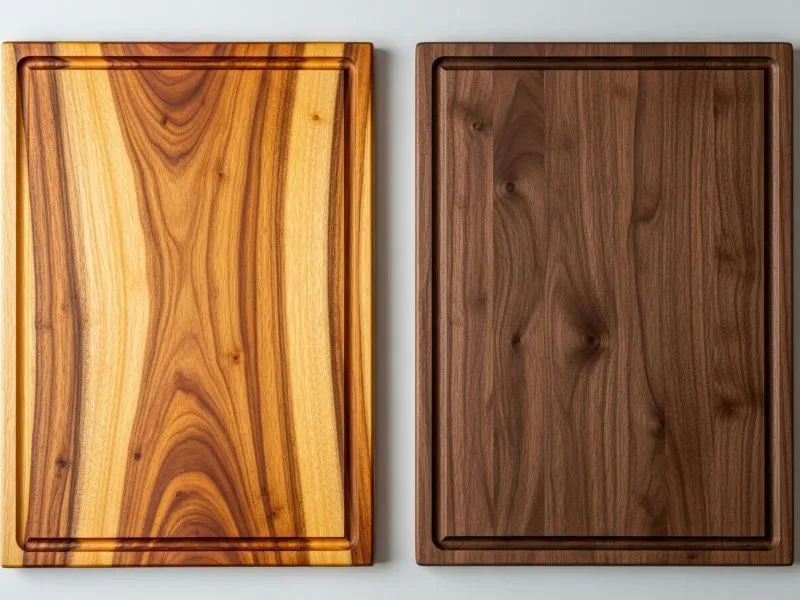
- Acacia cutting boards are durable and affordable, while walnut boards offer premium style and knife-friendliness
Quick Comparison: Acacia vs Walnut Cutting Boards
Acacia vs Walnut Cutting Board: Key Comparison
| Feature | Acacia | Walnut |
| Hardness (Janka) | ~1,700-1,800 lbf → tougher surface, resists dents and scratches, excellent for heavy chopping | ~1,000-1,100 lbf → softer, absorbs knife impact better, reduces wear on fine blades |
| Knife Friendliness | Durable but can dull edges faster; works best with everyday stainless-steel or Western chef’s knives | Very gentle on edges; ideal for high-carbon steel knives, Japanese blades, or anyone sharpening often |
| Moisture Resistance | Naturally oily → good resistance to water absorption and warping, less prone to stains | Lower natural oil content → needs regular oiling; without care, may dry or show water spots |
| Maintenance | Oiling every 1-2 months is usually enough; low-maintenance “workhorse” | Requires oiling about every 3-4 weeks to preserve smoothness and rich color |
| Aesthetics | Wide range of colors (golden, amber, reddish-brown); dramatic, lively grain patterns → rustic/modern flexibility | Deep chocolate brown with subtle, uniform grain → minimalist, luxurious look, doubles as serving board |
| Sustainability | Fast-growing (10-15 years); widely planted across Asia and Australia → naturally renewable, eco-friendly even if not always FSC certified | Slow-growing (40-60 years); mostly from North America; often FSC-certified due to stricter forestry regulation |
Durability & Knife Performance: The Technical Breakdown
Understanding Wood Hardness and Its Kitchen Impact
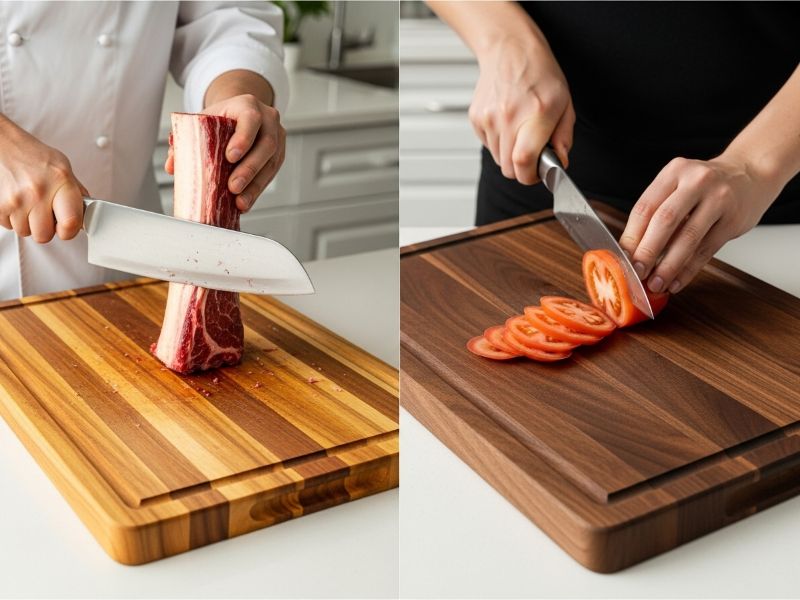
The Acacia cutting board sits at the harder end of wood types with a Janka rating of around 1,800 lbf. This density makes it highly resistant to scratches, dents, and deep knife marks. For home cooks who do a lot of heavy chopping—think root vegetables, squash, or even bone-in cuts—acacia feels solid and stable, holding up well after years of daily use.
With the Koppen Acacia End Grain Cutting Board, this concern is solved. Its end grain surface is tougher yet gentle on knives, blending durability with blade protection.
Walnut, by contrast, is softer at about 1,010 lbf. While it may pick up marks more easily, this moderate hardness is actually preferred by chefs because it’s gentler on knives. A walnut board cushions the blade just enough to protect sharp edges, making it ideal for precision slicing or long prep sessions. Over time, it also develops a rich patina, doubling as an elegant serving piece.

- Acacia cutting boards are harder and resist knife marks, while walnut boards are softer, gentler on blades, and develop a rich patina
Maintenance & Hygiene: The Time Investment Reality
Acacia – Low Effort, High Convenience
Acacia’s natural oils make it less likely to warp or crack, so upkeep is simple. Most households only need to oil it once a month, and its dense grain helps resist stains from tomatoes, turmeric, or beets. Cleanup is quick with warm water and mild soap, and it stays stable in both humid summers and dry winters. For busy cooks who want a board that just works, acacia delivers durability with minimal maintenance.
Walnut – More Care, More Character
Walnut boards need oiling every 3-4 weeks, especially early on, and their open grain means they can stain if neglected. But the trade-off is worth it: with regular care, walnut develops a rich patina and deep chocolate tones that make it as beautiful for serving as it is functional for prep. For home cooks who enjoy caring for their tools, walnut rewards the effort with long-lasting elegance.
Aesthetics & Kitchen Integration: Form Meets Function
Acacia – Warm and Varied
Acacia ranges from light honey to rich reddish-brown, with bold grain patterns that make every board unique. This natural variation adds warmth and rustic charm, while also helping to hide small knife marks. Interestingly, lighter acacia boards can even be darkened to resemble walnuts simply by applying food-safe natural oils – giving you flexibility in both function and look. It’s a great fit for casual, eclectic, or farmhouse-style kitchens.
Walnut — Elegant and Consistent
Walnut boards feature deep chocolate tones with straighter, subtle grain. The look is refined and uniform, perfect for modern or luxury kitchens. Walnut’s darker surface highlights food beautifully and develops a rich patina over time.
From Prep to Presentation
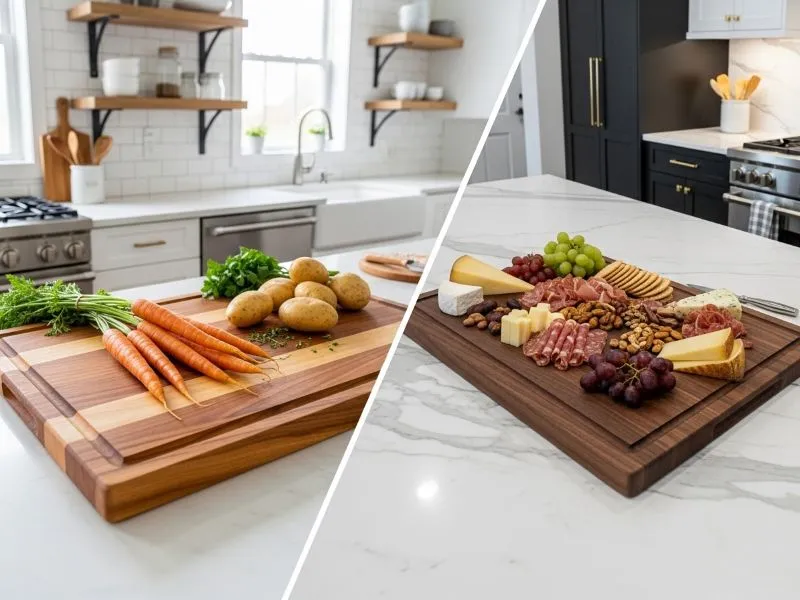
Acacia works best as a sturdy prep tool with natural character for everyday meals. Walnut, on the other hand, easily doubles as a serving piece — ideal for charcuterie, bread, or special occasions when presentation matters.
- Acacia offers rustic warmth with bold grain, while walnut delivers refined elegance and a rich patina
Price & Value Analysis: Understanding Your Investment
Acacia – Accessible Quality for Every Kitchen
The Acacia cutting board’s pricing makes quality wooden boards accessible to most households:
- Small utility boards (12-15 inches): $15-25 for edge grain construction
- Medium kitchen workhorses (18×12 inches): $25-40 for quality edge grain
- Large prep stations (24×16 inches): $40-60 for premium edge grain
- End grain butcher blocks (16×16 inches): $60-100 for professional-grade construction
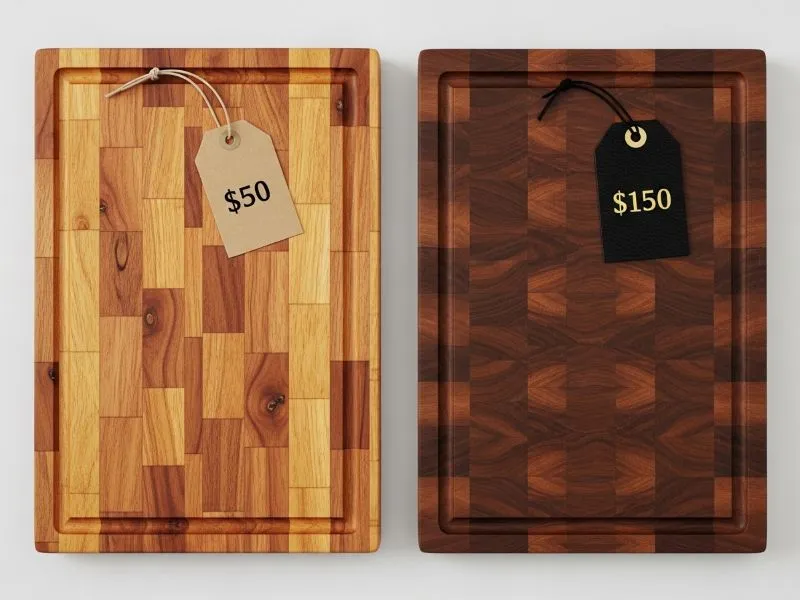
This pricing enables the multiple-board strategy recommended by food safety experts: separate boards for raw meats, vegetables, and ready-to-eat foods. A complete three-board acacia set costs less than a single premium walnut board, making proper food safety practices financially feasible for budget-conscious families.
Walnut – Premium Investment for Discerning Cooks
Walnut commands premium pricing reflecting its scarcity and prestige:
- Small edge grain boards (12-15 inches): $50-80 from reputable manufacturers
- Medium edge grain boards (18×12 inches): $90-150 for quality construction
- Large edge grain boards (20×15 inches): $150-250 for premium craftsmanship
- End grain butcher blocks (18×18 inches): $200-300+ for heirloom-quality pieces
- Acacia boards offer budget-friendly options for multiple uses, while walnut boards reflect premium craftsmanship and investment value
While the initial investment seems steep, consider the cost-per-use over decades. A $200 walnut board used daily for 10 years costs roughly 5 cents per day – less than a coffee filter. For serious home cooks who spend hours weekly in meal preparation, this investment in a superior tool makes financial sense.
Sustainability & Environmental Impact: The Conscious Choice
Acacia – Nature’s Renewable Resource
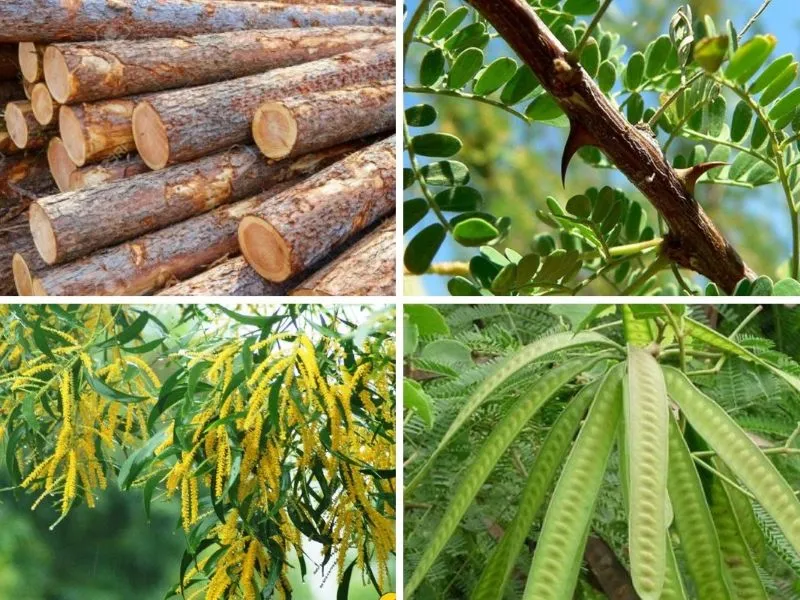
Acacia trees reach harvestable maturity in just 10-15 years, making them one of the fastest-growing hardwoods used in cutting board production. This rapid growth cycle means acacia plantations can sustainably meet market demand without depleting old-growth forests. Most acacia lumber comes from managed plantations in Southeast Asia, Australia, and Africa, where the trees also provide:
- Soil enrichment through nitrogen fixation
- Erosion control on hillsides and degraded land
- Carbon sequestration during rapid growth phases
While FSC certification remains less common for acacia due to the complexity of international supply chains, the wood’s inherent sustainability through rapid regeneration makes it an environmentally responsible choice for eco-conscious consumers seeking affordable options.
- Acacia grows rapidly in managed plantations, making it a renewable, eco-friendly choice for cutting boards
Walnut – Certified Excellence from Managed Forests
American Black Walnut requires 40-60 years to reach maturity, reflecting a long-term forest management commitment. This extended growth period means walnuts must be harvested responsibly to ensure future availability. Fortunately, most North American walnut comes from:
- FSC-certified forests in the Midwest and Appalachian regions
- Sustainably managed private lands with replanting programs
- Urban salvage programs recovering storm-damaged trees
The FSC certification prevalence in walnut production provides traceable assurance that your board comes from responsibly managed forests. This certification particularly matters for consumers who prioritize verified sustainability claims over general environmental friendliness.
- Most walnut boards come from certified sustainable forests in North America, guaranteeing long-term availability

Buying Guide: Matching Wood to Your Lifestyle
For the Busy Family Cook
If your kitchen is full of daily cooking, kids lending a hand, and little time for upkeep, acacia is the practical choice. It’s durable enough for heavy chopping and meat prep, while its lower cost makes it easy to keep multiple boards for different food types. Maintenance is simple – just an occasional oiling keeps it in good shape.
Walnut, on the other hand, is for families who want one standout board that doubles as a centerpiece. It does need more regular care, but the reward is a board that brings elegance to your kitchen and elevates family gatherings when used as a serving piece.
For the Culinary Enthusiast
For cooks who see the kitchen as a craft space – with sharp knives, precise cuts, and a love for beautiful plating – acacia fits the heavy-duty side of cooking. It’s tough enough for demanding prep work and affordable enough to keep multiple boards for different tasks.
Walnut shines where knife care and presentation matter most. Its gentle surface protects fine blades, while the dark tones and evolving patina turn everyday dishes into something worth showing off at the table.
For the Sustainable Shopper
If environmental responsibility guides your decisions, both acacia and walnut offer different paths. Acacia’s fast growth and affordability make it one of the most renewable hardwoods available, ensuring a lower carbon footprint and reducing replacement needs thanks to its durability. Walnut grows more slowly but typically comes from FSC-certified sources, supporting responsible forestry and American jobs. Its heirloom quality means fewer boards purchased over a lifetime – an investment in sustainability as much as style.
- From family cooking to fine dining and sustainable living, acacia and walnut boards serve different needs

Final Verdict: There’s No Wrong Choice, Only Better Fits
Both acacia and walnut make excellent cutting boards — the difference lies in what you value most.
- Choose acacia if you want durability, affordability, and low maintenance for everyday cooking. It’s tough, practical, and family-friendly.
- Choose walnut if you prioritize knife care, elegant presentation, and don’t mind a bit more upkeep. Its premium look and gentle surface make it ideal for special meals and serving.
Many home cooks eventually keep both: acacia for heavy-duty prep and walnut for moments when presentation matters. Either way, you’ll have a natural, sustainable board that serves your kitchen well for years.
Read more: Acacia vs Maple Cutting Board: Which One Should You Choose?