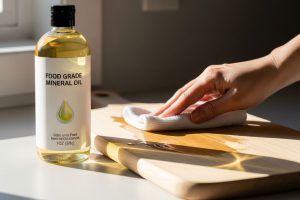
When preparing meals for your family, the choice of a cutting board is important. Rubber cutting boards are popular in both professional and home kitchens. This article explores their safety, hygiene, non-toxicity, durability, and proper usage based on expert guidance.
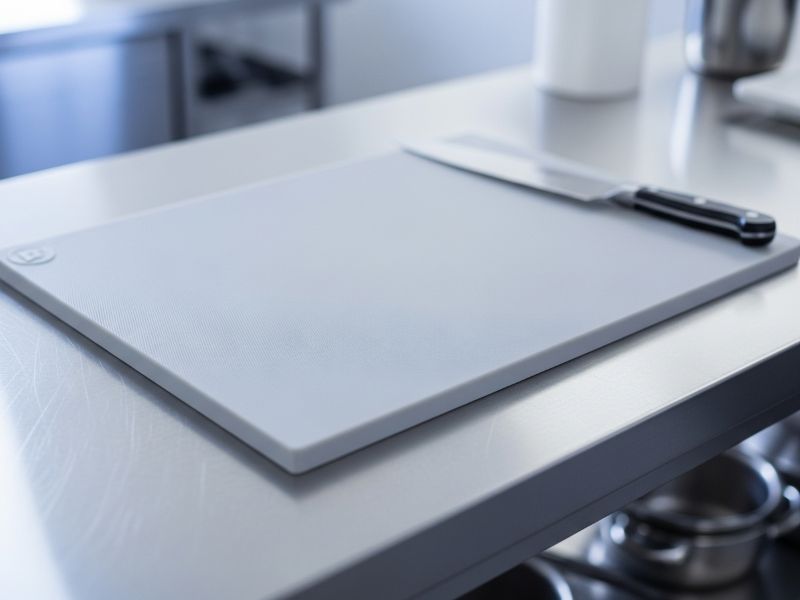
Are Rubber Cutting Boards Safe?
Yes, rubber cutting boards are safe for food preparation when manufactured from food-grade materials. These boards meet rigorous safety standards set by organizations like NSF International and the FDA, ensuring that no harmful substances leach into your food during use.
Rubber cutting boards are made from dense, food-grade rubber that’s non-porous and heat-resistant. This material prevents liquids and bacteria from penetrating the surface, making it more hygienic than porous options like wood or bamboo. Because contaminants remain on the surface, regular washing and sanitizing easily remove them.
Its chemical stability ensures safety during cleaning, as rubber doesn’t absorb detergents or release harmful compounds when exposed to hot water or bleach. This makes it a trusted material in professional kitchens, where strict sanitation standards are in place.
Pros and Cons of Rubber Cutting Boards
Every cutting board material presents trade-offs between performance, maintenance, cost, and aesthetics. A balanced assessment reveals where rubber boards excel and where they present challenges. Understanding these factors helps you make an informed choice based on your kitchen needs and priorities.
Advantages
Rubber cutting boards deliver measurable benefits that matter in daily kitchen use, particularly for those who prioritize sanitation and longevity:
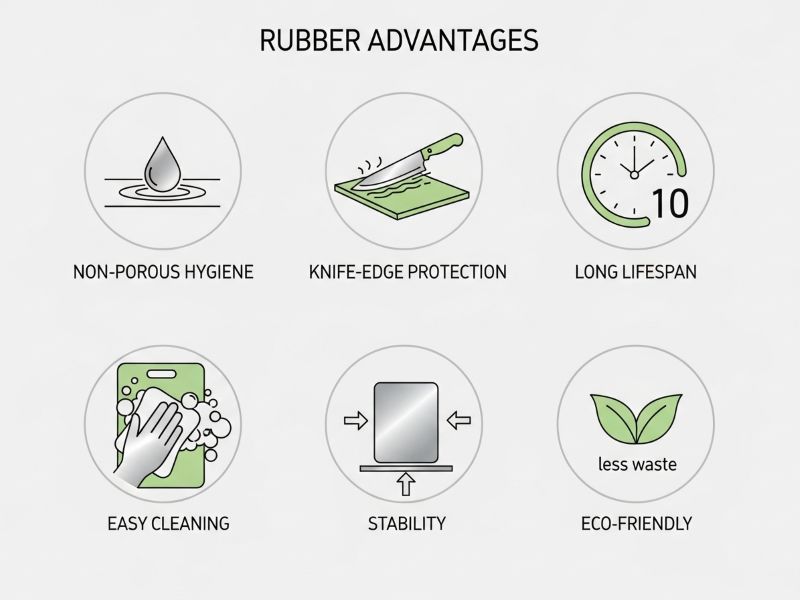
Non-porous surface structure: Rubber’s dense structure prevents liquids, food particles, and bacteria from seeping in, unlike wood, which has natural pores. Studies show non-porous materials allow deeper sanitization since contaminants remain on the surface.
Knife-edge preservation: The resilience of rubber cushions knife blades, reducing dulling compared to hard materials like glass or plastic. Professional chefs favor rubber boards because knives stay sharper longer, cutting more cleanly and safely. Over time, this saves both sharpening time and blade replacement costs.
Extended usable life: Quality rubber cutting boards are built to last in demanding environments. With proper maintenance, some commercial-grade rubber boards can last over a decade. For instance, a $150 board that lasts ten years offers better value than $20 plastic boards that need to be replaced every year.
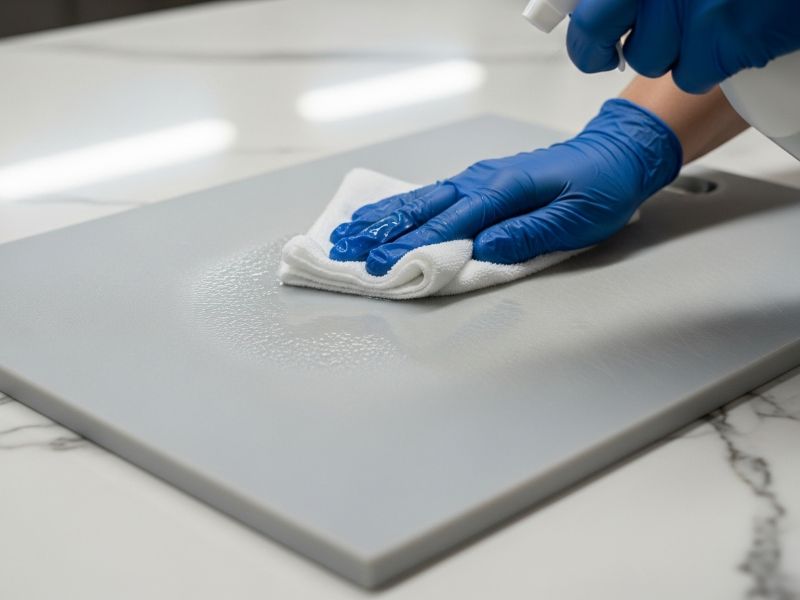
Cleaning convenience: Many rubber cutting boards can withstand dishwasher cycles, but hand washing with hot, soapy water is recommended for longevity and to avoid warping. Their non-porous surface makes cleaning easy. Handwashing with hot water maintains the board’s integrity better than dishwashing.
Stability during use: The weight of rubber boards creates a stable work surface that stays in place. The board resists sliding, reducing the risk of slips that could lead to cuts or injuries.
Eco-friendlier longevity: While the initial environmental impact of manufacturing rubber boards deserves scrutiny, their long usable life and resurfacing capability mean fewer replacements over time. A single rubber board that lasts ten years with periodic resurfacing creates less waste than multiple plastic boards replaced every year or two.
Disadvantages
Despite their considerable strengths, rubber cutting boards present some practical challenges that may influence your purchasing decision:
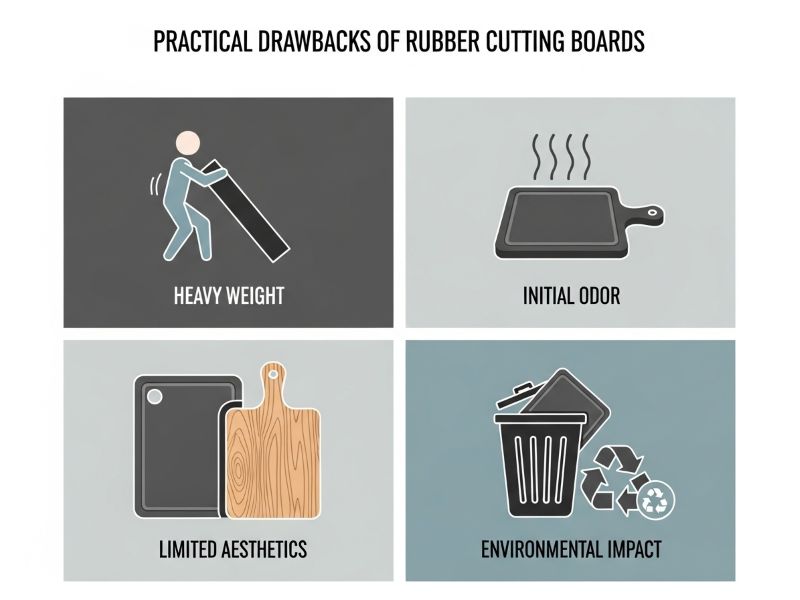
Weight considerations: Quality rubber boards weigh substantially more than comparable wood or plastic options. This weight makes them less portable and more difficult to maneuver during cleaning, particularly for users with limited upper-body strength or mobility issues.
Initial odor from new boards: Some rubber boards, particularly those made from synthetic rubber compounds or recycled rubber materials, emit a noticeable chemical smell when new. This odor typically dissipates after several washings and some exposure to air, usually within one to two weeks of regular use. The odor does not indicate toxicity in certified food-grade boards, but it can be unpleasant and requires patience during the initial phase of ownership.
Aesthetic and design limitations: Rubber boards usually come in dark, utilitarian colors like black or gray and lack decorative grain or color options. They typically come in black, dark gray, or brown, with minimal design elements beyond basic shapes. For those who value kitchen aesthetics, this practical appearance may seem unappealing and out of place in carefully designed kitchen spaces.
Environmental impact: Synthetic rubber doesn’t biodegrade easily, which means old boards can’t be composted like bamboo or wood. Recycling options are also limited. Only a few manufacturers offer take-back programs.
However, their long lifespan helps offset this drawback. A single durable board that lasts many years creates less waste overall compared to multiple plastic boards replaced frequently.
The hygienic benefits, safety features, and exceptional durability of rubber cutting boards outweigh these practical considerations for many users, particularly those who prioritize food safety, prepare high-risk proteins regularly, or cook professionally. The decision ultimately depends on your priorities, budget, physical capabilities, and whether you value function over form in your kitchen equipment.
Read more: Top 5 Safest Cutting Board Materials for a Safer Kitchen
Best Uses for Rubber Boards
Rubber cutting boards excel in situations where hygiene takes priority over other considerations. Understanding when to use rubber versus other materials helps you maintain food safety while optimizing your kitchen workflow and protecting your investment in quality boards.
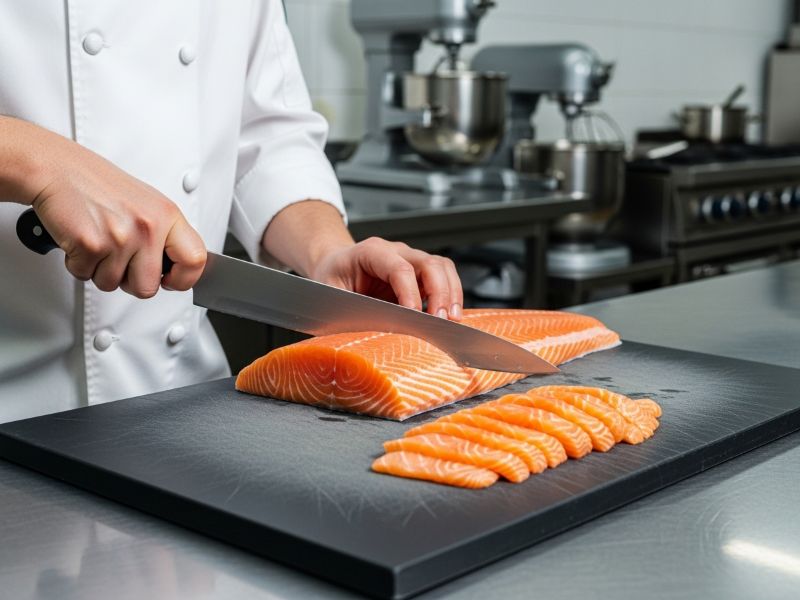
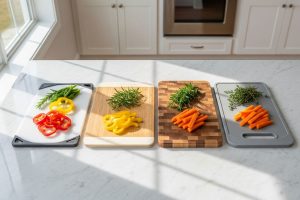
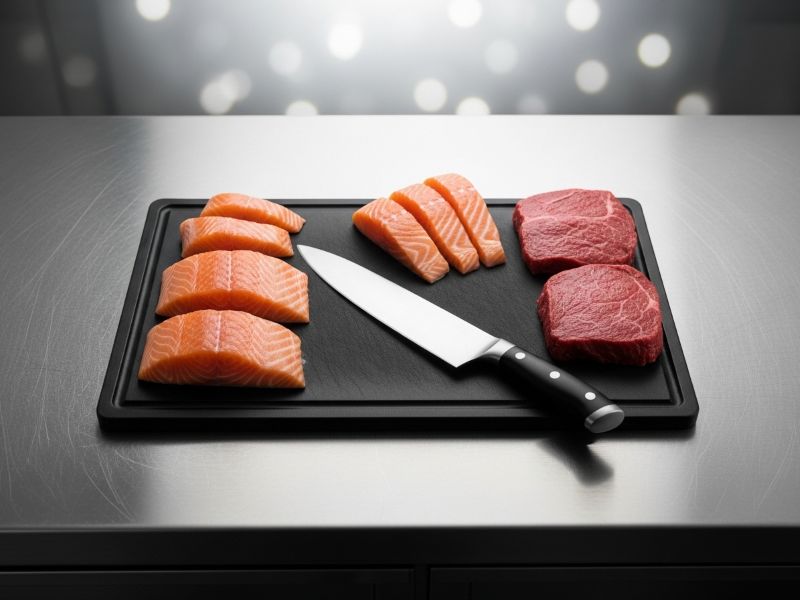
High-risk protein preparation: Raw meat, poultry, and seafood carry the highest risk of bacterial contamination in home kitchens. The non-porous surface of rubber boards prevents juices from these proteins from seeping into the material, where bacteria could establish colonies that survive cleaning. Koppen recommends designating one rubber board exclusively for raw proteins to prevent any possibility of cross-contamination with ready-to-eat foods like salads, fruits, or prepared dishes that receive no further cooking.
Commercial kitchen demands: Professional kitchens follow strict health codes that require regular sanitization and inspections, particularly for cutting boards. Rubber boards are ideal as they withstand frequent sanitizing with strong solutions, endure high-temperature cleaning in commercial dishwashers, and display wear patterns that indicate when they need replacement or resurfacing.
Final Recommendation
The evidence supports a clear conclusion: rubber cutting boards are safe, hygienic, and reliable when you choose certified products and maintain them properly. Their non-porous structure, exceptional durability, and sanitation-friendly properties make them particularly well-suited for preparing high-risk foods like raw meat, poultry, and seafood, where bacterial contamination poses the greatest threat to health.
Certified food-grade rubber boards are safe for food contact, as they do not release harmful compounds under normal use conditions. They meet strict FDA and NSF standards, ensuring they have been tested for safety under various conditions, including repeated use and exposure to heat, acids, and oils. In contrast, uncertified boards may contain unsafe fillers or additives.
Despite their higher initial cost, rubber boards are a durable investment. Their material strength and ability to be resurfaced mean they can last for many years with proper care. While they may cost five to ten times more than basic plastic boards upfront, their overall cost per year can be lower due to less frequent replacements and reduced knife wear, leading to savings on sharpening and blade replacements.