Silicone cutting boards are everywhere – flexible, lightweight, and easy to clean. But are they truly safe for your food? Do they hide bacteria or leach chemicals when you slice and dice? In this guide, we’ll unpack the science and expert data behind silicone boards, so you’ll know whether they really deserve a place in your kitchen.
Are Silicone Cutting Boards Safe?
Yes – food-grade silicone cutting boards are generally very safe when they come from certified sources. Silicone is a chemically stable, non-reactive material, meaning it doesn’t leach chemicals like BPA or phthalates, even under heat or contact with acidic foods. This inert nature is why silicone is trusted for baby bottles, bakeware, and medical applications.
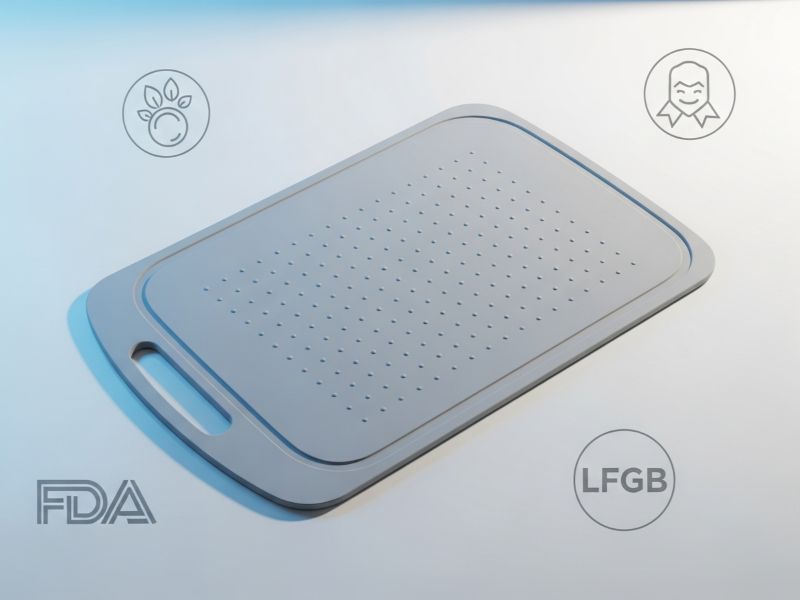
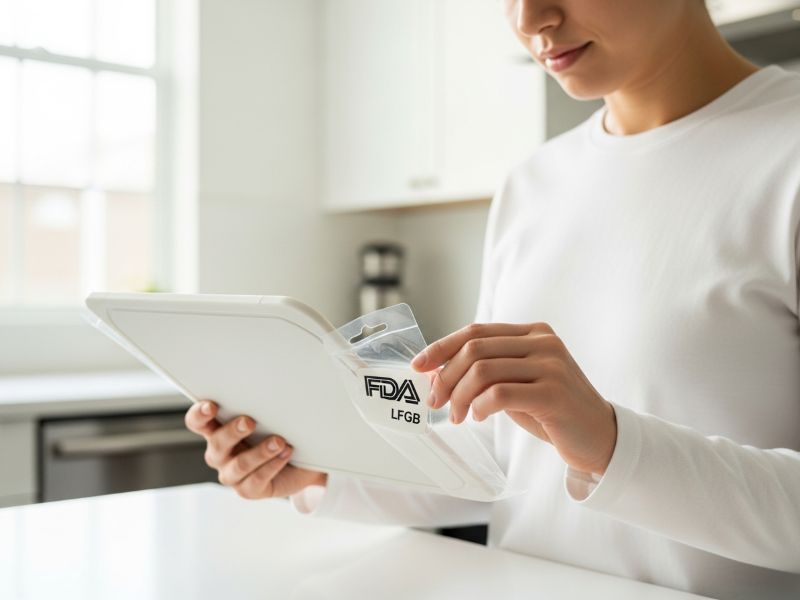
To qualify as food-safe, silicone must meet FDA (21 CFR 177.2600) or LFGB (EU) standards, which test how much material can “migrate” into food when exposed to heat, oil, or acid. Reputable brands submit their boards to accredited labs that simulate real cooking conditions; those that pass earn FDA/LFGB certification. If a product only claims “food safe” without citing standards – or is suspiciously cheap it may contain fillers that undermine safety.
From a hygiene standpoint, silicone’s non-porous surface gives it an advantage over plastic and even wood. It doesn’t harbor bacteria, absorb odors, or stain easily. Most boards are dishwasher-safe up to 400 °F, and routine cleaning with hot soapy water is enough to keep them sanitary. For deeper cleaning, use a mild bleach solution or boiling water. The only caveat: once deep knife grooves appear, replace the board – silicone doesn’t self-heal like wood.
In short, a certified silicone cutting board is one of the safest, most hygienic options for everyday cooking. Its inert chemistry and easy-to-clean surface make it a reliable choice for home cooks who value both food safety and convenience.
Read more: Top 5 Safest Cutting Board Materials for a Safer Kitchen
Silicone vs Plastic Cutting Boards
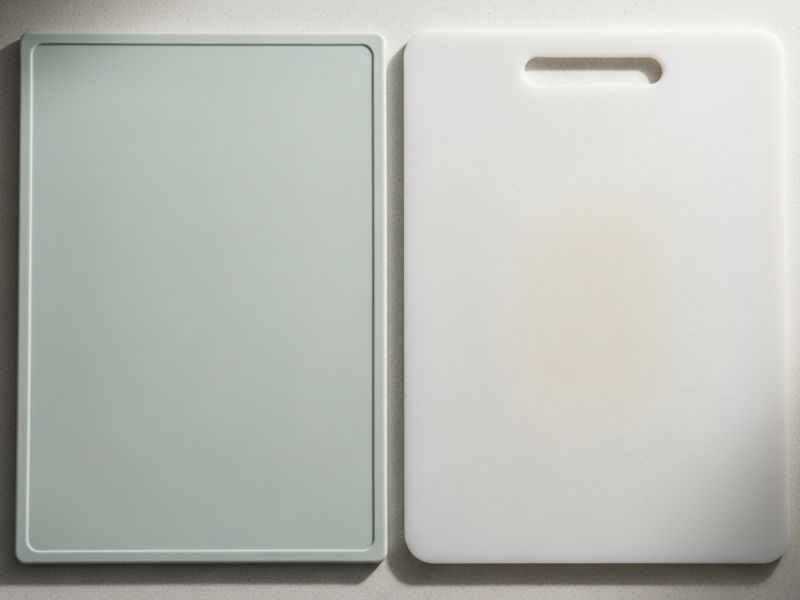
Though they may look alike, silicone and plastic cutting boards are fundamentally different. Plastic boards are usually made from polyethylene or polypropylene, while silicone comes from silica – a natural mineral bonded with oxygen, carbon, and hydrogen. This distinction gives silicone its unique stability and safety profile.
Safety: Plastic boards can contain BPA, phthalates, or additives that leach into food, especially when scratched or exposed to heat. Knife grooves also trap bacteria, and recent studies show that plastic can shed microplastics during cutting. By contrast, food-grade silicone is chemically inert and does not release harmful compounds or particles under normal kitchen conditions.
Hygiene & Durability: Silicone’s non-porous surface resists moisture, odors, and stains better than most plastics. It’s flexible and heat-resistant – won’t warp or crack – but its softer texture can show light knife marks over time. Still, these marks stay shallow and easy to clean, maintaining hygiene with minimal effort.
Sustainability: Neither material is easily recyclable, but silicone tends to last much longer. A well-made silicone board can serve for years without odor buildup or surface degradation, reducing replacements and overall waste compared to plastic boards that often need yearly replacement.
In essence, silicone isn’t “better plastic” – it’s a safer, longer-lasting alternative designed for cooks who want a cleaner, more durable, and eco-conscious prep surface.
Incremental Comparison Table
| Factor | Silicone | Plastic (PE/PP) |
|---|---|---|
| Safety | BPA-free, inert, no chemical migration when certified | Risk of BPA, phthalates, and microplastic release is possible |
| Hygiene | Non-porous, resists odor and stain absorption | Can absorb moisture, odors; grooves harbor bacteria |
| Knife Impact | Softer surface, gentle on blades, but shows marks | Harder surface dulls blades faster; deep grooves form |
| Sustainability | Long lifespan reduces waste; recycling is limited | Shorter lifespan; recycling is available but inconsistent |
| Heat Resistance | Withstands dishwasher and boiling water | Warps at high temperatures |
This table synthesizes key differences. For safety-conscious cooks prioritizing hygiene and blade care, silicone offers clear advantages. Those requiring rigid surfaces for heavy chopping may lean toward thick plastic or alternative materials.
Read more: Are Plastic Cutting Boards Safe? A Practical Guide for Your Kitchen
Pros and Cons of Silicone Cutting Boards
Every material involves trade-offs. Silicone boards deliver specific benefits while introducing certain limitations. Understanding both sides enables realistic expectations and optimal use.
Advantages
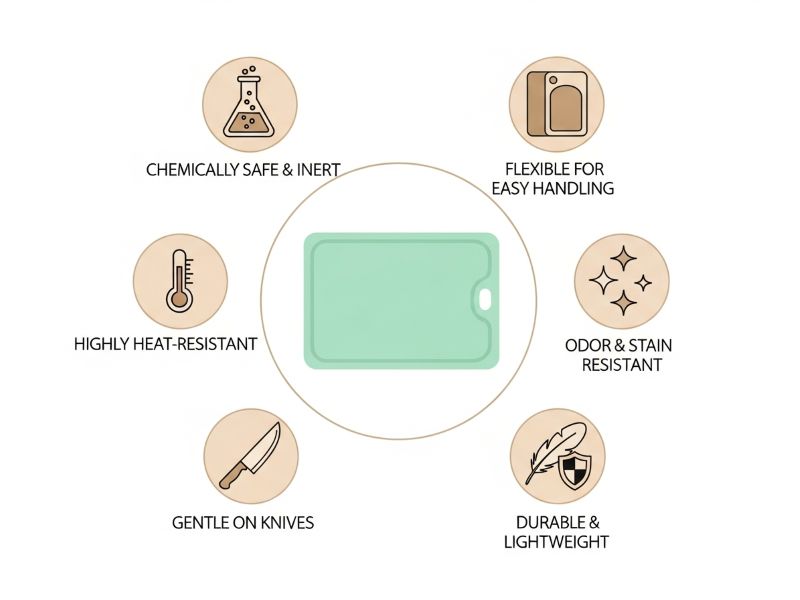
Chemically Safe & Inert: Food-grade silicone contains no BPA, phthalates, or reactive compounds. Its inert composition prevents flavor, odor, or color transfer between foods, keeping your ingredients pure and your board neutral after every wash.
Flexible for Easy Handling: Silicone’s soft, bendable nature lets you fold or roll the board to pour chopped ingredients directly into pots or bowls. This flexibility streamlines prep work, reduces spills, and limits countertop mess – especially when working with raw meat or juicy produce.
Highly Heat-Resistant: Silicone tolerates extreme temperatures – from dishwashers to boiling water – without warping or degrading. You can sanitize it effortlessly, ensuring reliable hygiene after heavy use.
Odor & Stain Resistant: Even strong foods like garlic, fish, or beets leave no trace. Silicone naturally repels stains and smells, so a quick rinse restores its clean, neutral look – ideal for switching between proteins, fruits, and vegetables.
Gentle on Knives: Softer than wood and much kinder than glass or stone, silicone cushions the blade slightly during cutting. This preserves edge sharpness over time, extending the life of your kitchen knives.
Durable & Lightweight: Silicone boards resist cracking, chipping, and splintering. They’re easy to carry, pack, or clean anywhere – making them practical for everyday cooking as well as outdoor use.
Disadvantages
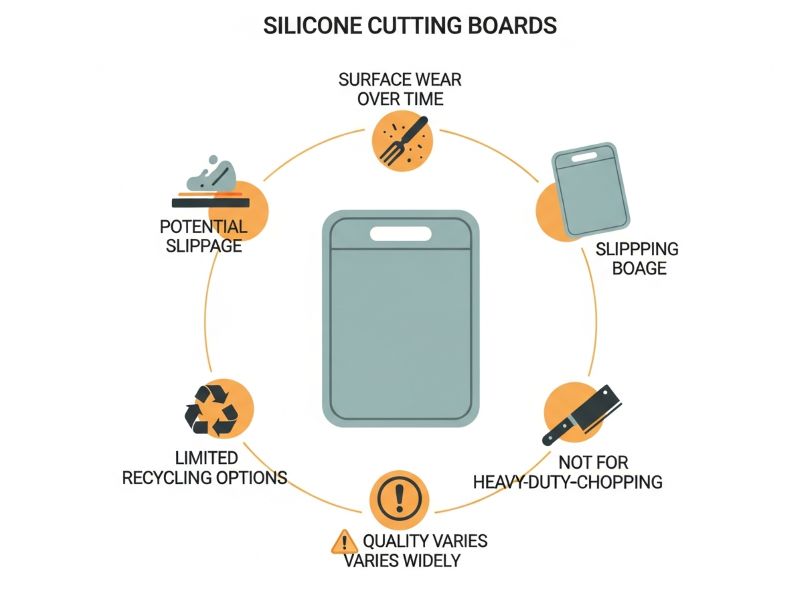
Surface Wear Over Time: The same softness that protects your knives also makes silicone more prone to visible scoring. Light marks appear quickly with regular use, and though they don’t affect hygiene right away, deep grooves can accumulate and eventually require replacement.
Potential Slippage: Silicone’s flexibility can work against stability. On smooth countertops, the board may shift during vigorous chopping. Placing a damp towel underneath or using a model with a textured underside helps maintain grip and safety.
Not for Heavy-Duty Chopping: Silicone boards aren’t built for cleaver work or butchering tasks. Under strong impact, they can flex or buckle slightly, making wood or bamboo better options for high-force cutting.
Quality Varies Widely: Low-grade or uncertified silicone products may include fillers that break down with heat or repeated washing. These can compromise both durability and safety – so certification (FDA, LFGB) is essential.
Limited Recycling Options: Although silicone lasts much longer than plastic, it’s not easily recyclable in most local systems. End-of-life disposal often ends up in landfills, with only a few specialty programs currently accepting silicone.
Appropriate Use Matters: These limitations don’t make silicone a poor choice – they simply define its ideal role: everyday slicing, prep, and quick cleanup, not heavy chopping or industrial use.
Safety Considerations for Silicone Cutting Boards
Check Certifications: Always choose boards labeled FDA- or LFGB-certified and BPA-free. These certifications confirm the silicone has passed strict tests for chemical safety and food contact standards. Look for clear labeling or documentation from the manufacturer – avoid products that make vague “food-safe” claims without verified compliance.
Spot Quality Signs: High-quality silicone feels sturdy yet flexible, with a matte, non-greasy finish and no chemical odor. A strong plastic smell usually signals fillers or low-grade materials – best to avoid.
Use & Care Wisely: Silicone resists heat but isn’t indestructible. Avoid direct flames or oven exposure beyond its rated limit. Clean with hot water or in the dishwasher, and replace boards once deep grooves, stains, or surface breakdown appear – typically after 2–5 years of use.
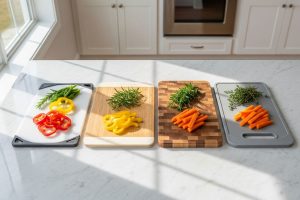
Prevent Cross-Contamination: Color-code your boards for meats, seafood, and produce. This simple system, borrowed from professional kitchens, keeps prep hygienic and organized.
In short, safety depends on quality and care – choose certified silicone, maintain it properly, and it will stay a reliable, food-safe surface for years.
Best Uses for Silicone Cutting Boards
Everyday Prep Tasks: Ideal for everyday chopping and slicing – fruits, vegetables, bread, or baked goods. The non-porous surface keeps juices from soaking in and maintains a clean, neutral cutting area.
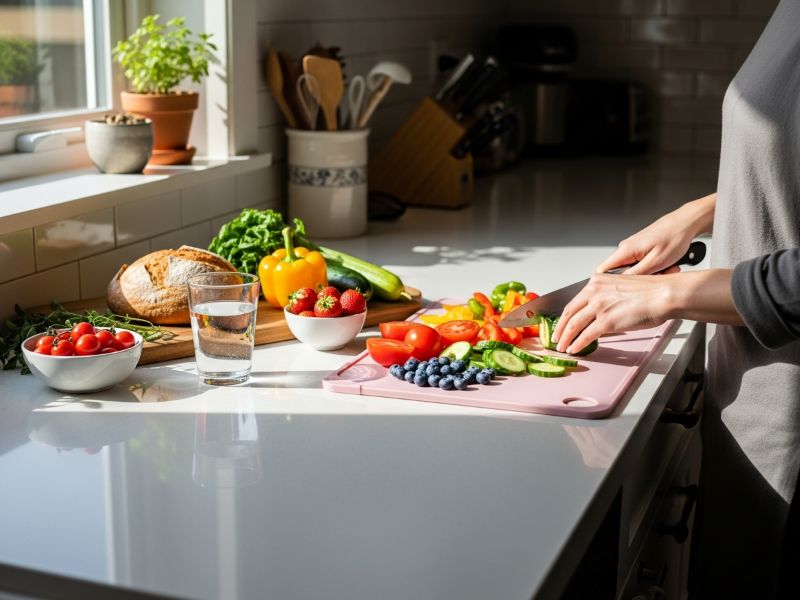
Easy Ingredient Transfer: Silicone’s flexibility lets you lift or fold the board to pour ingredients directly into pans or bowls. It streamlines meal prep and reduces countertop mess.
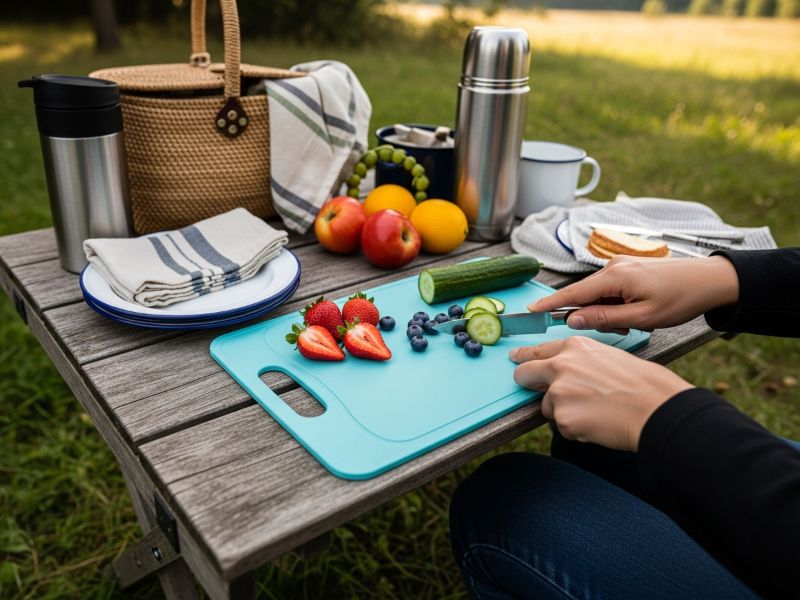
Portable & Space-Efficient: Lightweight and rollable, silicone boards are great for small kitchens, picnics, or camping. They pack easily and clean up quickly anywhere.
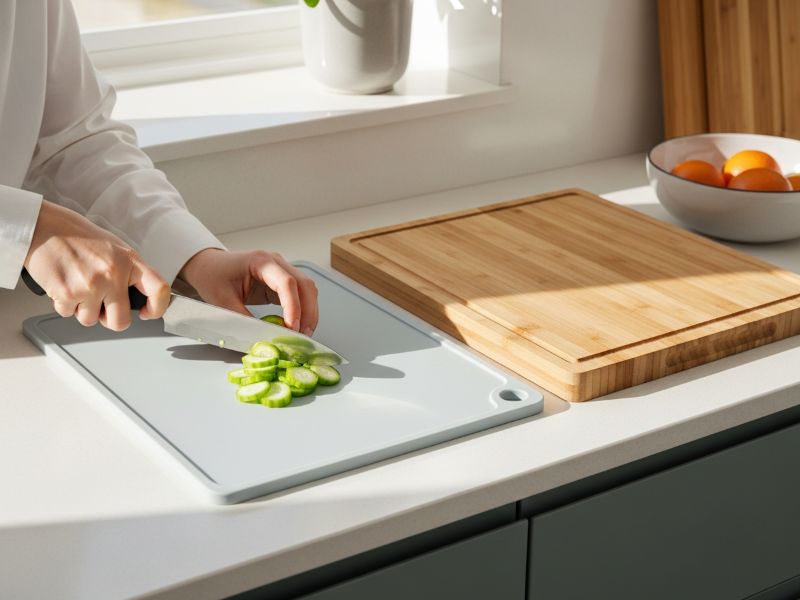
Light-Duty Focus: Silicone works best for general prep, not for heavy cleaver use or bone-in cuts. For those, use a sturdier wood or bamboo board alongside it.
Simple Care & Stability: Place a damp towel underneath for grip, rinse after use, and wash with hot soapy water or in the dishwasher. With proper care, a silicone board stays hygienic and durable for years.
Read more: The 7+ Best Cutting Board for Meat in 2025
Conclusion
Food-grade silicone cutting boards are safe, hygienic, and highly practical when properly certified and maintained. Their non-porous, chemically inert surface resists bacteria, odors, and stains better than most plastic alternatives – without the risk of microplastic shedding.
While silicone can’t replace wood for heavy-duty chopping, it excels in everyday prep thanks to its flexibility, heat resistance, and easy cleaning. Choosing FDA- or LFGB-certified products, inspecting the surface regularly, and replacing worn boards ensure long-term safety.
In short, silicone cutting boards are a smart, low-maintenance choice for modern kitchens – clean, durable, and kind to both your knives and your food.