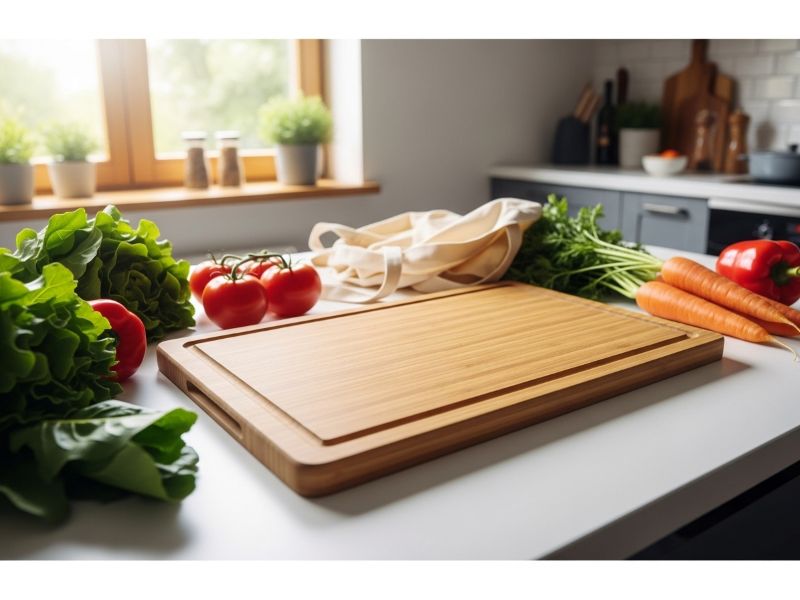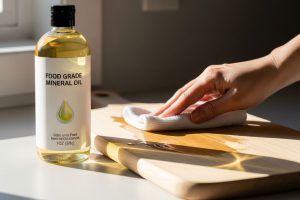
Bamboo cutting boards are popular in many households thanks to their eco-friendly appeal, lightweight feel, and clean design. But they also come with unique challenges: odors that cling after chopping garlic or fish, stains from foods like beets or turmeric, and even warping if exposed to too much moisture. Unlike plastic or glass, bamboo requires a simple but consistent routine of cleaning, sanitizing, and oiling to stay safe and durable. In this guide, you’ll learn exactly how to care for your bamboo cutting board and keep it in great shape for years.
Why Bamboo Cutting Boards Need Special Care
Bamboo is Different From Other Materials
Unlike plastic boards that are dishwasher-safe but prone to deep scratches harboring bacteria, or glass boards that stay pristine but dull your knives, caring for a bamboo cutting board requires its own unique approach.
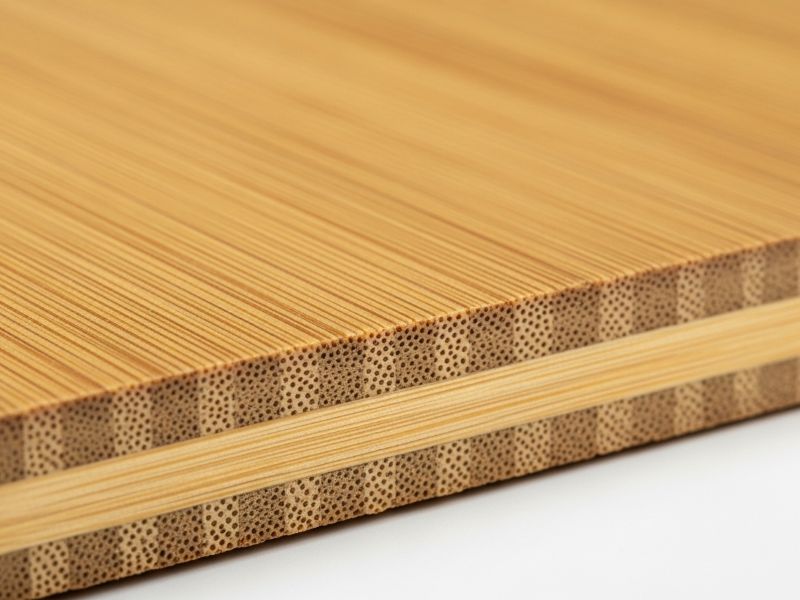
Many home cooks don’t realize that bamboo isn’t actually wood – it’s a type of grass. To make cutting boards, manufacturers compress bamboo fibers into solid panels. This process creates a surface that’s less porous than hardwoods like maple or walnut, yet still contains tiny gaps where moisture can collect and mold can develop if the board isn’t cared for properly. Knowing how to care for a bamboo cutting board begins with understanding this unique structure.
Durability, Safety, and Value
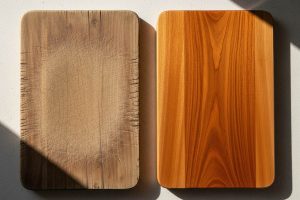
A well-maintained bamboo cutting board can last for many years, but neglect—like soaking it in water or skipping oiling—quickly leads to cracks, warping, and mold. Beyond durability, proper bamboo cutting board care also protects your health by preventing bacteria from accumulating in knife grooves or moisture-damaged areas. With consistent cleaning and oiling, a $30–60 bamboo board can serve you for nearly a decade instead of needing replacement every year or two—saving money and reducing waste.
Everyday Cleaning for Bamboo Cutting Boards
Core Principles for Daily Care
- Clean immediately: Wash the board right after use, since strong ingredients like onion or fish can leave odors if food residue sits too long.
- Avoid harsh chemicals: Strong cleaners strip away bamboo’s natural protective oils and may leave unsafe residues.
- Keep it dry: Excess moisture causes bamboo to warp, split, and even grow mold over time.
- Allow proper airflow: Store the board upright in a ventilated area so moisture doesn’t get trapped underneath.
- Never use a dishwasher: High heat, detergent, and steam break down bamboo fibers and adhesives, greatly reducing the board’s lifespan.
Step-by-Step Daily Cleaning Routine
Step 1: Rinse immediately after use
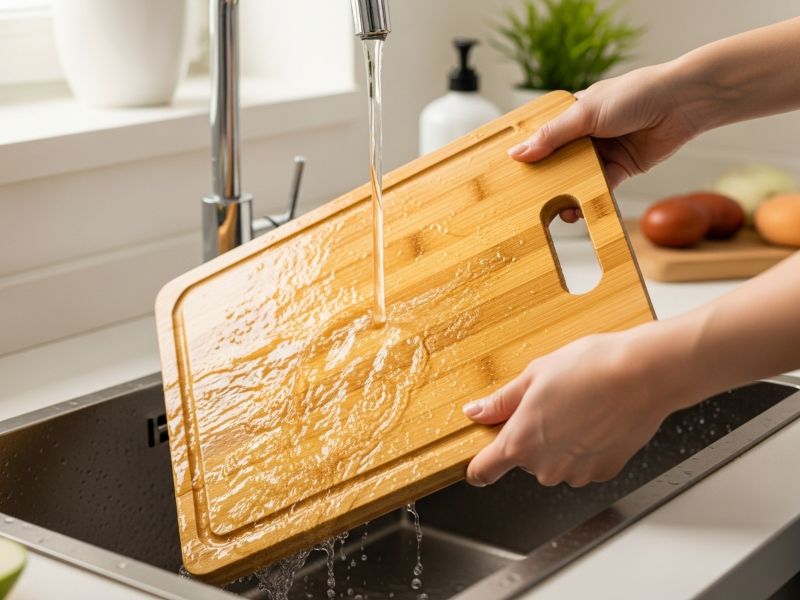
With bamboo, speed matters even more than with hardwood boards. Bamboo fibers are glued together in strips, and if food residue sits too long, it can seep into the seams. As soon as you finish cutting, rinse the board with warm water around 100 – 110°F (38-43°C). This is warm enough to lift grease and residue but gentle enough to avoid softening the adhesives that hold bamboo strips together. Quick rinsing also prevents strong odors (like garlic or fish) and pigments (like turmeric or beets) from settling into the bamboo surface.
Step 2: Use mild dish soap with care
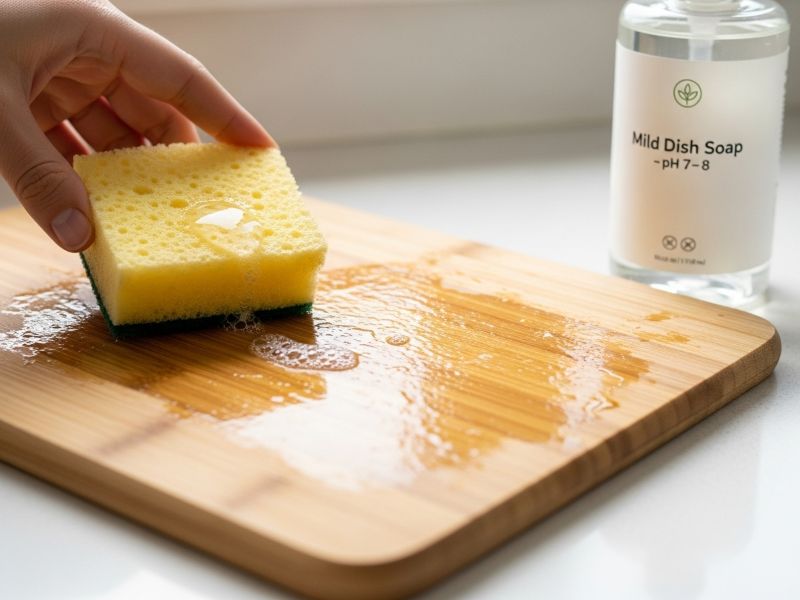
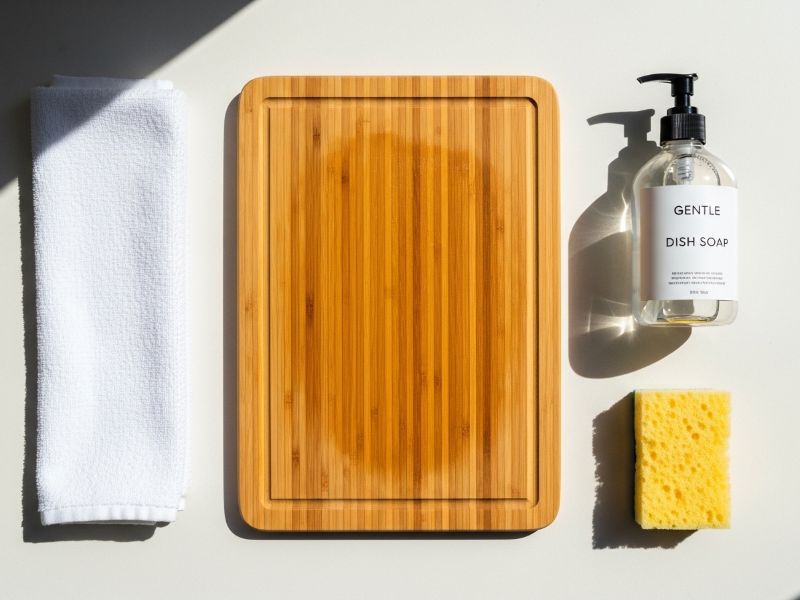
Bamboo is less porous than hardwood but more sensitive to harsh chemicals. Choose a mild, pH-neutral dish soap (around 7-8). Avoid anything bleach-based or highly alkaline – these not only strip bamboo’s natural finish but can also weaken the glue that bonds the fibers. Apply a small drop of soap to a soft sponge or microfiber cloth and wash gently. Skip ammonia-based cleaners and antibacterial soaps that can leave harmful residues.
Step 3: Scrub gently but cover all surfaces
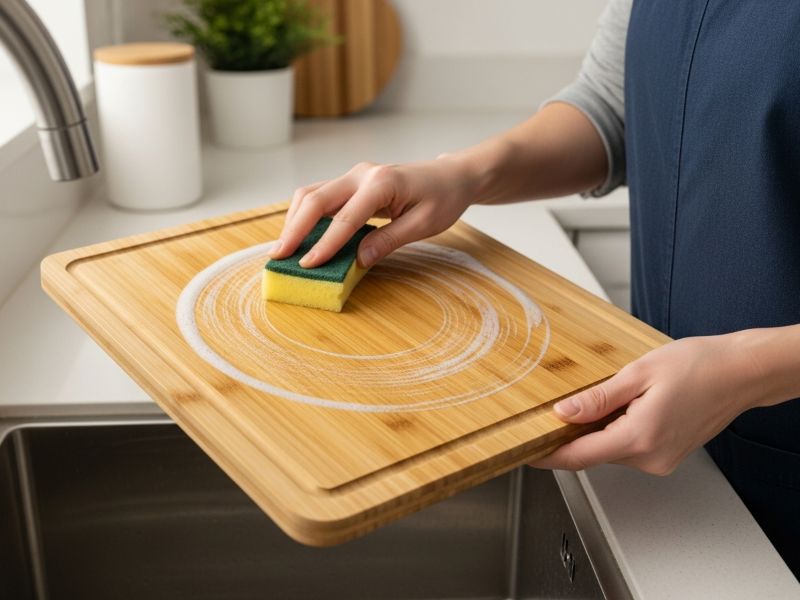
Use a non-abrasive sponge or a soft nylon brush in gentle circular motions. Pay attention to both the top and underside, since moisture and bacteria can transfer when you flip the board. Don’t forget the edges and corners, which are especially vulnerable in bamboo because they expose glued seams. If your board has a juice groove, clean it with a soft brush (an old toothbrush works well) to prevent residue buildup. Unlike end-grain wood boards, bamboo shouldn’t be scrubbed aggressively, as rough scrubbing may raise fibers or weaken glue joints.
Step 4: Dry thoroughly with the right materials
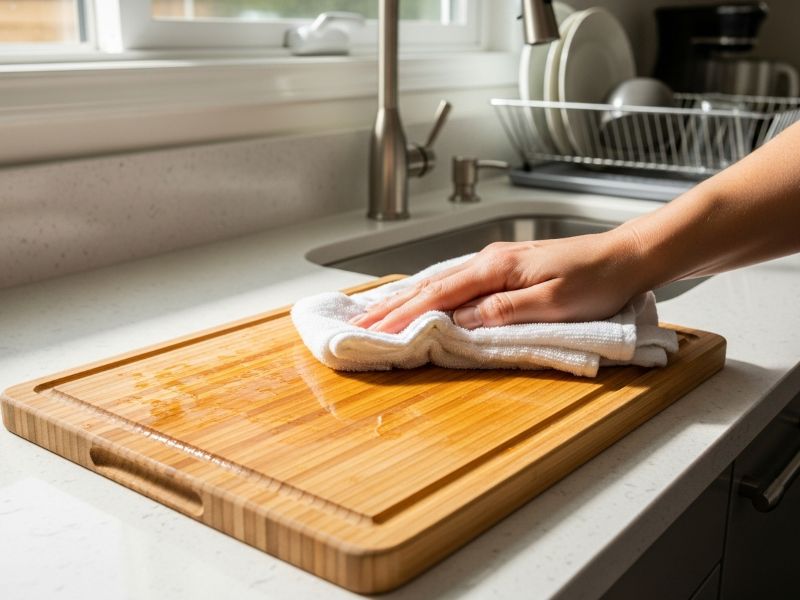
After rinsing off soap with clean warm water, immediately dry the board with an absorbent cotton or microfiber towel. For bamboo, this step is crucial: excess water can quickly cause swelling at the seams or delamination (where layers start to separate). Wipe both surfaces evenly to prevent uneven drying. Make sure to dry any grooves or small imperfections, since moisture in these areas encourages mold growth.
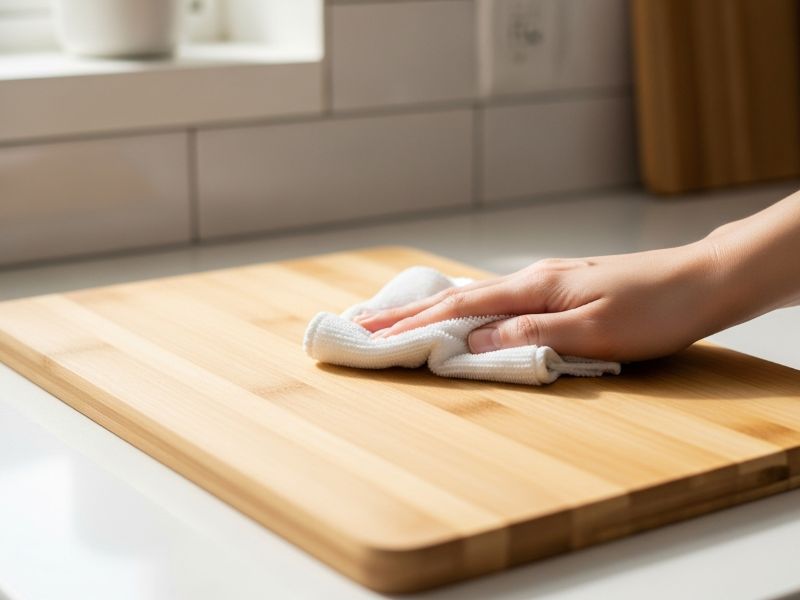
Step 5: Stand the board vertically for complete drying
Never lay a bamboo cutting board flat on the counter after washing. Trapped moisture is the fastest way to cause warping or splitting in laminated bamboo. Instead, stand the board upright in a ventilated rack or lean it at an angle against your backsplash so air circulates freely around all sides. Because bamboo dries faster than hardwood but is more vulnerable at its glued joints, full air-drying is essential before storage. For frequent cooks, consider keeping two bamboo boards in rotation so each has time to dry completely.
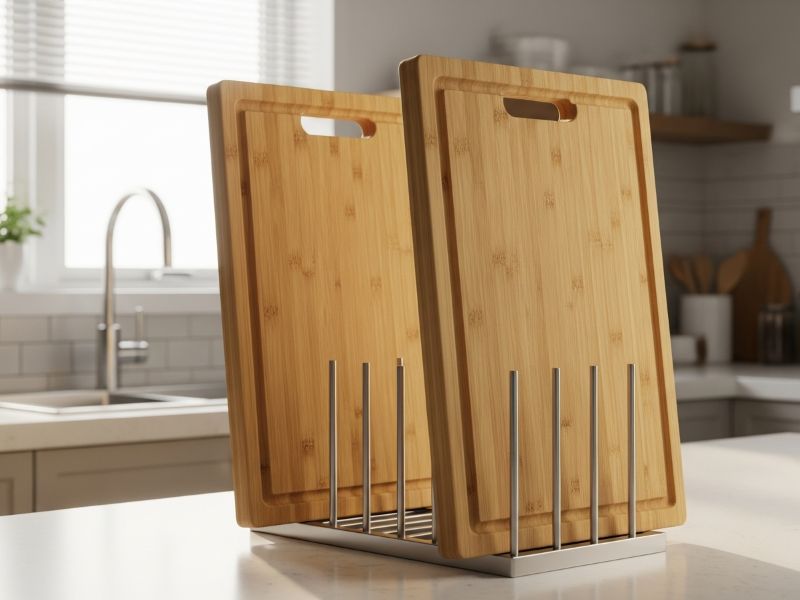
Pro Tip: Unlike hardwood boards, bamboo doesn’t “heal” from deep knife cuts. That means daily cleaning and drying habits are even more important for hygiene. Preventing grooves from harboring bacteria is the first line of defense in bamboo cutting board care.
How to Sanitize a Bamboo Cutting Board
Daily washing with soap and water is a must, but it doesn’t always take care of strong odors, deep stains, or the bacteria left behind by raw meat. Because bamboo is semi-porous, it can sometimes trap smells, colors, and even mold if it isn’t cleaned thoroughly. That’s why learning the right methods to keep a bamboo cutting board hygienic is just as important as the daily rinse.
Eliminating Lingering Odors from Onions, Garlic, or Fish
Method: Lemon and Coarse Salt Scrub
Sprinkle coarse salt generously across the board’s surface. Cut a lemon in half and use it as a scrubber, pressing down to release the juice while working the salt into the bamboo. The lemon’s natural acidity helps neutralize odors, while the salt’s abrasiveness lifts stains and residue. This simple routine is especially effective for maintaining your bamboo cutting board after prepping seafood or pungent ingredients like garlic and onions.

Fighting Mold or Mildew from Moisture Retention
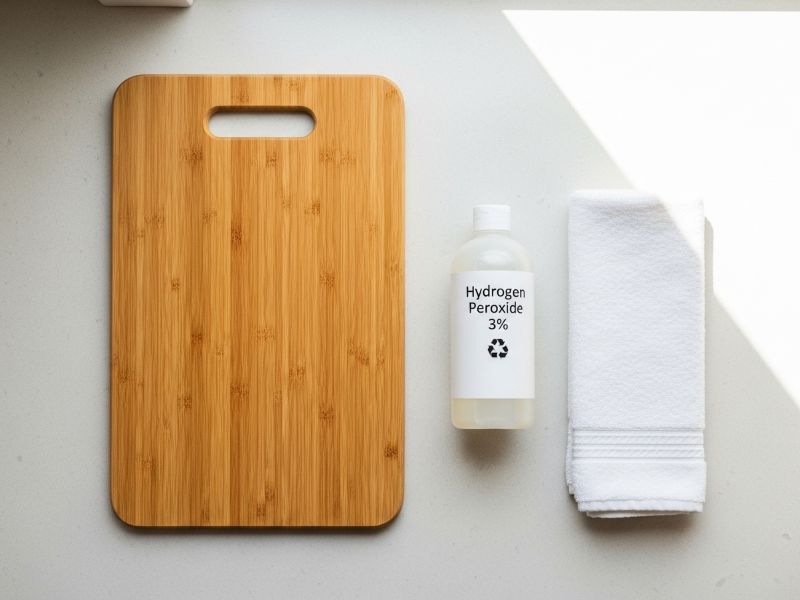
Method: Hydrogen Peroxide Treatment
Pour 3% hydrogen peroxide (available at any pharmacy) directly over the affected areas. You’ll notice it bubbling as it oxidizes organic matter. Let it sit for 3–5 minutes, then rinse thoroughly with warm water. Recognized by NSF International as a safe, effective sanitizer that leaves no toxic residue, hydrogen peroxide is an excellent choice for bamboo cutting board maintenance.
Addressing Stubborn Knife Cuts and Deep Grooves
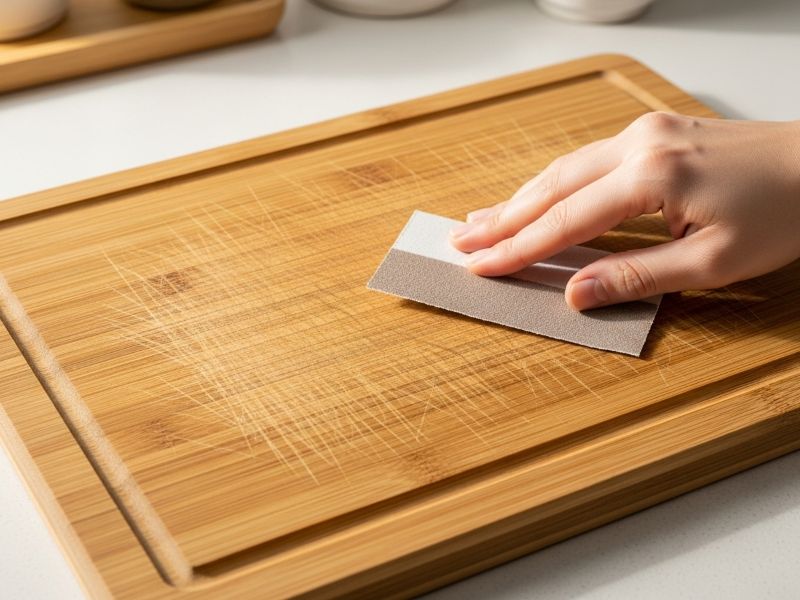
Method: Light Sanding and Re-oiling
Use 220-grit sandpaper to gently smooth out problem areas, always working with the grain. Wipe away dust with a damp cloth, let the board dry completely, and then apply food-grade mineral oil generously. This process removes bacteria-harboring grooves and restores a fresh surface – an important step in extending the longevity of your bamboo cutting board.
Removing Food Stains from Colorful Ingredients
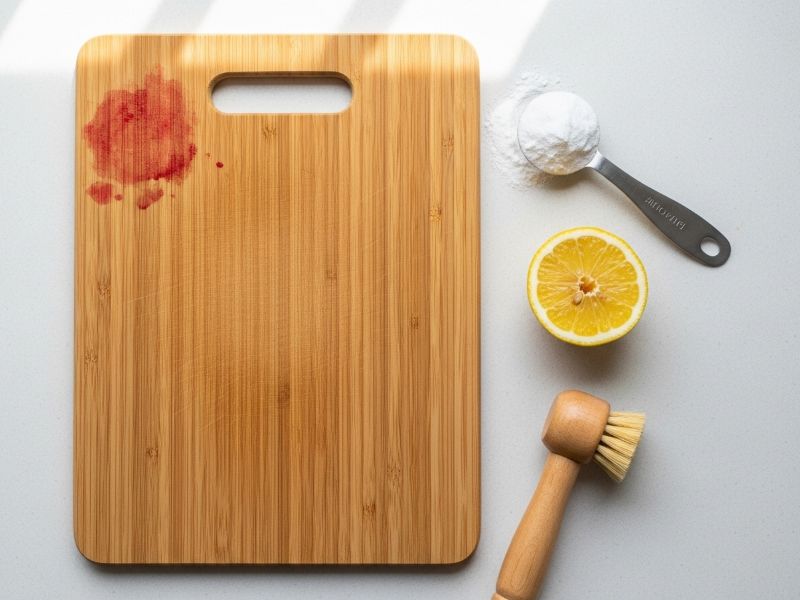
Method: Baking Soda and Lemon Paste
Mix baking soda with fresh lemon juice to create a thick paste. Apply to stained areas (common culprits include beets, turmeric, and berries), let sit for 5-10 minutes, then scrub gently with a soft brush. The combination provides a mild bleaching effect without harming the bamboo fibers – a gentle and effective way to clean the surface of a bamboo cutting board.
Eliminating Bacterial Build-up from Raw Meat
Method: Diluted Bleach Solution
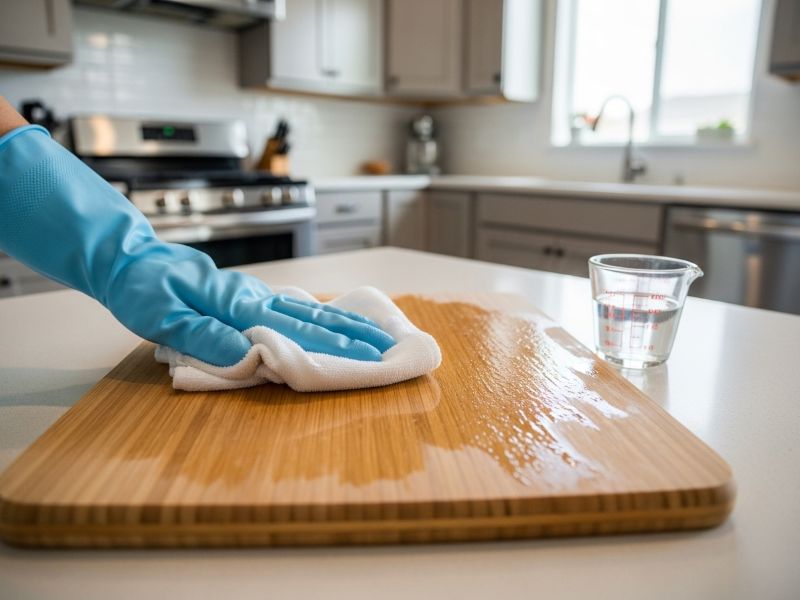
Following CDC guidelines, mix 1 tablespoon of unscented household bleach into 1 gallon of water. Soak a clean cloth in the solution and wipe the board thoroughly, then rinse several times with clean water and dry immediately. This approach is especially useful for sanitizing a bamboo cutting board after it has been used with raw meat, poultry, or seafood.
Oiling Your Bamboo Cutting Board (Seasoning the Board)
Essential Tools and Oils for Bamboo Board Care
Tools You’ll Need:
- Clean, lint-free cloths or paper towels for even oil application
- Soft brush or foam applicator for reaching edges and grooves
- Fine-grit sandpaper (optional) for smoothing rough spots before oiling
Best Oils for Bamboo Boards:
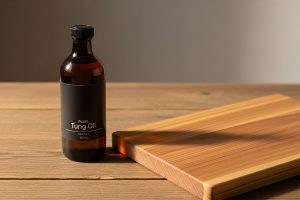
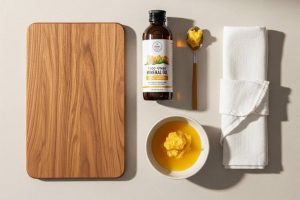
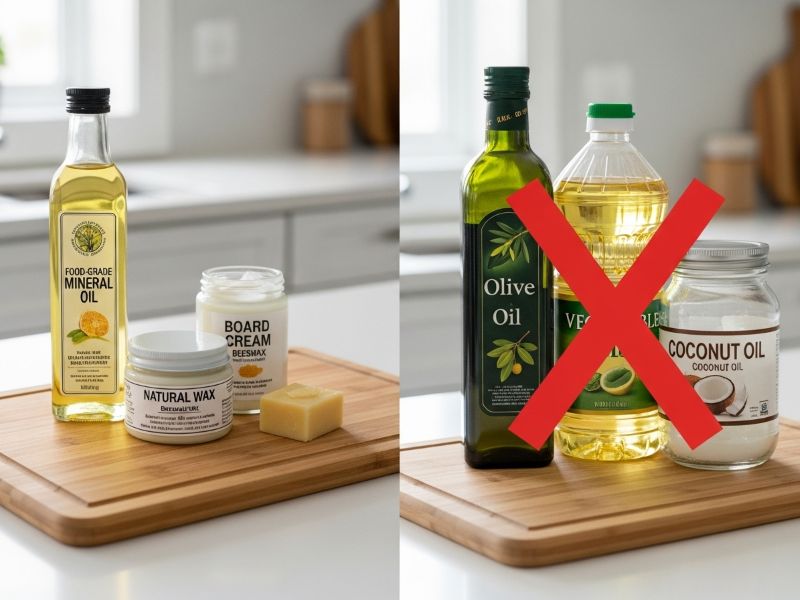
Food-grade mineral oil remains the gold standard – FDA-approved, odorless, and won’t go rancid. It’s the answer to “what oil to use on bamboo cutting boards” that professionals recommend.
Board cream (mineral oil mixed with beeswax) creates a thicker protective barrier, offering enhanced moisture resistance. This is the best oil for bamboo cutting board maintenance when you want extra protection.
Natural waxes like beeswax or carnauba can be melted and mixed with mineral oil for a custom blend that adds shine and water resistance. In addition to mineral oil, many home cooks also use food-safe options like walnut oil, coconut oil, or other plant-based oils to condition and protect their bamboo cutting boards.
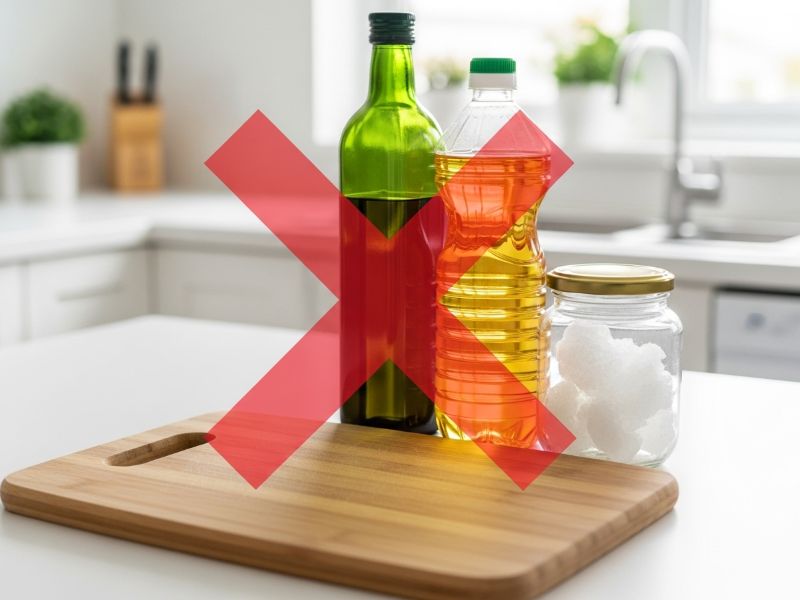
Note: Never use cooking oils (olive, vegetable, coconut) for oil bamboo cutting board maintenance. They oxidize and turn rancid, leaving sticky residue and unpleasant odors.
Step-by-Step Guide to Oiling and Conditioning
Step 1: Clean and Dry Thoroughly
Wash with warm water and mild soap, then dry completely. Any leftover moisture will block the oil from soaking in properly, so make sure the board is fully dry before you begin.
Step 2: Apply Oil Generously
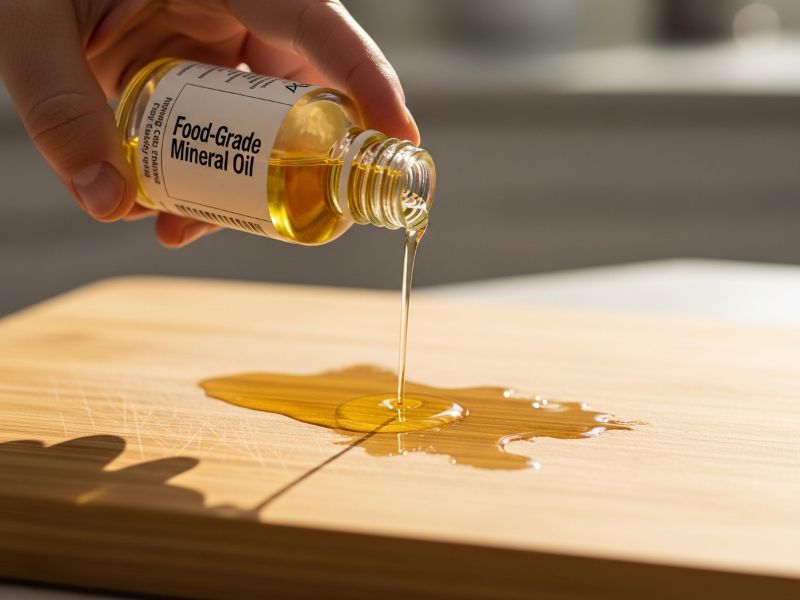
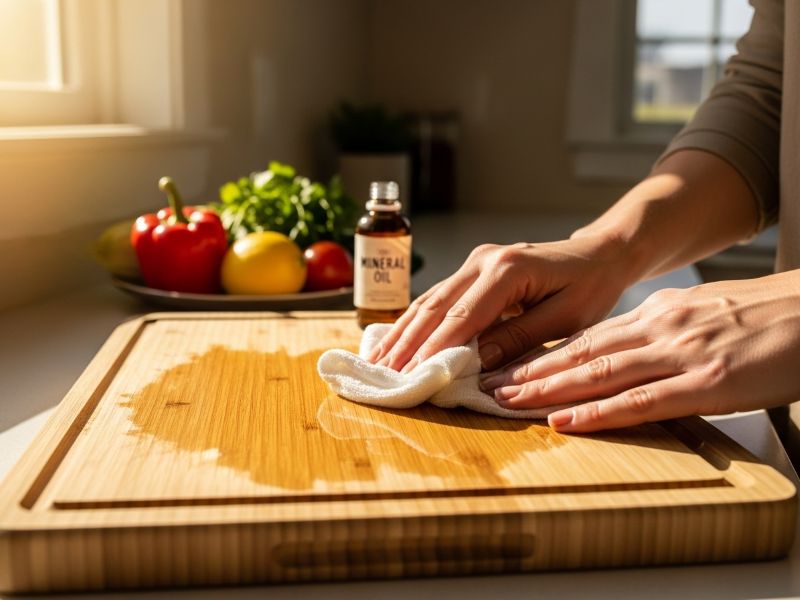
Pour mineral oil directly onto the surface. Use a cloth to spread it evenly across both sides and along the edges. Don’t forget the juice grooves if your board has them – every part should be covered.
Step 3: Let the Oil Soak
Place the board flat in a well-ventilated area. Allow the oil to penetrate for at least 20–30 minutes, or leave it overnight for best results. If the surface still looks dry, apply another coat, since bamboo boards vary in how much oil they absorb.
Step 4: Remove Excess Oil
Wipe away any unabsorbed oil with a clean, dry cloth. The surface should feel smooth and lightly polished, not greasy or sticky.
Step 5: Maintain a Regular Schedule
Plan to re-oil your bamboo cutting board every 3-4 weeks with normal use, or more often if the surface looks dry, pale, or rough. Boards used daily may need more frequent conditioning.
Important Notes: Oiling Bamboo vs. Wood Cutting Boards
Less Porous Than Hardwood
Bamboo’s compressed fiber structure absorbs oil more slowly than most hardwoods. This means bamboo cutting boards don’t usually need oiling as frequently as traditional wooden boards and can go a bit longer between treatments.
Avoid Over-Saturation
Unlike end-grain wood boards that take in a lot of oil, bamboo has its limits. Adding too much at once won’t speed up conditioning – it will only leave the surface greasy. Bamboo boards still need regular oiling, but a light, balanced approach works best.
What to Avoid When Cleaning and Oiling Bamboo Cutting Boards
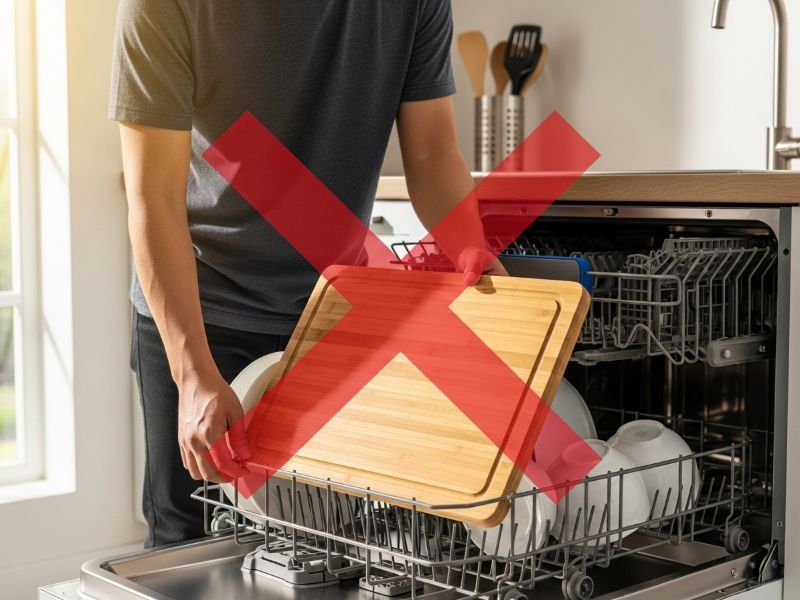
Never Put Bamboo Boards in the Dishwasher
The combination of high heat, harsh detergents, and prolonged moisture exposure breaks down the adhesives binding bamboo fibers, causing irreversible warping and splitting. Even boards claiming to be “dishwasher-safe” will deteriorate faster with machine washing.
Read more: Are Bamboo Cutting Boards Dishwasher Safe? Risks, Care, and New Innovations
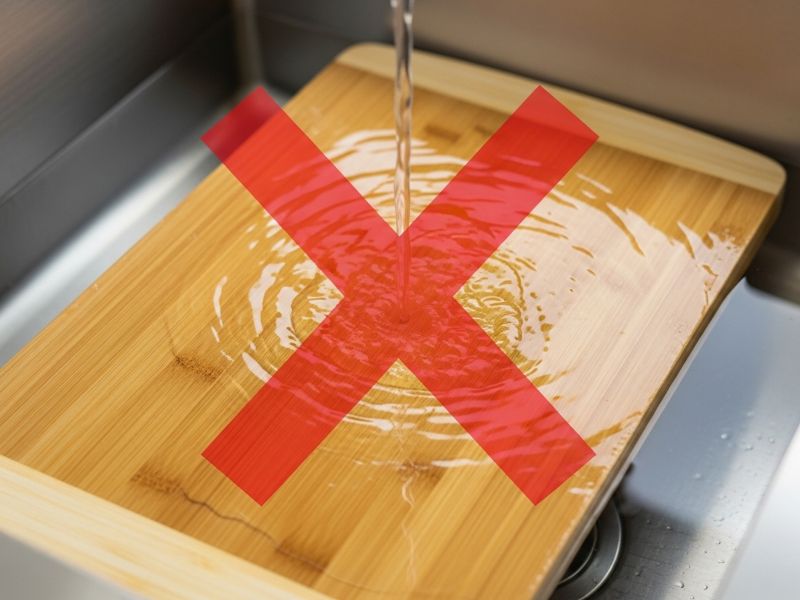
Don’t Soak in Water
Leaving your board submerged – even for just 30 minutes – allows water to penetrate deep into the fibers. This causes swelling, creates perfect conditions for mold growth, and weakens the board’s structure. Quick washing and immediate drying are essential for how to wash a bamboo cutting board properly.
Avoid Harsh Chemicals or Strong Detergents
Concentrated dish soaps, degreasers, and cleaning products with bleach alternatives can strip away bamboo’s natural protective compounds and may leave residues that contaminate food. Stick to mild, food-safe cleaners.
Skip Abrasive Scrubbers
Steel wool, scouring pads, and stiff brushes create micro-scratches where bacteria thrive. These rough tools also remove the protective oil layer you’ve worked to maintain. Soft sponges and clothes are all you need for bamboo cutting board cleaning.
Never Use Cooking Oils for Seasoning
It bears repeating: olive oil, coconut oil, and other cooking oils oxidize when exposed to air, becoming sticky and rancid. They’ll ruin your board’s surface and create food safety issues. Always choose oil for bamboo chopping boards specifically designed for board maintenance.
Don’t Over-Oil or Oil Too Frequently
More isn’t always better. Do you oil bamboo cutting boards daily? Absolutely not. Over-oiling creates a greasy surface that attracts dust and prevents proper food preparation. Seasoning bamboo cutting board monthly is typically sufficient.
MoistureBlock™ Bamboo Tech Cutting Boards – Solving Common Problems
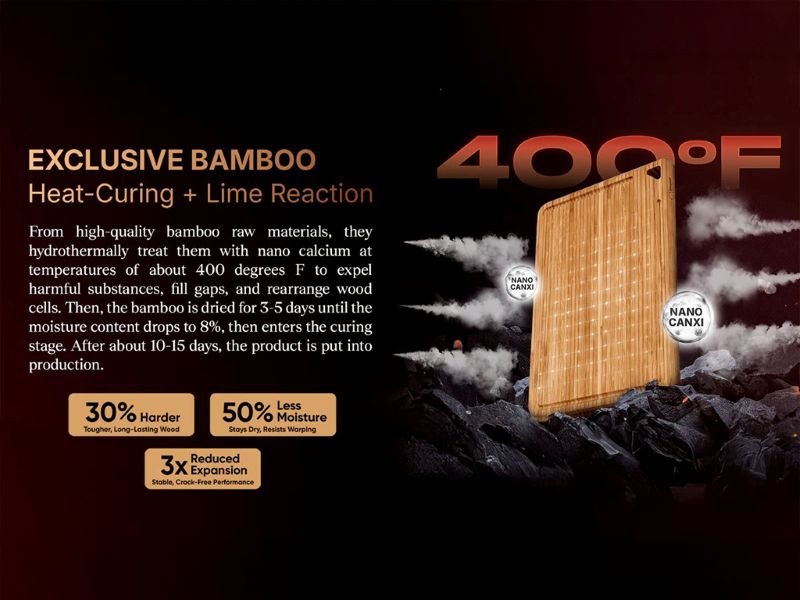
At Koppen Home Living, we’ve spent years perfecting bamboo craftsmanship in our Vietnamese workshops, combining traditional techniques with innovative technology. Our MoistureBlock™ treatment addresses the most frustrating aspects of bamboo board maintenance.
Read more: MoistureBlock Technology: How Koppen Transforms Bamboo and Wood into Premium Kitchenware
Odors and Stains
Ordinary bamboo readily absorbs smells from garlic, onion, and fish, while colorful foods like beets and turmeric leave permanent marks. MoistureBlock™ technology creates a barrier that prevents deep absorption, making odors and stains rinse away easily with simple washing.
Moisture Damage Prevention
Conventional bamboo cutting boards are prone to water damage, often leading to swelling, warping, or even mildew. Our MoistureBlock™ boards take in up to 50% less water than untreated bamboo, helping them stay stable even with frequent washing. Thanks to this technology, they don’t need seasoning as often, since the treatment extends the time between maintenance.
Enhanced Knife Groove Resistance
Daily chopping creates grooves where bacteria multiply. By reinforcing bamboo fibers at the structural level, MoistureBlock™ technology makes our boards 30% stronger than standard bamboo, resisting knife damage and maintaining a smoother, more hygienic surface longer.
Simplified Maintenance Routine
While standard bamboo requires frequent lemon scrubs, vinegar treatments, and careful oiling schedules, MoistureBlock™ boards need minimal special care. The technology prevents most issues before they start, giving busy home cooks more time for what matters – creating delicious meals.
Revolutionary Dishwasher Compatibility
Here’s what sets us apart: our 3-layer MoistureBlock™ boards are engineered to withstand dishwasher cycles. While we still recommend hand washing for maximum longevity, these boards won’t warp or crack from occasional machine washing – unprecedented convenience for bamboo cutting boards.

Read more: 5 Best Dishwasher Safe Cutting Boards in 2025
When to Replace a Bamboo Cutting Board
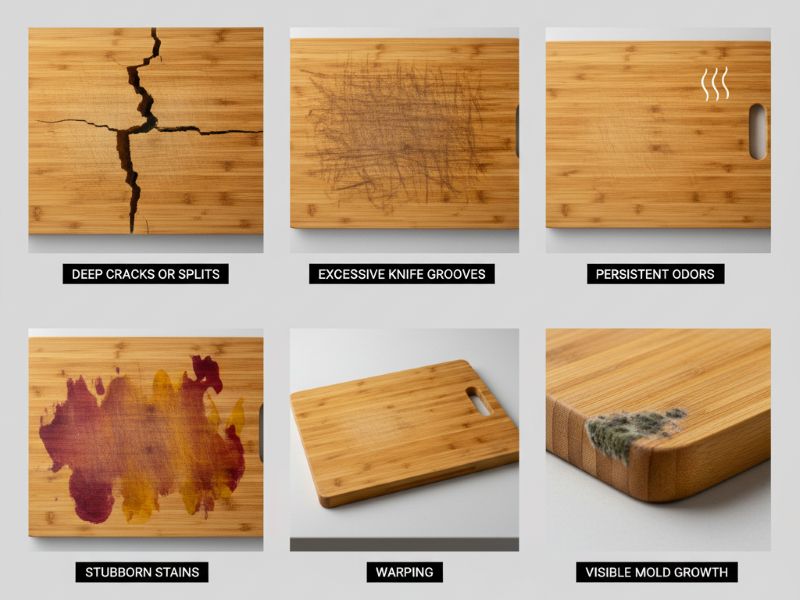
Even with the best bamboo cutting board care habits, no board lasts forever. Watch for these signs that it’s time to replace yours:
Deep Cracks or Splits
Large fissures create highways for moisture and bacteria to penetrate deep into the board, making it impossible to sanitize properly. Once structural integrity is compromised, it’s time for a new board.
Excessive Knife Grooves
When your board’s surface resembles a topographical map with deep valleys everywhere, food particles get trapped beyond the reach of cleaning. If sanding doesn’t restore a reasonably smooth surface, replacement is necessary.
Persistent Odors
Strong smells that survive multiple sanitizing attempts indicate bacteria or mold have penetrated too deeply. If your board permanently smells like last month’s fish dinner, it’s no longer food-safe.
Stubborn Stains
While some discoloration is normal, dark stains that won’t lift with treatment may indicate deep contamination or deterioration of the bamboo itself.
Warping or Uneven Surface
A board that rocks on the counter or has developed a permanent bend creates dangerous cutting conditions. Stability is non-negotiable for kitchen safety.
Visible Mold Growth
Any sign of mold—black spots, fuzzy patches, or musty smell—means immediate disposal. Mold roots penetrate deeply into bamboo, making complete removal impossible.
Frequently Asked Questions
Q: Do I need to oil a bamboo cutting board if it looks fine?
A: Yes. Regular oiling prevents small cracks from turning into splits. It’s like moisturizing skin – prevention works better than repair.
Q: Is it safe to cut raw meat on bamboo?
A: Bamboo has some natural antimicrobial qualities, but the USDA advises using separate boards for raw proteins and ready-to-eat foods.
Q: Can I use olive or coconut oil to condition my board?
A: No. Cooking oils can spoil and create rancid odors. Always choose food-grade mineral oil or a board conditioner.
Q: Do bamboo boards warp less than wood?
A: Usually yes, since bamboo’s structure is more stable. Still, all natural boards need proper care in very dry or humid climates.
Q: Are bamboo boards hard on knives?
A: Slightly – bamboo is harder than maple, so knives dull a bit faster. But it’s still far gentler than glass or ceramic.
Conclusion: Keep Your Bamboo Cutting Board at Its Best
Proper bamboo cutting board care combines daily habits with periodic deep maintenance to create a safe, beautiful, and long-lasting kitchen tool. Simple routines like immediate cleaning, monthly oiling, and occasional sanitizing can extend your board’s life from a few years to a decade or more. The key is consistency – treating your bamboo board as the valuable kitchen investment it is.
Yet even with diligent care, traditional bamboo boards have inherent limitations. They require constant attention to prevent warping, resist stains, and stay hygienic. That’s why at Koppen Home Living, we developed MoistureBlock™ Bamboo Tech Cutting Boards. By addressing bamboo’s natural vulnerabilities at the molecular level, we’ve created boards that maintain their beauty and functionality with minimal effort.
Whether you’re maintaining a classic bamboo board or upgrading to our MoistureBlock™ technology, remember that bamboo cutting board care is about more than preservation – it’s about creating a safer, more sustainable kitchen for your family’s daily cooking adventures.