Choosing the right cutting board isn’t just about style — it directly affects your knife’s sharpness, food safety, and the board’s overall lifespan. The big question many home cooks face is simple: should you choose bamboo or wood?
Both are among the most popular materials for cutting boards, but here’s the catch: bamboo isn’t actually wood. This distinction, along with differences in durability, hygiene, and maintenance, fuels the ongoing debate — and it’s exactly what we’ll help you settle in this guide.
Quick Answer: Which Is Better?
There isn’t a single “best” cutting board – bamboo and wood each come with unique advantages and trade-offs. The key is not about picking the superior material, but about finding the one that truly matches your cooking habits and lifestyle.
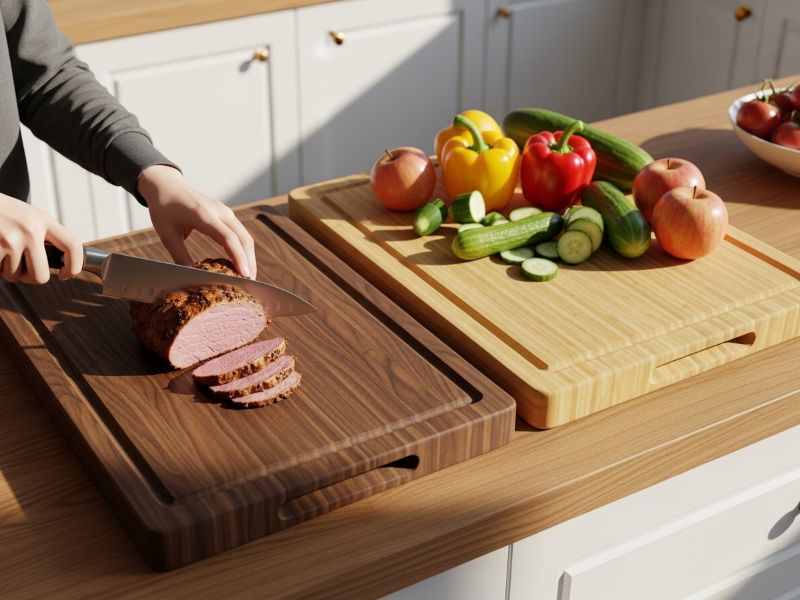
Wood boards are known for their durability, knife protection, and timeless craftsmanship, while bamboo boards stand out for being lightweight, eco-friendly, and affordable. With today’s innovations, advanced bamboo options even offer enhanced durability and dishwasher-safe convenience, giving cooks more flexibility than ever.
Material Basics: Understanding the Fundamental Differences
What Is Bamboo?
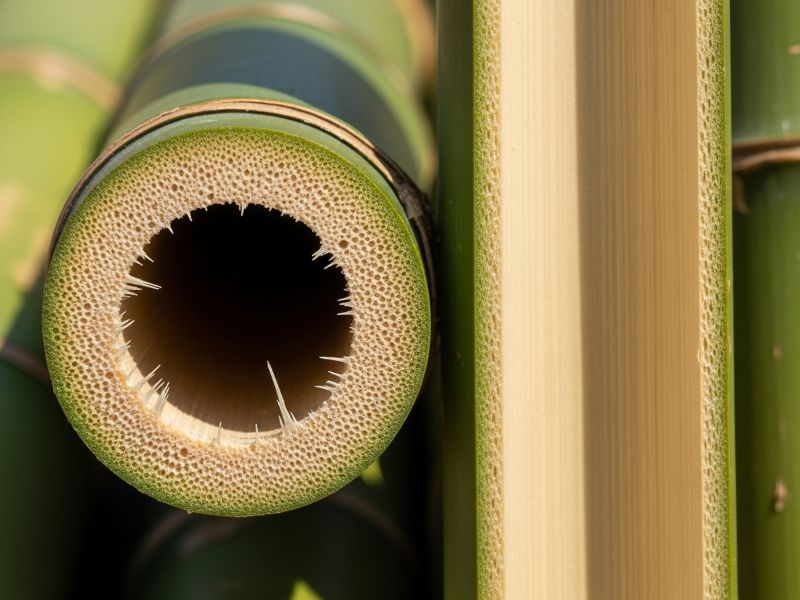
Bamboo isn’t actually wood – it’s a fast-growing giant grass, cultivated mainly in China and Southeast Asia, where forests of bamboo thrive naturally. Unlike hardwood trees that take decades to mature, bamboo can be harvested in just 3-5 years, regenerating without replanting and requiring little to no pesticides. These traits make it one of the most sustainable raw materials for kitchenware today.
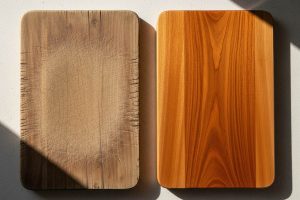
Bamboo cutting boards are made by laminating strips of bamboo together with food-safe adhesives. Thanks to its cellular structure, bamboo contains naturally occurring silica compounds that make it about 20-25% harder than red oak. The fibers run lengthwise with minimal cross-grain, creating a smooth, uniform surface that resists deep knife marks – though this same hardness can be tougher on knives compared to traditional hardwood boards.
What Is Hardwood?
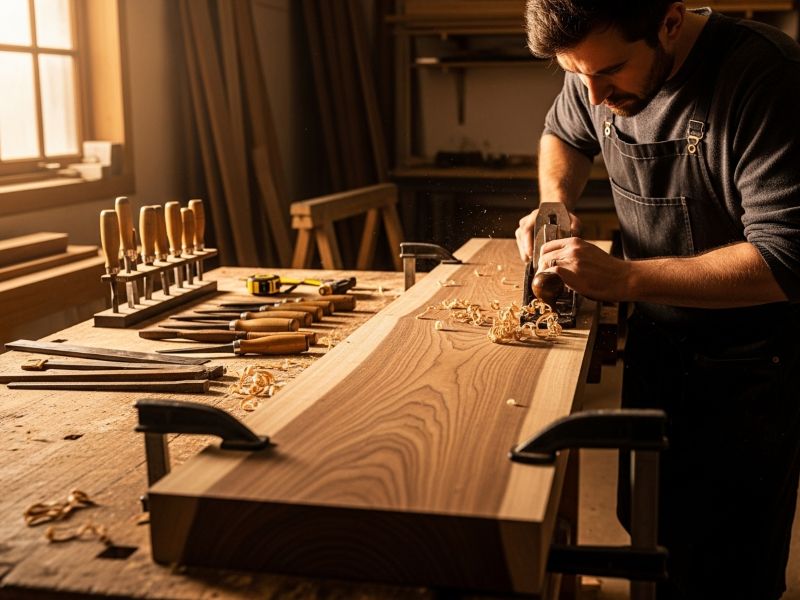
Hardwood comes from deciduous trees like maple, walnut, cherry, teak, and acacia. Unlike bamboo, these trees take much longer to mature – often 20-50 years – which gives them dense fibers and rich grain patterns. Faster-growing species such as acacia can be harvested in just 5-10 years, while premium hardwoods like walnut or teak may take decades to fully develop.
When crafted into cutting boards, hardwood delivers exceptional durability, knife-friendliness, and longevity. Its dense structure gives the surface natural “self-healing” properties, allowing shallow knife marks to close over time and helping the board maintain a smoother appearance. With proper care, a quality hardwood board can last for many years, making it a reliable choice for both everyday cooking and professional kitchens.
Read more: Acacia vs Bamboo Cutting Boards
Sanitation & Food Safety: Debunking Myths with Science
Bamboo Cutting Boards
Bamboo cutting boards are valued not only for their sustainability but also for their hygienic properties. Thanks to their dense, tightly packed fibers, bamboo surfaces are less porous than many hardwoods, making it harder for deep knife grooves to form and trap bacteria. This structure helps bamboo resist staining and reduces the risk of bacterial buildup when properly cleaned.
In addition, bamboo contains natural antimicrobial agents such as lignin and phenolic compounds, which contribute to suppressing microbial growth on the board’s surface. While bamboo does not “self-heal” like some hardwoods, regular washing with hot soapy water and prompt drying can keep the surface sanitary and safe for daily kitchen use.
For eco-conscious consumers, this combination of easy cleanability and inherent resistance to bacteria makes bamboo a practical and food-safe option in everyday cooking.
Hardwood Cutting Boards
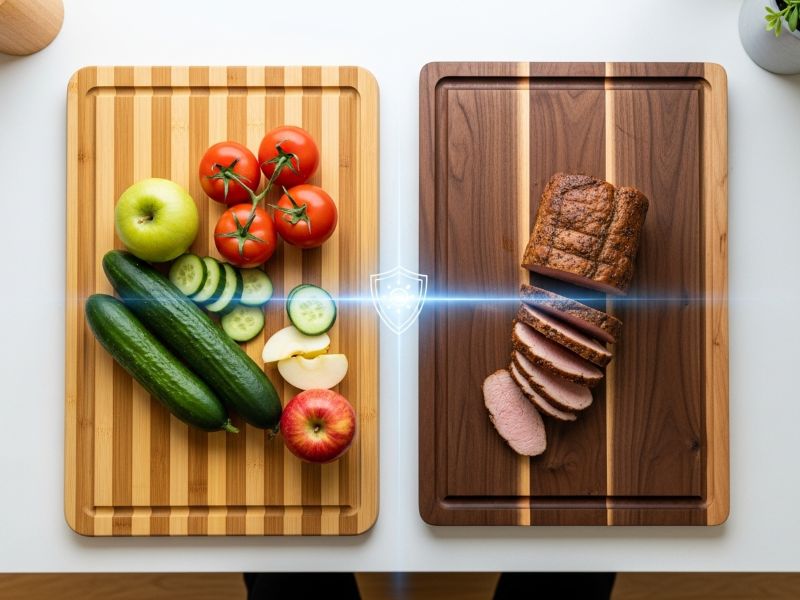
Hardwood shows remarkable natural antimicrobial properties. UC Davis microbiologist Dr. Dean Cliver’s research revealed that bacteria absorbed into wood grain tend to die off naturally within hours, while they multiply on plastic surfaces. Certain species, like maple and walnut, even contain tannic acids and compounds that actively suppress bacterial growth. Recognizing this, the FDA Food Code approves properly maintained hardwood cutting boards for commercial kitchens.
Moisture, Warping & Lifespan: Which Material Stands the Test of Time?
Bamboo Durability Challenges
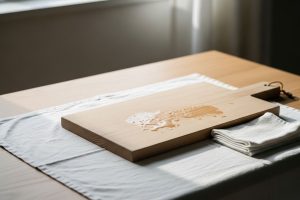
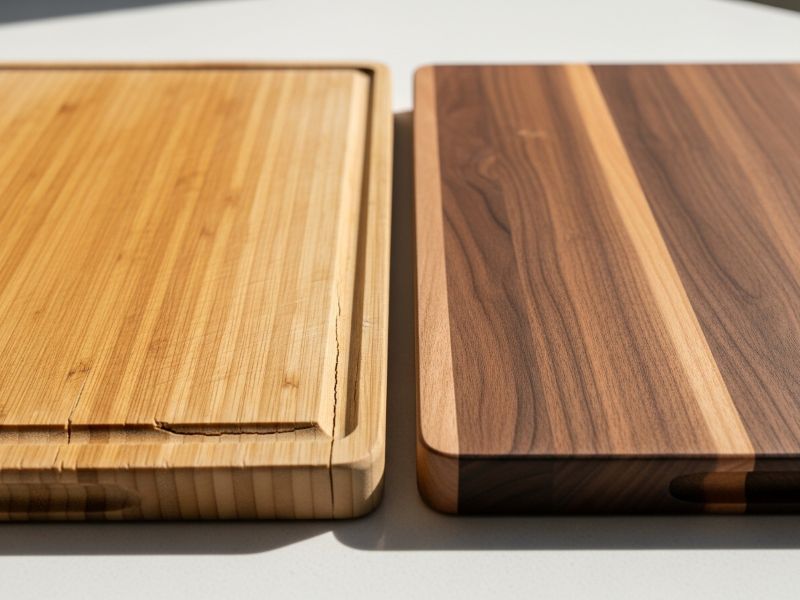
Standard bamboo boards face significant moisture-related issues. Laboratory humidity testing shows untreated bamboo absorbs 15-20% moisture content changes, leading to warping, splitting, and delamination. The adhesive layers become failure points when exposed to dishwasher cycles or prolonged soaking.
Professional kitchen experience confirms these findings – typical bamboo boards last 3-5 years with regular use before showing signs of separation or warping. Heavy restaurant use often reduces this to 1-2 years. The bamboo vs wood cutting board which will last longer questions clearly favors quality hardwood under standard conditions.
Hardwood Longevity Advantages
Quality hardwood boards are built to last when properly maintained. Koppen’s warranty data shows maple and walnut boards averaging 5-10 years of daily home use, with some customers even reporting lifespans of over 15 years when boards are regularly oiled and cared for.
The reason lies in wood’s natural cellular structure. Oils penetrate deep into the fibers, creating a barrier against moisture while keeping the board flexible. Even when knife marks appear, routine oiling helps reduce visible damage and prolongs the board’s life. For those seeking maximum longevity, premium end-grain construction further enhances durability by distributing impact forces more evenly across the surface.
Knife Performance: How Each Material Affects Your Blades
Bamboo Cutting Boards
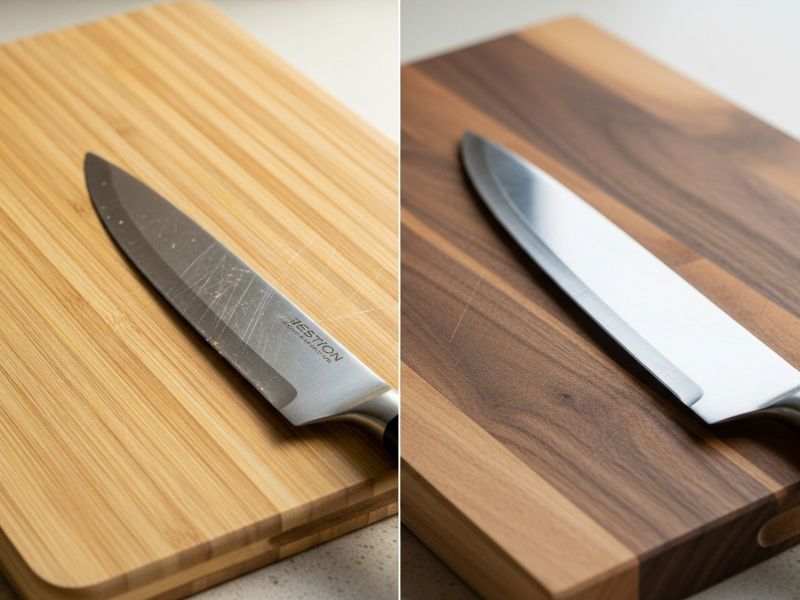
Bamboo is harder than many hardwoods and contains natural silica, which acts almost like fine sandpaper on knife edges. Tests show knives can dull 20-30% faster on bamboo than on maple or walnut.
For chefs using high-carbon Japanese knives, this means sharpening twice as often. But for home cooks with stainless steel knives, the difference is smaller – usually just an extra sharpening every few months.
Hardwood Cutting Boards
Hardwood is generally gentler on blades, especially end-grain boards where knives slip between fibers instead of cutting across them. This design preserves sharpness and reduces wear on knife edges.
Even edge-grain boards perform better than bamboo, offering a balance of durability and knife-friendliness. For most home cooks, hardwood means less frequent sharpening and longer-lasting knives.
Maintenance & Ease of Use: Real Kitchen Practicality
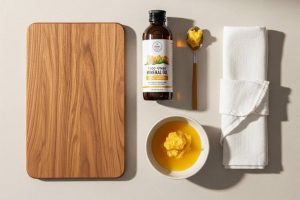
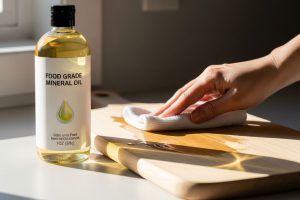
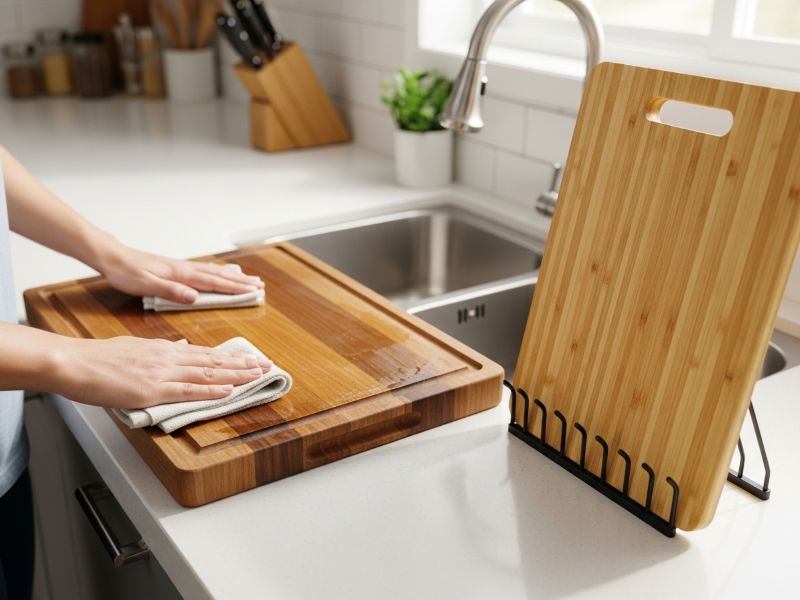
The daily care for bamboo and hardwood cutting boards differs in both effort and frequency. Bamboo boards are lighter and easier to handle, typically needing monthly oiling, immediate drying after washing, and upright storage to stay in good shape. Their compact fibers make them less demanding, so most home cooks find bamboo relatively low-maintenance.
Read more: Are Bamboo Cutting Boards Dishwasher Safe?
Hardwood boards, on the other hand, demand more attention to maintain their strength and beauty. They benefit from more frequent oiling, occasional wax treatments, and light sanding when scratches build up. While this care takes extra time, the payoff is clear: a well-maintained hardwood board can last for decades, offering both durability and knife protection that bamboo cannot match long term.
Cost of Ownership & Environmental Impact
When it comes to cost, bamboo cutting boards are the cheaper option up front. Most range from $15 to $40, but since they often need replacing every 3-5 years, the expense adds up. Over a decade, a household may spend $60 to $120 on bamboo boards.
Hardwood boards cost more initially, with edge-grain styles starting around $40 and premium end-grain boards reaching $150 or more. However, a quality hardwood board can last for decades with proper care. Even when you add the cost of oil and wax for maintenance, the 10-year ownership cost is often similar to bamboo – but with the bonus of longevity and consistent performance.
Environmental Impact
Bamboo
Bamboo is one of the most renewable resources in the world. It reaches maturity in just 3–5 years, regenerates naturally without replanting, and requires little to no pesticides. This makes bamboo a highly sustainable choice for eco-conscious consumers.
Beyond cutting boards, bamboo’s high strength-to-weight ratio allows it to be used in construction, textiles, and bio-composites. For kitchenware, these qualities translate into a material that is both eco-friendly and practical.
Hardwood
Hardwood grows more slowly, often taking 20 to 50 years to reach harvest maturity. While not as rapidly renewable as bamboo, hardwood’s longevity makes it sustainable in a different way. A single board can last for decades with proper care, reducing the need for frequent replacements.
Hardwood cutting boards also provide a blend of durability, natural beauty, and long service life. Choosing hardwood means investing in a product that balances slower growth with long-term usability.

How MoistureBlock™ Technology Revolutionizes Bamboo Performance

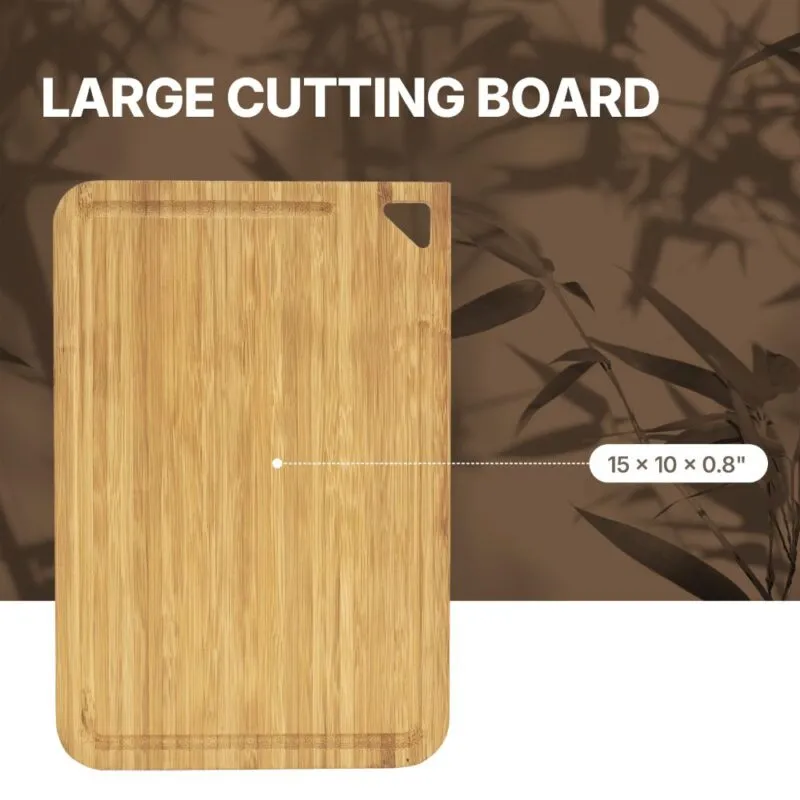

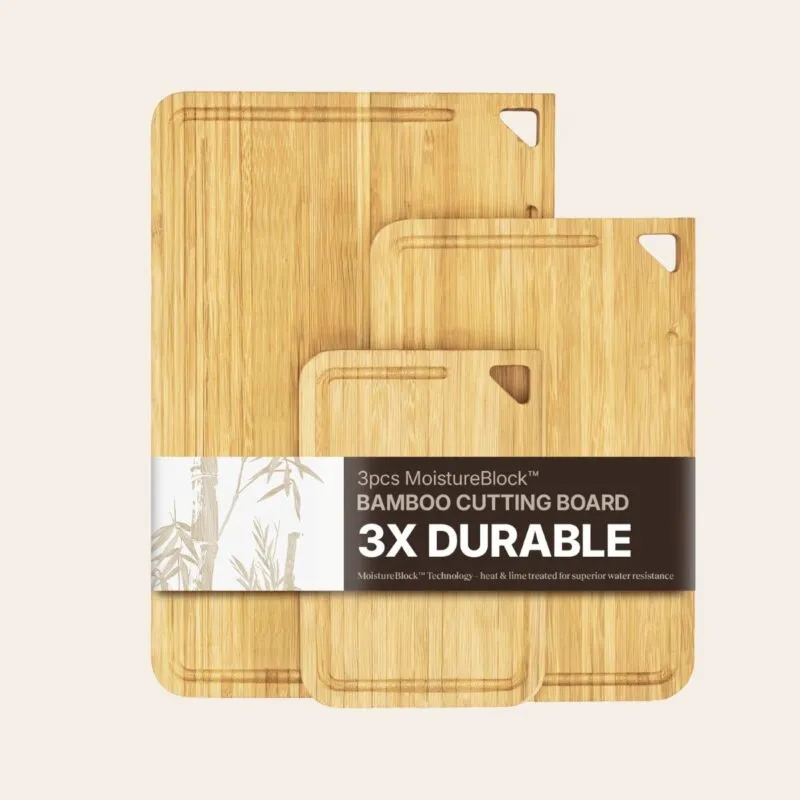
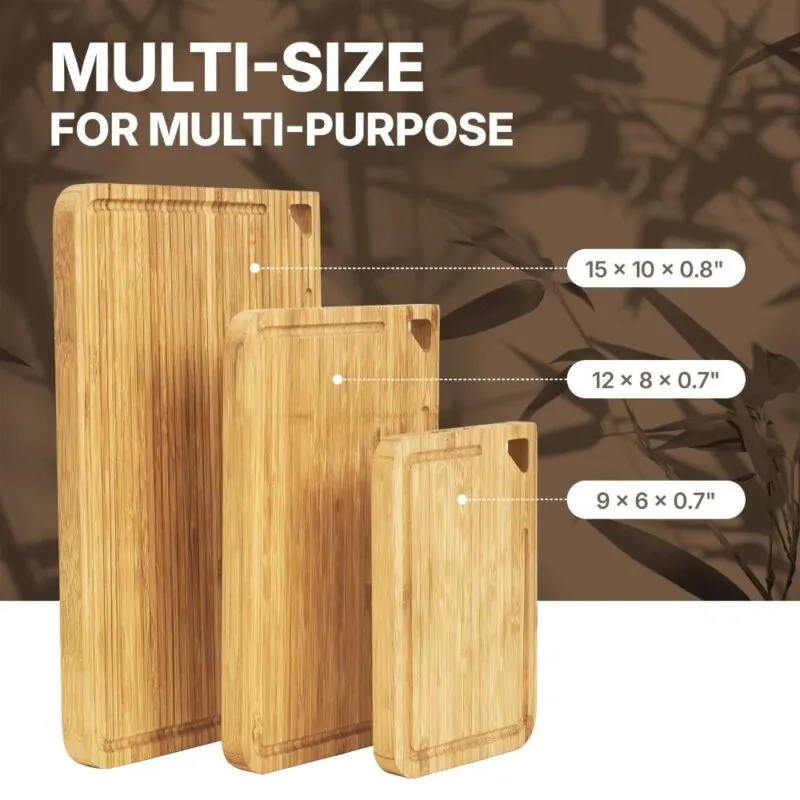
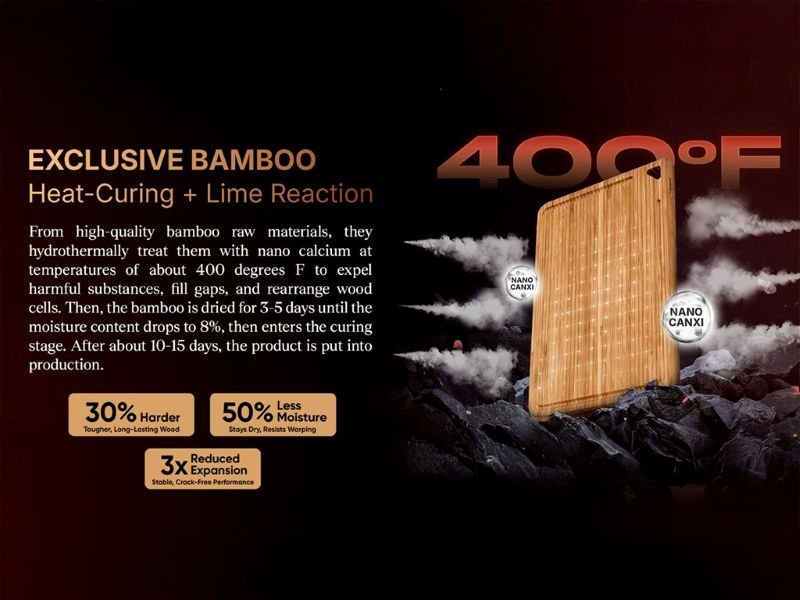
Koppen’s engineering team spent many years developing MoistureBlock™ technology to address traditional bamboo’s weaknesses while preserving its benefits. This innovation transforms bamboo versus wood cutting board comparisons by eliminating typical bamboo drawbacks.
Stronger & More Durable: Hydro-thermal treatment combined with lime-curing creates bamboo boards 3x stronger than standard versions. Internal testing shows resistance to splitting and cracking even in 90% humidity environments.
Superior Moisture Resistance: Water absorption drops below 5% compared to 15-20% for untreated bamboo. This prevents the warping, mold growth, and bacterial harboring that plague standard bamboo boards.
Extended Lifespan: MoistureBlock™ bamboo lasts 7-10 years versus 3-5 years for regular bamboo. The treatment process bonds fibers at the molecular level, preventing the delamination common in standard laminated boards.
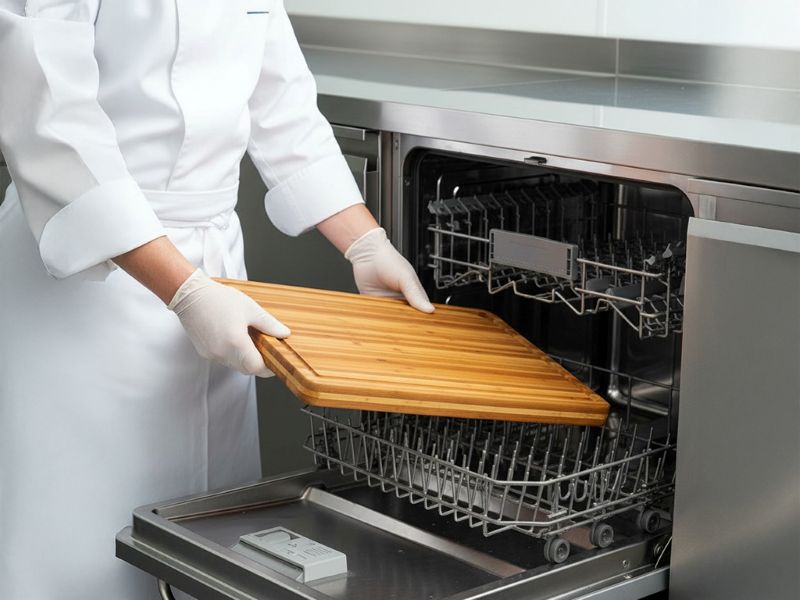
Dishwasher Safe: The unique 3-layer construction withstands repeated dishwasher cycles – solving bamboo’s biggest limitation. SGS testing confirms structural integrity through 1,000+ commercial dishwasher cycles.
Comprehensive Comparison Table
| Material | Knife Care | Durability & Lifespan | Moisture Resistance | Maintenance | Price & Eco | Best For |
|---|---|---|---|---|---|---|
| Acacia | Moderately gentle, less dulling than bamboo | 10-15 years with care | Fair, needs regular oiling | Oil every 1-2 months | $$, fairly sustainable | Daily use + serving |
| Maple | Very knife-friendly | 10-20 years | Moderate, can warp if damp | Regular oil/wax needed | $$-$$$, slower growing | Precision chopping |
| Teak | Slightly harder on knives (natural silica) | 15-20+ years | Excellent, natural oils | Minimal oiling required | $$$, limited eco sources | Humid kitchens, outdoor BBQ |
| Walnut | Very gentle, protects blades | 10-20 years | More porous, needs care | Monthly oiling | $$$, moderate eco impact | Carving & presentation |
| Bamboo | Hard surface dulls knives faster | 3-5 years | Fair, warps if wet | Oil every 2-3 weeks | $, very eco-friendly | Budget-friendly cooking |
| Koppen MoistureBlock™ Bamboo | Similar to standard bamboo | 7-10 years (2-3x longer) | <5% absorption, warp-resistant | Low-maintenance | $$, FSC-certified | Busy homes needing eco + dishwasher-safe |
Practical Use Cases: Matching Boards to Your Cooking Style
For Knife Enthusiasts & Premium Blades
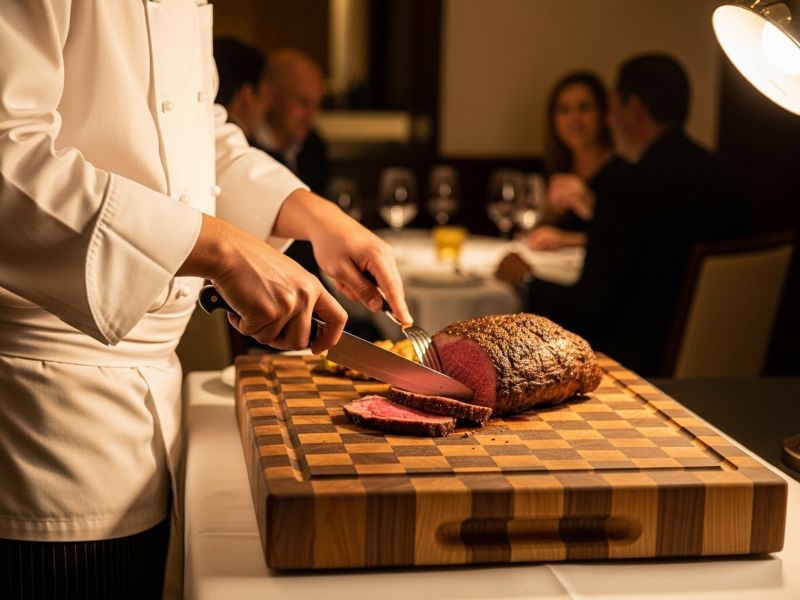
Professional chefs and serious home cooks who invest in high-quality knives should lean toward hardwood cutting boards rather than bamboo. End-grain cutting boards are especially valued because they provide superior blade protection while also offering the stability needed for precise, extended knife work.
These boards shine in demanding situations, from safeguarding delicate Japanese steel knives to handling heavy-duty prep sessions that last for hours. They also serve beautifully when used for meat carving, barbecue presentation, or even professional food photography, where both performance and appearance matter.
For Busy, Budget-Conscious Home Cooks
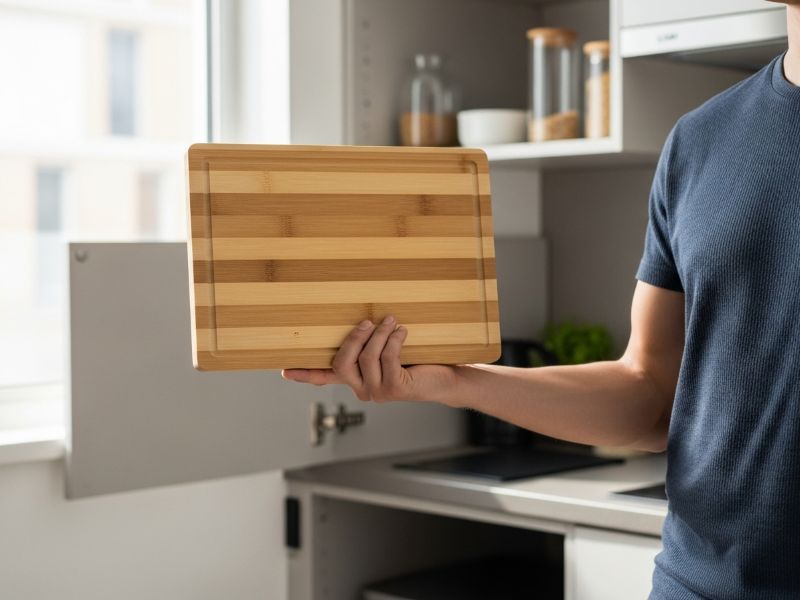
For everyday cooking tasks, standard bamboo cutting boards deliver excellent value. Their lightweight build and affordable pricing make them especially practical for smaller kitchens or apartments where storage space is limited. They work well for quick vegetable prep, slicing bread and pastries, cutting fruit, or handling light daily cooking needs without adding bulk or cost to your kitchen routine.
For Humid Kitchens or Moisture-Prone Areas
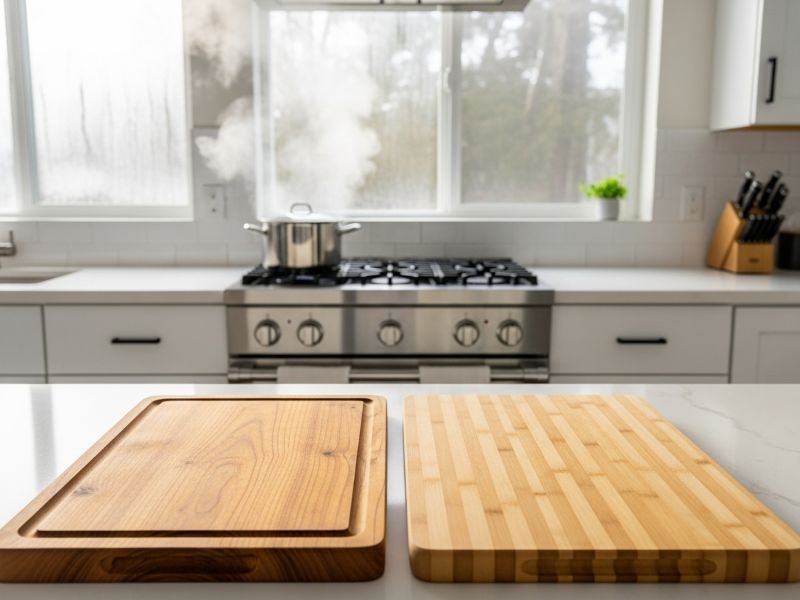
In kitchens exposed to constant humidity — such as coastal homes, basements, or spaces near steam equipment — cutting boards need extra protection against warping and mold. Teak, with its natural oils, and modern treated bamboo technologies both perform exceptionally well in these conditions. They are popular choices for settings like outdoor kitchens, poolside bars, and professional environments where moisture is a daily challenge.
For Maximum Convenience & Modern Lifestyles
For families who want dishwasher-safe convenience without sacrificing quality, advanced bamboo technologies are a practical solution. Koppen’s MoistureBlock™ boards combine eco-friendliness with everyday durability, making them especially appealing for busy households. They are well-suited to modern lifestyles – from parents juggling meal prep, to small apartments with limited sink space, or even elderly users who prefer lighter, low-maintenance kitchen tools.
FAQs: Your Cutting Board Questions Answered
Q: Bamboo vs wood cutting board – which is more durable?
Hardwood boards last 10–20+ years with care. Standard bamboo lasts 3–5 years, though treated bamboo like MoistureBlock™ can reach 7–10 years.
Q: Hardwood vs bamboo cutting board – which is better for knives?
Hardwood, especially end-grain, is gentler on blades. Bamboo’s hardness and silica make knives dull 20–30% faster.
Q: Bamboo cutting board vs wood – which is more sanitary?
Both can be sanitary with proper care. Bamboo resists scratches, while wood’s fibers kill bacteria naturally. Cleaning matters more than material.
Q: Should I use wood or bamboo for raw meat?
Both are safe if sanitized. The USDA advises using separate boards for raw meat, washed immediately with hot soapy water and sanitized.
Q: Can bamboo or wood cutting boards go in the dishwasher?
Standard boards should never go in dishwashers. Only treated boards like MoistureBlock™ are designed to handle it.
Q: Which is better for humid kitchens?
Use teak or treated bamboo. Standard bamboo and most hardwoods may warp without moisture protection.
Verdict: Finding Your Perfect Cutting Board Match
There is no single winner in the bamboo vs wood debate. The best choice depends on your cooking style and priorities.
Bamboo boards are lightweight, affordable, and sustainable — great for quick daily prep and modern kitchens. Hardwood boards offer unmatched durability, protect knives better, and can last decades with proper care.
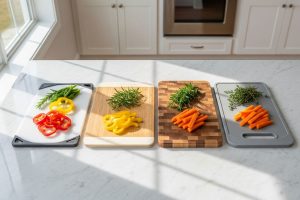
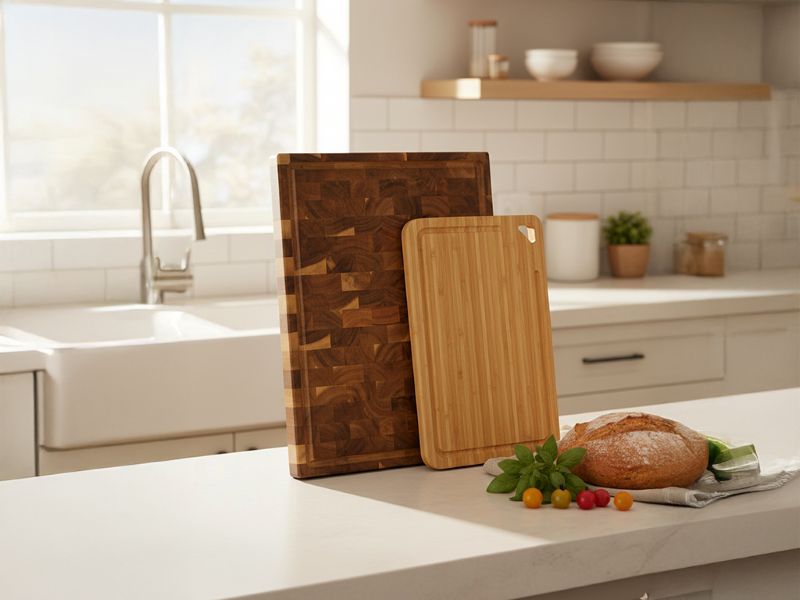
For most home cooks, the ideal setup is a mix: a bamboo board for everyday tasks and a hardwood board for heavy-duty cooking and serving. With proper maintenance, either option will serve your kitchen well for years.
Read more: Are Bamboo Cutting Boards Good?