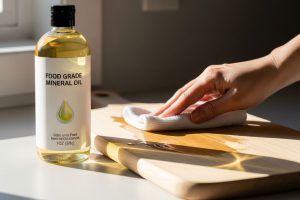
Choosing the best cutting board for meat isn’t just about convenience — it affects your family’s health, kitchen efficiency, and even sustainability. In 2025, with options ranging from antibacterial synthetics to eco-friendly hardwoods, the challenge is knowing which boards truly deliver. This guide highlights the best cutting boards for raw and cooked meat, based on real testing of safety, durability, and usability — plus answers to common questions like whether one board can handle both. Whether you want budget-friendly reliability or premium craftsmanship, we’ll help you choose with confidence.
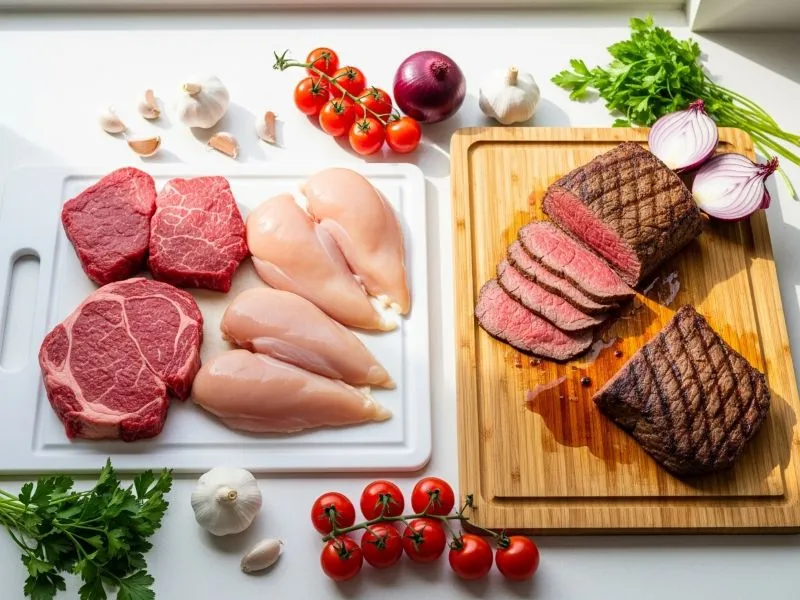
1. Best Cutting Board for Raw Meat
Raw meat boards must prioritize food safety with non-porous surfaces, easy sanitization, and juice control. Our top picks focus on hygiene and durability, balancing professional-grade needs with practical options for everyday home cooking.
1.1. OXO Good Grips Carving & Cutting Board
The OXO Good Grips Carving & Cutting Board represents practical design focused on raw meat handling. This polypropylene board features a deep juice groove that effectively contains meat drippings, preventing spills that could contaminate countertops or other surfaces.
The board’s non-slip feet provide stability during carving, while the tapered design creates a pour spout for easy disposal of collected juices. At 17.5 x 11.5 inches, it offers ample workspace for whole chickens or large roasts without overwhelming smaller kitchens.
Key Features:
- Material: Food-grade polypropylene plastic
- Dimensions: 21.1″ x 14.5″ x 0.7”
- Deep perimeter juice groove with pour spout
- Non-slip feet for stability
- Dishwasher safe (top rack recommended)
- Knife-friendly surface that resists deep scoring
Strengths: The generous juice groove handles even large roasts effectively, while the pour spout eliminates messy cleanup. The plastic surface sanitizes completely in the dishwasher, and the non-slip design stays secure during aggressive carving motions.
Limitations: The plastic surface shows knife marks over time, though these don’t affect functionality. Some users find the tapered edge less stable for precise work.
Best For: Home cooks who regularly prepare whole poultry or large roasts and prioritize easy cleanup over aesthetics.

1.2. Joseph Joseph Index Plastic Cutting Board Set
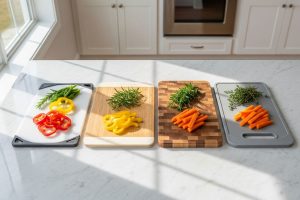
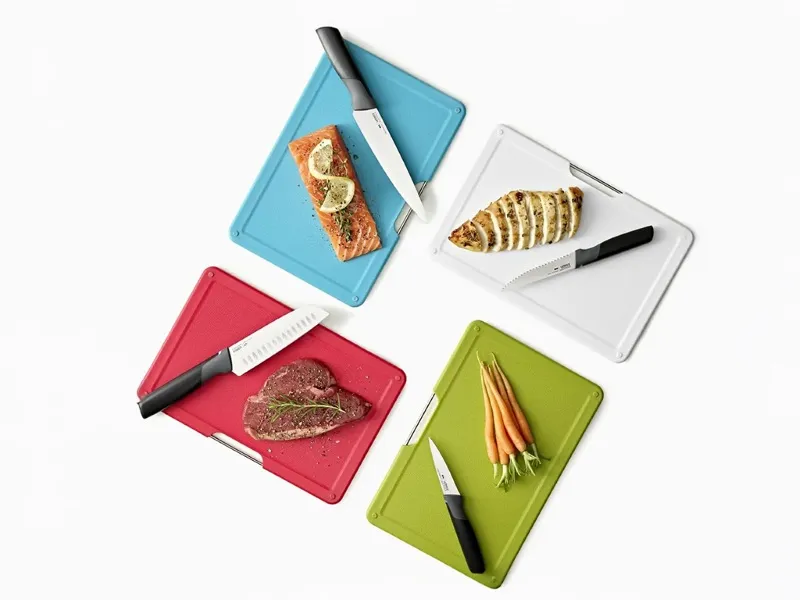
The Joseph Joseph Index system revolutionizes kitchen organization with its color-coded approach to preventing cross-contamination. This four-board set includes dedicated boards for raw meat, cooked meat, vegetables, and fish, each clearly marked with icons and distinct colors.
Each board in the set features a textured cutting surface that improves knife control while remaining gentle on blade edges. The boards nest compactly in the included stand, saving counter space while keeping each board easily accessible during meal preparation.
Key Features:
- Set of 4 boards with color-coded system (red for raw meat)
- Material: BPA-free polypropylene
- Textured cutting surface for improved grip
- Dishwasher safe construction
- Space-saving storage stand included
- Non-slip feet on each board
Strengths: The color-coding system eliminates guesswork about which board to use, making it ideal for households with multiple cooks. The compact storage keeps counters organized, and the textured surface provides excellent knife control.
Limitations: Individual boards are smaller than single large boards, which may limit workspace for large cuts of meat. The plastic material requires replacement more frequently than hardwood alternatives.
Best For: Families with strict food safety protocols or kitchens with limited storage space who want an organized, systematic approach to meal preparation.
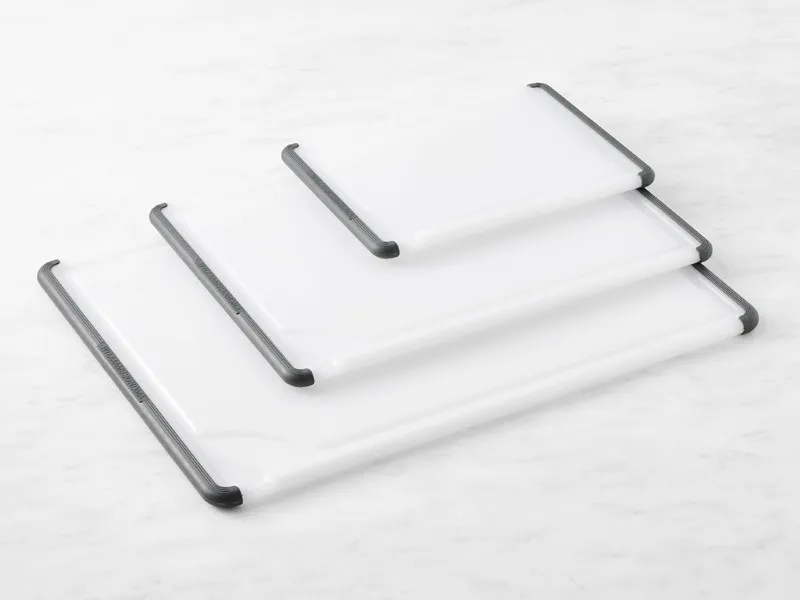
1.3. Williams Sonoma Antibacterial Synthetic Cutting & Carving Board
Williams Sonoma’s antibacterial cutting board incorporates built-in antimicrobial protection directly into the polypropylene material. This technology provides an additional layer of safety beyond standard cleaning practices, making it particularly valuable for households that frequently handle raw meat.
The board’s dual-sided design offers versatility, with one side featuring a deep juice groove for carving and the other providing a flat surface for general cutting tasks. The knife-friendly surface resists the deep grooves that can harbor bacteria in lesser materials.
Key Features:
- Material: Durable polypropylene with integrated antibacterial protection
- Dual-sided design (grooved and flat surfaces)
- Deep perimeter juice groove on one side
- Dishwasher safe for complete sanitization
- Reinforced construction resists warping
Strengths: The built-in antibacterial protection provides continuous germ resistance, while the dual-sided design maximizes versatility. The larger size options accommodate substantial cuts of meat, and the material withstands years of regular dishwasher cycles.
Limitations: Premium pricing reflects the antibacterial technology. The larger sizes require significant storage space and may overwhelm smaller kitchens.
Best For: Households that prepare raw meat regularly and want maximum hygiene protection, particularly those with family members who have compromised immune systems.
2. Best Cutting Board for Cooked Meat
Cooked meat preparation allows for different material choices since the bacterial risks associated with raw meat are eliminated. This opens possibilities for natural materials like wood, which offer superior knife preservation and aesthetic appeal. However, the choice depends on your cooking style, maintenance preferences, and budget considerations.
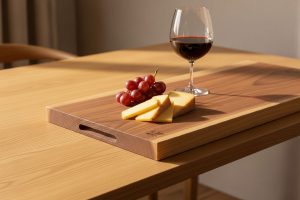
The boards in this category prioritize knife preservation, visual appeal, and long-term durability over maximum sanitization ease. These selections work best for carving roasts, slicing steaks, or presenting charcuterie, where the cutting board often doubles as a serving piece.
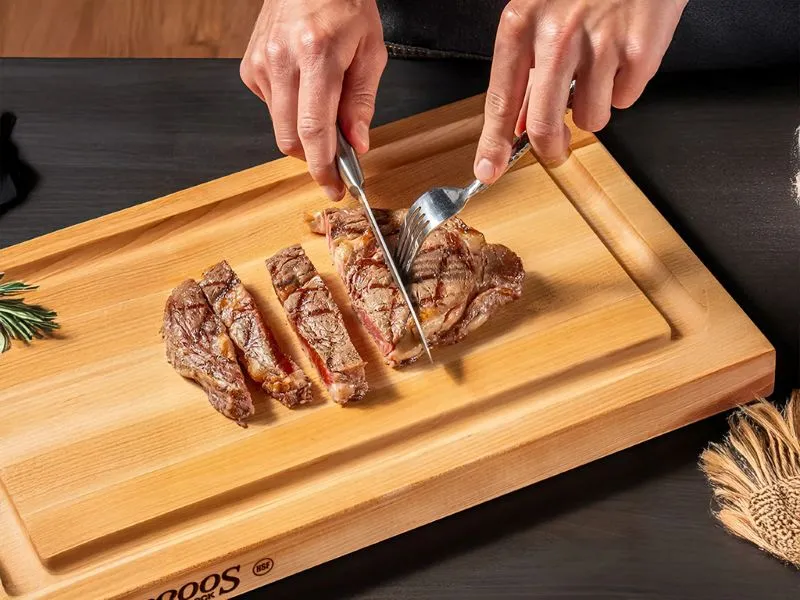
2.1. Cherry Cutting Boards 1-1/2″ Thick (R-Board Series)
John Boos cherry cutting boards represent professional-grade craftsmanship in home kitchen format. The 1.5-inch thickness provides exceptional stability and durability, while the tight-grain cherry wood resists moisture absorption that can lead to bacterial growth or warping.
Cherry wood offers the ideal balance of hardness and knife-friendliness. Unlike softer woods that show excessive knife marks, cherry maintains its appearance while being gentler on blade edges than plastic or composite materials. The natural antimicrobial properties of cherry wood provide additional food safety benefits.
Comparison of Wood Types:
- Cherry: Moderate hardness, excellent durability, natural antimicrobial properties, attractive grain
- Maple: High hardness, maximum durability, neutral appearance, requires more knife maintenance
- Walnut: Moderate hardness, rich color, good durability, higher maintenance needs
- Teak: High oil content, maximum water resistance, premium price point
- Bamboo: Fast-growing, eco-friendly, harder than most woods, can be harsh on knives
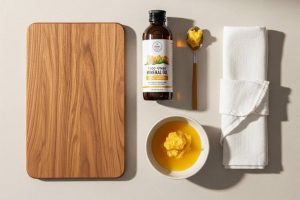
Maintenance Requirements: Monthly oiling with food-grade mineral oil, immediate cleaning after use, periodic deep sanitization with coarse salt scrub.
Best For: Serious home cooks who want professional-quality boards and don’t mind regular maintenance for superior performance and longevity.
2.2. Teakhaus Edge Grain Carving Board W / Juice Canal L
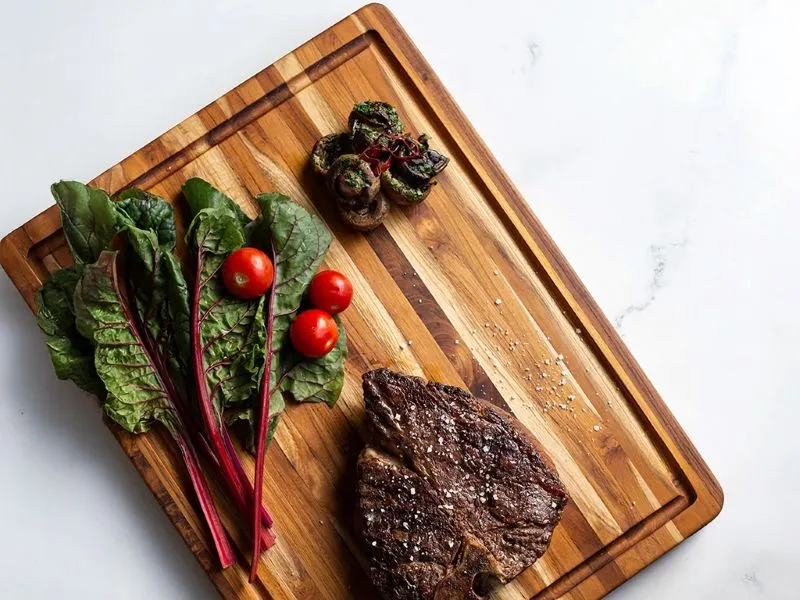
The Teakhaus Edge Grain board leverages teak’s natural water-resistant properties for superior performance in meat preparation. Teak’s high oil content makes it naturally resistant to moisture and bacteria, while the edge grain construction provides optimal knife preservation.
This board excels in outdoor cooking scenarios where traditional hardwoods might suffer from humidity or temperature fluctuations. The built-in hand grips and juice canal make it particularly suitable for BBQ carving and serving.
Key Features:
- Premium teak wood construction
- Edge grain orientation for knife preservation
- Integrated hand grips for secure handling
- Perimeter juice canal contains drippings
- Natural water and bacterial resistance
Strengths: Teak’s natural oils provide superior water resistance compared to other woods. The edge grain construction heals minor knife marks naturally, while the hand grips enable confident handling of large roasts.
Limitations: Higher initial cost reflects premium material. Teak requires specific maintenance products to preserve its natural properties.
Best For: BBQ enthusiasts and outdoor cooks who need a board that performs reliably in varying conditions while providing serving-worthy presentation.
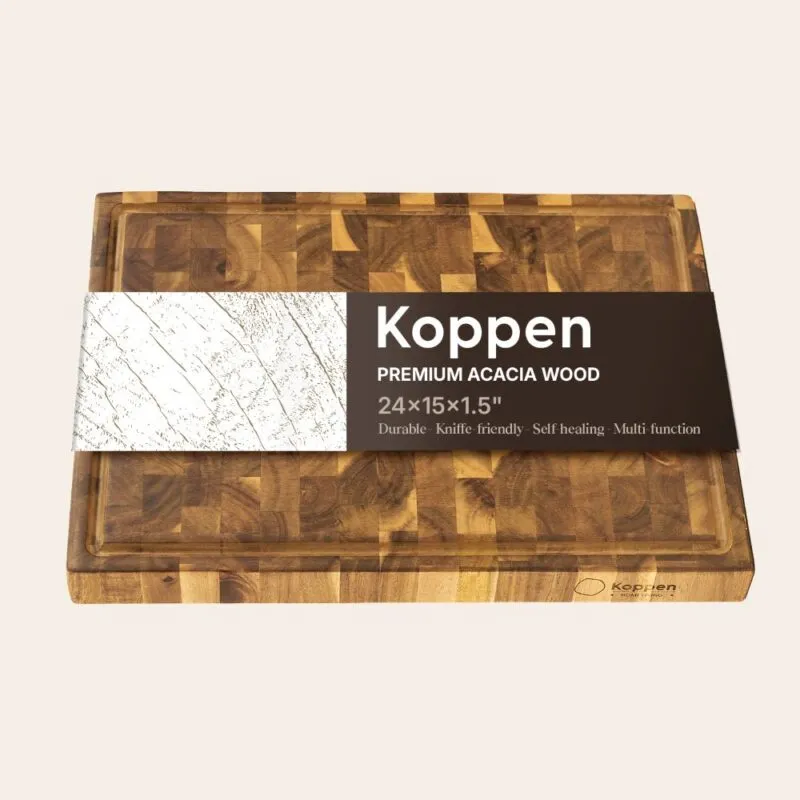
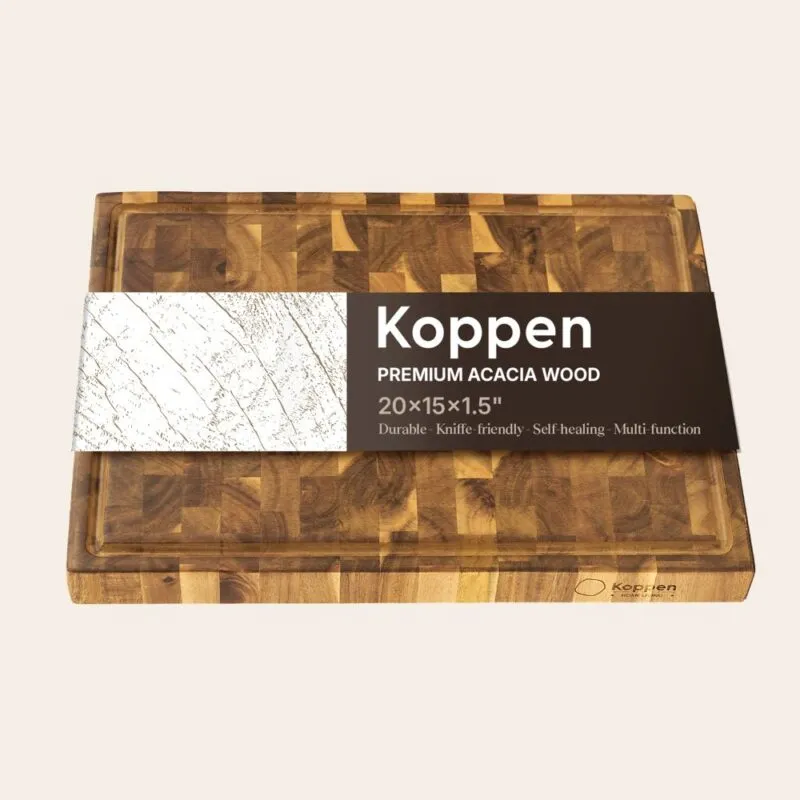
2.3. Koppen Acacia End Grain Cutting Board – Size 20 x 15 x 1.5 inch
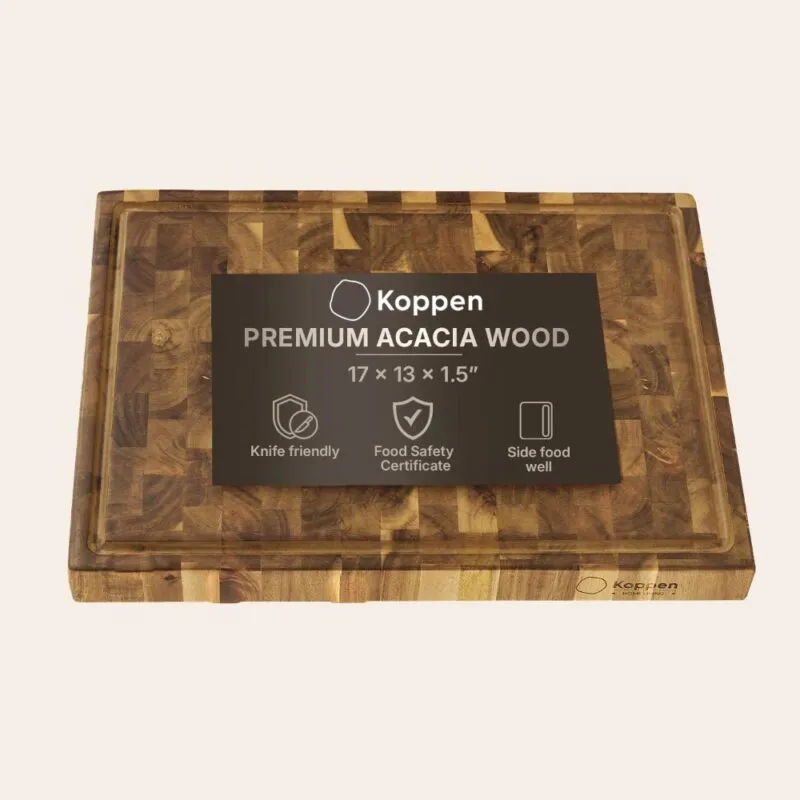
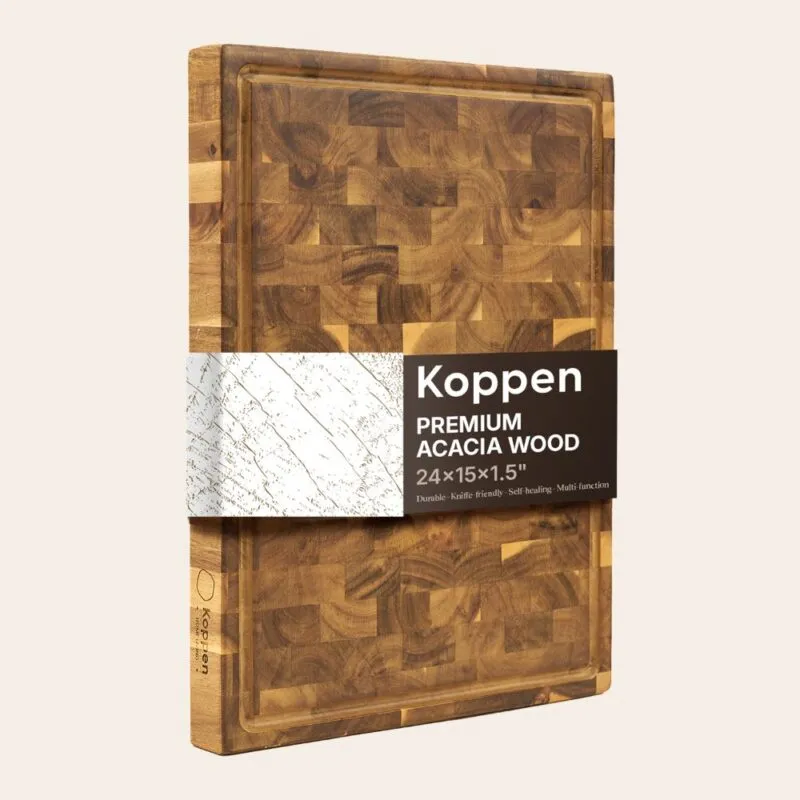
The Koppen Acacia End-grain cutting board delivers premium hardwood performance at an accessible price point. Acacia wood combines natural antibacterial properties with exceptional durability, while the end-grain construction provides the ultimate knife-preservation surface.
End-grain construction means knife edges cut between wood fibers rather than across them, dramatically extending blade sharpness while allowing the board to “heal” from minor cuts. This makes the board ideal for frequent use with quality knives that deserve protection.
Key Features:
- Premium acacia wood with natural antibacterial properties
- End-grain construction for superior knife preservation
- Large 20″ x 15″ x 1.5″ size accommodates substantial cuts
- Hand-finished with food-grade mineral oil
- Juice groove prevents spills and mess
- Sustainably sourced materials
- Exceptional value for hardwood quality


Performance Characteristics: The dense acacia grain provides excellent durability while remaining gentle on knives. Natural antimicrobial compounds in acacia wood inhibit bacterial growth, while the end-grain surface maintains its appearance through years of use.
Maintenance: Simple monthly oiling preserves the wood’s natural properties. The dense grain resists staining and odor absorption better than softer woods, making maintenance more forgiving for busy households.
Value Proposition: This board offers professional-quality performance typically found in boards costing significantly more. The combination of premium materials, thoughtful design, and accessible pricing makes it an outstanding choice for home cooks seeking hardwood benefits without premium pricing.
Best For: Home cooks who want the performance and aesthetics of premium hardwood cutting boards but need to maintain a reasonable kitchen budget. Ideal for those who cook regularly and want to protect their knife investment.
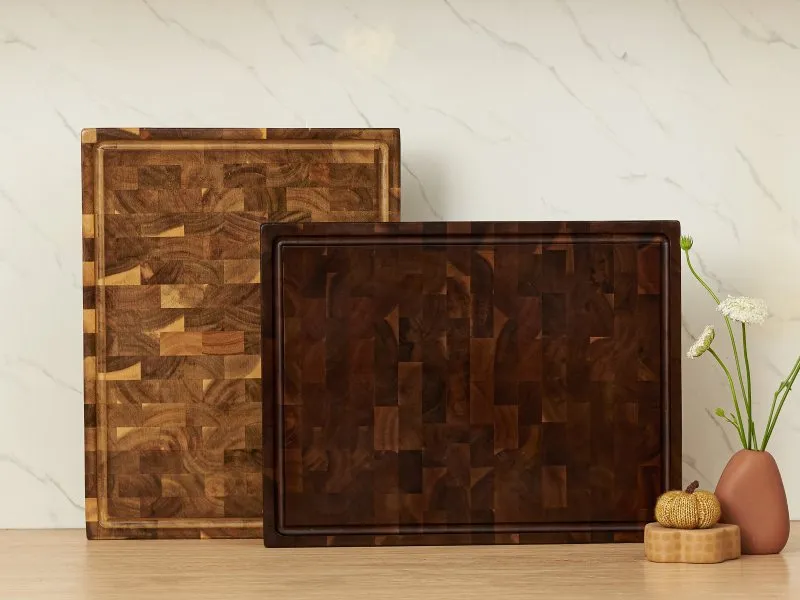
2.4. Epicurean Composite BBQ Carving Board
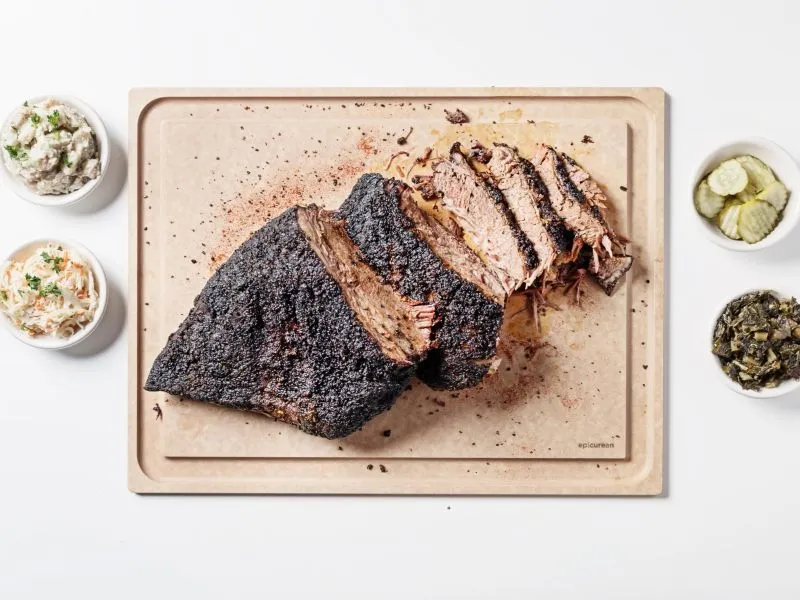
Epicurean’s composite boards blend sustainability with performance through their unique construction from recycled paper and food-safe resin. This creates a cutting surface that combines the knife-friendliness of wood with the easy maintenance of synthetic materials.
The composite material withstands dishwasher cycles while maintaining its structural integrity, making it ideal for households that prioritize easy cleaning over traditional materials. The surface resists staining and odor absorption while providing excellent knife preservation.
Key Features:
- Eco-friendly composite from recycled materials
- Dishwasher safe construction
- Non-porous surface resists bacteria and stains
- Available in multiple sizes and colors
- Lighter weight than comparable wood boards
- Made in USA from sustainable materials
Strengths: The dishwasher-safe construction eliminates maintenance concerns while the composite material provides excellent durability. The eco-friendly credentials appeal to environmentally conscious cooks.
Limitations: The composite material lacks the natural antimicrobial properties of wood. Some users prefer the aesthetic and feel of natural materials.
Best For: Casual home cooks who want good performance with minimal maintenance, particularly those who prioritize environmental sustainability in their kitchen choices.
3. Other Cutting Boards We Tested
We found several boards worth mentioning, though they fell short of our top picks due to specific trade-offs. These options may fit certain kitchens or preferences, but their limitations prevent them from being universal recommendations
3.1. Sonder Los Angeles Walnut End Grain Board
The Alfred cutting board from Sonder Los Angeles showcases beautiful walnut construction with end-grain orientation for excellent knife preservation. The rich walnut grain provides striking visual appeal, making it suitable for both preparation and presentation.
However, walnut’s softer nature compared to cherry or acacia means it requires more frequent maintenance and shows wear more readily. The premium pricing reflects the artisanal construction and materials, but the performance doesn’t justify the cost for most home cooks. The board excels as a showpiece for special occasions but proves less practical for regular meal preparation.

3.2. Uline Poly Cutting Board
Uline’s commercial-grade polypropylene board offers professional kitchen durability at reasonable cost. The 15″ x 20″ size provides ample workspace, while the commercial construction withstands intensive use better than typical home boards.
The plain white surface lacks visual appeal, and the large size requires substantial storage space. While the commercial durability impresses, most home cooks don’t need this level of heavy-duty construction. The board serves well for households that process large quantities of meat but offers limited advantages for typical home use.
3.3. Koppen Set 3 MoistureBlock Bamboo Tech Cutting Board
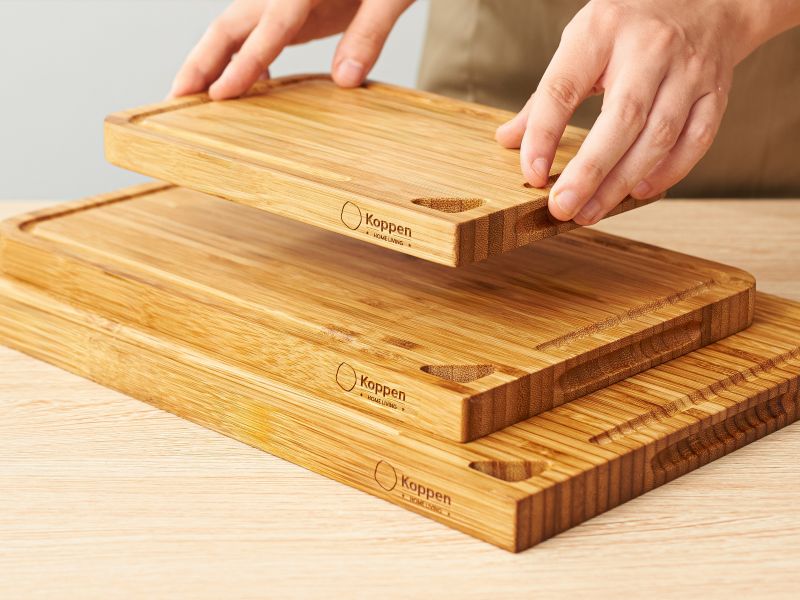
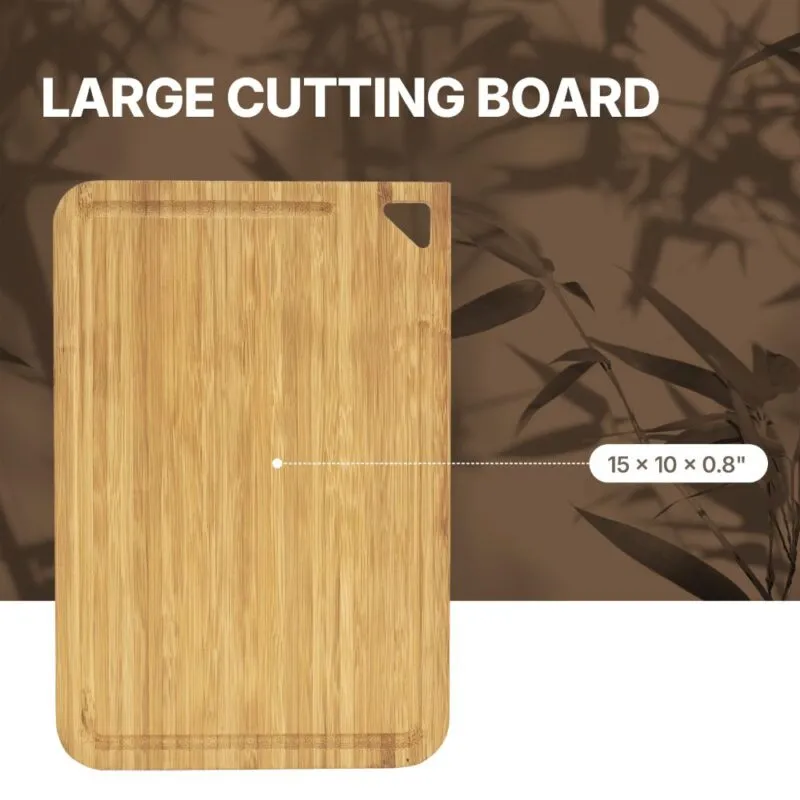
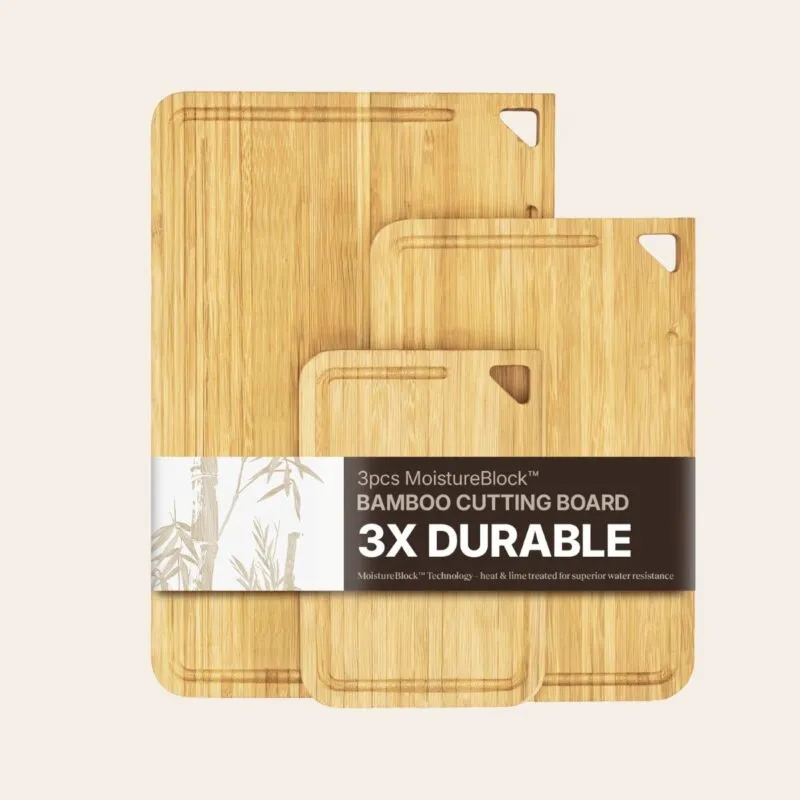
This innovative bamboo set uses MoistureBlock technology to overcome bamboo’s usual weakness against water exposure. With three different sizes, the boards bring versatile use: a smaller board ideal for raw meat prep, a medium board suited for cooked meat and serving, and a large board perfect for chopping vegetables or handling bigger ingredients.
The bamboo construction adds eco-friendly value and natural antimicrobial benefits, while the set’s multi-size design makes it a true 3-in-1 solution for everyday kitchens. It’s especially practical for households that want separate boards for raw and cooked foods, plus an extra for general prep. While bamboo is slightly harsher on knives than premium hardwoods, this set delivers sustainability, convenience, and versatility at a very accessible price point.


4. Should You Use the Same Cutting Board for Raw and Cooked Meat?
The short answer is No. Using the same cutting board for raw and cooked meat creates serious cross-contamination risks that can lead to foodborne illness. This practice violates basic food safety principles and ignores well-documented pathogen transmission pathways.
Raw meat carries dangerous bacteria including E. coli, Salmonella, and Campylobacter that cooking destroys in the meat itself but that remain active on cutting surfaces. When you place cooked meat on a board previously used for raw meat, these pathogens transfer to the safe, cooked food, creating infection risk.
Cross-Contamination Risks: The USDA identifies cross-contamination as one of the leading causes of foodborne illness in home kitchens. Even trace amounts of raw meat juice can contain millions of bacteria capable of causing serious illness. These pathogens survive on cutting board surfaces for hours, particularly in microscopic grooves and scratches that normal washing doesn’t reach.
USDA and FDA Recommendations: Both agencies specifically recommend using separate cutting boards for raw meat and other foods. The FDA’s Food Code, which guides commercial food service, requires separate boards for this reason. Home kitchens should follow the same standards to protect family health.

Practical Solutions:
- Separate Boards: Maintain dedicated boards for raw meat, cooked meat, and produce
- Color Coding: Use different colored boards to eliminate confusion
- Immediate Sanitization: If using one board, sanitize completely between raw and cooked meat
- Board Material: Choose non-porous materials for raw meat boards to facilitate complete cleaning
- Storage Systems: Keep boards organized to prevent mix-ups during busy meal preparation
Sanitation Tips: When sanitizing between uses, wash with hot soapy water, then apply a bleach solution (1 tablespoon bleach per gallon of water) and air dry. Replace boards showing deep cuts or grooves that resist complete cleaning.
5. What Do You Need to Look for When Choosing a Cutting Board for Meat
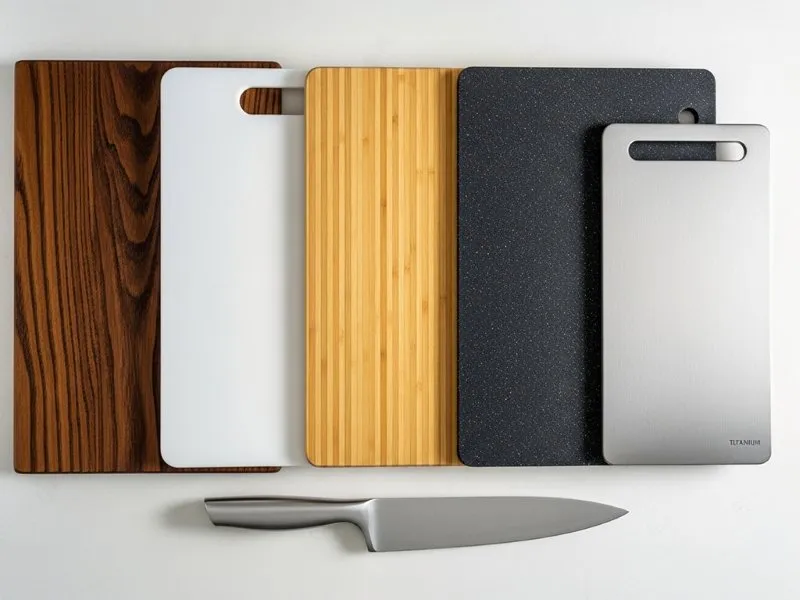
Selecting the right cutting board for meat preparation means balancing safety, durability, and convenience. Materials play the biggest role:
- Wood preserves knives and offers natural antimicrobial properties but needs regular oiling.
- Plastic sanitizes easily, especially in dishwashers, though knife grooves can trap bacteria.
- Bamboo provides eco-friendly appeal with mixed performance, while composites combine durability with easier care.
Use wood for cooked meat where presentation matters, and plastic for raw meat where strict sanitization is critical.
Key features also affect performance. Juice grooves control drippings but must be cleaned carefully. Non-slip grips improve safety during carving. Size and thickness determine stability, durability, and storage needs.
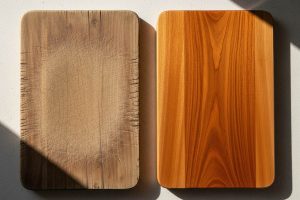
Safety depends on board condition—replace when deep grooves or cracks appear. Choose food-safe certified materials and avoid decorative finishes not meant for direct contact.
Finally, consider cost vs. longevity. A premium hardwood board may cost more upfront but lasts for decades, while cheap plastic replacements add up over time. Investing in quality ensures better hygiene, knife care, and overall cooking satisfaction.
Conclusion – The Cutting Board That Fits You Best
The best cutting board for meat preparation depends on how often you cook, your care routine, and your budget. No single option excels at everything, so targeted choices matter. Frequent cooks benefit from keeping separate boards for raw and cooked meat, while occasional cooks may do well with one high-quality board as long as it’s cleaned and sanitized properly.
Ultimately, the right cutting board should balance safety, durability, and your cooking style. Eco-conscious buyers may prefer sustainably sourced hardwoods or recycled composites, while others prioritize low maintenance or professional-grade quality. At Koppen Home Living, our cutting board collection combines sustainable materials with thoughtful design, giving home cooks reliable performance without the burden of premium pricing.
Read more:
Best Wooden Cutting Boards For Slicing, Chopping
Best Cutting Board Materials for Safety and Performance