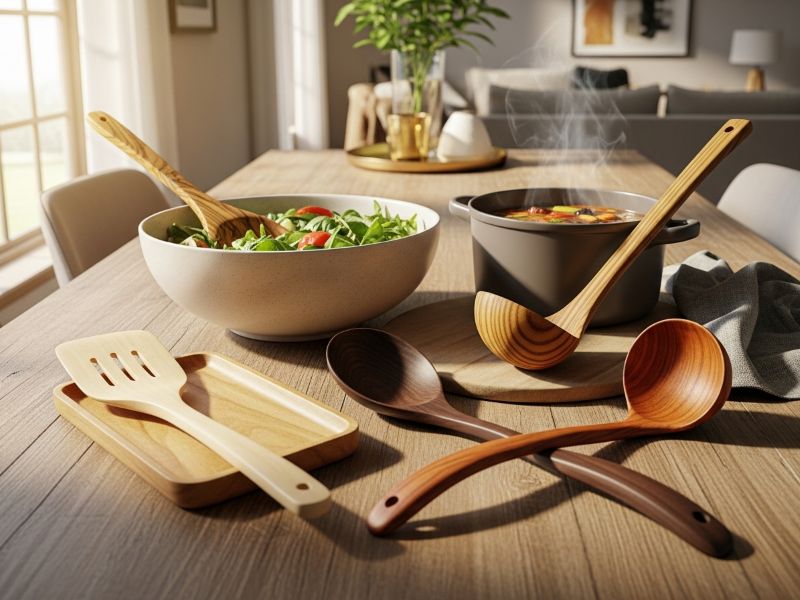
Wooden utensils have earned their place in kitchens worldwide, offering safe, gentle cooking tools that protect your cookware while adding natural beauty to your culinary space. When selecting the best wood for kitchen utensils, the right choice combines durability, smooth grain, and easy maintenance. Popular options include rubberwood, maple, beech, olive, cherry, walnut, and teak, each bringing unique strengths for everyday cooking, premium serving, or long-lasting kitchen performance.
Key Criteria for Choosing Wood for Cooking Utensils
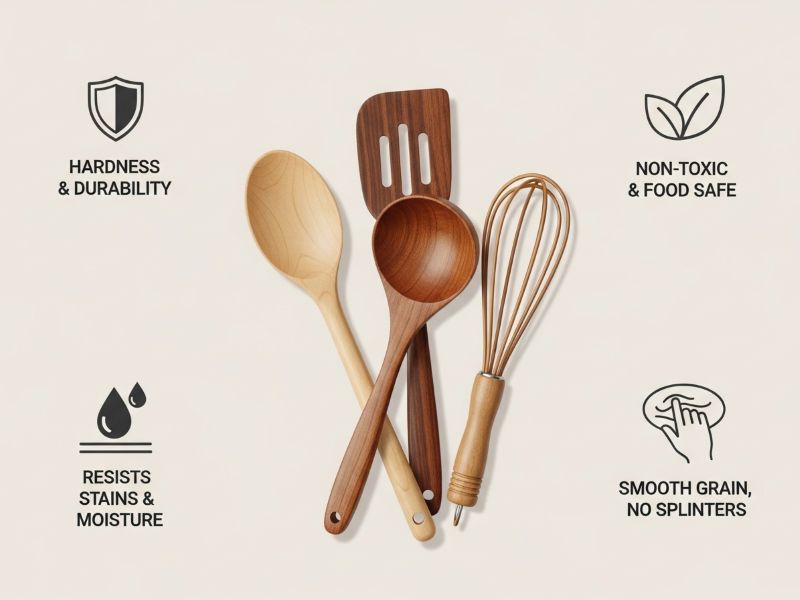
Hardness and Durability
The durability of your wooden utensils directly impacts their lifespan and performance. Kitchen utensils must withstand daily stirring, flipping, and serving without chipping, warping, or breaking. This makes wood selection crucial for long-term use.
Finding the right balance matters. Wood that’s too soft will deteriorate quickly under regular use, while excessively hard wood can be difficult to craft and may feel uncomfortably heavy during extended cooking sessions.
Most professional kitchenware makers prefer medium-hardness hardwoods like rubberwood, maple, beech, cherry, and walnut. These woods offer the ideal compromise between durability and comfortable handling, ensuring your utensils last while remaining practical for daily cooking tasks.
Non-Toxic and Food Safe
Since cooking utensils come into direct contact with your food, wood safety is non-negotiable. The wood must be completely safe, free from harmful resins or toxic compounds that could leach into your meals.
Woods with fine, tight grain structures help prevent bacterial growth and resist absorbing strong odors from foods like garlic or curry. This grain density creates a naturally hygienic surface that’s easier to clean and maintain.
Resistance to Stains, Odors, and Moisture
Kitchen utensils face constant exposure to oils, water, and staining ingredients like turmeric and tomato sauce. The wood’s ability to resist these elements determines how well your utensils maintain their appearance and functionality.
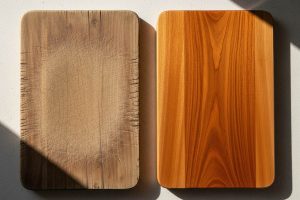
Woods with tight grain structures naturally limit moisture absorption and odor retention. Regular drying after washing and periodic oiling significantly extend utensil lifespan by creating a protective barrier against moisture and stains.
Smooth Grain to Prevent Splintering
A smooth, fine grain ensures your utensils won’t develop splinters or rough patches that could contaminate food or create an unpleasant cooking experience. This characteristic is essential for both safety and comfort.
Utensils with fine, smooth grain provide a secure grip, feel comfortable in hand, and are much easier to clean thoroughly after each use. This makes them more hygienic and pleasant to work with during meal preparation.
Quick Comparison of Popular Woods for Kitchen Utensils
| Wood Type | Grain & Durability | Water & Heat Resistance | Maintenance | Sustainability | Best Use Case |
|---|---|---|---|---|---|
| Rubberwood | Moderately durable, smooth fine grain | Average – can warp if left wet | Needs regular oiling | Eco-friendly, made from retired rubber trees | Everyday spoons, spatulas, budget utensil sets |
| Maple | Very durable, fine closed grain, resists stains | Good – stable under heat and moisture | Low to medium care | Widely available, FSC certified | All-purpose spoons, ladles, turners |
| Beech | Strong, uniform grain, traditional hardwood | Fair – can swell without oiling | Needs consistent oiling | Common in Europe, sustainable | Classic spatulas, stirrers, everyday use |
| Olive | Dense, hard, distinctive decorative grain | Good – natural oils add antimicrobial qualities | Low to medium care | Limited supply, artisanal, often small-scale | Premium salad servers, serving spoons |
| Cherry | Medium hardness, smooth finish, develops rich patina | Good – stable if maintained | Needs occasional oiling | Sustainable in North America | Ladles, spoons, serving utensils with warm aesthetics |
| Walnut | Lightweight, softer than maple, elegant dark grain | Fair – less resistant to constant moisture | Needs moderate care | FSC certified, but potential nut allergy concerns | Stylish serving spoons, salad utensils |
| Teak | Dense, stable, uniform golden-brown grain | Excellent – natural oils resist water and warping | Low care | Plantation teak sustainable, wild harvest problematic | Long-lasting ladles, heavy-duty cooking utensils |
Best Types of Wood for Kitchen Utensils
Rubberwood
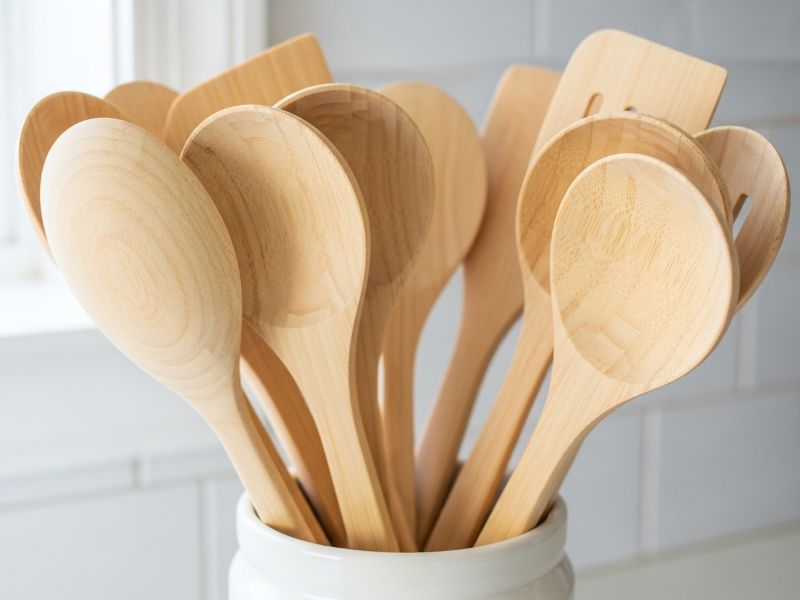
Rubberwood comes from rubber trees that have completed their latex-producing lifecycle, making it an environmentally conscious choice that repurposes plantation resources. This sustainable wood features relatively fine grain, machines easily, and provides a comfortable grip at an accessible price point.
Pros
- Eco-friendly and sustainable: Rubberwood comes from plantation trees that no longer produce latex. Instead of being discarded, these trees are repurposed into durable products, making it one of the most environmentally responsible choices for utensils.
- Fine, smooth grain: The wood has a relatively tight and even texture, which accepts food-safe oil or wax finishes well. When dried and sealed properly, it remains stable and less prone to splintering, providing a safe and smooth surface for everyday kitchen use.
- Affordable option: Rubberwood is widely available and budget-friendly. This makes it ideal for complete utensil sets, giving families a practical way to equip their kitchens without compromising on safety or aesthetics.
Cons
- Low natural durability: Unlike dense hardwoods such as teak or maple, rubberwood is more vulnerable to mold, fungus, and insect attack if not treated. Without sealing, it can deteriorate faster in humid kitchen conditions.
- Requires protective finish: The wood must be coated with food-safe mineral oil or beeswax to resist water absorption. Prolonged exposure to moisture or soaking can cause staining, swelling, or warping, which shortens the utensil’s lifespan.
- Latex sensitivity concerns: Since rubberwood comes from latex-producing trees, some sources mention potential concerns for people with latex allergies. However, once the wood is properly treated, dried, and sealed, it is generally regarded as safe for everyday use.
Best uses for rubberwood: Everyday spoons and spatulas work well in rubberwood, especially for budget-conscious families needing complete utensil sets. Avoid prolonged water exposure or dishwasher use.
Maple (Hard Maple)
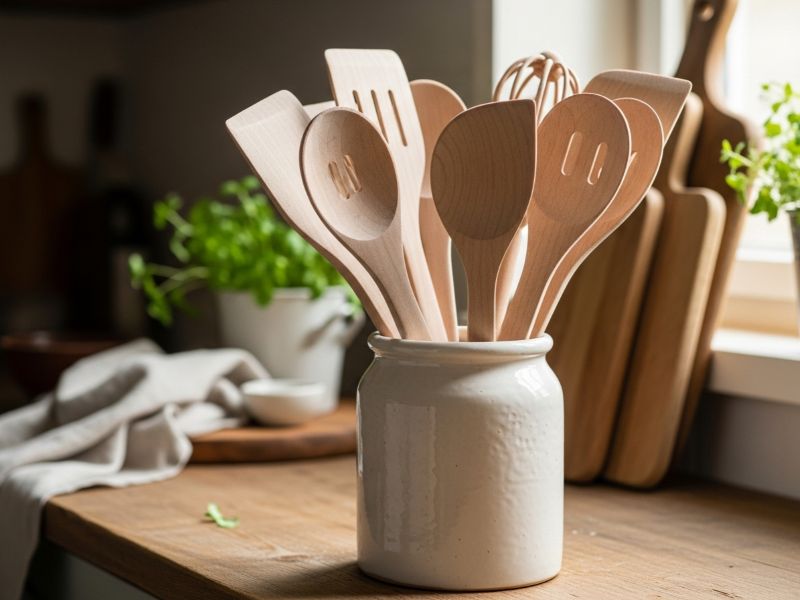
Maple stands as the gold standard for kitchen wood products. Its fine, closed grain structure provides excellent durability while resisting stains and odors. Hard maple offers superior hardness and stability compared to soft maple varieties.
Pros
- High durability with fine grain: Strong and closed-grain texture resists stains and keeps utensils smooth for daily use.
- Low maintenance: Needs only occasional oiling, easier to care for than many tropical hardwoods.
Cons
- Heavier feel: More solid in hand than walnut or cherry, which may feel bulky for long cooking sessions.
- Water stains risk: Can develop marks if left damp, so drying after washing is important.
Best uses for maple: All-purpose spoons, ladles, and turners excel in maple, especially for daily cooking with non-stick cookware.
Beech
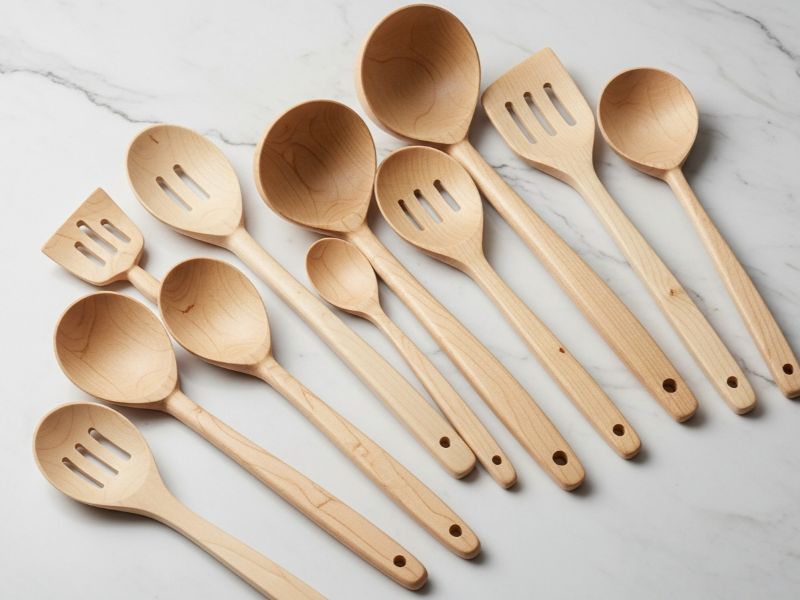
This traditional European hardwood has been crafting kitchen utensils for generations. Beech offers fine, uniform grain that provides a solid grip and comfortable feel at an affordable price.
Pros
- Smooth, even texture: Beech has a fine, uniform grain that machines easily, giving utensils a comfortable feel in hand. It’s also widely available and reasonably priced, making it a popular traditional choice in Europe.
Cons
- Moisture-sensitive: Beech lacks natural oils, so it’s more prone to swelling or cracking if not oiled regularly. Without proper drying after washing, the wood can warp or develop rough spots over time.
Best uses for beech: Beech is ideal for spatulas, stirrers, and mixing spoons used in everyday cooking like sautéing vegetables or stirring sauces. Its smooth grain feels comfortable in hand, and the affordable price makes it great for stocking home kitchens. With regular oiling and drying, beech utensils can stay reliable for years.
Olive Wood
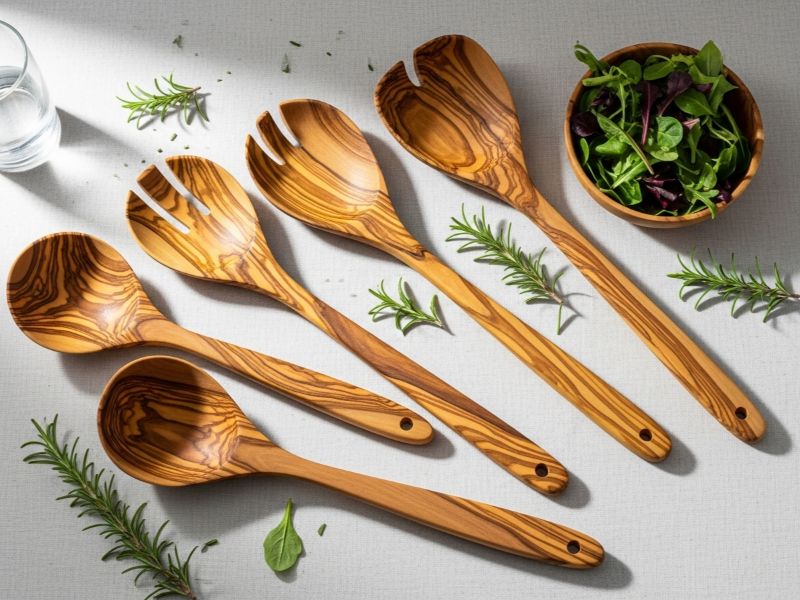
Olive wood brings striking grain patterns and natural density to premium kitchenware. Its slightly oily nature and dense structure offer some natural antimicrobial properties, though scientific evidence specifically for solid wood applications remains limited.
Pros:
- Beautiful grain and premium feel: The swirling, high-contrast grain patterns create one-of-a-kind pieces that double as decorative serveware. The smooth surface adds a luxurious hand feel compared to plainer hardwoods.
- Dense and less absorbent: Olive’s tight grain structure reduces water and odor absorption, helping utensils stay cleaner and resist strong food smells.
- Natural antimicrobial potential: Phenolic compounds in olive tree materials have demonstrated antimicrobial activity in studies, suggesting an additional layer of protection, though this is not fully confirmed for solid wood.
Cons:
- Rare and expensive in large sizes: Olive trees grow slowly and are often used for fruit production, so large, uniform wood blanks are limited and costly.
- Difficult workability: The twisted grain can chip during cutting or planing, making it harder to craft utensils compared to straight-grain woods.
Best uses for olive wood: Salad servers, serving spoons, and premium serveware that sees less water exposure and more presentation use.
Cherry
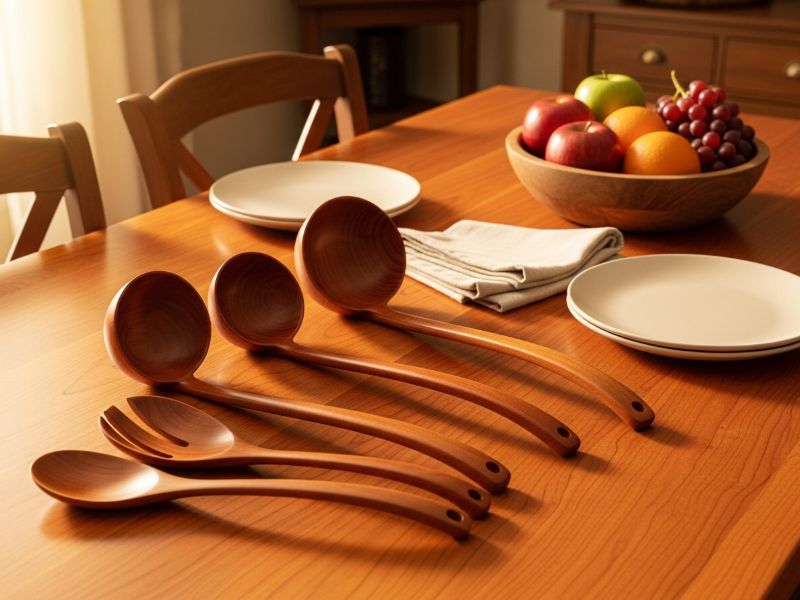
Cherry wood is valued for its warm color and smooth texture, creating utensils that not only perform well but also age gracefully. Over time, cherry develops a rich patina that deepens its natural beauty, making each piece more distinctive. Its excellent workability allows craftsmen to produce refined edges and sleek surfaces, reducing the risk of splintering.
Pros:
- Warm look and smooth feel: Cherry’s fine texture provides comfortable handling, while its color matures beautifully with age.
- Stable and easy to shape: Crafts easily into utensils with refined edges and clean lines, minimizing splintering and rough spots.
Cons:
- Moderate hardness: With a Janka rating around 950, cherry is softer than maple or teak, so utensils may wear faster under heavy or high-intensity use.
Best uses for cherry: Cherry works best for ladles, serving spoons, and light to medium daily cooking tools. It also excels in warm-toned serveware like salad servers or presentation pieces, where aesthetics and comfort matter as much as function.
Walnut (Black Walnut)
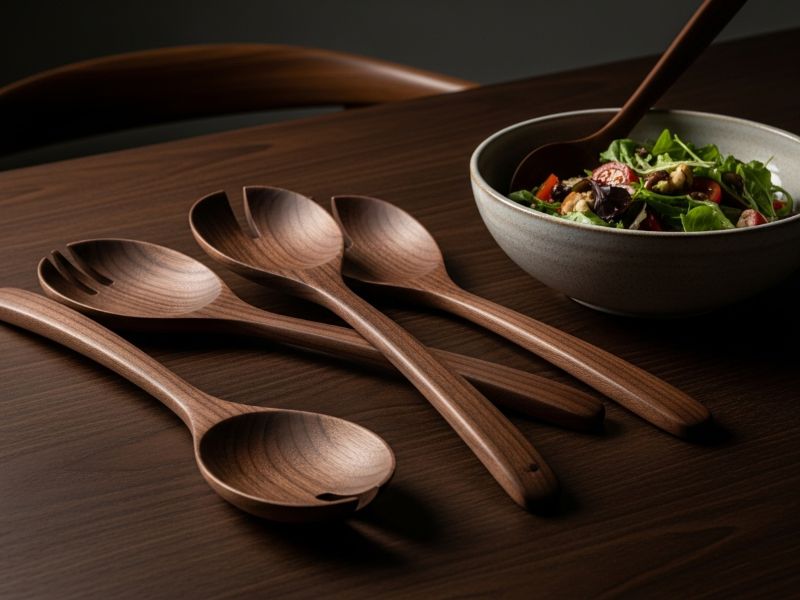
Walnut is a favorite for those who want both function and style in their kitchen tools. Lighter than maple yet strong enough for everyday use, walnut is easy to shape and finish, giving utensils a smooth surface and elegant dark-brown tone. With a Janka hardness of around 1,010 lbf, it strikes a balance between durability and comfort, making it suitable for longer cooking sessions.
Pros:
- Lightweight and ergonomic: Easier to handle than denser hardwoods, walnut utensils remain comfortable even during extended stirring or serving.
- Elegant finish: Its rich color and smooth surface make walnut utensils stand out as both functional and decorative.
- Decay resistance: The heartwood has natural resilience against everyday wear.
Cons:
- Moderate durability: Being softer than maple or teak, walnut utensils may show wear faster under heavy or high-intensity cooking tasks.
- Requires regular care: To keep its rich color and smooth surface, walnut needs occasional oiling and careful drying after washing.
Best uses for walnut: Walnut is ideal for serving spoons, salad servers, and everyday cooking utensils where comfort and aesthetics are priorities. It is especially suited for presentation and dining use, bringing both beauty and practicality to the table.
Teak
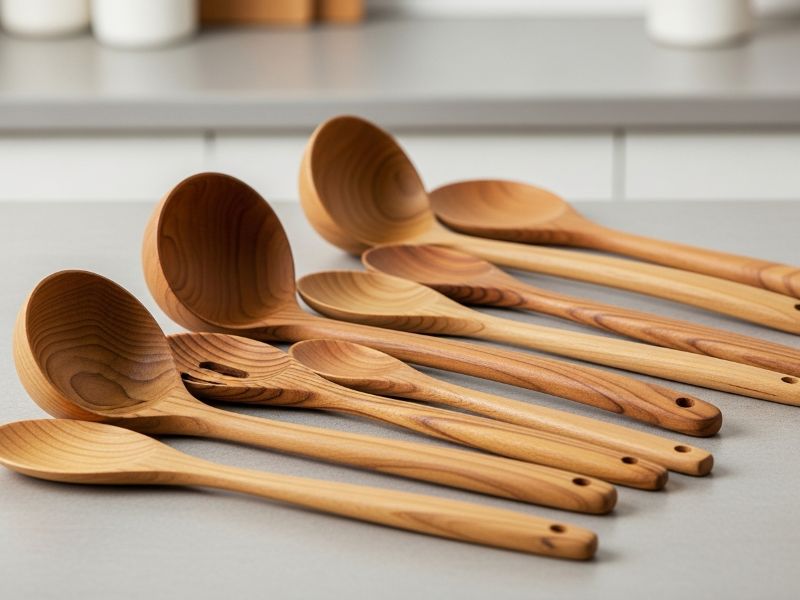
This tropical hardwood offers exceptional stability with natural oils providing superior moisture resistance. Teak’s natural silica content may dull cutting tools during manufacturing but doesn’t affect utensil performance.
Pros:
- Superior water resistance: Natural oils prevent swelling and warping, even in humid kitchens.
- Long lifespan: Durable wood that requires less frequent oiling and upkeep compared to many other hardwoods.
- Stable performance: Maintains shape and smoothness even after years of regular use.
Cons:
- Higher cost: Quality teak comes at a premium price, making utensils more expensive than common hardwoods.
- Heavier weight: Can feel bulkier in hand compared to lighter woods like walnut or cherry.
- Silica content: Present in small amounts, silica makes crafting more difficult, though it doesn’t impact performance once finished.
Best uses for teak: Teak is best suited for ladles, cooking spoons, and heavy-duty utensils that face constant exposure to hot liquids, steam, and moisture. It also works well for mixing sticks or stirring tools where long-term stability and resistance to warping are critical.
Read more: Is Teak Wood Good for Cooking Utensils? Compare Teak and Bamboo Utensils
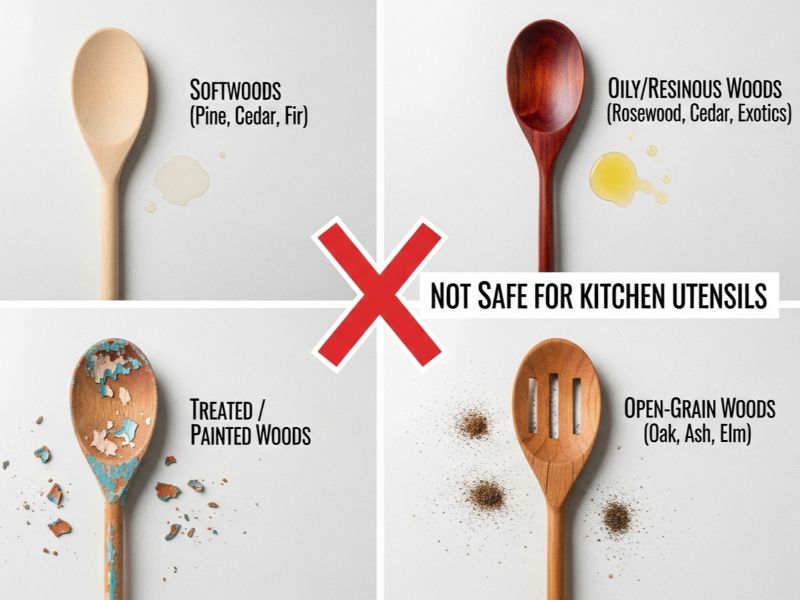
Woods to Avoid for Kitchen Utensils
Softwoods (Pine, Cedar, Fir)
Softwoods such as pine, cedar, and fir are not recommended for kitchen utensils because of their natural structure. Their open, porous grain readily soaks up water, oils, and food residues, which can lead to odor retention and bacterial growth over time.
They are also less dense and more brittle than hardwoods, meaning utensils made from softwoods splinter easily. Tiny fragments can break off during use and potentially contaminate food.
Another drawback is their tendency to absorb strong cooking odors. For example, pine spatulas quickly pick up smells from garlic or turmeric, and once absorbed, those odors are nearly impossible to remove completely.
Because of these issues, USDA and FAO guidelines recommend choosing fine-grained hardwoods – like maple or beech – for any utensils or surfaces that come into direct contact with food, rather than softwoods.
Oily or Resinous Woods (Rosewood, Cedar, Tropical Exotics)
Certain woods like rosewoods (Dalbergia), cedar, and some tropical hardwoods contain natural oils and resins that can leach into food, causing unwanted flavors and even potential allergic or toxic reactions. Some also carry irritant compounds that affect skin or mucous membranes.
Because of these risks, oily and resinous woods are better suited for furniture or decorative uses, not for utensils. The Wood Database lists many species in this group as unsuitable for direct food contact.
Treated, Painted, or Stained Woods
Woods that have been painted, varnished, or chemically treated should never be used for kitchen utensils. These finishes are not food-safe and can leach harmful substances when exposed to heat, moisture, or prolonged contact with food. The risk is especially high with utensils used in soups, stews, or hot liquids, where coatings may soften and break down.
In practice, painted wooden spoons often shed their coating after only a few washes, creating both safety and durability concerns. For long-lasting and safe performance, the best option is to choose natural hardwoods finished only with food-grade oils or waxes.
Woods with Open Grain (Red Oak, Ash, Elm)
Open grain structure creates numerous gaps where bacteria and mold can establish themselves. These woods prove difficult to clean thoroughly, even with careful washing.
USDA FSIS research on food contact wood specifically recommends closed-grain woods like maple and beech over oak or ash for utensils and cutting boards.
FAQs about Wooden Utensils
1. Can wooden utensils go in the dishwasher?
No. The heat and extended water exposure in dishwashers cause wood to swell, crack, and lose its finish. To keep utensils intact, always wash them by hand.
2. How should I clean wooden utensils?
Use mild soap and warm water, gently scrubbing away food residue. Avoid soaking, as standing water weakens the wood. After washing, dry thoroughly with a towel.
3. Are wooden utensils sanitary?
Yes. When properly cleaned and dried, wood is naturally hygienic. Its tight grain and natural compounds can resist bacterial growth better than plastic if well maintained.
4. Do wooden utensils stain or absorb odors?
Yes, especially from strong foods like garlic, curry, or turmeric. To refresh the wood, scrub the surface with lemon and salt, or use a baking soda paste.
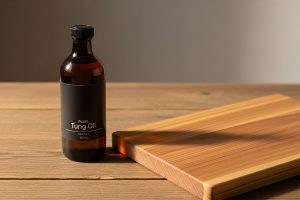
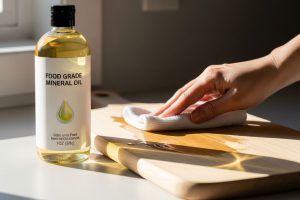
5. Do wooden utensils need to be oiled?
Yes. Regular oiling helps prevent drying, cracking, and moisture absorption. It also keeps the surface smooth and extends the lifespan of the utensil.
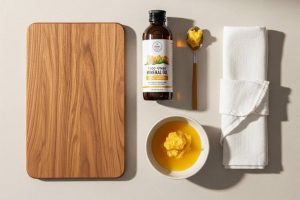
6. What oil should I use and how often?
Use food-grade mineral oil or beeswax. Apply every 3–4 weeks, or whenever the wood looks pale, rough, or dry to the touch.
7. How long do wooden utensils last with proper care?
High-quality hardwood utensils (maple, teak, olive) can last 5–10 years or more if they are cleaned, dried, and oiled consistently.
Final Verdict: Which Wood Wins for Utensils?
Each wood type brings distinct advantages to your kitchen:
- Rubberwood provides an eco-friendly and affordable everyday option
- Maple and Beech deliver reliable, durable, and balanced performance for daily cooking
- Olive and Walnut offer premium choices with elegant aesthetics, perfect for serving
- Cherry brings warm tones and smooth finish that ages beautifully with use
- Teak ensures stability, water resistance, and longevity for heavy kitchen use
Your ideal choice depends on cooking style, maintenance routine, and design preferences. From budget-friendly rubberwood to premium olive and teak, selecting the right wood for utensils ensures years of safe, enjoyable cooking. Consider how you cook, how much maintenance you’re willing to perform, and what aesthetic appeals to you when choosing the best woods for cooking utensils for your kitchen.