Choosing the right cutting board isn’t just about picking a size or wood type. The grain orientation determines everything – durability, knife care, and longevity. Understanding end grain vs edge grain differences can mean the difference between a board that warps in months and one that becomes a kitchen heirloom.
Understanding Wood Grain Basics
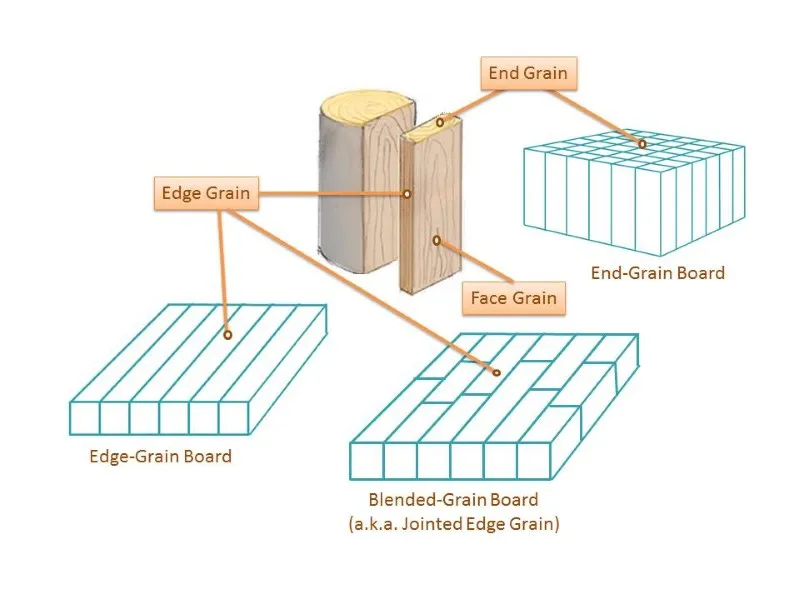
Wood grain simply means the direction in which the natural fibers of the wood run. When a tree grows, its fibers form long, parallel lines. After the wood is cut and turned into cutting boards, the way these fibers are arranged on the surface determines how the board performs.
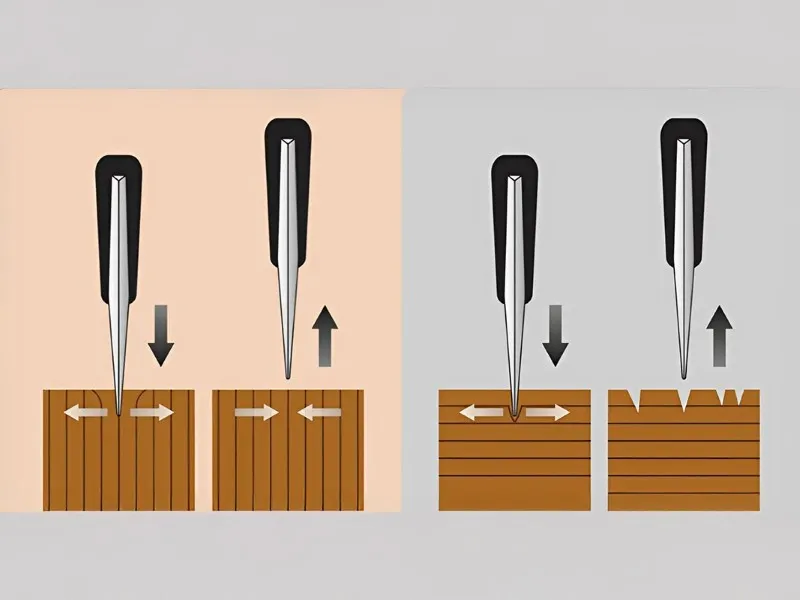
- If the fibers stand upright (end grain), the knife slips between them, making the board gentle on blades.
- If the long sides of fibers are exposed (edge grain), the knife cuts across them, giving a balance of strength and price.
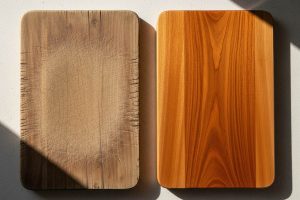
- If the wide face of fibers shows (face grain), the surface looks beautiful but is weakest under heavy cutting.
This fiber direction is what decides how easily your knife glides, how resistant the board is to scratches and warping, and how long it will last in your kitchen.
End Grain Cutting Boards: The Premium Choice
What Makes End Grain Boards Special
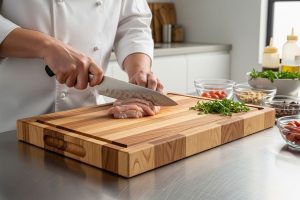
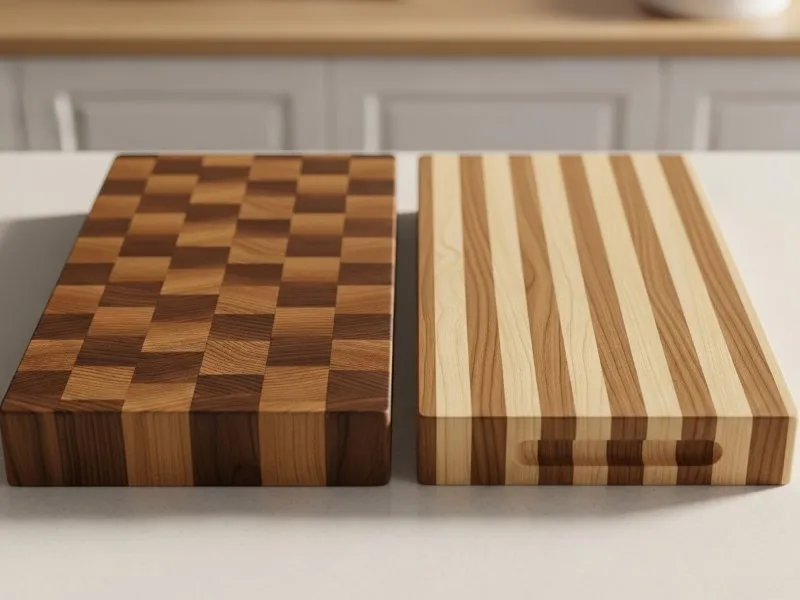
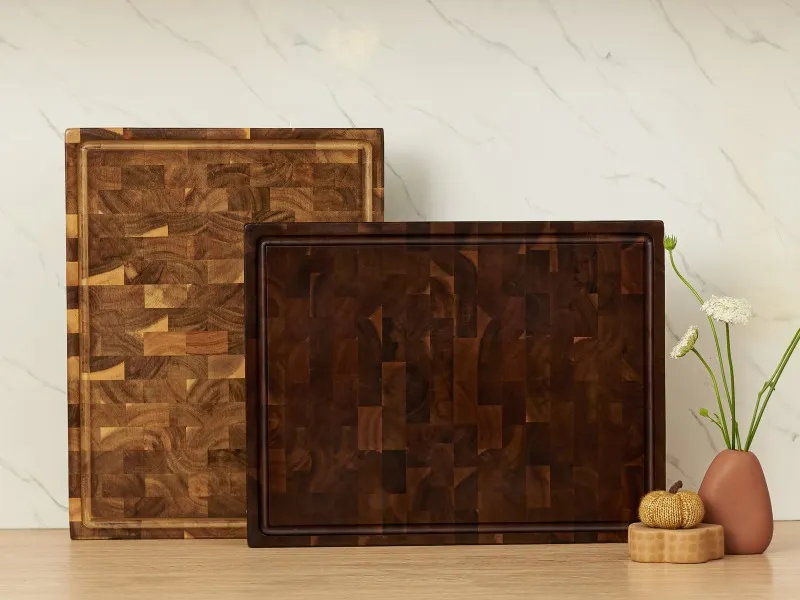
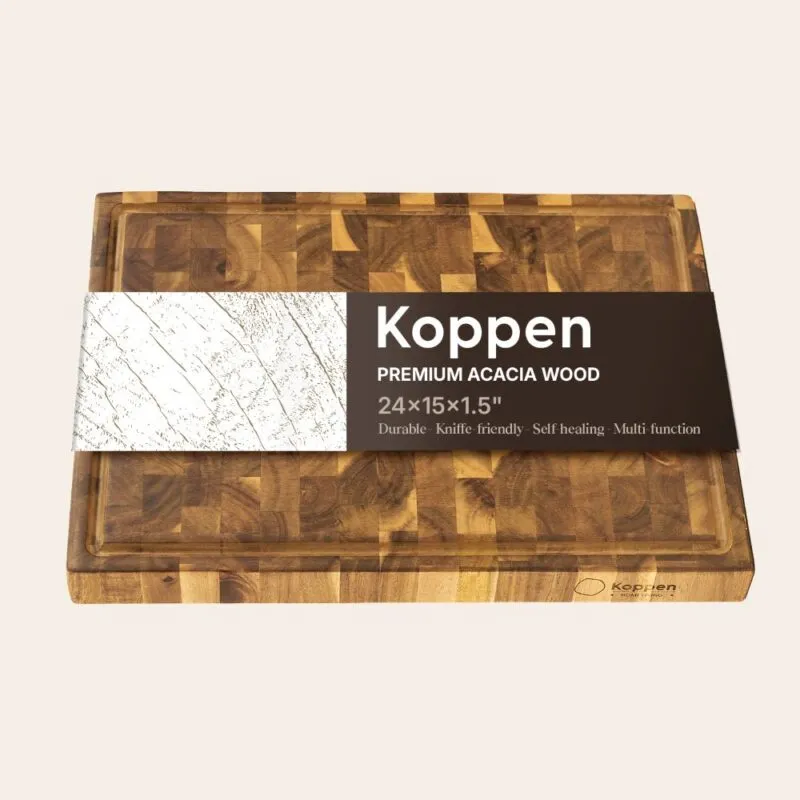
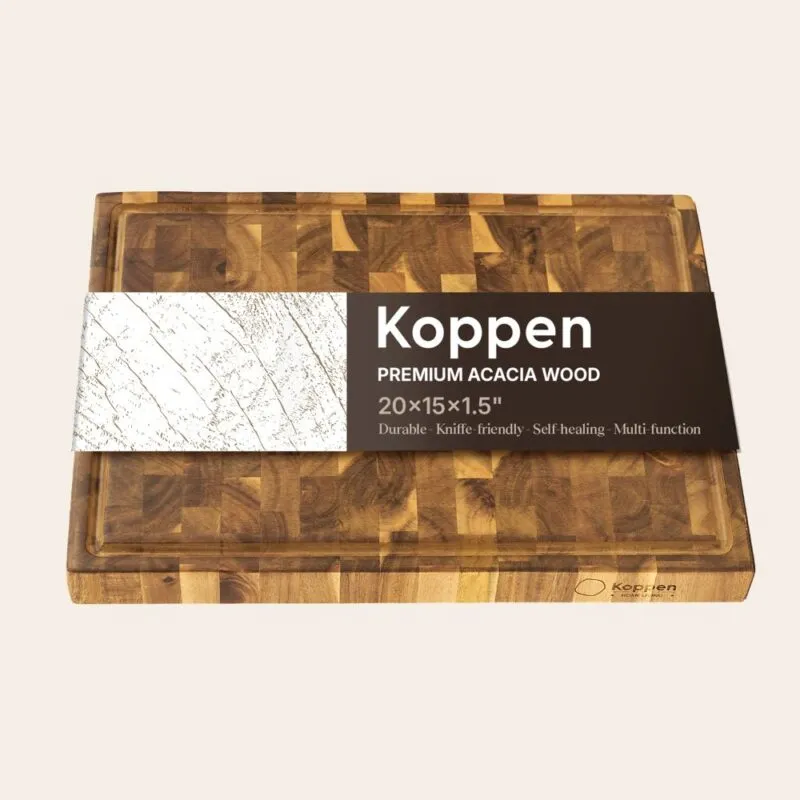
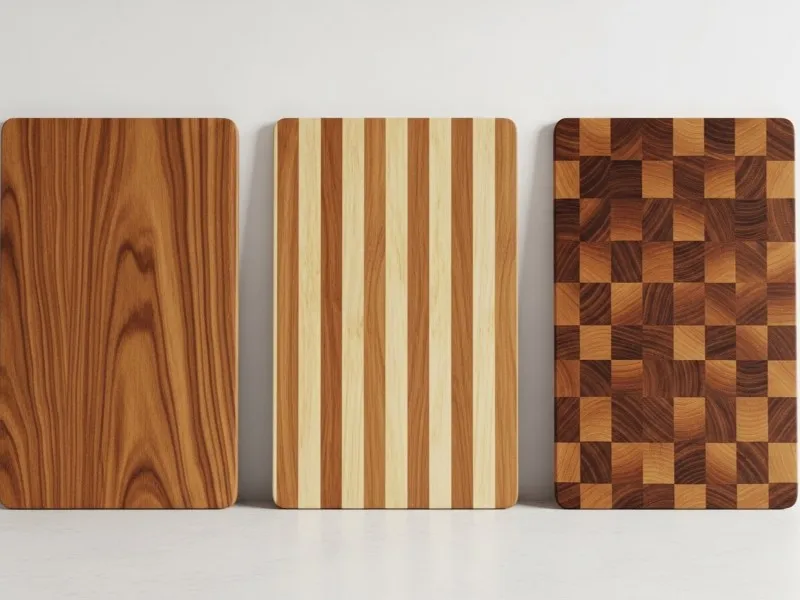
End grain cutting boards are built from small wood blocks rotated so the fibers point upward, forming the signature checkerboard pattern. This construction exposes the ends of the fibers – the strongest part of the wood – to your knife. As a result, end grain boards are widely regarded as the gold standard: exceptionally knife-friendly, highly durable, and built to last for decades with proper care.
Why They’re Gentle on Knives
When you cut, the blade slides between vertical fibers rather than slicing across them. The fibers compress, then spring back – a self-healing effect that protects sharp edges and keeps the surface smoother for longer. You’ll notice a quieter, cushioned feel under your knife.
Advantages
- Protects knives better than any other board – the end grain surface allows blades to slide between fibers instead of cutting through them, keeping even delicate edges sharp for longer.
- Extremely durable – can last for decades with proper care – unlike other boards that wear down in just a few years, end grain boards are built to handle daily use and still perform reliably.
- Fewer deep grooves, more hygienic over time – the self-healing nature of the wood fibers means fewer permanent cuts where bacteria can hide, making it easier to clean and safer for food prep.
- Premium checkerboard design adds visual appeal – the unique block pattern not only highlights the natural beauty of the wood but also makes the board a statement piece in any kitchen.
Disadvantages
- Heavier and bulkier than edge or face grain – their thickness and solid construction make them harder to lift, move, or store compared to lighter alternatives.
- More expensive due to complex construction – the labor-intensive process of gluing and finishing small wood blocks drives the price up, often two to three times that of edge grain.
- Needs regular oiling to stay in top condition – without frequent conditioning, the surface can dry out, lose its luster, and become more vulnerable to cracking or warping.
Best Suited For: End grain is ideal for chefs, passionate home cooks, and anyone investing in high-quality knives or a board that will last a lifetime.


Edge Grain Cutting Boards: The Balanced Choice
Why Edge Grain Boards Are the Everyday Favorite
Edge grain cutting boards are the go-to choice for most kitchens because they balance durability, cost, and ease of care. They’re sturdier and longer-lasting than face grain boards, yet lighter, cheaper, and less demanding than end grain. This middle ground makes them ideal for everyday cooking – strong enough for daily chopping and slicing, but without the high price or maintenance routine of premium end grain boards.
Why They’re a Smart Choice
- Solid durability for daily use – edge grain boards are sturdier than face grain options and, with proper care, can handle years of chopping and slicing without falling apart.
- Stable build – their construction makes them less likely to warp or twist from moisture compared to face grain boards, giving you more consistent performance.
- Easier upkeep – they don’t require as much oiling as end grain boards, making maintenance more manageable for busy households.
- Versatile look – the striped wood pattern is simple yet attractive, fitting seamlessly into both rustic farmhouse kitchens and sleek modern spaces.
- Widely available – because they’re so popular, you can find them in many different sizes, thicknesses, and wood types to suit your preferences.

Drawbacks to Know
- Tougher on knives – since the blade cuts across the fibers instead of between them, knives will lose their edge faster than on an end grain board.
- Knife marks appear sooner – heavy chopping creates grooves more quickly, and while still functional, the surface shows wear earlier than end grain.
- Limited longevity – even with good care, edge grain boards generally last several years, but they won’t match the decades-long lifespan of a well-maintained end grain.
Best For: Everyday cooks, families, and anyone who wants a reliable board that balances affordability, durability, and style without the weight or price tag of end grain.
Face Grain Cutting Boards: The Display Option
Why People Choose Them
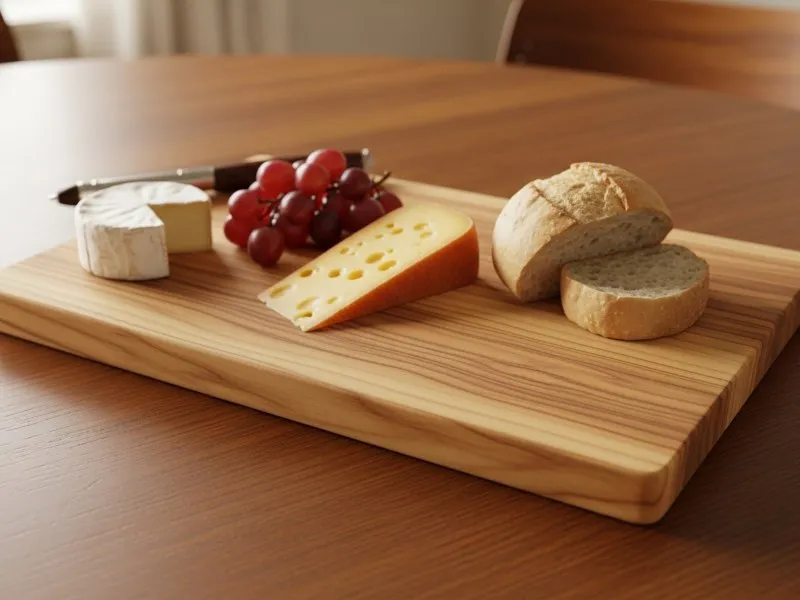
Face grain boards put the flat, wide surface of the wood on top — the part most people admire in furniture. This orientation makes them look stunning, showing off natural wood color and figure. They’re also lighter and typically the cheapest option, making them accessible for casual use.
Why They Fall Short
Beauty comes at a cost. Because fibers lie flat, your knife cuts directly across them. This leads to deep grooves forming quickly, which not only shortens the board’s life but also creates hygiene issues as scratches trap moisture and bacteria. Add in the tendency to warp under moisture, and face grain boards become the least durable choice on the market.
Best Uses for Face Grain
Face grain boards aren’t built for heavy chopping. Instead, they shine as serving pieces. Their wide wood surface highlights beautiful patterns, making them ideal for:
- Decorative cheese or charcuterie boards
- Light fruit, pastry, or bread prep
- Dining table accents and casual serving trays
Most buyers don’t use face grain as their main cutting board. They’re valued more as aesthetic centerpieces — something you put on the table to impress, not in the kitchen for daily knife work.
Full Comparison: End Grain vs Edge Grain vs Face Grain
| Feature | End Grain | Edge Grain | Face Grain |
|---|---|---|---|
| Durability | Lasts decades with proper care | 3-5 years if maintained | 1-2 years, wears quickly |
| Knife Care | Fibers absorb cuts, very gentle | Moderate dulling over time | Blades dull fast, no give |
| Maintenance | Needs frequent oiling, more care | Oiling every few months | Minimal care, but short life |
| Weight | Thick and heavy, very sturdy | Moderate weight, easy to handle | Lightweight, easy to move |
| Aesthetics | Distinct checkerboard look | Clean striped patterns | Full wood grain on display |
| Price | $$$ Premium, highest cost | $$ Mid-range, good value | $ Budget-friendly |
| Best Use | Pro chefs, heirloom kitchens | Daily home cooking | Serving, presentation boards |
How to Choose the Right Board for Your Kitchen
Cooking Frequency
If you cook every single day and put your board through heavy chopping and slicing, an end grain cutting board is worth the investment. It can handle years of abuse while keeping your knives sharp. For families who cook regularly but don’t need a professional-grade surface, an edge grain board strikes the right balance of durability and price. If you only prepare food occasionally or want something primarily for serving, a face grain board will be sufficient.
Knife Protection
The type of knives you own should also guide your choice. End grain boards are the most forgiving, especially for high-end Japanese steel, since the fibers part with the blade instead of resisting it. Edge grain boards are reliable for everyday knives, but they will dull blades faster over time. Face grain boards provide the least protection and should not be relied on if knife care is a priority.
Budget and Longevity
Think about whether you want to spend less now or save more long term. Edge grain boards are affordable and can last several years with care, making them a smart middle-ground option. End grain boards cost more up front, often double the price, but they can last for decades, making them the most economical choice long term. Face grain boards are the cheapest, but because they wear out quickly, they’re best for presentation and light prep, not serious cooking.
Conclusion
The real difference comes down to grain orientation. Choosing between end grain vs edge grain determines how long your board lasts and how well it treats your knives. Go with end grain for maximum longevity and knife protection, or edge grain for everyday balance of durability and value.