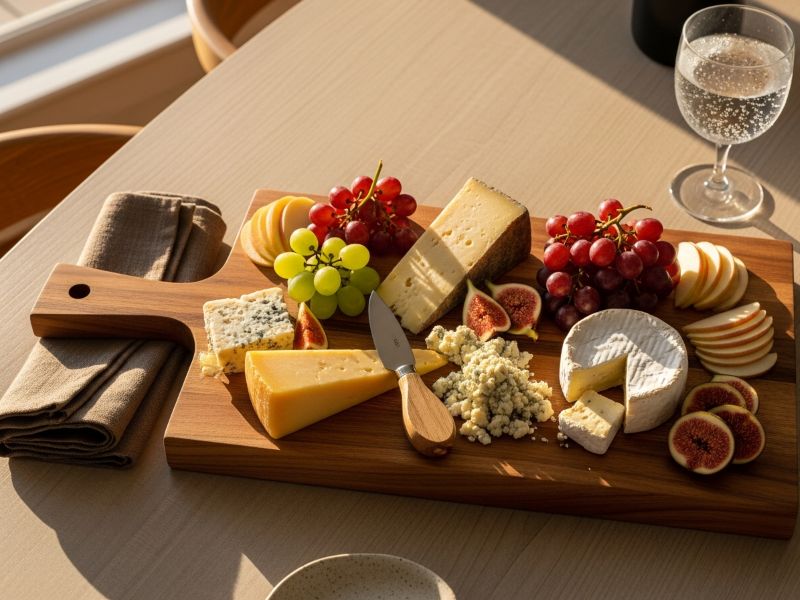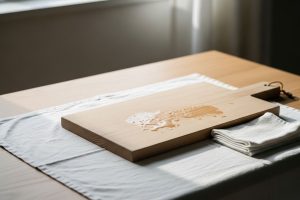
If you’ve searched for how thick a charcuterie board should be, you’ve probably found mixed answers – some favor slim, elegant boards, others prefer heavy slabs. Unlike cutting boards, a charcuterie board is made for serving, not chopping. This guide breaks down the ideal thickness, explains why it matters, and helps you choose the best size for your style and needs.
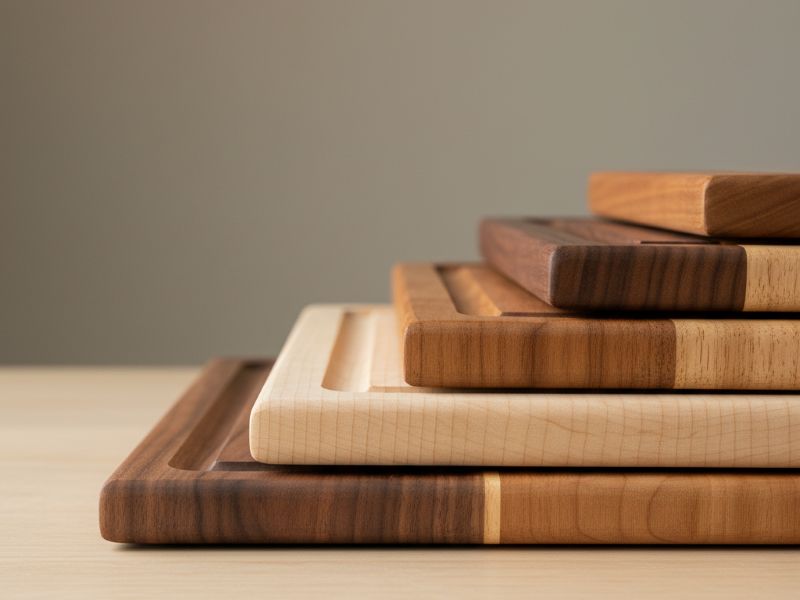
Ideal Thickness for a Charcuterie Board
Most charcuterie boards perform best between 0.75 inch and 1.5 inches thick. This range delivers structural integrity without unnecessary weight, creating a balance that works for everyday use and special occasions.
| Board Type | Recommended Thickness | Why |
|---|---|---|
| Serving-only board | 0.75″–1″ (19–25 mm) | Portable, modern look, sufficient for light loads |
| All-purpose board | 1″–1.25″ (25–32 mm) | Balanced weight, resists warping, comfortable to handle |
| Centerpiece board | 1.25″–1.5″ (32–38 mm) | Premium appearance, stable under full spreads, durable |
| Dual-use (light cutting) | 1.5″+ (38+ mm) | Absorbs knife impact, allows resurfacing if needed |
This range balances weight, strength, and appearance. A board at 0.75 inch feels manageable when you carry it from kitchen to table. At 1.5 inches, it becomes a statement piece with noticeable heft and visual presence.
Why This Range Works
Stiffness increases exponentially with thickness. A board twice as thick resists bending eight times more effectively. This matters when you load cheese, meats, fruits, and accompaniments onto the surface. The benefits include less warping over time, comfortable lifting even when fully arranged, and adequate edge thickness for sealing with oil or wax.
Physics of Thickness
Wood naturally expands and contracts with humidity. Thicker boards offer more mass, reducing movement across the grain. Think of thickness, density, and moisture as a stability triangle – each affects how flat your board stays. Dense woods like maple stay steadier than soft pine, while regular care with food-safe mineral oil or beeswax helps prevent warping, especially in humid climates.
Real-world examples confirm this range. Most manufacturers at Koppen and similar brands produce boards between 1 inch and 1.25 inches, as this satisfies the majority of users. Custom makers often default to 1.5 inches for premium orders. But not all boards serve the same purpose – thickness changes depending on your needs.
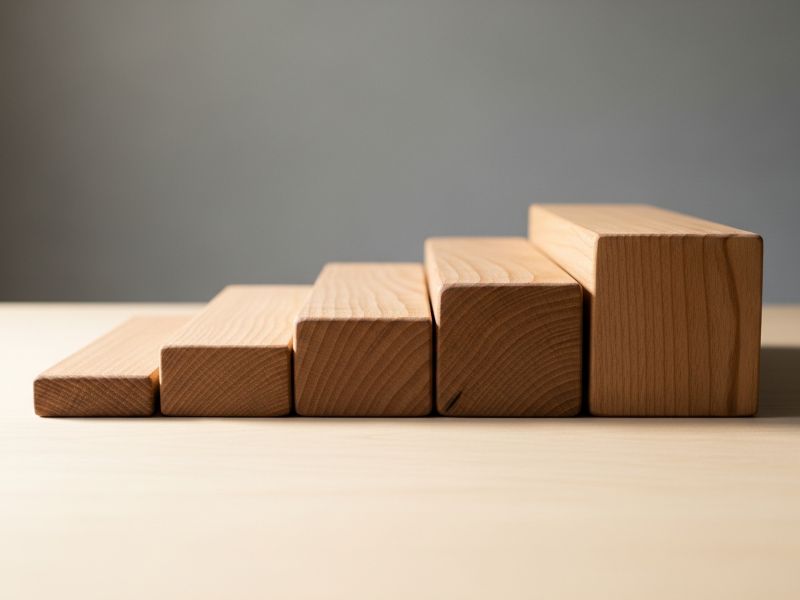
Thinner Boards (0.75–1 inch)
A thin board measures 0.75 inch to 1 inch. These boards suit casual serving and modern kitchen aesthetics. They slide easily into cabinets, rest flat on counters, and weigh less when you transport them to dining areas or outdoor settings.
Benefits and Drawbacks
The sleek profile appeals to minimalist design preferences. Thin boards cost less to produce and ship, which often translates to lower retail prices. Portability makes them practical for picnics or potlucks. However, thinner wood carries risk. It warps more readily when exposed to moisture or temperature swings. Reduced weight stability means the board shifts under pressure if you press down while slicing cheese or spreading jam.
| Advantages | Disadvantages |
|---|---|
| Sleek, modern look | Higher warping risk |
| Portable and lightweight | Less stable under heavy loads |
| More affordable | Feels less premium |
| Easy storage | Limited knife-impact tolerance |
Suitable Wood Types
Maple works well for thin boards due to its tight grain and natural hardness. Bamboo, though technically a grass, offers similar density and resists moisture better than many hardwoods. Both materials minimize warping risk even at 0.75 inch thickness. Avoid softer woods like pine or poplar at this dimension – they lack the structural integrity needed for consistent flatness.
If you prefer a sturdier, centerpiece-style look, consider thicker options.
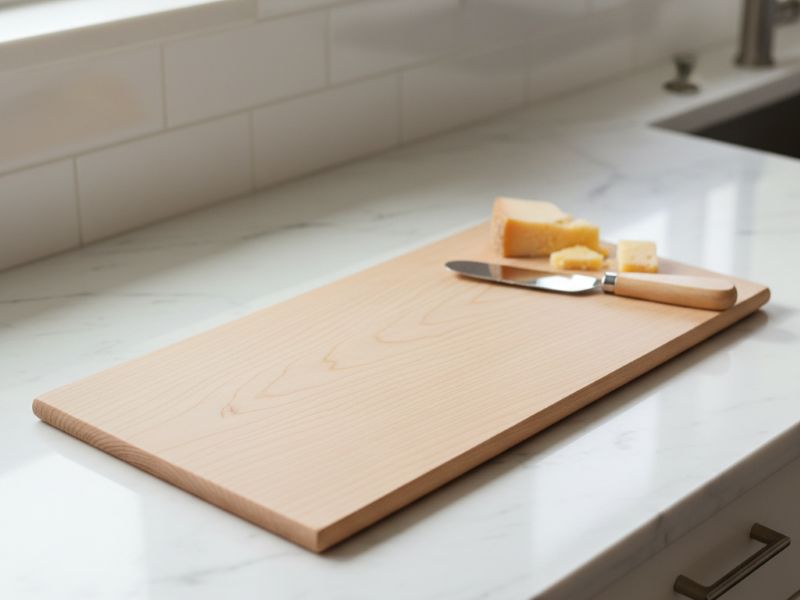
Thicker Boards (1–1.5 inches)
Thicker boards occupy the premium segment. At 1 inch to 1.5 inches, they deliver durability, flatness, and a sense of quality that guests notice. This thickness range resists bending, feels solid in your hands, and maintains its shape across years of use.
Advantages of Thicker Boards
Thicker charcuterie boards offer superior durability and stability. The added mass resists cupping, twisting, and impact from heavy bowls or layered spreads. Their weight conveys craftsmanship and quality, while deeper oil absorption enhances long-term protection.
When to Choose This Range
Opt for 1.25–1.5 inches if you serve large groups or use the board for both serving and light cutting. It supports heavier loads without flexing, hides minor knife marks, and can be lightly refinished when needed – ideal for gatherings and events.
Usability Tips
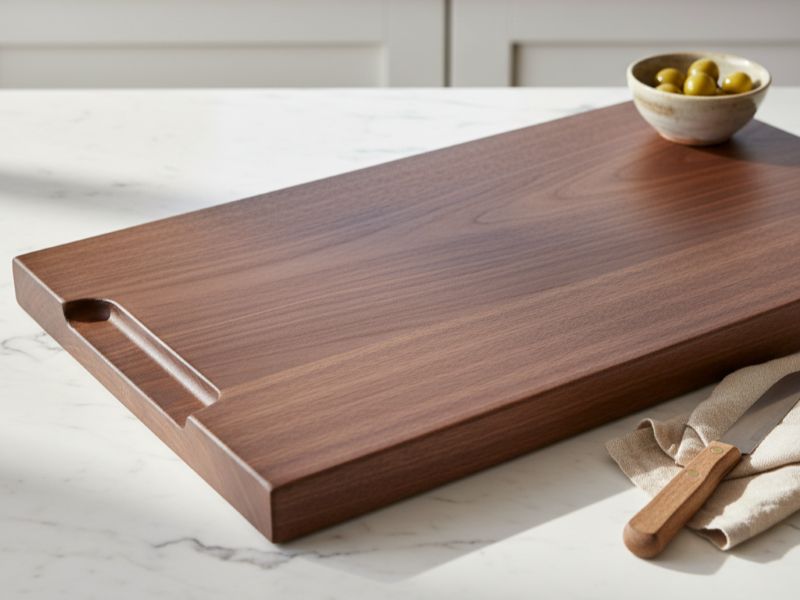
Handles become essential at this weight. Look for boards with routed finger grooves or integrated grips. Bevel edges reduce the perceived heft and make the board easier to lift. Some makers add slip-resistant rubber feet to the underside – a detail that prevents sliding on polished tables. These features transform a thick slab into a functional tool rather than a cumbersome object.
Beyond this, some boards go thicker, but do you need to?
Extra-Thick Boards (Over 1.5 inches)
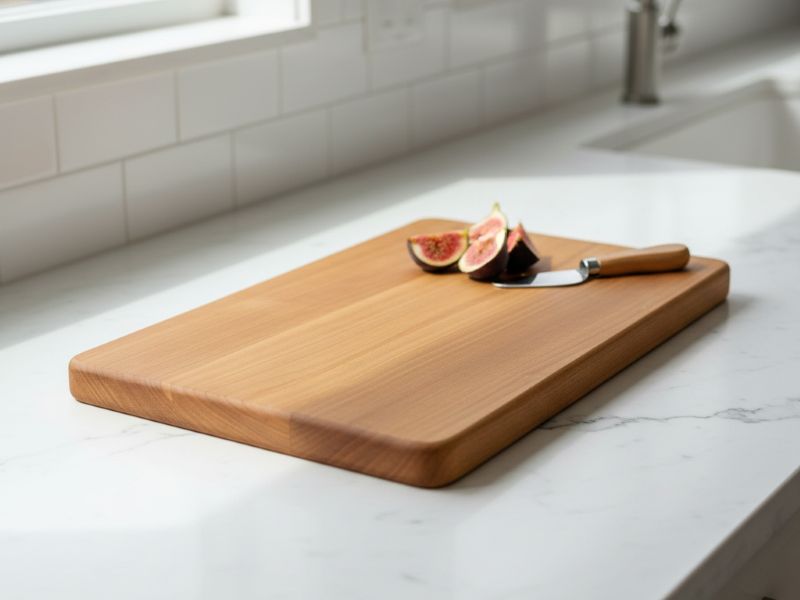
Extra-thick boards exceed 1.5 inches, often reaching 2 inches or more. In the charcuterie context, this dimension crosses into cutting board territory. These boards suit dual-purpose use – serving one night, chopping vegetables the next – or appeal to users who prioritize visual impact above all else.
Use Cases
If you plan to use the board for both serving and food preparation, extra thickness accommodates knife impact. Professional kitchens sometimes use thick boards as hybrid surfaces. The mass absorbs repetitive chopping without developing deep grooves quickly. Some users prefer the statement a 2-inch board makes on their countertop or table – it becomes furniture as much as kitchenware.
| Benefits | Drawbacks |
|---|---|
| Maximum durability | Heavy and difficult to move |
| Allows resurfacing multiple times | Requires more storage space |
| Premium, statement appearance | Higher cost |
| Absorbs knife impact fully | Overkill for serving-only needs |
Conclusion for Most Users
For dedicated charcuterie serving, boards over 1.5 inches offer diminishing returns. The added weight complicates handling. Storage becomes an issue in standard cabinets. Cost increases due to material and shipping. Unless you specifically need a cutting surface or want a showpiece, this range exceeds practical requirements.
Difference from Cutting Boards
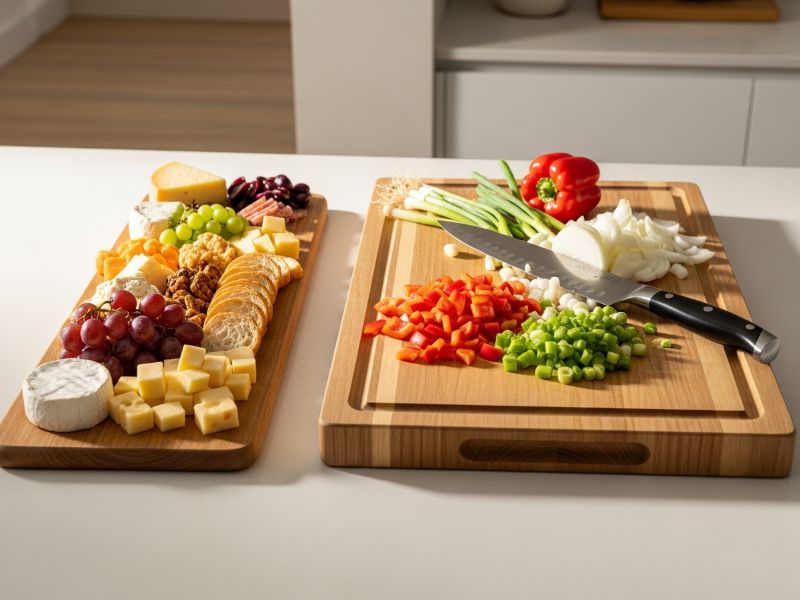
Charcuterie boards and cutting boards serve distinct functions. Understanding this difference clarifies why thickness requirements diverge.
| Feature | Charcuterie Board | Cutting Board |
|---|---|---|
| Purpose | Display and serve food | Withstand knife impact |
| Grain orientation | Edge grain or face grain | Often end grain for knife protection |
| Thickness | 0.75″–1.5″ typical | 1.5″–2.5″ typical |
| Finish | Mineral oil, beeswax blend | Same, but reapplied more frequently |
| Design priority | Aesthetics and portability | Durability and knife-edge preservation |
Why Cutting Boards Require More Thickness
Each knife cut compresses wood fibers and leaves grooves. Thicker boards can be sanded and resurfaced multiple times, extending their lifespan. End-grain boards, often around 2 inches thick, absorb impact vertically – ideal for heavy cutting. In contrast, charcuterie boards don’t need this thickness; they’re for serving, not chopping, so stability and warp resistance matter more than blade durability.
This functional split means you shouldn’t assume a cutting board’s thickness applies to charcuterie boards. Each tool answers different demands. Now, let’s summarize the ideal choices for various scenarios.
Read more: Can You Use a Charcuterie Board as a Cutting Board?
Final Recommendation
Choosing the right thickness depends on how you plan to use the board. No wrong choice exists – only the right fit for your needs. A 0.75-inch board serves well if you value portability and modern design. A 1-inch board handles most scenarios without compromise. At 1.25 to 1.5 inches, you gain durability and visual presence, ideal for hosts who entertain regularly. Beyond 1.5 inches, consider whether you’ll use the board for cutting tasks or simply want the statement thickness it provides.
Your decision should account for storage space, frequency of use, and personal preference for weight and aesthetics. Test the feel of different thicknesses in-store if possible, or review manufacturer specifications carefully when ordering online. A well-chosen board becomes a kitchen staple you reach for repeatedly – proof that the right thickness makes all the difference.