When choosing natural cooking utensils, many home cooks wonder about the difference between teak wood and bamboo. Which is safer? Which lasts longer? And which one feels better in daily cooking? Both materials are popular, but each comes with unique strengths and trade-offs.
In this guide, we’ll break down the key differences between teak and bamboo utensils so you’ll know exactly what to expect in terms of durability, safety, and style before deciding which fits best in your kitchen.
Understanding About Materials
Teak Cooking Utensils
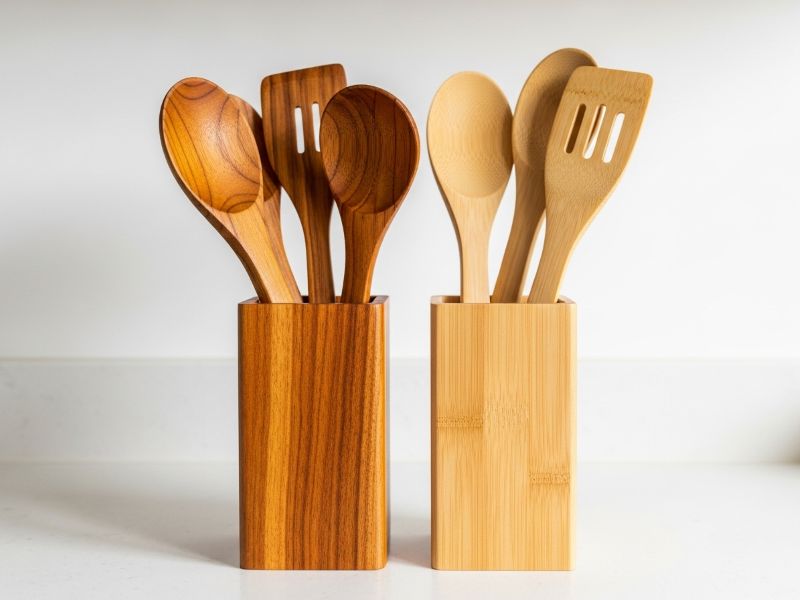
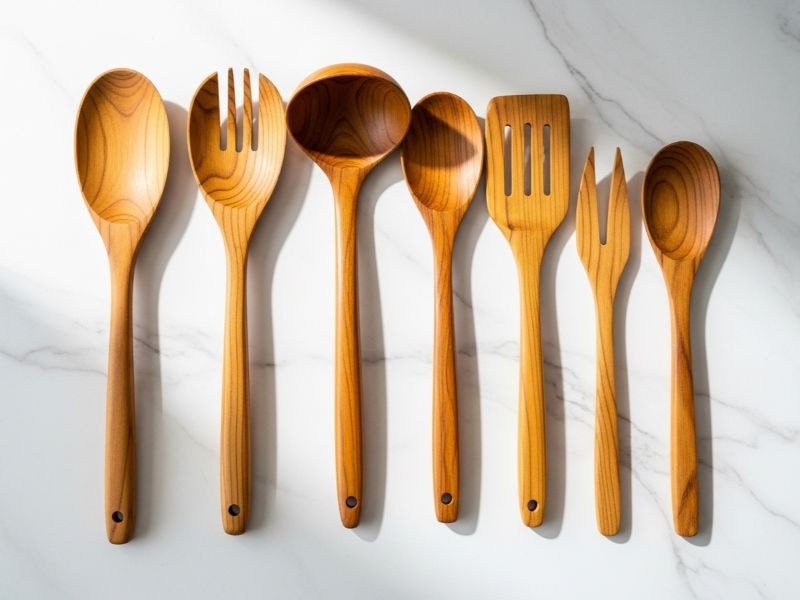
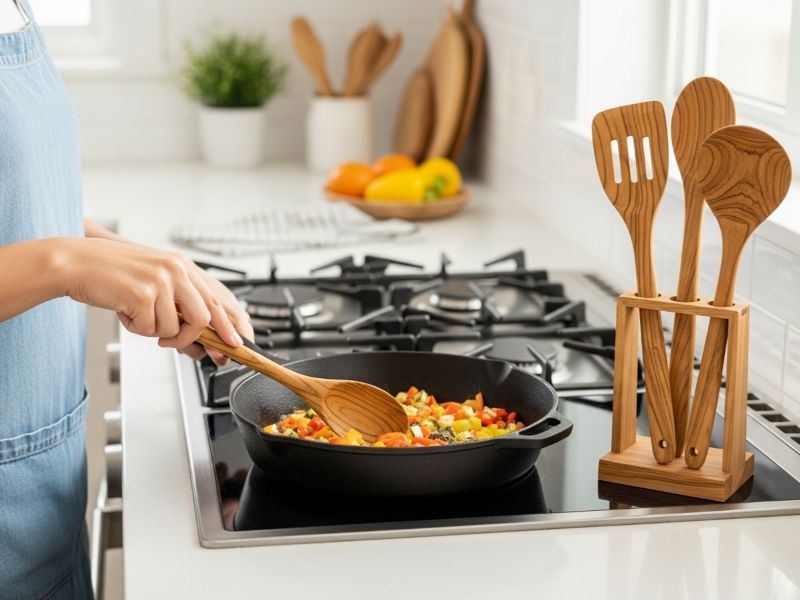
Teak is a tropical hardwood long valued for its water resistance, natural oils, and rich golden-brown grain. Heavier and denser than bamboo, it brings a premium feel and extra durability, making it a trusted option for long-lasting kitchen tools. Because of these qualities, teak utensils often appeal to cooks who prioritize both performance and aesthetics in their kitchen.
Bamboo Cooking Utensils
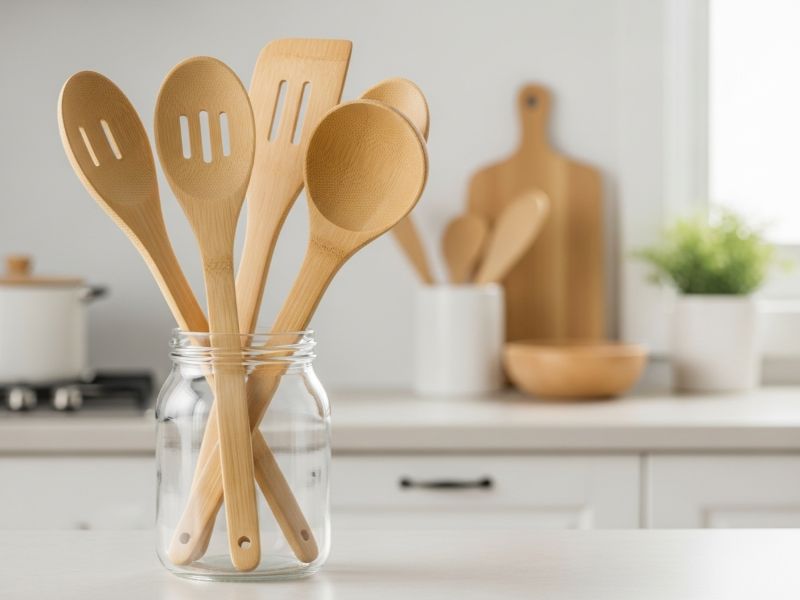
Bamboo, a fast-growing renewable grass, has become popular for its eco-friendly appeal, light weight, and clean minimalist look. More affordable than teak, bamboo offers a practical everyday choice, though it requires more care to prevent water damage. It’s often the go-to option for new households or anyone seeking a sustainable upgrade without overspending.
Teak Wood Cooking Utensils
Pros
- Superior moisture resistance. The high natural oil content in teak acts as a built-in barrier, protecting utensils from absorbing water, reducing the risk of warping, cracking, or bacterial growth.
- Exceptional durability. Teak’s dense hardwood structure allows it to withstand years of daily use without losing strength or shape, making it one of the longest-lasting materials for kitchen tools.
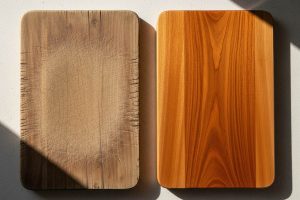
- Premium aesthetics. With warm golden-brown tones and rich, unique grain patterns, teak utensils bring a timeless, elegant look that elevates both everyday cooking and table presentation.
- Cookware-friendly surface. Despite its density, teak is gentle on non-stick pans, stainless steel, and enamel-coated cast iron, ensuring your cookware remains scratch-free.
- Comfort and stability. The slightly heavier weight compared to bamboo provides a balanced, solid feel in hand, giving more control during cooking.
- Low maintenance compared to other woods. While all wood requires care, teak’s natural oils reduce the frequency of oiling needed, making upkeep easier than maple, cherry, or acacia utensils.
- Long-term investment value. Though more expensive upfront, teak utensils often last a decade or more, offering excellent value over time as replacements are rarely needed.
Cons
- High cost. Teak utensils are much more expensive than bamboo or other woods, often three to five times the price.
- Heavier weight. The solid density provides stability but can feel tiring for long cooking sessions or for those who prefer lightweight tools.
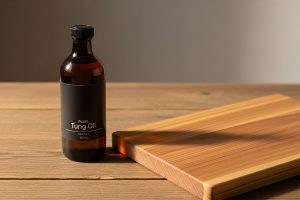
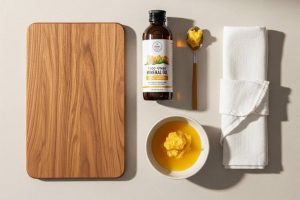
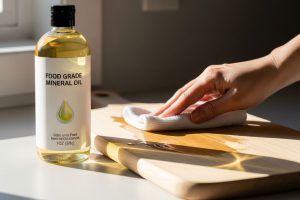
- Regular maintenance. Despite its natural oils, teak still needs occasional conditioning to prevent dryness and preserve its rich look over time.
- Is teak good for cooking utensils? Absolutely, particularly if you prioritize durability and appreciate premium materials. While not the budget choice, teak rewards your investment with years of reliable service and timeless beauty.
Bamboo Cooking Utensils
Pros
- Eco-friendly and renewable. Bamboo is technically a grass that matures in just 3–5 years, making it one of the most sustainable materials available for kitchenware.
- Lightweight and easy to handle. Bamboo utensils are much lighter than hardwoods, which makes them comfortable to use and ideal for quick daily cooking tasks.
- Affordable for all budgets. Compared to teak and other hardwoods, bamboo utensils are inexpensive, allowing you to equip your kitchen with multiple tools without overspending.
- Cookware safe. The smooth surface of bamboo utensils is gentle on non-stick pans, stainless steel, and enamel-coated cookware, preventing scratches or damage.
- Clean, modern aesthetic. With its pale tone and straight grain, bamboo matches minimalist and contemporary kitchen styles, doubling as a functional and stylish choice.
- Widely available. Bamboo utensils can be found easily online and in most home goods stores, making them accessible to everyone.
Cons
- Less durable over time. Without protective oils, bamboo can dry out, crack, or split when exposed to moisture or heat.
- Quality varies. Cheaper bamboo utensils may use low-grade adhesives or unsafe finishes, so reliability depends on the manufacturer.
- Simpler aesthetics. While clean and modern, bamboo lacks the deep grain and premium character of hardwoods like teak.
Bamboo vs Teak Cooking Utensils: Side-by-Side Comparison
| Feature | Bamboo | Teak |
|---|---|---|
| Durability | Moderate, may crack or warp over time | Excellent, very strong and long-lasting |
| Water Resistance | Low to Medium, absorbs moisture easily | High, natural oils repel water |
| Weight | Very light, easy to handle | Heavier, solid feel |
| Eco-friendliness | Highly renewable, grows quickly | Long lifespan, less renewable |
| Price | Affordable, widely available | Expensive, premium category |
| Aesthetic | Clean, minimal, modern look | Rich grain, warm golden-brown, premium |
| Maintenance | Low effort but shorter lifespan | Needs oiling, but lasts much longer |
| Cookware Safety | Gentle on non-stick and cast iron | Gentle, also safe for cookware |
| Longevity | 1 to 3 years with daily use | 5 to 10+ years if maintained |
Which One Should You Choose?
Choose Bamboo if:
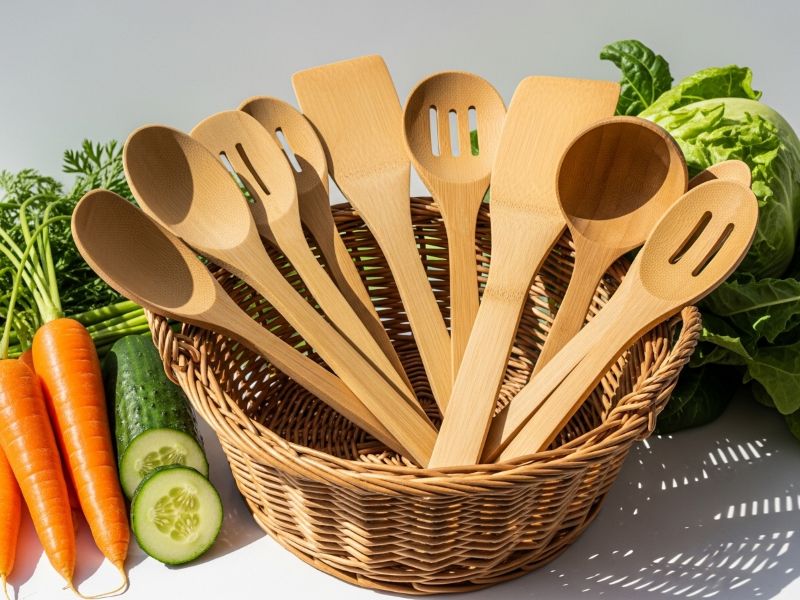
You’re looking for affordable utensils that won’t strain your budget. The lightweight feel appeals to you, especially for quick everyday cooking tasks. Environmental impact matters deeply, and bamboo’s rapid renewability aligns with your values. You primarily need utensils for light cooking like stirring soups, flipping pancakes, or tossing salads. Regular replacement every couple of years fits your kitchen refresh schedule.
Choose Teak if:
You want utensils that last many years with proper care. Durability and water resistance rank as top priorities for your kitchen tools. The premium aesthetic appeals to you, with rich golden tones and unique grain patterns elevating your cooking experience. You cook frequently or tackle heavier tasks where sturdy utensils make a real difference. You’re willing to invest more upfront for long-term value and reliability.
Final Thoughts
When asking “is teak or bamboo better for cooking utensils,” the answer depends on your priorities. Bamboo is affordable and eco-friendly, ideal for everyday light use. Teak is durable and premium, perfect for long-term performance.
Both are safe for cookware and family, but the best choice comes down to your budget, cooking style, and maintenance preferences. Whichever you choose, quality wooden utensils will bring natural beauty and conscious living into your daily cooking.