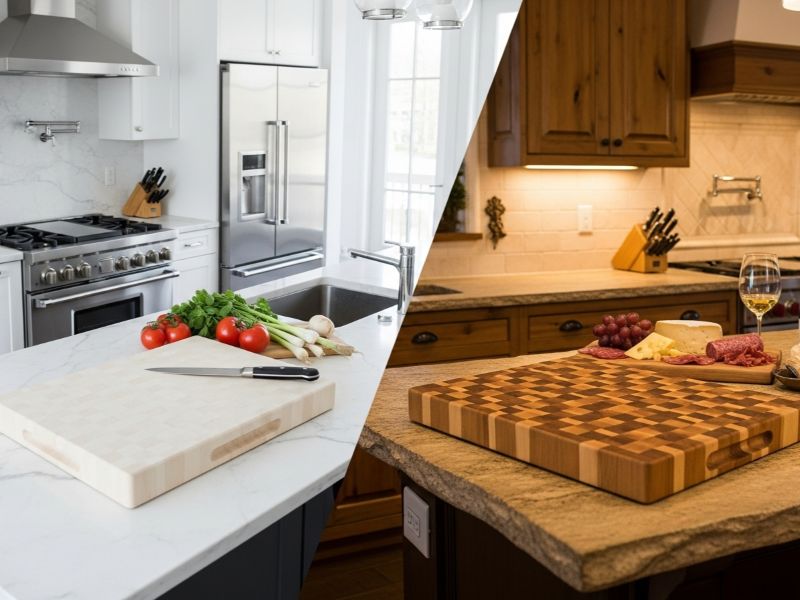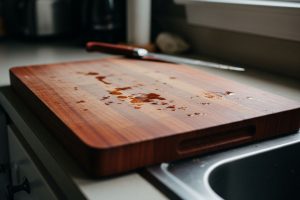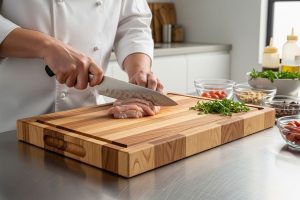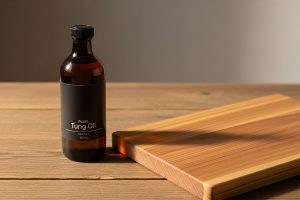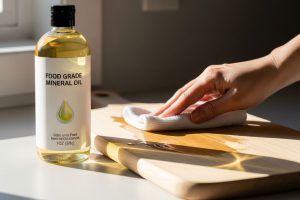
Maple vs Teak Cutting Boards pits two top hardwoods head-to-head. This quick guide compares durability, knife care, maintenance, and cost to help you choose the best fit for your cooking style and kitchen needs.
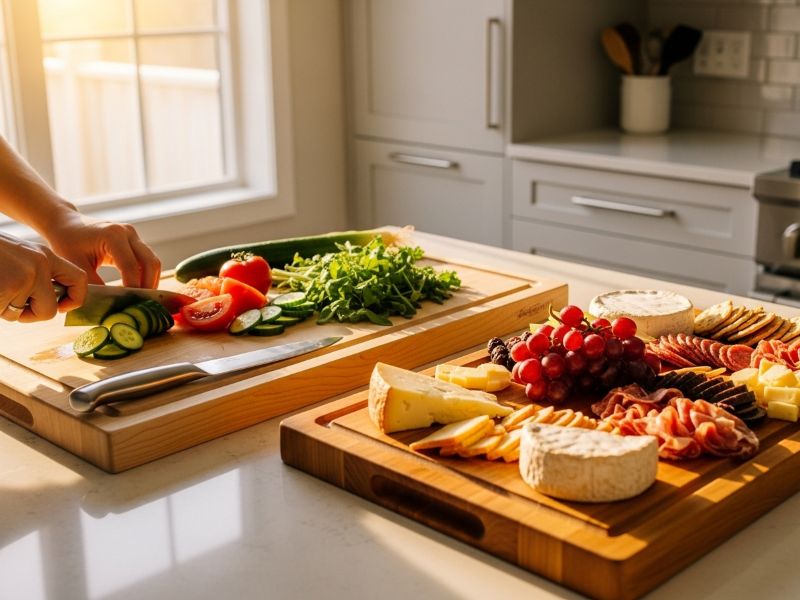
Maple Cutting Board Pros and Cons
Maple cutting boards have earned their reputation as the workhorse of professional kitchens and home cooking spaces. This North American hardwood combines practical functionality with proven performance, making it a reliable choice for daily food preparation tasks.
Pros
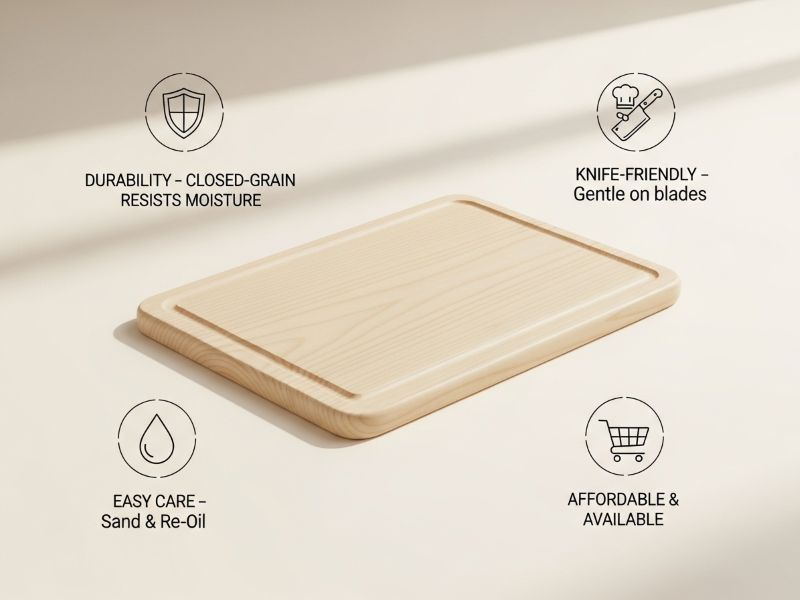
Maple cutting boards offer exceptional durability through their tight, closed-grain structure that resists moisture penetration and bacterial growth. This density creates a surface that withstands years of consistent use while maintaining its structural integrity. The closed-grain pattern also prevents knife marks from becoming permanent scars, allowing the board to self-heal through regular maintenance.
- Knife-friendliness stands out as maple’s signature advantage. With a Janka hardness rating of 1,450 lbf, maple provides the ideal balance between firmness and give. This characteristic protects knife edges from premature dulling while offering enough resistance for effective cutting. Professional chefs specifically choose maple for its ability to preserve blade sharpness during extended prep sessions.
- Affordability and availability make maple accessible to most cooking enthusiasts. North American maple forests provide consistent supply chains, keeping costs reasonable compared to exotic woods. This accessibility extends to replacement and repair services, as most woodworkers and kitchen specialty stores stock maple boards and refinishing supplies.
- Easy refinishing and repair capabilities extend maple’s functional lifespan significantly. Surface scratches, stains, and minor damage respond well to sanding and re-oiling treatments. The uniform grain structure accepts refinishing evenly, restoring the board to near-original condition. Many users report decades of service from properly maintained maple boards.
- Sustainable sourcing options abound with maple cutting boards. Forest Stewardship Council (FSC) certified maple comes from responsibly managed forests throughout North America. The relatively fast growth rate of maple trees compared to tropical hardwoods supports sustainable harvesting practices while maintaining forest ecosystem health.
Read more: Acacia vs Maple Cutting Board: Which One Should You Choose?
Cons
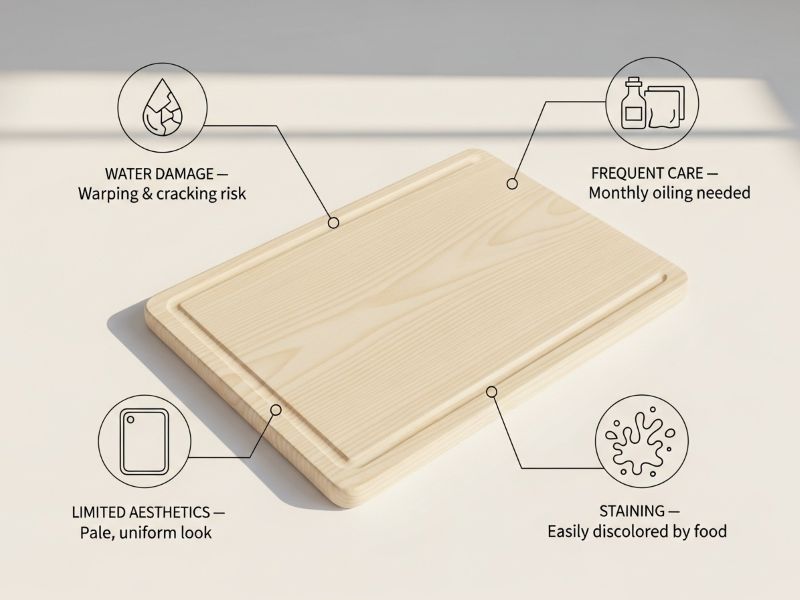
Water damage susceptibility represents maple’s primary weakness. Despite its closed-grain structure, prolonged exposure to moisture can cause warping, cracking, and splitting. Standing water left on the surface penetrates gradually, creating conditions for bacterial growth and structural degradation. Users must maintain consistent drying practices to prevent these issues.
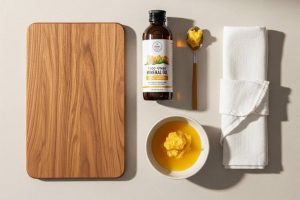
- Frequent maintenance requirements demand regular attention from users. Monthly oiling with food-grade mineral oil or specialized cutting board conditioners keeps the wood properly sealed and prevents moisture absorption. This maintenance schedule increases compared to some alternatives, requiring ongoing time investment and supply costs.
- Staining susceptibility affects maple’s appearance over time. Light-colored wood shows discoloration from acidic foods, beetroot, berries, and other pigmented ingredients. While these stains don’t affect functionality, they can create an unappealing appearance that requires bleaching treatments or acceptance of the patina.
- Limited aesthetic variety restricts design options for users seeking distinctive appearance. Maple’s naturally pale, uniform coloring provides a clean, professional look but lacks the exotic grain patterns and rich colors found in other hardwoods. This limitation may disappoint users looking for cutting boards that serve as kitchen showcase pieces.
- Shorter lifespan under heavy use becomes apparent in high-volume cooking environments. While durable for typical home use, maple boards show wear more quickly than harder alternatives when subjected to continuous commercial-kitchen demands. Heavy chopping and frequent cleaning cycles accelerate surface degradation and require more frequent refinishing.
Teak Cutting Board Pros and Cons
Teak cutting boards represent the premium segment of wooden cutting surfaces, offering unique properties derived from their tropical hardwood composition. These boards appeal to users seeking low-maintenance luxury with superior moisture resistance characteristics.
Pros
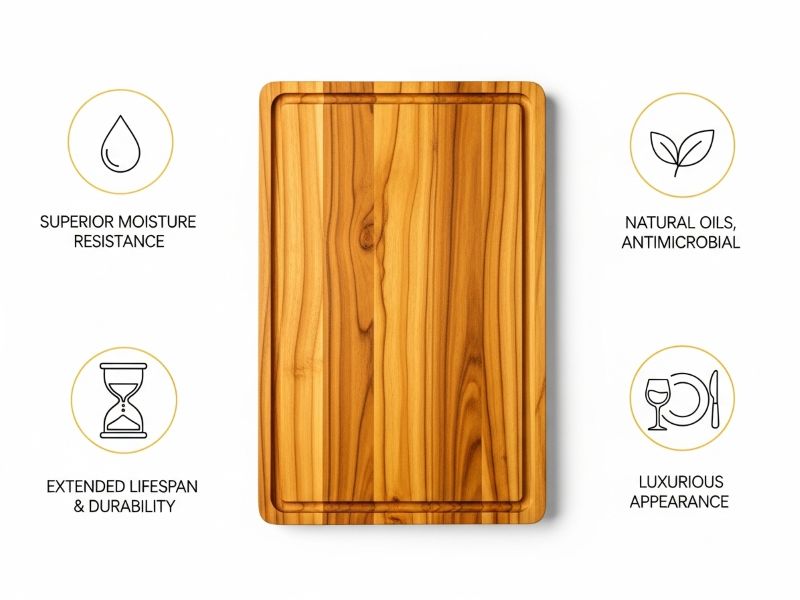
Natural oil content gives teak cutting boards inherent water and rot resistance that surpasses most other wood species. These oils, primarily tectoquinone, create a natural barrier against moisture penetration while providing antimicrobial properties. This characteristic makes teak particularly suitable for humid environments and frequent washing cycles.
- Luxurious appearance sets teak apart with rich golden-brown coloring and distinctive grain patterns. The exotic wood’s natural beauty improves with age, developing a deeper patina that enhances visual appeal. Many users choose teak specifically for its ability to function as both cutting surface and serving presentation piece.
- Low maintenance requirements reduce ongoing care responsibilities compared to other hardwoods. Teak’s natural oils eliminate the need for frequent conditioning treatments. Quarterly oiling suffices for most users, while some high-quality teak boards maintain their condition with minimal treatment for extended periods.
- Extended lifespan potential rewards proper care with decades of service. Teak’s density and oil content resist wear from regular use while maintaining structural integrity. Many commercial marine applications demonstrate teak’s longevity under harsh conditions, translating to exceptional durability in kitchen environments.
- Superior moisture resistance handles wet conditions that damage other woods. Teak cutting boards recover quickly from washing without warping or splitting concerns. This property makes them ideal for users who prefer thorough cleaning routines or live in high-humidity climates.
Read more:
Teak vs Walnut Cutting Boards: Which One Should You Choose?
Acacia vs Teak Cutting Board: Which Wood is Best for Your Kitchen?
Bamboo vs Teak Cutting Board: Pros, Cons, and Best Choice for Your Kitchen
Cons
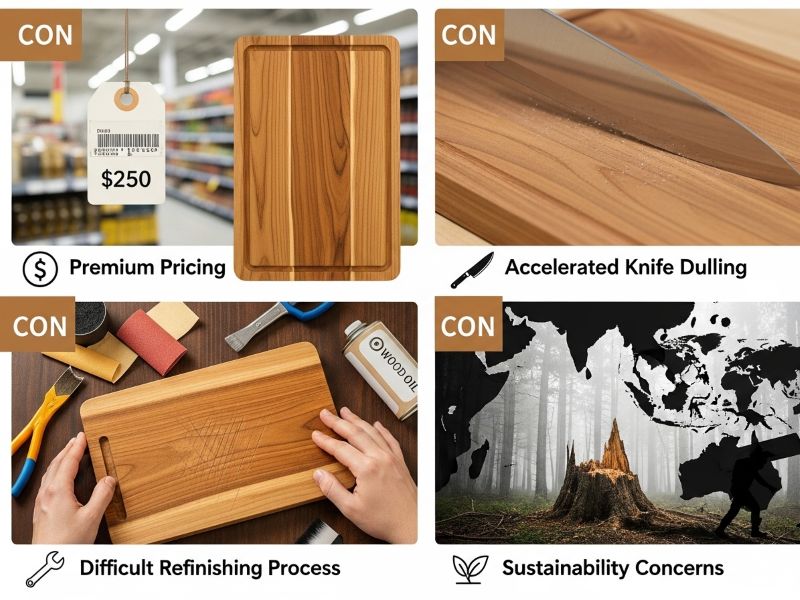
Premium pricing places teak cutting boards beyond many users’ budgets. Quality teak boards cost significantly more than maple alternatives, with prices reflecting the wood’s scarcity and desirable properties. This investment may not justify the benefits for casual cooks or budget-conscious buyers.
- Higher silica content in teak fibers causes accelerated knife dulling compared to softer woods. The mineral deposits embedded in teak’s structure create microscopic abrasive surfaces that gradually wear blade edges. Professional chefs often avoid teak for heavy prep work due to increased sharpening requirements.
- Difficult refinishing process complicates restoration when damage occurs. Teak’s oil content interferes with stain and finish adhesion, requiring specialized techniques for successful repair. Surface damage often necessitates professional restoration services, increasing long-term ownership costs.
- Sustainability concerns surround teak harvesting practices in many regions. Illegal logging and deforestation have made responsible teak sourcing challenging to verify. Buyers must research suppliers carefully to ensure their purchase supports legitimate plantation-grown or reclaimed teak rather than contributing to environmental degradation.
- Limited availability restricts options for replacement or matching pieces. Teak’s exotic nature means fewer suppliers and higher shipping costs. Regional availability varies significantly, potentially complicating future purchases or warranty service.
Head-to-Head Comparison: Maple vs Teak Cutting Boards
Direct comparison reveals how these two premium hardwoods perform across the metrics that matter most to serious cooks. Understanding their relative strengths helps identify which material better suits your specific kitchen needs and cooking style.
Quick Answer and Core Specifications
The choice between maple and teak centers on priorities: maple excels in knife care and affordability, while teak offers superior water resistance and luxury appeal. Each wood serves different user profiles and kitchen environments effectively.
| Feature | Maple | Teak |
|---|---|---|
| Durability | High (closed-grain) | Very High (natural oils) |
| Hardness (Janka) | 1,450 lbf | 1,070 lbf |
| Knife-Friendliness | Excellent | Good |
| Water Resistance | Moderate (requires maintenance) | Excellent (natural) |
| Maintenance Frequency | Monthly oiling | Quarterly oiling |
| Sustainability | Excellent (FSC available) | Variable (verify source) |
| Aesthetic Appeal | Clean, professional | Rich, exotic |
This comparison framework guides deeper analysis of performance characteristics that influence long-term satisfaction and value.
Strength, Hardness, and Knife Performance
Maple’s higher Janka hardness (1,450 lbf vs. teak’s 1,070 lbf) means it resists dents and damage better during heavy chopping. Its closed-grain structure distributes impact evenly, protecting both the board and your knives. This makes maple a reliable choice for kitchens that see frequent, high-impact prep work.
Teak’s slightly softer feel reduces strain on knife edges but its natural silica can dull blades 15-20% faster, requiring more frequent sharpening. Despite this, teak’s durability and natural oils give it excellent long-term stability, which is why many chefs still favor it. In commercial settings, maple retains its cutting quality longer, while teak demands a bit more blade care. For typical home cooking, however, the performance gap between the two is less noticeable.

Water Resistance, Hygiene, and Long-Term Care
Teak’s natural oils repel water better than maple, making it ideal for humid kitchens or tasks involving lots of moisture. Maple’s closed grain resists water well but can absorb more over time.
Both woods stay hygienic when cleaned and dried properly: maple blocks bacteria with its tight grain, while teak’s oils actively fight microbial growth.
Maintenance differs slightly:
- Maple: Oil monthly, dry immediately after washing, deep clean with salt and lemon as needed, and check yearly for refinishing.
- Teak: Light oiling every 3-4 months, mild soap cleaning, and air-drying.
Maple is easier to refinish – just sand and re-oil. Teak may need professional help for repairs due to its oily nature. Over 10 years, maple costs about $50-75 for upkeep, while teak uses $25-40 in oil but can be pricier to repair if damaged.
Style, Sustainability, and Choosing What Fits You
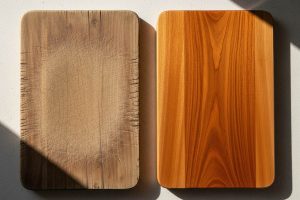
Maple’s light color and uniform grain suit modern, minimalist kitchens and pair well with stainless steel appliances. Its clean look gives a professional, timeless feel.
Teak offers rich golden-brown tones and exotic grain patterns, perfect for rustic or traditional kitchens. Its beauty deepens over time, making it great for both prep and serving.
On sustainability, maple is widely FSC-certified in North America, where responsible harvesting supports biodiversity. Teak requires more scrutiny – plantation-grown, certified teak is eco-friendly, but uncertified sources risk deforestation. Always check sourcing before buying.
Practical recommendations based on user profiles:
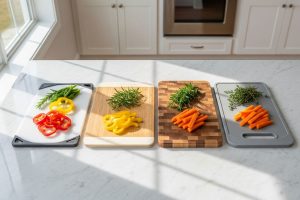
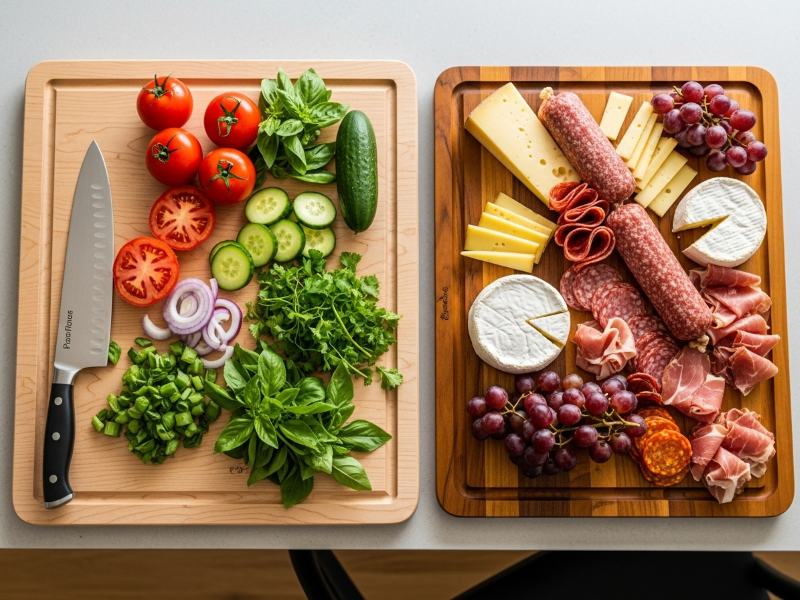
- Home cooks seeking versatility: Maple cutting boards offer the best balance of performance, cost, and maintenance requirements. The knife-friendly surface suits varied cutting tasks while remaining affordable enough for multiple board systems.
- Professional chefs prioritizing knife care: End-grain maple boards provide optimal knife preservation for high-volume prep work. The investment in quality maple construction pays dividends through reduced sharpening costs and extended blade life.
- Wet environment users: Teak’s superior moisture resistance makes it ideal for humid kitchens, outdoor cooking areas, or users who prefer thorough washing routines. The natural water-repelling properties reduce maintenance concerns in challenging conditions.
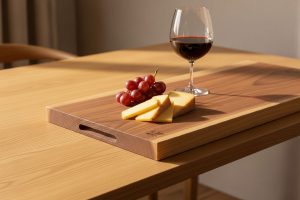
- Presentation-focused users: Teak cutting boards excel as serving pieces that transition from prep work to table presentation. The luxury appearance justifies the premium cost for users who value aesthetic appeal and entertaining functionality.
Conclusion
Choosing between maple and teak cutting boards depends on your cooking habits, maintenance style, and budget. Maple offers excellent value with its knife-friendly surface, affordable price, and easy care – perfect for most home cooks and widely available through sustainable forestry practices.
Teak delivers premium performance, with superior water resistance, natural oils, and lasting beauty. It suits those who want minimal upkeep and luxury appeal, though it comes with higher costs and the need for verified sustainable sourcing.
When deciding on Maple vs Teak Cutting Boards, consider three key questions: How often do you prep food? How much maintenance are you willing to do? Does appearance matter for serving? Heavy daily use favors maple, while teak appeals to those prioritizing convenience and style. Matched to your needs, either option will serve your kitchen reliably for years.