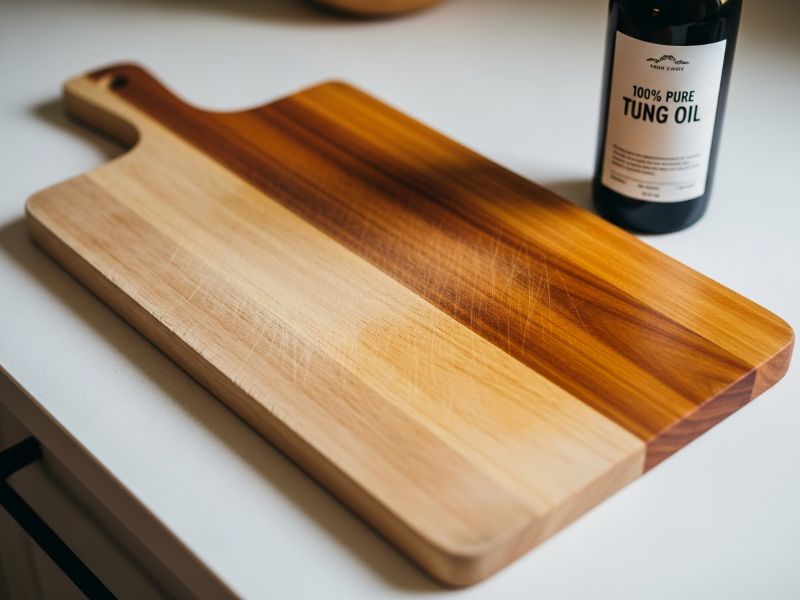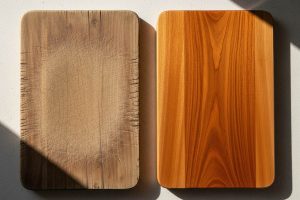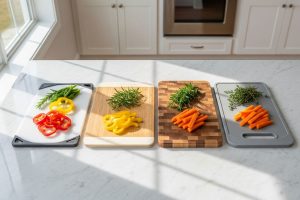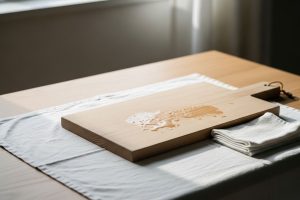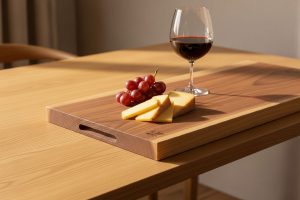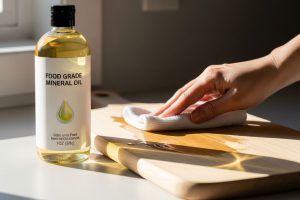
Is tung oil safe for cutting boards? Yes – when it’s 100% pure and properly cured, tung oil is one of the safest, most durable finishes you can use. It not only protects your board from water and stains but also enhances the wood’s natural beauty. This guide explains why tung oil stands out, how it compares with other finishes, and what experts recommend for long-term performance.
What Is Tung Oil?
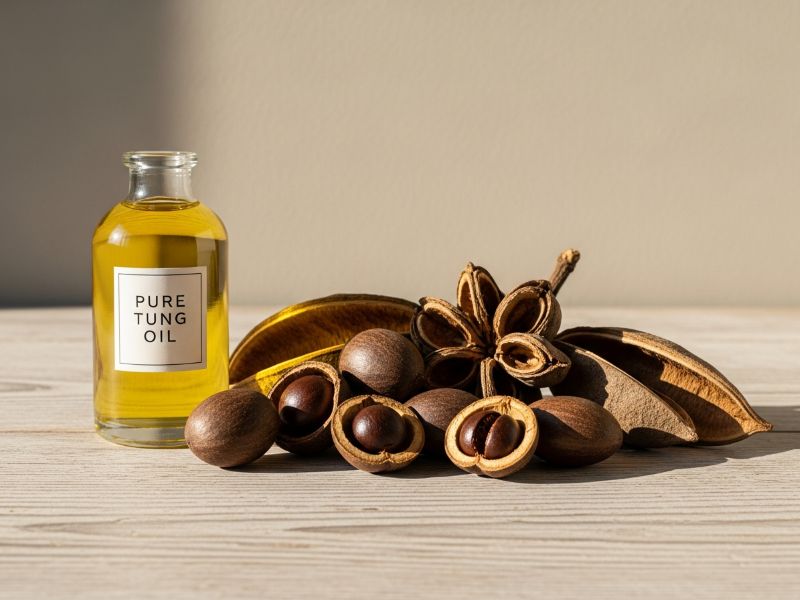
Wood naturally absorbs moisture and bacteria, making a protective finish essential for cutting boards. Tung oil, derived from the seeds of the tung tree (Aleurites fordii), has been used for centuries to waterproof and preserve wood. Unlike synthetic coatings, pure tung oil penetrates deep into the grain, then polymerizes into a hard, water-resistant layer. This creates a natural barrier that repels moisture while allowing the wood to breathe – enhancing durability and food safety without chemicals.
How Tung Oil Works
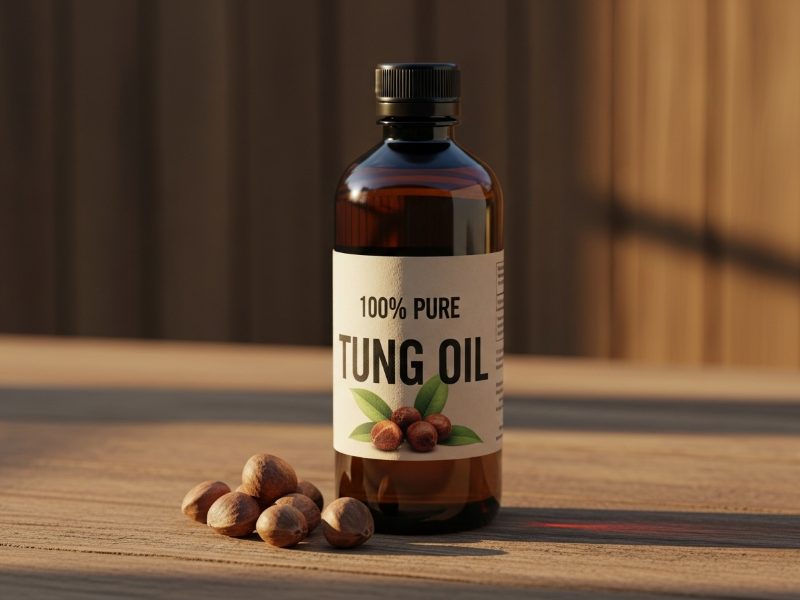
When applied to wood, tung oil slowly reacts with oxygen in the air and hardens – a natural process called polymerization. Instead of just drying on the surface, it seeps deep into the wood fibers and bonds from within. As it cures, the oil forms a thin, flexible layer that blocks moisture and prevents warping or cracking.
Unlike oils such as olive or vegetable oil that stay greasy and can turn rancid, fully cured tung oil becomes dry, stable, and completely food-safe – making it an ideal protective finish for cutting boards.
Types of Tung Oil
Not all products labeled “tung oil” offer the same composition or safety profile. Understanding these distinctions prevents mistakes that compromise food safety.
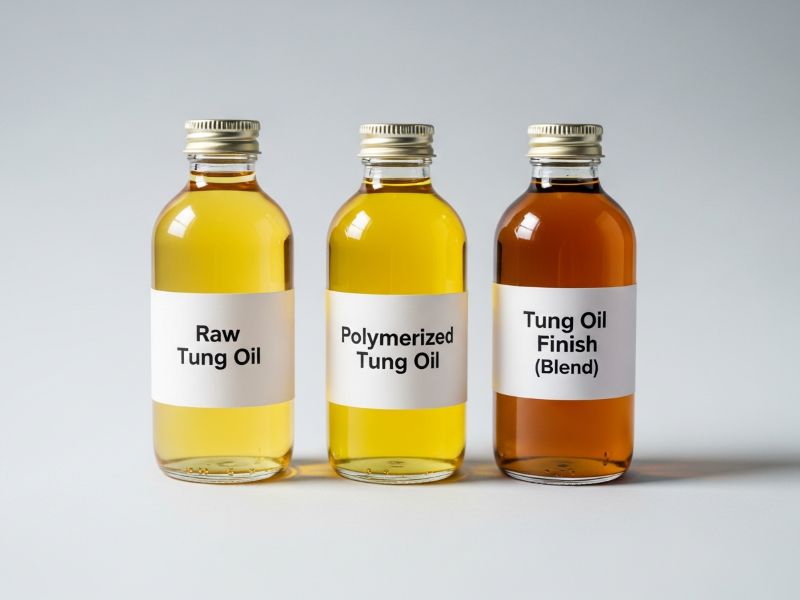
Raw Tung Oil consists of pure, cold-pressed oil with no additives. This form takes the longest to cure, typically 7-30 days depending on temperature and humidity, but provides the safest option for cutting boards. The slow curing time results from natural oxidation without chemical accelerators.
Polymerized Tung Oil undergoes heat treatment that partially completes the polymerization process before application. This pre-polymerization reduces curing time and creates a harder initial film. When produced without solvents or drying agents, polymerized tung oil remains food-safe. The heat process mimics the natural oxidation that would occur over weeks, condensing it into manufacturing time.
Tung Oil Finish describes commercial blends that contain tung oil mixed with solvents, resins, and drying agents. These products cure faster and apply more easily than pure tung oil, but the additives often include chemicals unsuitable for food contact. Many “tung oil finish” products contain more varnish than actual tung oil.
Only pure or polymerized additive-free tung oil qualifies as food-safe once the curing process completes. Product labels require careful examination to distinguish between these categories.
Is Tung Oil Safe for Cutting Boards?
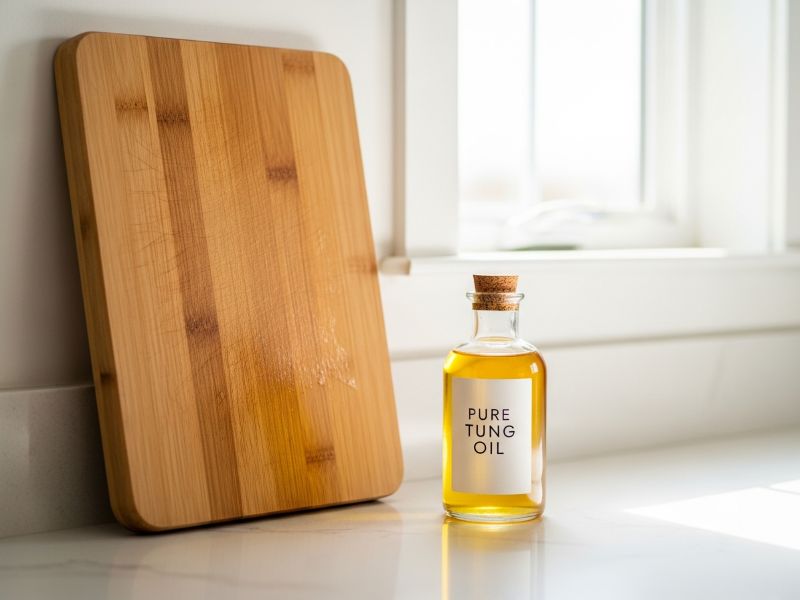
Yes – pure, fully cured tung oil is food-safe. Once it oxidizes and hardens, it becomes a stable, non-toxic finish that won’t leach chemicals or go rancid. The key is using 100% pure tung oil and allowing it to fully cure before food contact.
Problems arise with products labeled “tung oil finish” – these often contain solvents, resins, or varnishes and may include only 10–30% real tung oil, making them unsafe for cutting boards.
Understanding Food Safety Standards
The FDA allows natural oils like tung oil for food-contact surfaces only after they fully polymerize. Curing is a chemical process – not just drying – that can take several weeks. Once cured, the oil forms an inert barrier that won’t contaminate food.
Despite coming from tree seeds, tung oil causes no nut allergy risk, since it contains no proteins after processing.
How to Verify Product Purity
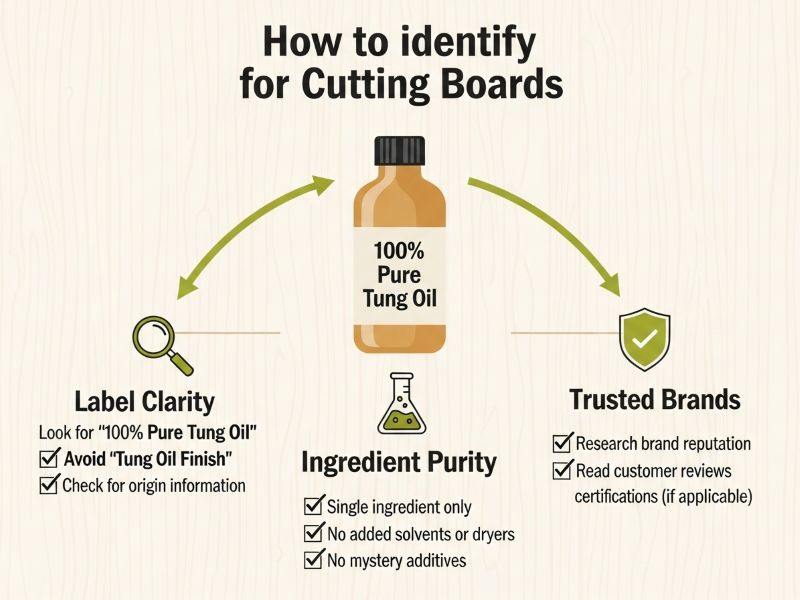
Choosing the right tung oil can be confusing because many products use similar names but contain very different ingredients. To keep your cutting board safe, focus on three things: label clarity, ingredient purity, and brand reputation.
Check the label carefully. Only buy oils clearly labeled “100% Pure Tung Oil” or “Cold-Pressed Pure Tung Oil.” These products contain nothing but natural tung oil, without added solvents or resins.
Watch out for misleading names. Avoid products marketed as “Tung Oil Finish,” “Fast-Drying Tung Oil,” or “Tung Oil Varnish.” These often include synthetic drying agents or mineral spirits — fine for furniture, but not for surfaces that touch food.
Choose trusted brands. Reputable options like Hope’s, Real Milk Paint Co., and Tried & True clearly disclose their ingredients and comply with food-contact safety standards. These brands are widely used by woodworkers who make cutting boards, salad bowls, and utensils meant for everyday kitchen use.
Tung Oil vs Mineral Oil for Cutting Boards
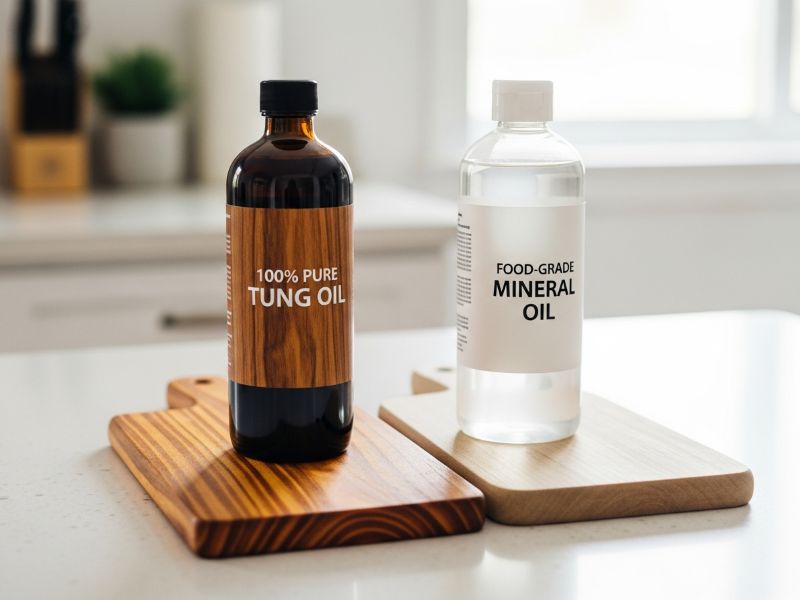
When it comes to maintaining a wooden cutting board, most people debate between tung oil and mineral oil. Both protect wood from moisture and food stains, but they work in very different ways – and each has its pros and cons.
How They Work
Mineral oil is a clear, odorless, food-grade petroleum oil approved by the FDA. It soaks into the wood fibers, filling pores and blocking water from entering. However, it never hardens – it stays liquid inside the wood. This makes it easy to apply and immediately food-safe, but it gradually washes out, requiring frequent reapplication (usually once a month).
Tung oil, on the other hand, is a natural drying oil from the tung tree. It penetrates deep into the wood, then hardens through oxidation into a thin, durable film that repels moisture. Once cured, it forms a semi-permanent barrier that resists water and bacteria far better than mineral oil. The trade-off? It takes weeks to fully cure and needs careful application.
Effectiveness Comparison (Tung Oil vs Mineral Oil)
Evaluating these finishes requires examining multiple performance factors and understanding how each affects daily use. The optimal choice depends on your priorities, usage patterns, and willingness to invest time in board maintenance.
| Factor | Tung Oil | Mineral Oil |
|---|---|---|
| Moisture Resistance | Excellent (polymerized barrier) | Good (displacement only) |
| Durability | High (years with minimal care) | Moderate (requires monthly reapplication) |
| Ease of Application | Moderate (technique-dependent) | Simple (foolproof) |
| Food Safety | Safe when fully cured | Immediately safe |
| Knife-Friendliness | Moderate (harder surface) | High (softer surface) |
| Maintenance Frequency | Annual or less | Monthly |
| Initial Time Investment | High (weeks of curing) | None (immediate use) |
Moisture resistance affects how wood withstands washing. Tung oil creates a water-repellent barrier that allows water to bead off easily, while mineral oil saturates pores and requires more frequent reapplications.
Durability is key for finishes. Tung oil can last for years with only 2-3 reapplications over five years, while mineral oil needs about 60 monthly applications for protection.
For cutting boards, both finishes are effective with proper care. Tung oil is best for those who prefer less maintenance, while mineral oil works for those who don’t mind monthly upkeep. Decorative boards benefit from tung oil’s longevity, while mineral oil’s self-healing properties are better for heavily used boards.
Read more: 7 Best Oils for Cutting Boards: Complete Food-Safe Guide (2025 Update)
How to Use Tung Oil on Cutting Boards (Step by Step)
Applying tung oil properly is key to getting a safe, durable finish. Here’s a simple step-by-step process:
1. Clean and dry the board. Wash with mild soap, rinse, and let it dry completely for 1–2 days. Any moisture will prevent proper curing.
2. Sand lightly (optional). Use fine-grit sandpaper (around 220) to smooth the surface and open wood pores. Wipe away dust.
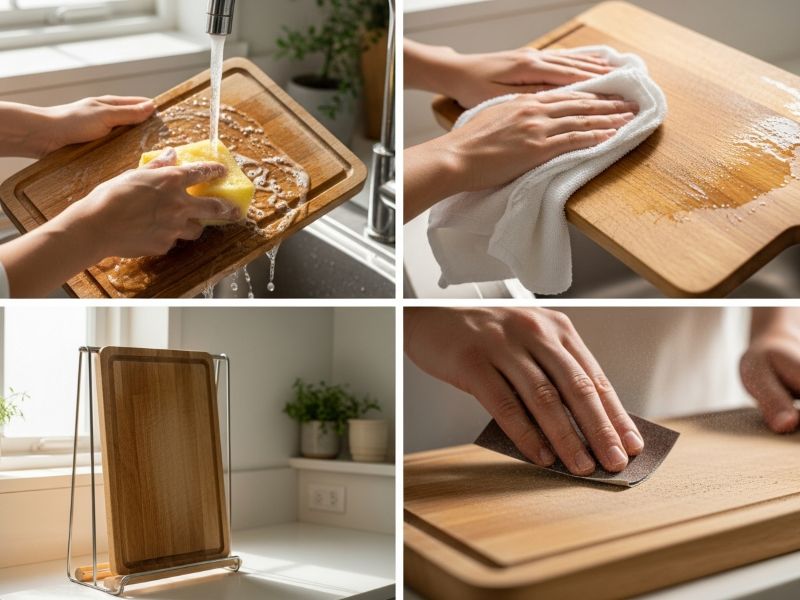
3. Apply a thin coat of pure tung oil. Use a lint-free cloth to rub oil evenly along the grain. Avoid thick layers – they cure poorly.
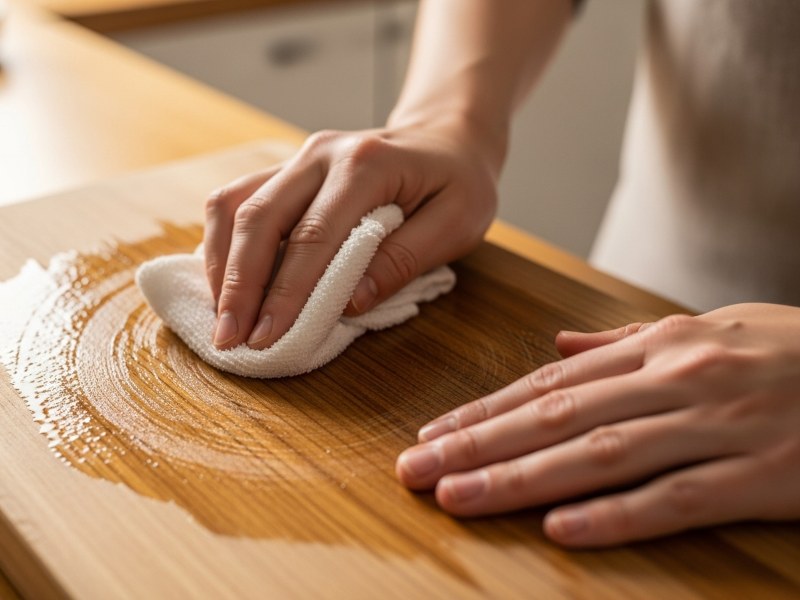
4. Let it soak, then wipe off. After 30–60 minutes, wipe away all excess oil with a clean cloth to prevent stickiness.
5. Let it cure. Allow at least 24 hours between coats. Apply 2–3 thin coats for best results. Full curing may take 1–3 weeks depending on temperature and humidity.
Once cured, the board is fully food-safe and protected from moisture, stains, and bacteria.
Read more: How to Oil a Cutting Board: Step-by-Step Guide for Long-Lasting Resltsu
Final Recommendation
Both tung oil and mineral oil protect cutting boards well – the difference lies in how much time and care you’re willing to invest.
- Choose pure tung oil if you want a long-lasting, professional finish and don’t mind waiting for it to cure. It offers stronger water resistance, richer color, and less frequent maintenance.
- Choose food-grade mineral oil if you prefer quick, simple upkeep. It’s safe right away, easy to reapply, and ideal for everyday kitchen use.
In short: tung oil for longevity and beauty; mineral oil for convenience and speed. The best finish is the one you’ll actually maintain.