When choosing a cutting board for a commercial kitchen, it’s not just about durability or convenience. Strict food safety laws require boards that meet hygiene standards, resist cross-contamination, and satisfy health inspectors. The right choice must balance compliance with HACCP regulations, withstand the heavy volume of daily prep, and support kitchen efficiency.
Commercial Kitchen Requirements
Commercial kitchens must meet strict food safety standards under frameworks like HACCP, the FDA Food Code, and USDA/FSIS regulations. These mandates require cutting boards to be non-absorbent, smooth, easily sanitized, and NSF-certified. In practice, this means most kitchens rely on high-density plastic cutting boards rather than wood.
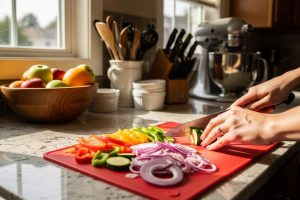
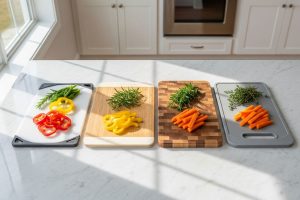
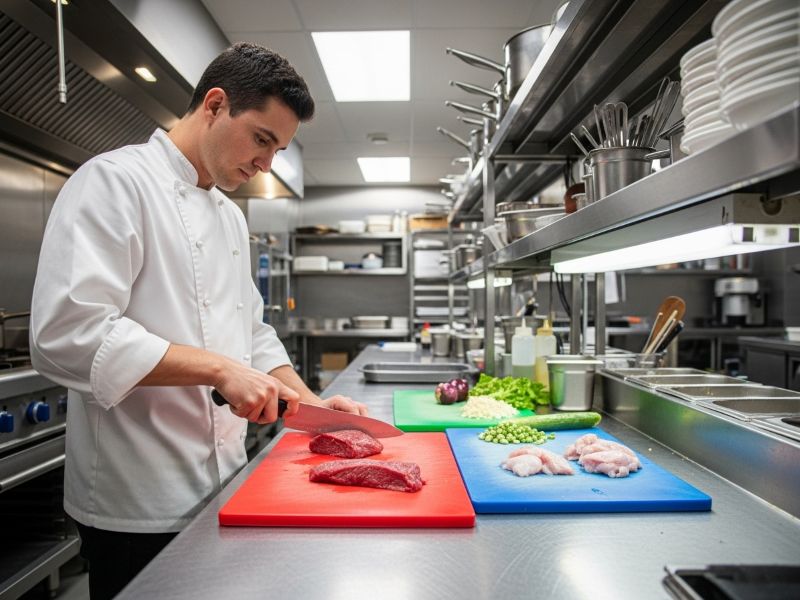
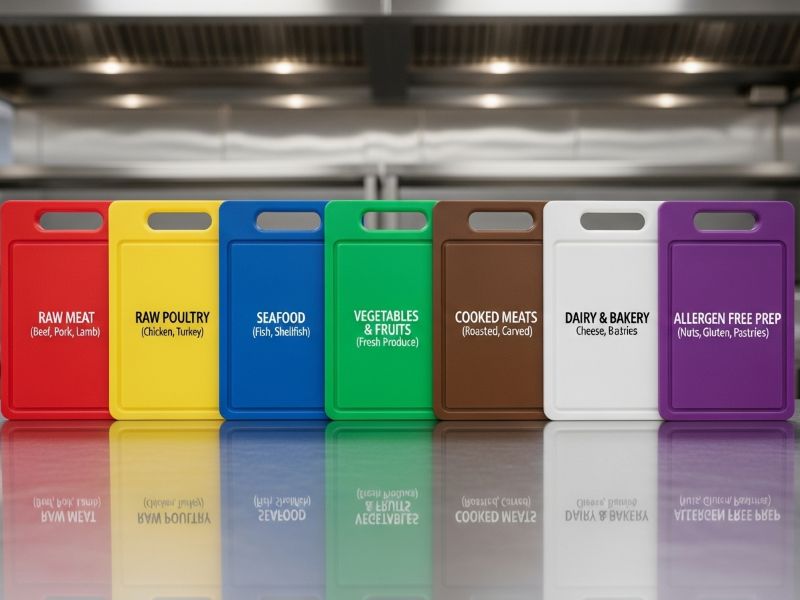
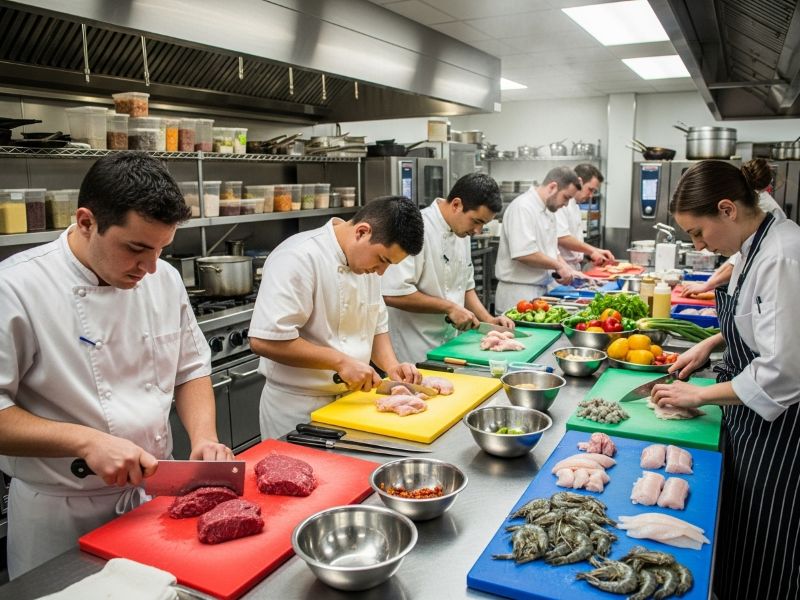
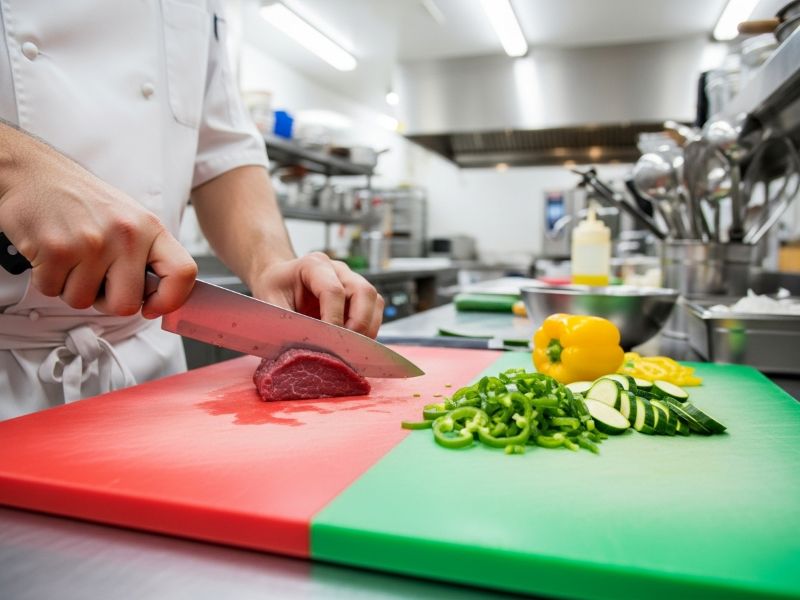
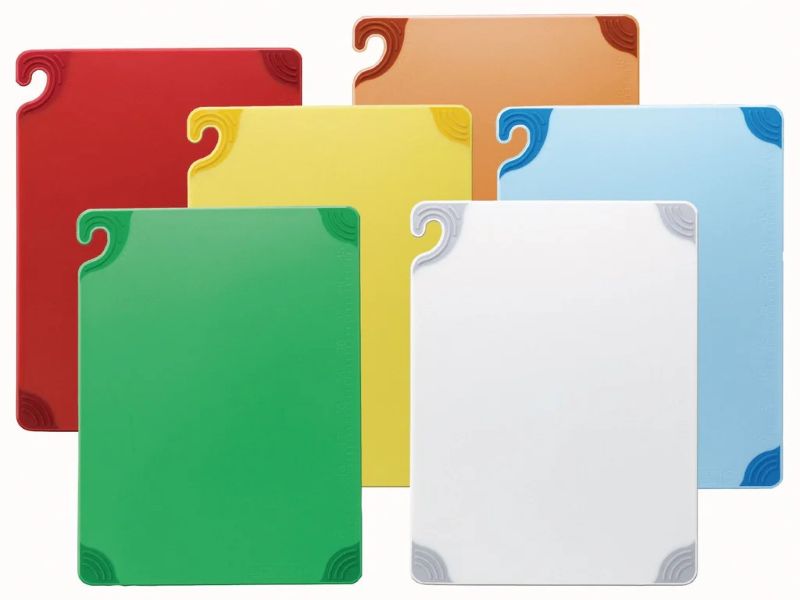
Color-coded cutting boards are an essential tool for preventing cross-contamination in professional kitchens. Red boards are for raw red meat such as beef, pork, and lamb. Yellow boards are for raw poultry like chicken, duck, or turkey. Blue boards are for seafood including fish and shellfish. Green boards are for fresh vegetables and fruits. Brown boards are commonly used for cooked meats at carving stations, though in some systems they may be assigned to root vegetables — consistency with your HACCP plan is important. White boards are used for dairy, bread, and bakery items. Finally, Purple boards are reserved for allergen-free prep to avoid cross-contact with common allergens such as nuts, gluten, or dairy.
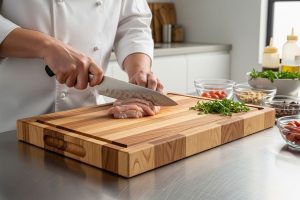
Wood cutting boards, despite being valued for their durability and knife friendliness, are generally restricted in prep areas because most species cannot meet NSF sanitation standards. Only certain fine-grained hardwoods, such as hard maple, are sometimes allowed in limited applications like carving stations, but plastic remains the dominant choice for everyday commercial prep lines.
Beyond regulations, the reality of a commercial kitchen is one of speed, volume, and constant sanitation. Dozens of staff handle multiple ingredients simultaneously, making cross-contamination a daily risk. Cutting boards must not only withstand heavy use but also allow for quick cleaning and clear food separation. The right board choice becomes essential to keep workflows efficient, knives performing well, and hygiene standards consistently met in such a demanding environment.
Choosing the Right Commercial Cutting Board
Key Decision Factors
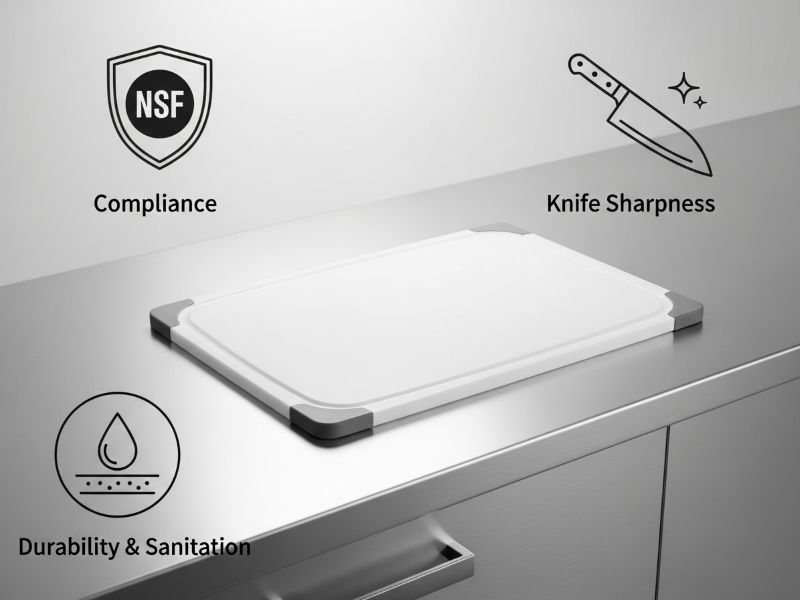
In commercial kitchens, regulatory compliance always comes first. Health departments and HACCP systems require cutting boards that are NSF-certified, non-porous, and color-coded to prevent cross-contamination. A board that fails inspection can mean costly fines or even immediate shutdown.
After compliance, durability and sanitation are critical. Boards in high-volume kitchens face thousands of cuts daily. If the surface develops deep grooves, they quickly become harborage sites for bacteria and must be replaced. A durable board reduces replacement frequency, saving both cost and operational downtime.
Knife performance is another key factor. Dull knives slow prep speed and increase the risk of accidents. Slightly softer surfaces extend knife sharpness, while harder materials withstand heavier chopping but may require more frequent sharpening.
Use-Case Applications
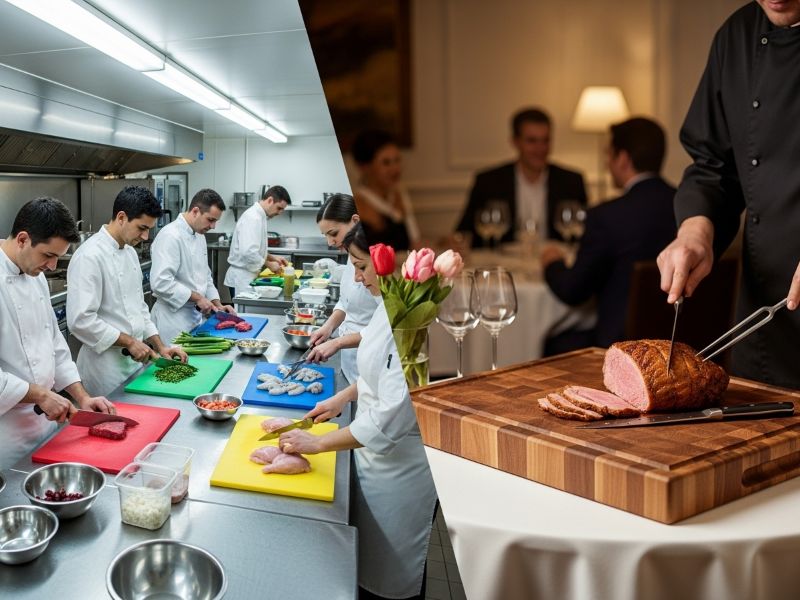
In most HACCP systems, cutting boards are color-coded to prevent cross-contamination. Each color corresponds to a specific food group, making it easier for kitchen staff to follow food safety protocols:
- Red – Raw Meat: Used for raw red meats such as beef, pork, and lamb.
- Yellow – Raw Poultry: Designated for raw poultry such as chicken, duck, or turkey.
- Blue – Seafood: Assigned to raw fish and shellfish,
- Green – Vegetables & Fruits: Used for fresh produce.
- Brown – Cooked Meats: Commonly used for roasted or cooked meats at carving stations. In some systems, however, brown may be designated for root vegetables, so consistency with your HACCP plan is essential.
- White – Dairy & Bakery: Used for cheese, bread, pastries, and other ready-to-eat items.
- Purple – Allergen-Free Prep: Reserved for allergen-sensitive stations to prevent cross-contact with common allergens such as nuts, gluten, or dairy.
- Front-of-House Presentation: Some fine dining operations still use hardwood end-grain boards (like maple or walnut) for carving or presentation due to their knife-friendliness and aesthetics. However, in back-of-house prep, color-coded HDPE plastic remains the standard for hygiene and compliance.
Scale and Budget Considerations
- Small restaurants often seek versatile boards that balance compliance with cost — for example, maintaining a smaller set of color-coded plastic boards for all prep tasks.
- Large operations typically invest in a full color-coded system, stocking multiple NSF boards for each category to rotate during busy shifts. They may also use specialized boards for high-volume meat cutting, sushi prep, or pastry work.
Recommended Cutting Boards for Commercial Kitchens
Plastic Boards (HACCP Compliance)
Plastic cutting boards are the most widely used in commercial kitchens. They meet HACCP and FDA Food Code requirements by being non-porous, smooth, NSF-certified, and color-coded for food separation. The system is standardized across the industry: red for raw meat, blue for seafood, green for vegetables, yellow for cook
- Dull knife edges faster than hardwood
- Require frequent replacement, typically every 6–12 months
- Higher lifetime costs despite low initial price
In practice, plastic boards dominate prep stations for raw meat, seafood, and high-volume vegetable prep. Their high-density polyethylene construction resists warping, withstands repeated sanitizing cycles, and provides the stability required for heavy daily use — making them the industry standard for compliance and safety in commercial kitchens.
Wooden Cutting Boards (Limited Commercial Use)
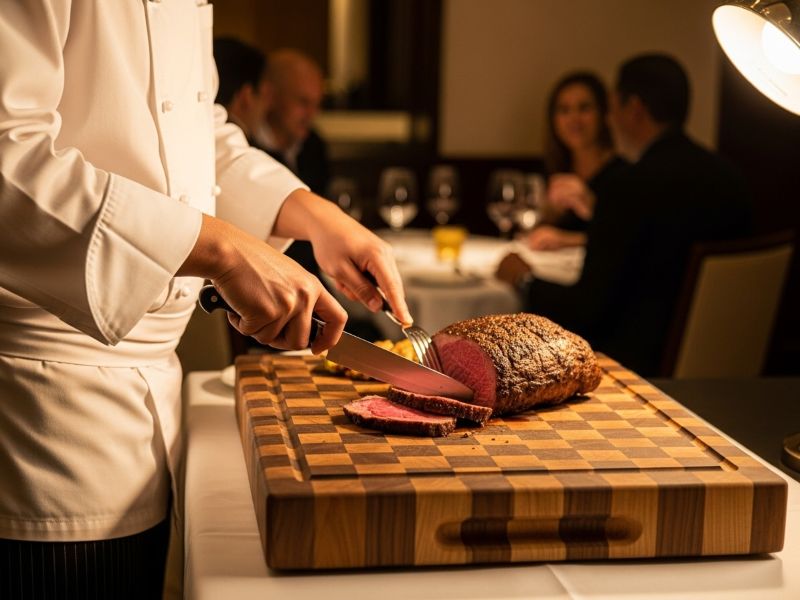
Wooden boards are prized for their knife-friendliness, durability, and natural antimicrobial qualities, but commercial use is restricted by many health codes. While hardwoods like maple may be allowed in carving or presentation, most prep stations prohibit wood due to its porous nature and lack of NSF certification.
Pros: Gentle on knives, natural antimicrobial effect, self-healing surface, attractive for presentation, long lifespan with proper care.
Cons: Often restricted by regulations, require hand-washing and oiling, not dishwasher-safe, higher cost, and maintenance-heavy under commercial use.
Best Use: Carving stations, bread service, plating, and front-of-house displays. Always confirm with local health authorities before use.
Bamboo Boards (Sustainable Commercial Option)
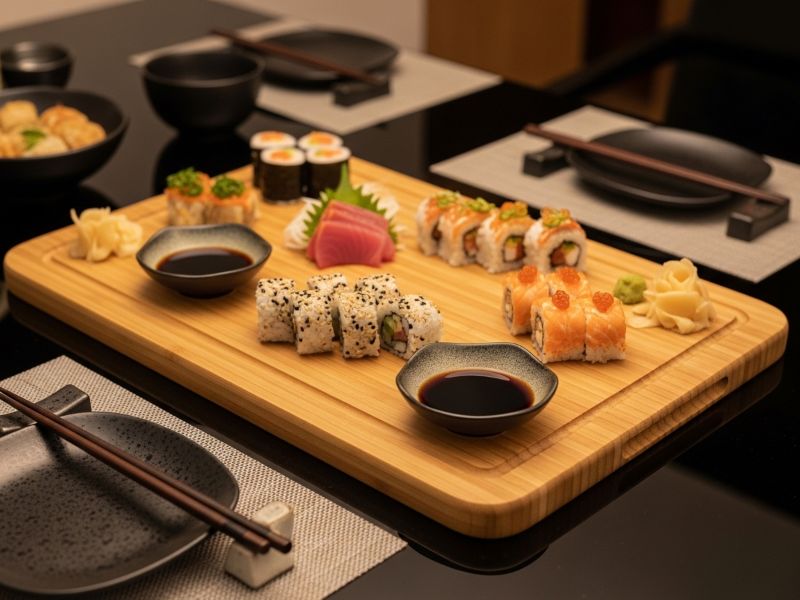
Bamboo matures in just 3–5 years, making it attractive for restaurants that emphasize eco-friendly branding. Lighter and more affordable than hardwood, bamboo is easy for staff to handle and looks modern in open kitchens.
Pros: Sustainable image, lightweight, low cost, visually appealing.
Cons: Dulls knives faster due to silica, limited regulatory approval, shorter lifespan under heavy use, quality varies with cheaper boards.
Best Use: Light prep (fruits, garnishes, baked goods) or front-of-house service like bread, cheese, or casual plating. Heavy raw protein prep still relies on NSF plastic boards.
Modern Upgrade: Koppen’s MoistureBlock™ Bamboo-Tech board overcomes traditional flaws with thermo-treatment and lime curing, improving hardness, reducing moisture absorption, and extending lifespan for real kitchen durability.
Composite/Resin Boards (Hybrid Solution)
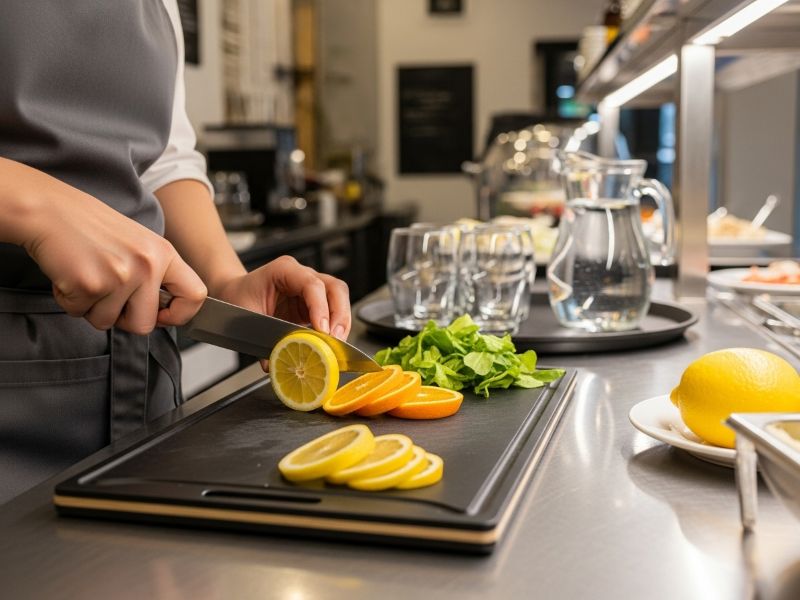
Made from wood fibers and food-safe resins, these boards are NSF-certified, dishwasher safe, and chemical resistant, offering a sleeker look than plastic.
Pros: Meet health standards, dishwasher safe, chemical tolerant, slim and lightweight, more knife-friendly than plastic, professional appearance.
Cons: Dull knives faster than wood, higher cost than plastic, limited sizes, less eco-friendly.
Best Use: Ideal for cafés, catering, and small restaurants that need easy sanitization, storage efficiency, and a polished look. Less suited for high-volume prep where knife longevity is critical.
Cutting Boards You Should NOT Use in Commercial Kitchens
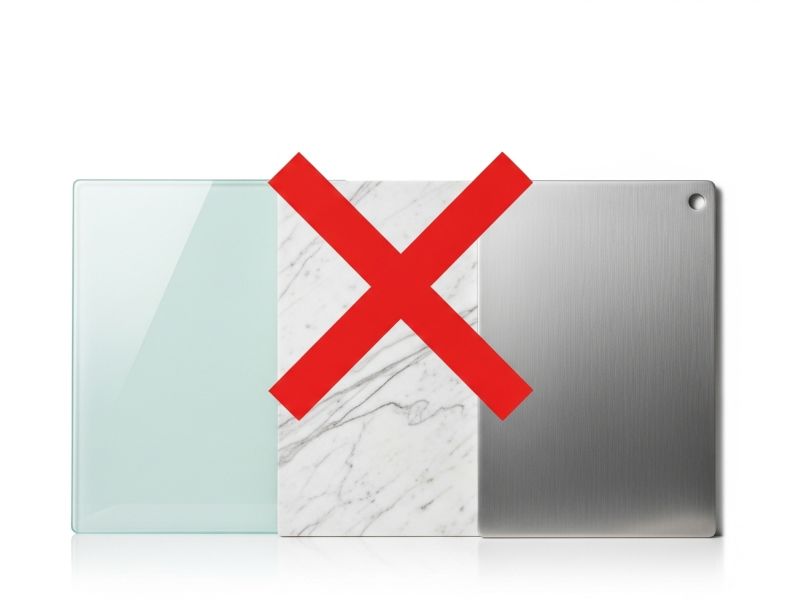
Glass, Marble, and Steel Surfaces
Some cutting board materials may look modern or hygienic, but in a professional kitchen they create more problems than benefits. Glass, marble, and steel boards are especially unsuitable. Their extreme hardness damages knives rapidly — tests show glass can dull blades up to 50% faster than wood — while also creating slippery surfaces that raise accident risks. The loud clattering noise further disrupts communication in a busy kitchen, and there are no practical food safety advantages to offset these issues.
Why they’re avoided:
- Destroy knife edges and increase replacement costs
- Slippery surfaces create safety hazards
- Excessive noise disrupts workflow
- No proven benefits over plastic, wood, or composite boards
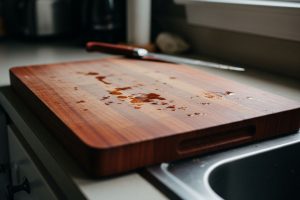
Another material to avoid is untreated or raw wood. Unlike sealed or NSF-approved hardwood boards, raw wood absorbs liquids, harbors bacteria in its pores, and deteriorates quickly under commercial sanitation protocols. Health departments specifically prohibit porous, unfinished wood surfaces because they cannot be properly cleaned or disinfected. Only treated hardwood that meets sanitation standards may be used, and usually in limited applications like carving stations or presentations.
Cutting Boards Recommended by Koppen Home Living
San Jamar Saf-T-Grip Cutting Board
San Jamar Saf-T-Grip Cutting Board earns our top recommendation among plastic NSF-certified options for commercial kitchens, thanks to its HACCP color-coding, non-slip grip corners, and professional durability. This board is designed specifically for foodservice operations that demand compliance, safety, and efficiency.
Key Specifications:
- Dimensions: 18” x 12” x 0.5”, 24” x 18” x 0.5”
- Material: High-Density Polyethylene (HDPE), NSF-certified
- Construction: HACCP color-coded with molded rubber grip corners
- Price Range: $168–$200 (set pricing)
The Saf-T-Grip series combines durability with HACCP compliance. Rubber grip corners keep the board stable, while color-coded options ensure proper food separation. Its non-porous HDPE surface resists warping, handles high-temp dishwashers, and withstands heavy daily use—making it a trusted choice for restaurants, caterers, and institutional kitchens.
John Boos CCB Series Maple Chopping Block
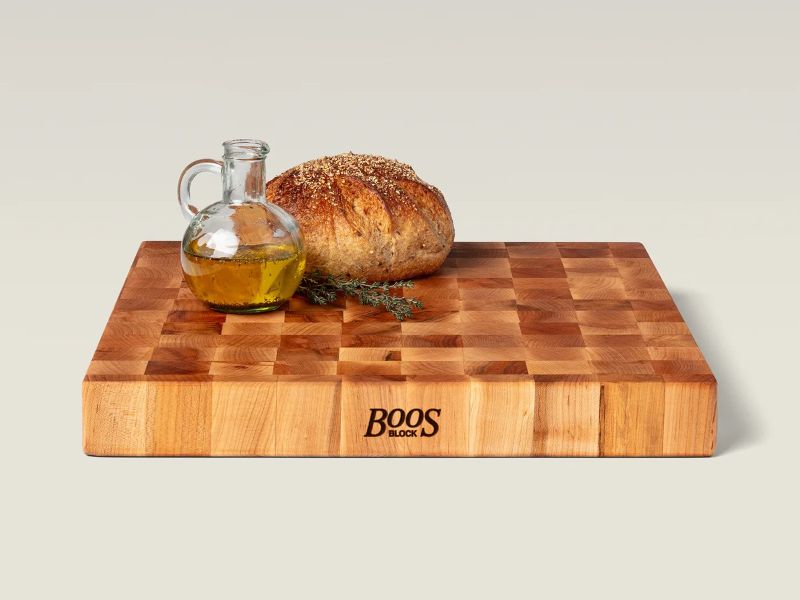
John Boos CCB Series Maple Chopping Block is a true workhorse for professional kitchens, built to handle the toughest demands of high-volume foodservice. With massive end-grain maple construction and a non-reversible design, these boards deliver unmatched durability and knife protection—making them a fixture in restaurant prep lines and carving stations.
Key Specifications:
- Dimensions: 20″ × 23″, 26″ × 24″, 48″ × 24″
- Material: End-grain American hard rock maple, sustainably sourced
- Construction: 4-inch thick, non-reversible end-grain block
- Weight: 80 – 128 lbs (depending on size)
- Price Range: $789 – $1,172
The extraordinary 4-inch thickness ensures rock-solid stability, even under hours of chopping, butchering, and carving in busy kitchens. Its end-grain surface “self-heals” from cuts, preserving both the board and the sharpness of professional knives—a key advantage for chefs working long prep shifts.
Because of their weight and size, these boards are best suited for dedicated prep stations, butchery blocks, and restaurant carving displays, where stability and longevity matter more than portability. Made in the USA, the CCB Series has become a trusted standard in commercial kitchens worldwide, blending craftsmanship with sustainability.
Koppen 3-Layer MoistureBlock™ Bamboo-Tech Cutting Board
Koppen 3-Layer MoistureBlock™ Bamboo-Tech Cutting Board offers a unique balance of sustainability, compliance, and professional performance. Engineered with proprietary ThermoTreated Technology, these boards achieve 3× the water resistance of standard bamboo, along with greater hardness and durability for heavy commercial use. Unlike conventional bamboo boards, they are also dishwasher safe, maintaining their integrity and hygiene even after repeated washing cycles, making them practical for modern professional kitchens.
Key Specifications:
- Dimensions: 15″ × 11″, 13″ × 9″
- Material: 3-layer thermally treated bamboo
- Construction: MoistureBlock™ Bamboo-Tech, naturally antibacterial, maintenance-free
- Price Range: $35 – $45
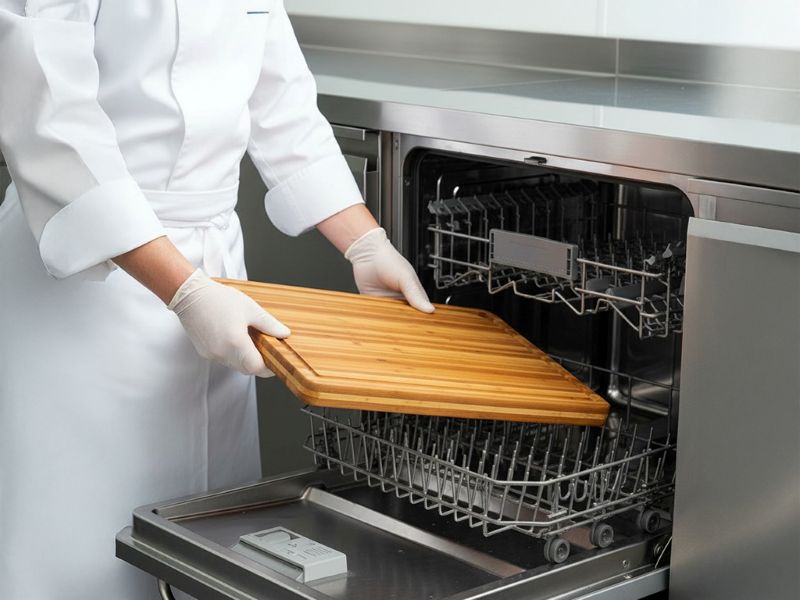
The naturally antibacterial surface makes these boards safe for both raw prep and cooked food handling, offering restaurants a versatile multi-station solution. Unlike conventional bamboo or hardwood boards, they require no oiling or special upkeep, helping kitchens cut down on labor costs and maintain consistent hygiene in fast-paced service environments.
Beyond utility, the refined bamboo grain and smooth finish make MoistureBlock™ boards ideal for presentation and plating. They are particularly popular in Asian restaurants, where bamboo conveys cultural authenticity and craftsmanship while still meeting modern safety standards.
For chefs seeking a cost-effective yet durable option, Koppen’s MoistureBlock™ series stands out—delivering eco-friendly performance that elevates both back-of-house workflow and front-of-house presentation.
Conclusion & Takeaways
Choosing the right cutting board for a commercial kitchen starts with local health regulations. Compliance is mandatory, and what is permitted in one jurisdiction may not be in another. Confirming the rules where your restaurant operates ensures food safety and avoids costly violations.
Beyond compliance, consider operational efficiency, durability, and long-term costs. Plastic remains the standard for prep lines, while wood, bamboo, or composites may be used in carving, plating, or presentation where allowed. The best choice is one that satisfies inspectors, protects your knives, and supports smooth daily operations.