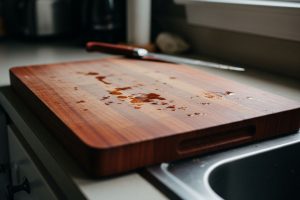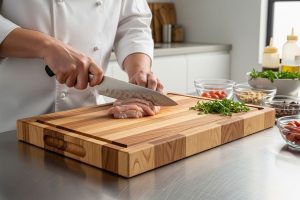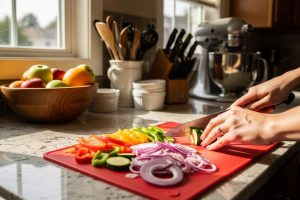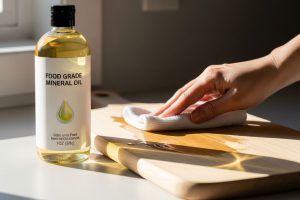
Where can you safely store clean cutting boards? The answer matters more than most home cooks realize. A damp or poorly stored board can trap moisture, grow mold, and even spread cross-contamination back onto your food. Storing them properly isn’t just about neat organization – it’s about protecting your family’s health and making your boards last longer. Whether you rely on wood, bamboo, or plastic, the key rules are the same: keep them completely dry, allow airflow, and avoid closed, humid spaces. In this guide, we’ll show you exactly how to do it right in any kitchen setup.

Why Proper Storage of Cutting Boards Matters
Proper storage isn’t just about keeping your kitchen tidy – it directly impacts food safety and the lifespan of your boards. Done right, it helps you:
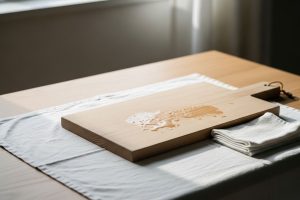
Prevent mold and mildew from lingering moisture. Even microscopic water droplets trapped between stacked boards can spawn fungal growth within 24 hours, especially in warm kitchens.
Avoid pests like termites or wood-boring insects (especially for wood and bamboo boards). These unwanted visitors are attracted to damp wood fibers and can quickly damage your premium boards beyond repair.
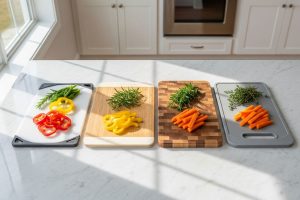
Reduce cross-contamination risks by separating clean boards from raw food contact areas. Storing boards properly ensures they stay sanitized between uses, preventing bacteria from previous meals from contaminating fresh ingredients.
Extend durability by protecting boards from warping, cracking, or lingering odors. Proper airflow and positioning prevent the wood grain from expanding unevenly, which causes those frustrating cracks and splits that ruin even the finest boards.

Golden Rules for Storing Cutting Boards
Before exploring specific storage locations, master these fundamental principles that apply to every cutting board in your collection:
Make sure the board is completely dry before putting it away. Run your hand across both surfaces and edges – any dampness means it needs more drying time. This single step prevents 90% of storage-related problems.
Store upright with airflow – racks, wall hooks, or open slots keep moisture from being trapped. Vertical positioning allows gravity to pull any remaining moisture downward while air circulates around all surfaces.
Avoid stacking flat in closed cabinets where dampness can build up. Horizontal stacking creates pockets where moisture gets trapped between boards, turning your storage area into a petri dish for bacteria and mold.

How Different Cutting Board Materials Should Be Stored
Wood & Bamboo Boards
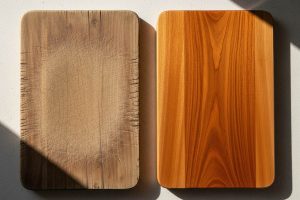
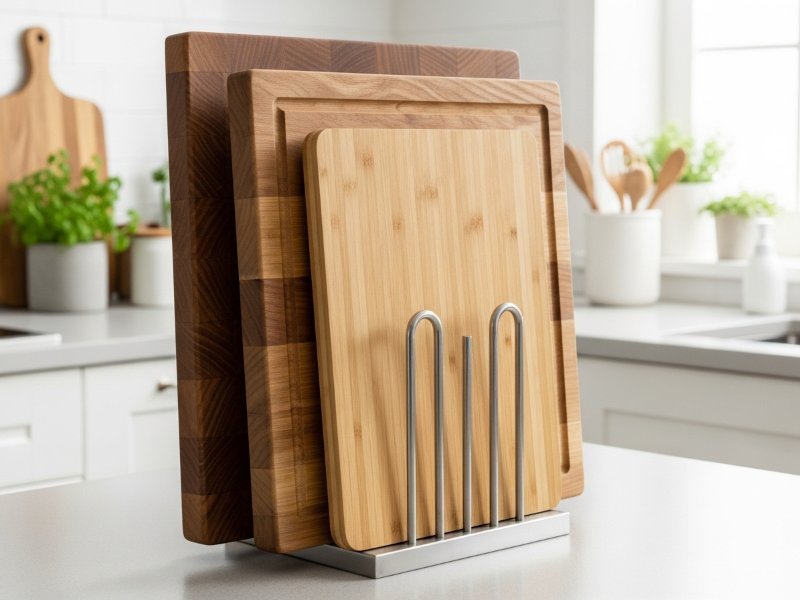
Wood and bamboo need the most attention after washing. Let them dry completely — at least an hour propped on a rack or against a wall — because their porous structure holds moisture below the surface. Once fully dry, store them upright in a rack or on a wall hook so air circulates around all sides.
Avoid sinks, closed drawers, or stacking while even slightly damp. Trapped moisture leads to warping, cracks, musty odors, and higher contamination risk. Keep storage locations ventilated and open, and rotate boards occasionally so the same edge isn’t always bearing weight.
Plastic Boards
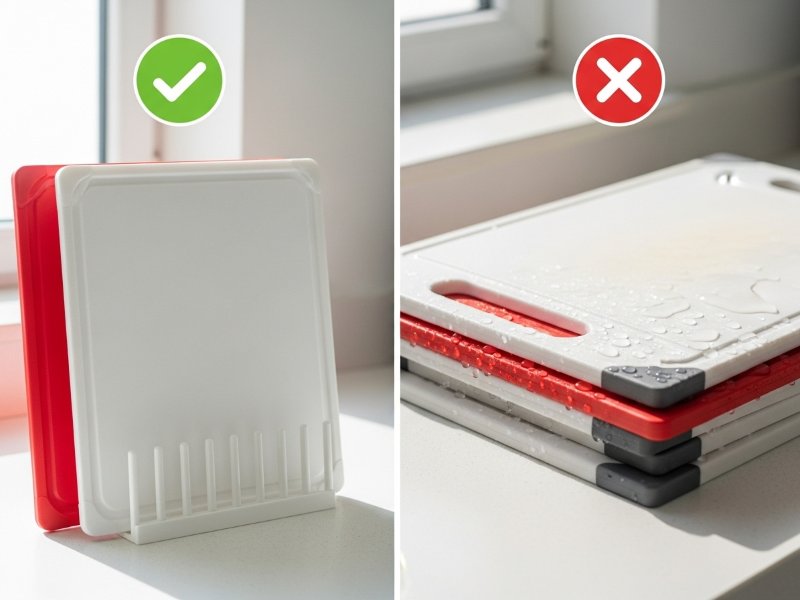
Plastic boards may seem low-maintenance, but they still require careful storage. Even if they are dishwasher safe, they must be dried fully before putting away, since water droplets often collect along edges and corners. Knife grooves make this worse by trapping hidden moisture, which can quickly lead to mold or lingering odors if the board is stored damp.
The safest method is upright storage — in a rack, on a hook, or in an open slot — so air can circulate and any remaining moisture can evaporate. Avoid stacking flat, especially if multiple boards are piled together, as this allows water to pool in grooves and creates ideal conditions for bacteria growth.
Glass & Titanium Boards (Others in Brief)
These modern alternatives are less porous and don’t absorb moisture, which makes them easier to store than wood or plastic. Their non-porous surfaces prevent water and bacteria from penetrating, so storage mainly comes down to keeping them dry and positioned securely. For glass boards especially, stable placement is crucial to avoid slipping or accidental breakage.
While they are lower maintenance overall, they still need thoughtful handling. Avoid stacking them under heavy kitchen items to prevent cracks (for glass) or scratches (for titanium). The best practice is to store them where they won’t bear unnecessary weight, ensuring they remain durable and safe for long-term use.

Special Considerations for Humid Kitchens
In warm kitchens with poor ventilation or high humidity, cutting boards face greater risks of mold, lingering odors, and reduced lifespan. When moisture lingers in the air and sunlight doesn’t reach storage areas, standard practices often aren’t enough to keep boards completely dry and safe.
Key Storage Practices in Humid Kitchens
Always ensure boards are bone-dry before putting them away – in warm, damp spaces, even slight moisture left inside the wood or grooves can trigger mold in a single night.
Never leave boards flat on countertops that stay damp or warm, like near the sink or stovetop. Instead, use vertical racks or wall hooks where airflow keeps surfaces dry on all sides.
If cabinets are your only option, choose ones near ventilation or away from steam sources like dishwashers and stovetops. Keeping them in a closed, humid corner only accelerates warping and odor.

Material Choice Tips:
For wood: consider naturally moisture-resistant woods like teak, which perform better in damp environments. These premium hardwoods contain natural oils that repel water and resist fungal growth.
For light prep: glass or titanium boards can be alternatives, since they don’t absorb moisture or harbor mold. While not ideal for heavy chopping, they excel in humid conditions where wood might struggle.
Smart Storage Hacks for Small Kitchens
In smaller kitchens, vertical solutions work best. Wall-mounted racks or magnetic strips keep boards off the counter while allowing airflow, which is especially important for wood and bamboo boards that need ventilation to stay dry. Countertop vertical organizers with drip trays are another practical choice for households using multiple boards, keeping them upright and separated while preventing water from pooling. For those who want built-in convenience, pull-out drawers with airflow slats offer a modern option that combines storage and ventilation.

Maintaining Wooden Boards with Oil and Beeswax
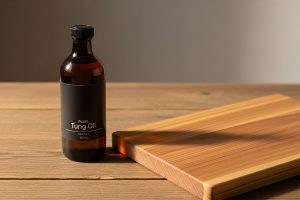
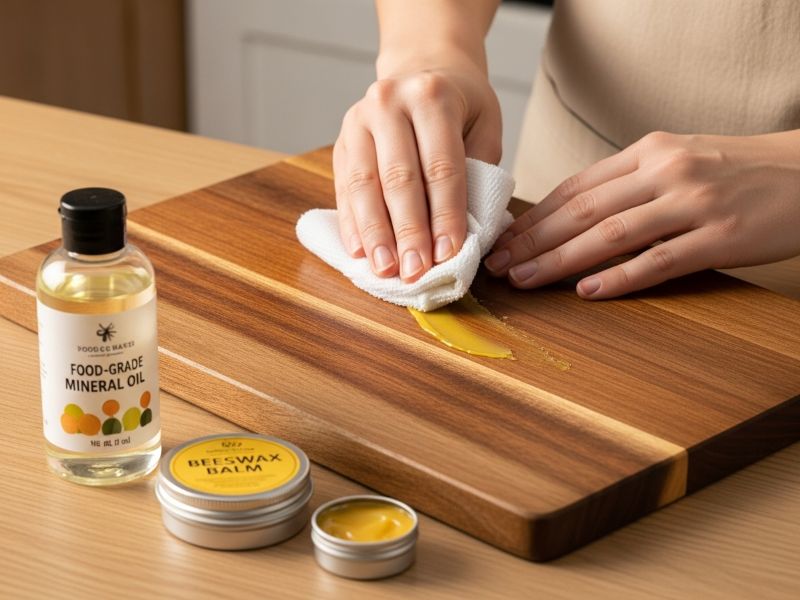
Wooden cutting boards require more attention than plastic or composite alternatives, but the payoff is worth it. Conditioning with food-grade mineral oil and a layer of natural beeswax creates a protective barrier that locks out excess moisture and prevents the wood from drying or cracking. This treatment also discourages mold and bacterial growth, which can easily develop when wood fibers stay damp for too long.
Beyond hygiene, regular oiling and waxing enhance the board’s natural beauty by deepening its color and highlighting the grain. A well-maintained board not only looks polished but also lasts for years longer, making it both a practical and aesthetic investment for any kitchen.
Read more: How to Oil a Cutting Board
Conclusion – Safe Storage for Longer-Lasting Boards
Proper cutting board storage starts with one rule: make sure every board is fully dry before putting it away. From there, choose upright racks, wall hooks, or open slots that allow airflow and prevent moisture buildup. Cabinets are fine too, but only if boards are completely dry. Storing this way keeps your boards clean, safe, and long-lasting—protecting both your family’s health and your kitchen investment.