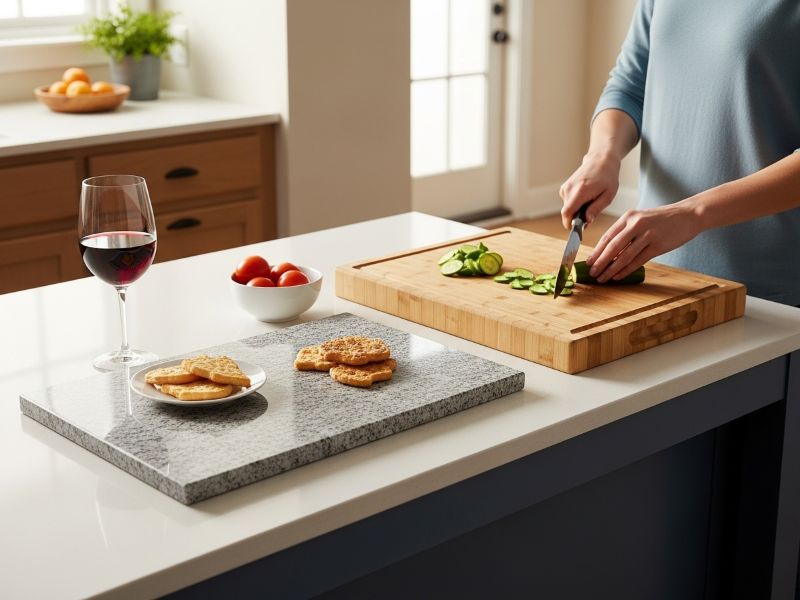
Stone cutting boards are admired for their elegant look and solid feel, but they also raise questions about practicality in everyday cooking. In this article, we’ll explore their pros and cons, compare them with wood, bamboo, and plastic alternatives, and help you decide whether a stone board fits your kitchen needs.
What is a Stone Cutting Board?
Definition & Characteristics
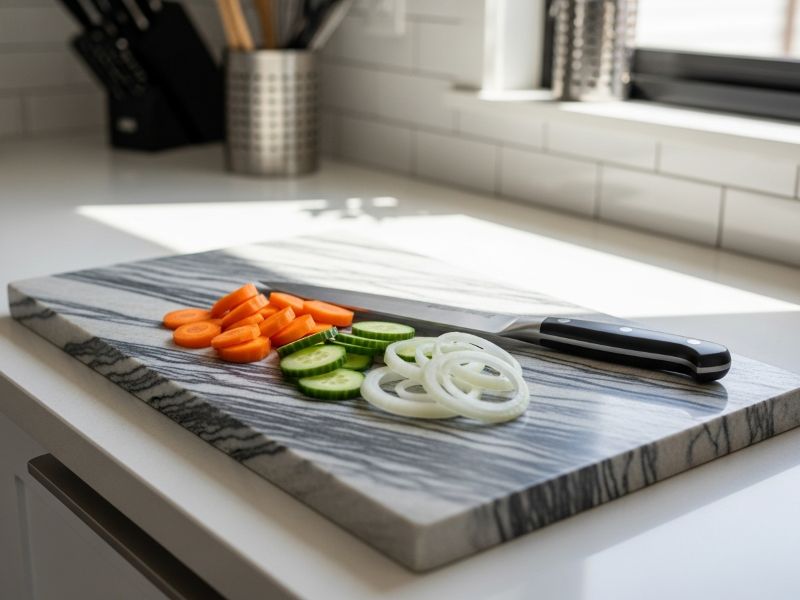
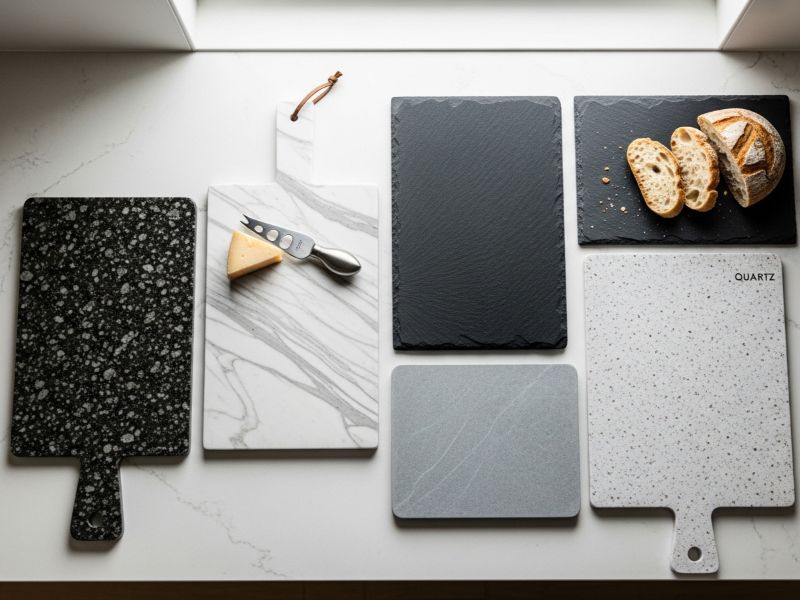
A stone cutting board is a food preparation surface made from natural stone materials like granite, marble, or slate, as well as engineered stone products. These boards share common characteristics including extremely hard surfaces, substantial weight, non-porous properties, and a premium appearance that elevates kitchen aesthetics. Unlike traditional wooden or plastic boards, stone cutting surfaces originated more from architectural and decorative traditions than culinary necessities.
Popular Stone Types
Common options include granite, valued for its hardness and natural patterns but heavy to handle; marble, prized for its cool veining yet prone to acid etching and scratches; and slate, often used for cheese serving but too brittle for chopping. Less common choices include soapstone and quartz, though they are rarely used for cutting boards.
Practical Applications
In practical kitchen use, stone boards serve primarily as serving platters for cheese boards, pizza, sushi, and artisanal breads. Food photographers and home entertainers frequently choose stone surfaces for their visual impact and ability to maintain cool temperatures. However, professional chefs and experienced home cooks rarely select stone boards for daily chopping or meat preparation due to their knife-damaging properties and unwieldy nature.
Types of Stone Cutting Boards
Granite Cutting Boards
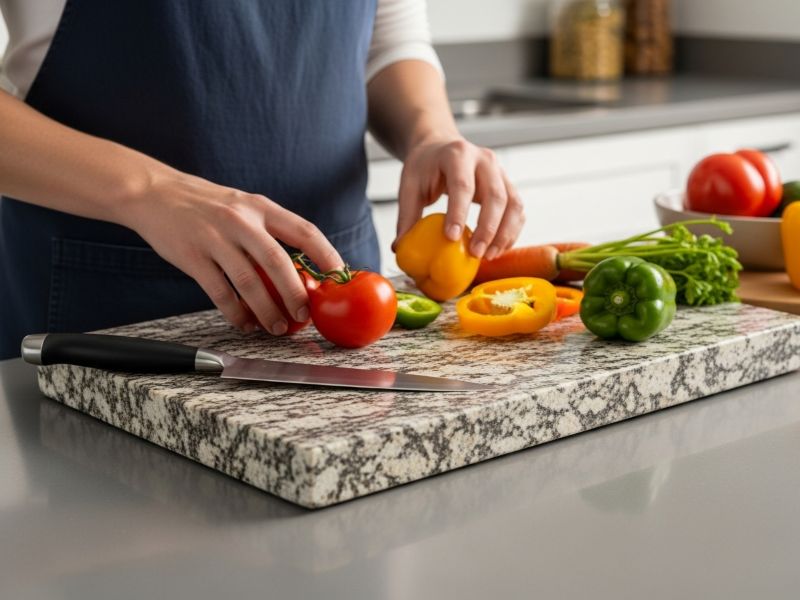
Granite cutting boards are popular for their hardness, durability, and unique natural patterns. They resist scratches, heat, and bacteria when properly sealed, making them easy to clean and visually appealing. However, their extreme hardness dulls knives quickly, which is why professional chefs generally avoid them for everyday cooking.
Marble Cutting Boards
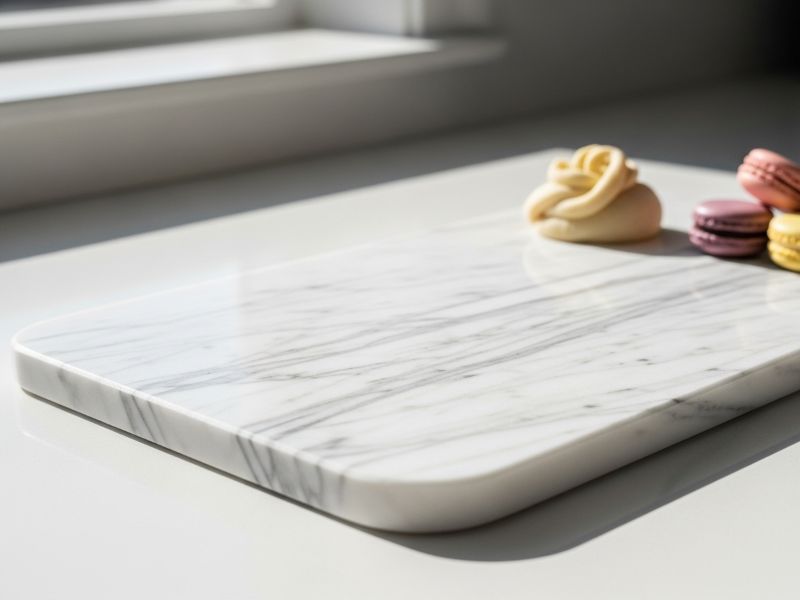
Marble cutting boards are prized for their elegant veining and naturally cool surface, making them popular for pastry work and stylish serving. However, they are prone to etching from acidic foods, can chip or scratch more easily than granite, and still dull knives quickly, limiting their practicality for everyday use.
Slate Cutting Boards
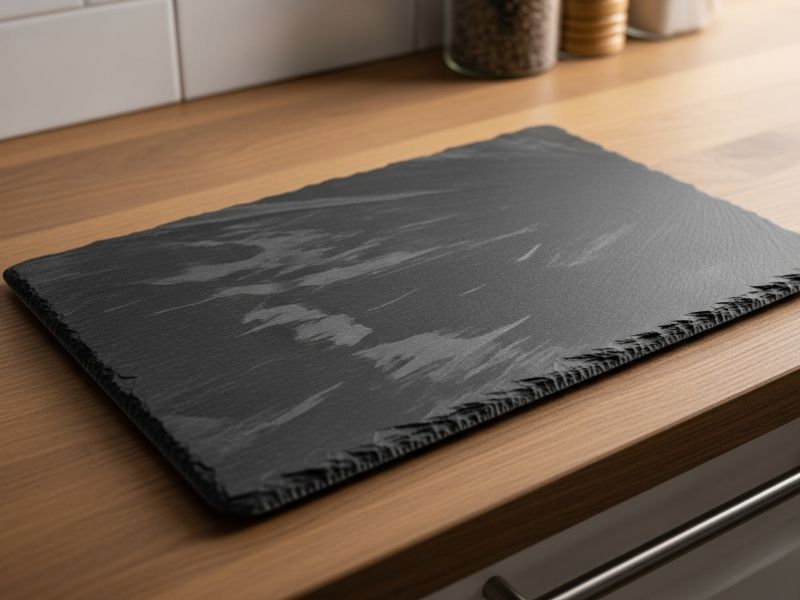
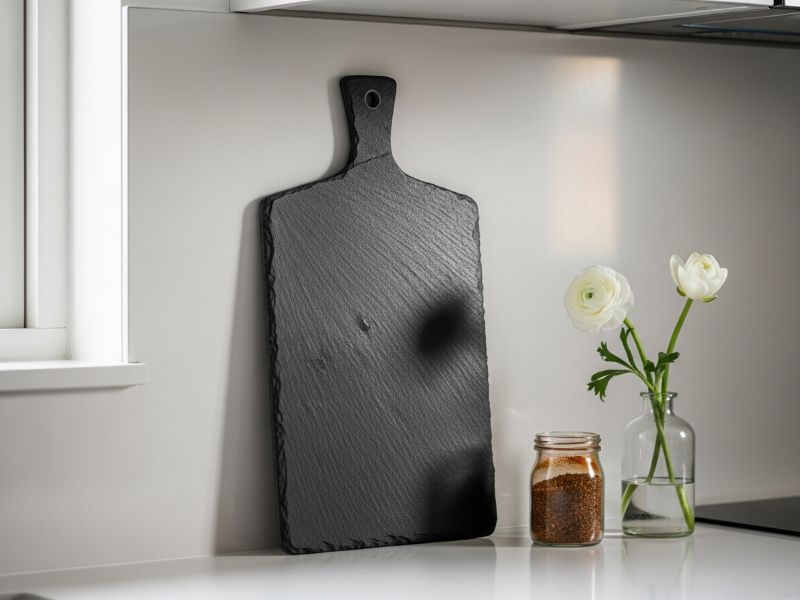
Slate cutting boards stand out with their dark, rustic look and natural anti-slip texture, making them excellent for cheese or appetizer serving. They are popular in restaurants for presentation, but their brittleness leads to chipping or breakage with regular use. Dropping almost always causes cracks. As a result, slate works well for serving but poorly as a daily cutting surface.
Soapstone Cutting Boards
Soapstone is softer than most stones, offering good heat resistance and less knife damage. It resists stains without needing sealing, but scratches easily, can harbor bacteria, and is costly, making it more decorative than practical.
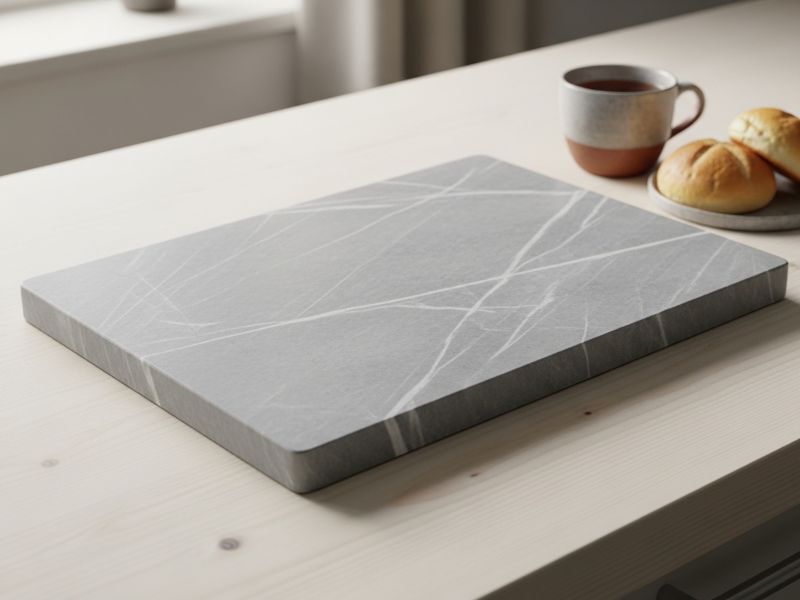
Quartz Cutting Boards
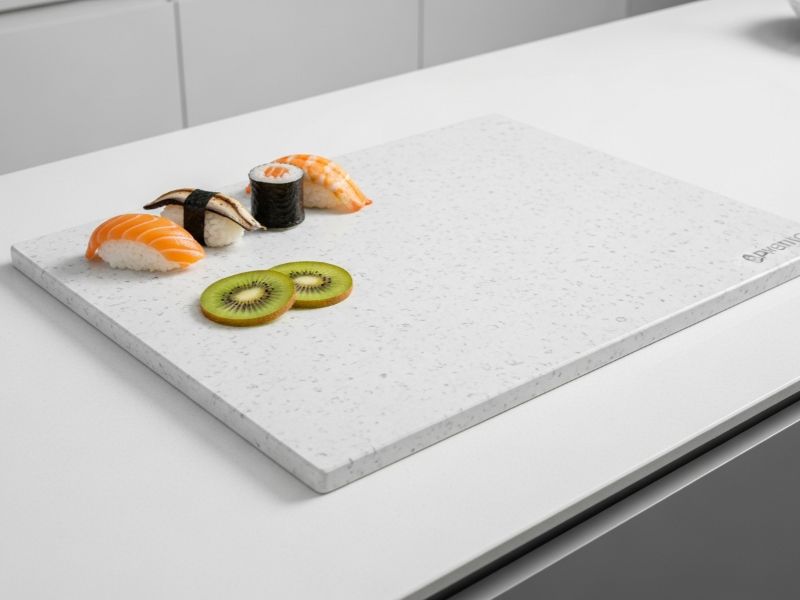
Quartz boards are extremely hard, durable, and non-porous, with consistent manufactured patterns. However, they dull knives faster than any other material, so they are best suited for decorative or serving purposes rather than cooking.
| Stone Type | Hardness (Mohs scale) | Knife Friendliness | Durability (crack/scratch) | Maintenance Needs | Best Use Cases | Weight (18×14 board) |
|---|---|---|---|---|---|---|
| Granite | 6-7 | Very dulling – knives lose edge fast | Excellent – highly scratch & heat resistant | Low – wipe clean, seal occasionally | Heavy prep, occasional cutting, décor | 15-20 lbs |
| Marble | 3-4 | Dulls knives quickly, can chip blades | Medium – softer than granite, prone to etching from acids | Medium – needs sealing, avoid acids | Pastry, cheese, serving | 12-18 lbs |
| Slate | 2.5-4 | Rough surface, not ideal for knives | Brittle – can flake/chip | Low – easy wipe, fragile edges | Cheese board, charcuterie, décor | 8-12 lbs |
| Soapstone | 1-2.5 | Softer stone – less dulling but scratches easily | Medium – softer, can dent or gouge | Low – doesn’t stain easily | Décor, light serving | 10-15 lbs |
| Quartz | 7 (engineered stone) | Extremely dulling – hardest on knives | Very durable, stain-resistant | Very low – easy wipe | Decorative surface, occasional serving | 18-22 lbs |
Advantages and Disadvantages of Stone Cutting Boards
Benefits of Stone Cutting Boards
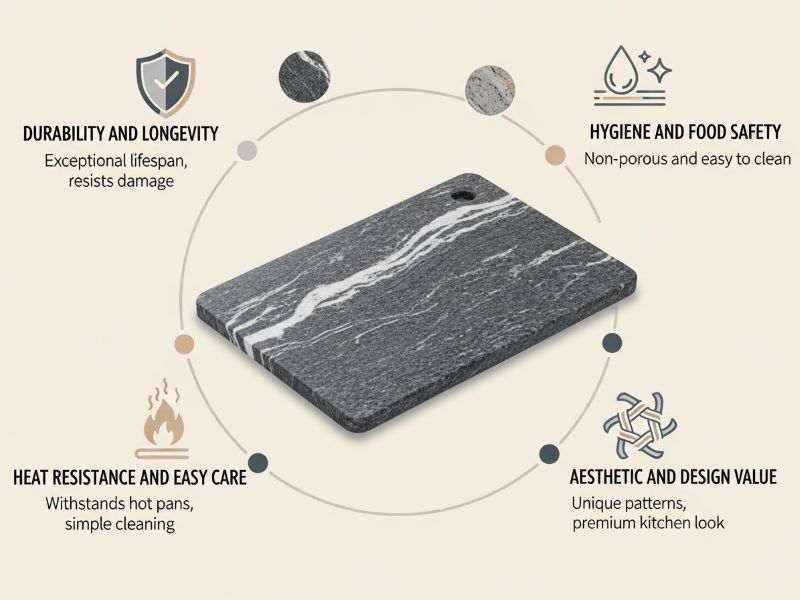
Durability and Longevity
Stone cutting boards offer exceptional lifespan that surpasses most other materials. With proper care, a quality granite or marble board can last several decades without warping, cracking, or developing deep grooves. The natural hardness of stone resists surface damage from regular use, maintaining a smooth cutting surface far longer than wood or plastic alternatives.
Hygiene and Food Safety
The non-porous nature of sealed stone provides superior hygiene compared to traditional cutting surfaces. Bacteria, mold, and food particles cannot penetrate the surface, making stone boards exceptionally easy to sanitize. Unlike wood boards that can retain odors from garlic, onions, or fish, stone surfaces release food smells completely with simple washing.
Heat Resistance and Easy Care
Heat resistance stands as another significant advantage of stone cutting boards. You can place hot pans directly on granite or marble without causing damage, making these boards dual-purpose as trivets. Cleaning requires only soap and water, with no need for special oils or conditioning treatments that wood boards demand.
Aesthetic and Design Value
The aesthetic appeal of natural stone transforms ordinary food preparation into an elevated experience. Each stone board features unique patterns and colors that complement modern kitchen designs. Many homeowners display their stone boards permanently on countertops as decorative elements that also serve practical purposes during entertaining.
Disadvantages of Stone Cutting Boards
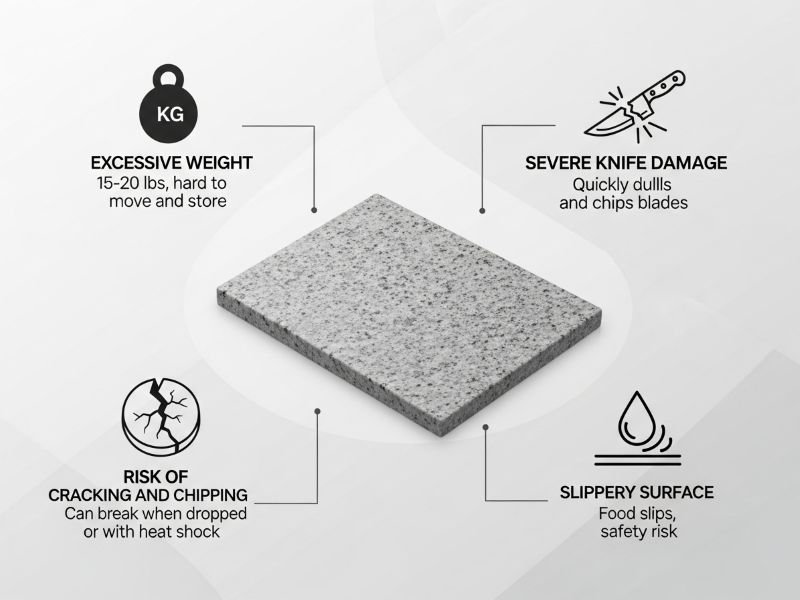
Excessive Weight
The excessive weight of stone boards creates immediate practical challenges. Most granite boards weighing 15–20 pounds prove difficult to move between sink and counter, making thorough cleaning cumbersome. Storage becomes problematic in smaller kitchens where lifting heavy boards into cabinets risks injury or damage to surrounding items.
Severe Knife Damage
Knife damage represents the most significant drawback of stone cutting surfaces. The hardness that provides durability simultaneously destroys knife edges with every cut. High-quality Japanese knives or thin-bladed chef’s knives suffer particularly severe damage, requiring frequent sharpening that shortens blade lifespan considerably.
Risk of Cracking and Chipping
Despite their durability, stone boards can crack or chip when dropped or subjected to sudden temperature changes. A granite board falling from counter height will likely shatter, creating dangerous shards and requiring expensive replacement. Even minor chips along edges can make boards unsafe for food preparation.
Slippery Surface
The slippery surface of polished stone creates safety concerns during food preparation. Wet vegetables or meats slide unpredictably, increasing injury risk when using sharp knives. The lack of grip makes precision cutting difficult, particularly for delicate tasks like julienning vegetables or filleting fish.
Stone Cutting Board vs Other Cutting Boards
Understanding how stone cutting boards compare to other materials helps clarify when each option makes
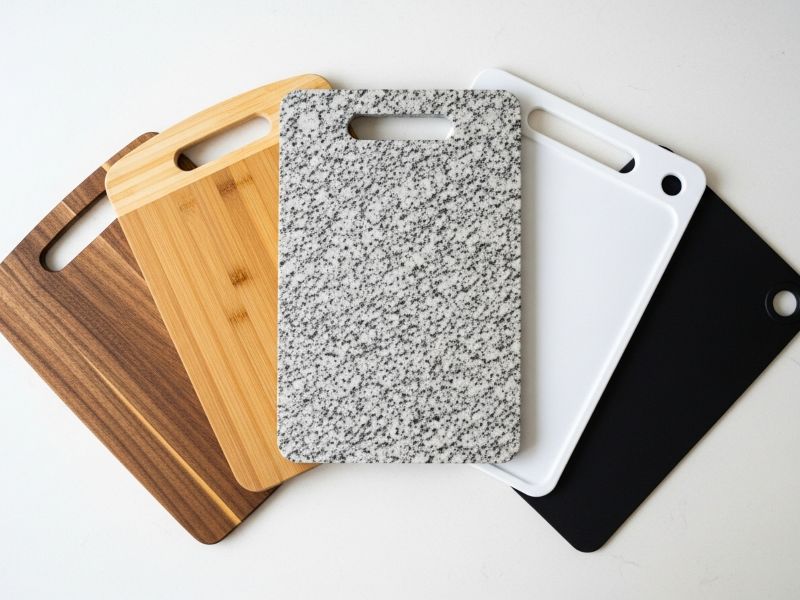
| Material | Durability | Knife-Friendliness | Hygiene | Price Range |
|---|---|---|---|---|
| Stone (Granite/Marble) | Very High – heat & scratch resistant | Very Poor – dulls knives rapidly | High – non-porous | $40–150 |
| Wood (Maple, Walnut) | High – 5–20 yrs with care | Excellent – gentle on knives | Medium – needs oiling | $30–200 |
| Bamboo | Medium – 2–5 yrs | Good – slightly harder than wood | Good if treated | $20–80 |
| Plastic | Low – 1–3 yrs | Good – knife-friendly | Low-Med – grooves trap bacteria | $10–40 |
| Glass | High – scratch-proof | Terrible – ruins knives instantly | Very High – non-porous | $15–50 |
| Rubber | High – pro-grade | Excellent – preserves knives | Good – resists cuts | $40–120 |
Summary Comparison
- Stone and glass boards are durable and hygienic but damage knives quickly, so they are mainly used for serving or display.
- Wood and bamboo remain the best for daily cooking, offering a balance of durability, knife-friendliness, and appearance. Wood needs oiling, while bamboo is eco-friendly but slightly less durable.
- Plastic boards are cheap, light, and dishwasher safe, though they wear out fast and can trap bacteria.
- Rubber boards are common in professional kitchens thanks to their knife protection and easy cleaning, but their higher price and industrial look limit home use.
Read more: What Are the Best Cutting Board Materials for Safety and Performance?
Best Uses for Stone Cutting Boards
Everyday Food Prep (with Caution)
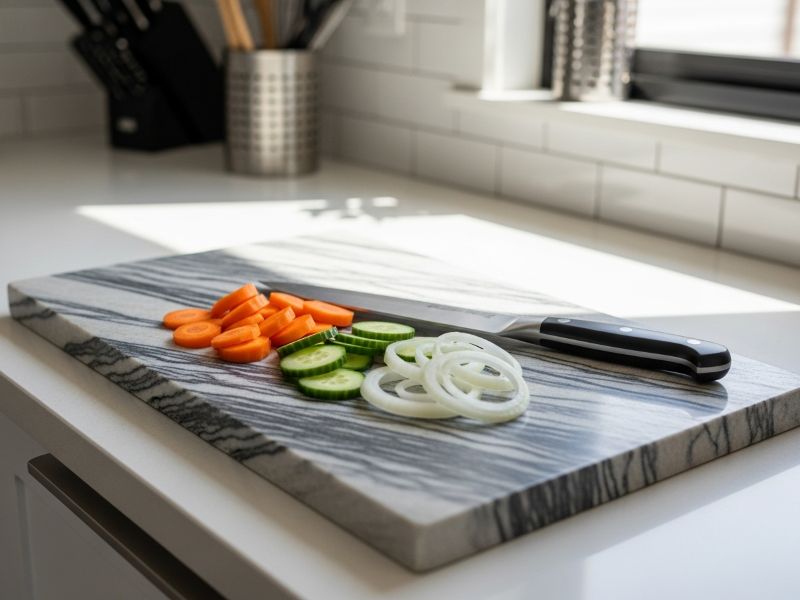
Stone cutting boards can handle everyday chopping of vegetables and fruits effectively from a functional standpoint. The hard surface provides stable support for cutting, and the non-porous nature prevents staining from beets, turmeric, or berry juices that would permanently mark wooden boards. However, using stone boards for daily prep work means accepting significantly faster knife dulling compared to wood or plastic alternatives.
Serving and Entertaining
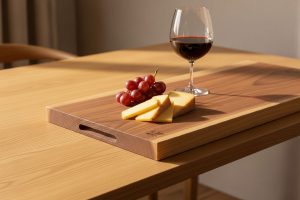
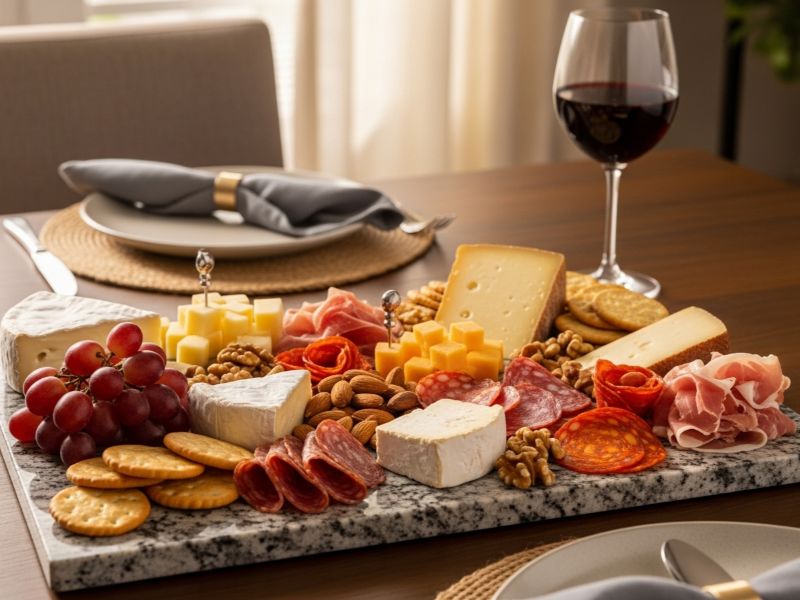
The ideal application for stone boards involves serving cheeses, charcuterie, or pastries rather than active food preparation. Granite and marble naturally maintain cool temperatures that keep dairy products and meats fresh during extended serving periods. The elegant appearance elevates any dining experience, transforming simple appetizers into sophisticated presentations worthy of fine dining establishments.
Decorative Kitchen Display
Many homeowners purchase stone cutting boards primarily as decorative kitchen displays. A polished granite board permanently placed on a kitchen island serves as both a design element and an occasional prep surface for special occasions. The visual impact of natural stone patterns adds luxury to kitchen spaces while providing a heat-resistant surface for hot dishes when needed.
Should You Buy a Stone Cutting Board?
Whether a stone cutting board is right for you depends on your purpose. They make sense if you’re a baker who needs marble’s cool surface for pastry work, or a host who values elegant serving platters for cheese and charcuterie. They also appeal to homeowners who prioritize aesthetics and want a permanent decorative piece in the kitchen.
On the other hand, if you care about knife preservation, need a lightweight and practical board for daily cooking, or want a safe surface for precise cutting, stone is a poor choice. For most home cooks, wood or bamboo boards are better for everyday prep, while stone boards are best reserved for serving and presentation.