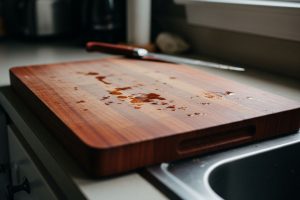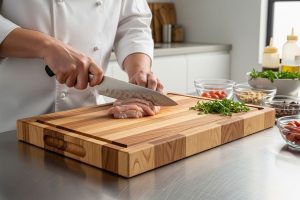
Oiling is the key to keeping a wooden cutting board safe and durable. But which oil should you use? This guide introduces the seven best options trusted by chefs and wood care experts today. We’ll cover how each oil works, what makes it safe for food contact, and why the right choice can add years to your board’s life.
Why Oil Your Wooden Cutting Board
Regular oiling keeps your board from drying, cracking, or warping, and creates a barrier against moisture damage. It also smooths the surface, blocks odors, reduces mold growth, and makes cleaning easier—so your board stays safe, durable, and enjoyable to use every day.
How Wood Behaves (Science Made Simple)
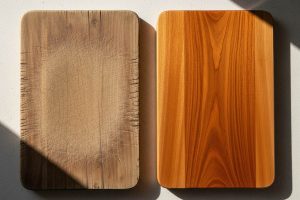
Wood naturally absorbs and releases moisture, causing dimensional changes that lead to warping or cracking. When you apply oil for cutting board maintenance, it fills microscopic gaps in the wood structure.
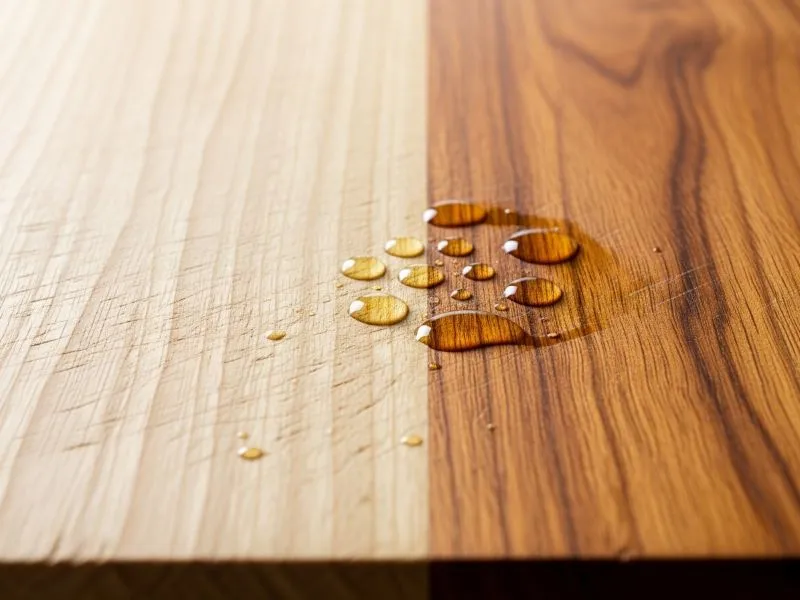
- Wood expands and contracts as it absorbs and releases moisture. Regular oiling fills tiny gaps in the grain, reducing cracks and warping
This process significantly reduces deformation by:
- Moisture and temperature fluctuations directly affect wood structure
- Bacteria and odors easily penetrate dry, cracked surfaces
- Natural wood movement becomes controlled through proper sealing
- Surface integrity improves with consistent oil application

- Oiling seals microscopic gaps in wood, preventing cracks, warping, and bacterial penetration
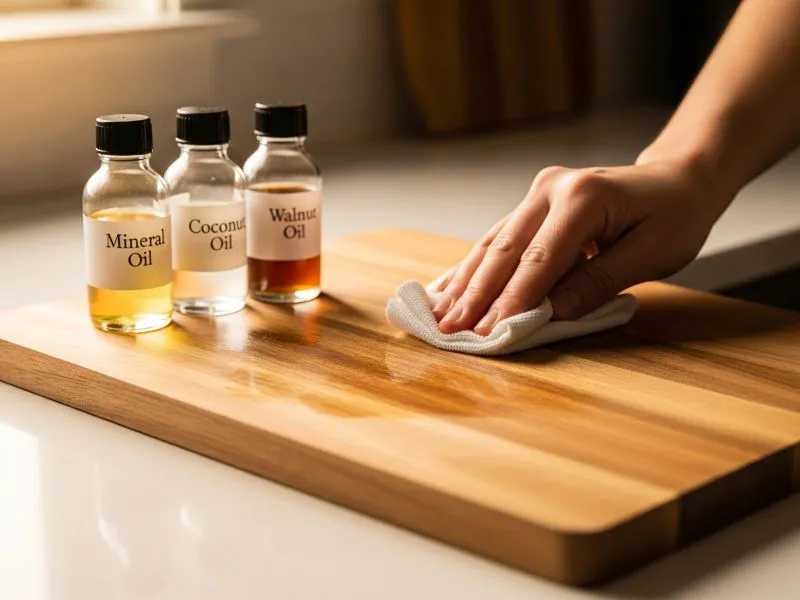
Best Food-Safe Oils for Cutting Boards (2025 Update)
Food-Grade Mineral Oil
Characteristics:
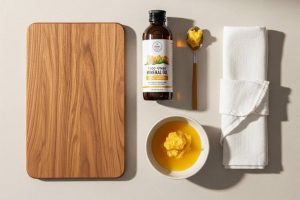
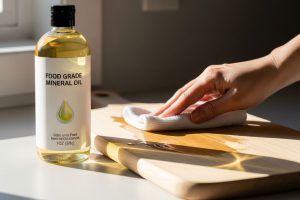
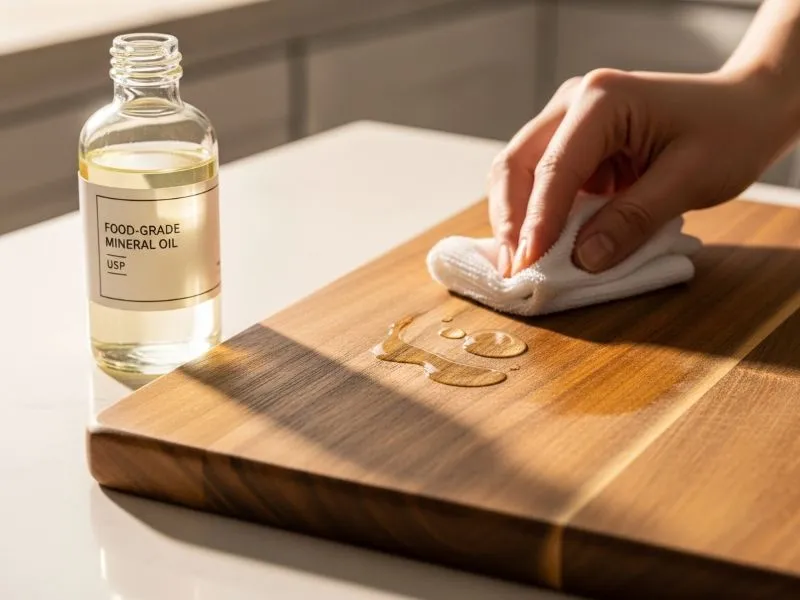
Food-grade mineral oil remains the gold standard for cutting board maintenance. It is colorless, odorless, tasteless, and certified safe for food contact under the FDA Food Code. This ultra-refined oil penetrates deeply into wood fibers, preventing dryness and cracking while enhancing the board’s resistance to moisture. It is also widely used by wooden kitchenware manufacturers for its safety and reliability.
Typical Price & Buying Tips:
Expect to pay around $8–$14 for a 8–12 oz bottle. Always choose options labeled “food-grade” or “USP” to ensure purity. Industrial-grade mineral oils may contain additives unsafe for food contact. Available widely at kitchen supply stores, pharmacies, and online marketplaces like Amazon.
- Food-grade mineral oil is clear, safe, and deeply penetrates wood fibers to prevent cracking and moisture damage
Advantages:
- Widely available & affordable.
- Non-oxidizing, never goes rancid.
- Easy to apply for beginners and pros alike.
Disadvantages: Requires frequent reapplication since it doesn’t form a hard film.
Application Method:
- Clean and fully dry the cutting board.
- Apply generously to all surfaces, including edges.
- Let absorb for 4–6 hours (overnight is ideal).
- Wipe off any excess with a clean, lint-free cloth.
Used regularly, mineral oil keeps your cutting board smooth, safe, and beautiful for years.
Recommended Products
Thirteen Chefs Mineral Oil – 12oz, Food Grade
Kate Naturals Mineral Oil – 8oz, Food Safe
Pure Tung Oil
Characteristics:
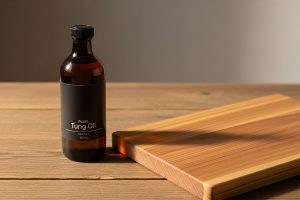
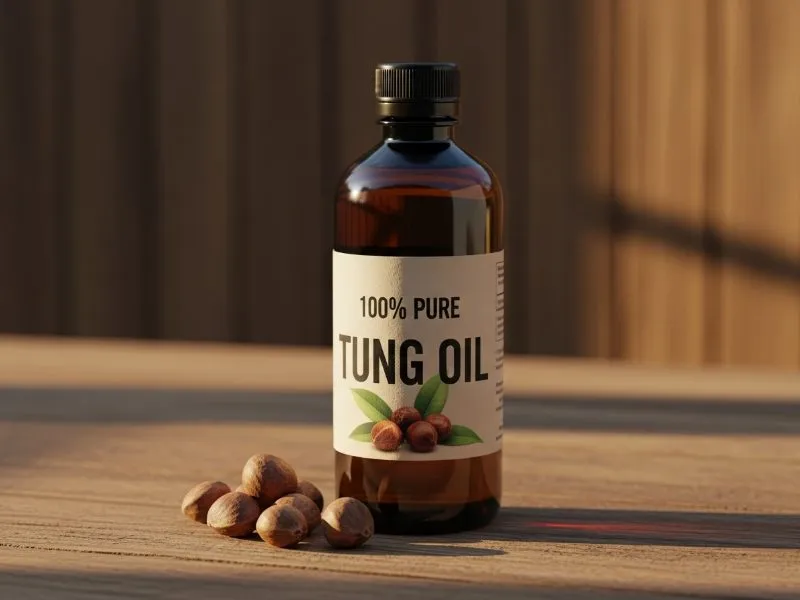
Pressed from the nuts of the tung tree (Vernicia fordii), pure tung oil has been used for centuries as a natural wood finish. When exposed to air, it polymerizes to form a hard, water-resistant surface that bonds with the wood fibers. Unlike many finishes, almost pure tung oil is food-safe and enhances wood with a rich, warm glow.
Typical Price & Buying Tips:
Expect to pay around $15–$25 for a 16 oz bottle of high-quality, 100% pure tung oil. Always verify the label specifies pure or raw tung oil with no added solvents, metallic driers, or chemical hardeners. Some “tung oil finishes” on the market contain varnish blends and are not food-safe. Trusted brands are readily available in woodworking supply stores and on platforms like Amazon.
- Pure tung oil creates a hard, water-resistant finish while enhancing wood with a rich, warm glow
Advantages
- Creates a durable, water-resistant seal once cured.
- Enhances grain and color, giving wood a deep, lustrous finish.
- Requires less frequent reapplication compared to non-drying oils.
Disadvantages
- Slow curing time (24–72 hours per coat), making application lengthy.
- Must be 100% pure — blended versions are not suitable for food contact.
Application Method:
- Clean and fully dry the cutting board.
- Apply a thin, even coat with a lint-free cloth or soft brush.
- Let it penetrate for 30–60 minutes, then wipe away any excess.
- Allow 24–72 hours for curing before applying the next coat.
- Apply 3–5 coats for optimal sealing, lightly sanding with fine-grit paper between coats if needed.
Used correctly, pure tung oil creates a beautiful, hard-wearing finish that can keep a cutting board both functional and stunning for years.
Recommended Products
HOPE’S 100% Pure Tung Oil – 16oz, Food Safe Wood Finish
100% Pure Tung Oil – 16oz, Food Safe for Cutting Boards & Furniture
Refined Food-Grade Linseed Oil (Flaxseed)
Characteristics:
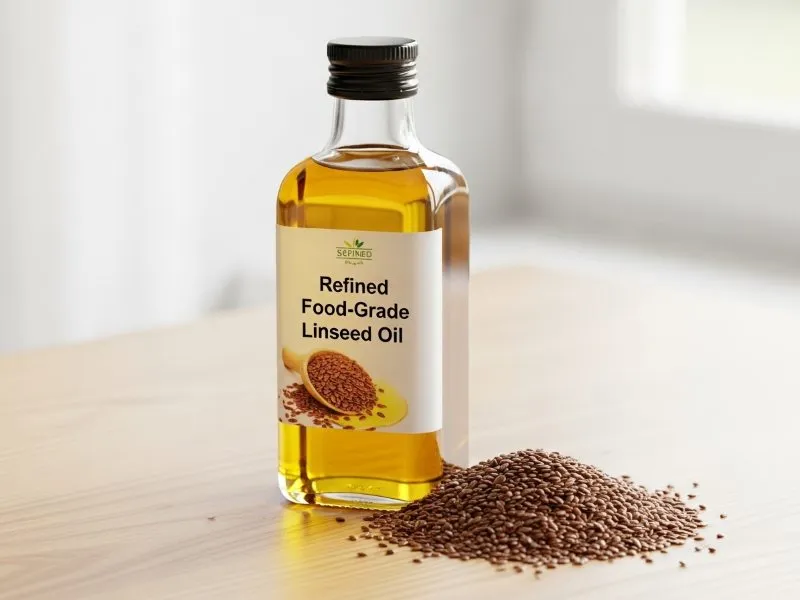
A plant-based drying oil that polymerizes into a hard, protective film. It penetrates deep into the wood, sealing out moisture while adding a warm golden tone to the grain. Important: Avoid “boiled linseed oil” or hardware-store versions, which often contain chemical driers and are not food-safe. Always choose bottles labeled refined food-grade or culinary grade.
Typical Price & Buying Tips:
Around $10–18 for a 16 oz bottle. Look for cold-pressed, refined flaxseed oil with food-safe labeling and FDA compliance. Available in health food stores, kitchenware shops, and online.
- Refined linseed (flaxseed) oil penetrates deep into wood, sealing out moisture and adding a natural golden tone
Advantages
- Forms a durable, moisture-resistant finish.
- Enhances wood’s color and grain with a natural golden hue.
- Plant-based and renewable, making it an eco-friendly choice.
Disadvantages
- Slow curing time (24–48 hours per coat; full cure may take weeks).
- Shorter shelf life than mineral oil — can go rancid if stored improperly.
- Easily confused with toxic variants if the label isn’t checked carefully.
Application Method:
- Clean and fully dry the cutting board.
- Apply a thin, even coat with a lint-free cloth.
- Allow 20–30 minutes for penetration, then wipe away excess.
- Let cure for 24–48 hours before reapplying.
- Apply 3–4 coats initially, then re-oil as needed to maintain protection.
When sourced correctly and applied patiently, refined food-grade linseed oil produces a rich, protective finish that can last months between applications.
Beeswax + Oil Blends
Characteristics:
A mix of food-grade oil (commonly mineral oil) and natural waxes such as beeswax or carnauba. The oil nourishes wood fibers internally, while the wax forms a protective top layer that repels water and stains. This dual effect slows moisture loss and leaves the board with a smooth satin finish. Best used after several coats of penetrating oil to lock in hydration.
Typical Price & Buying Tips:
Typically $10–18 for a 4–6 oz tin. Always choose food-safe blends specifically made for cutting boards, as furniture waxes may contain solvents or chemicals. Popular options are available from kitchenware brands, woodworking supply shops, and on Amazon.
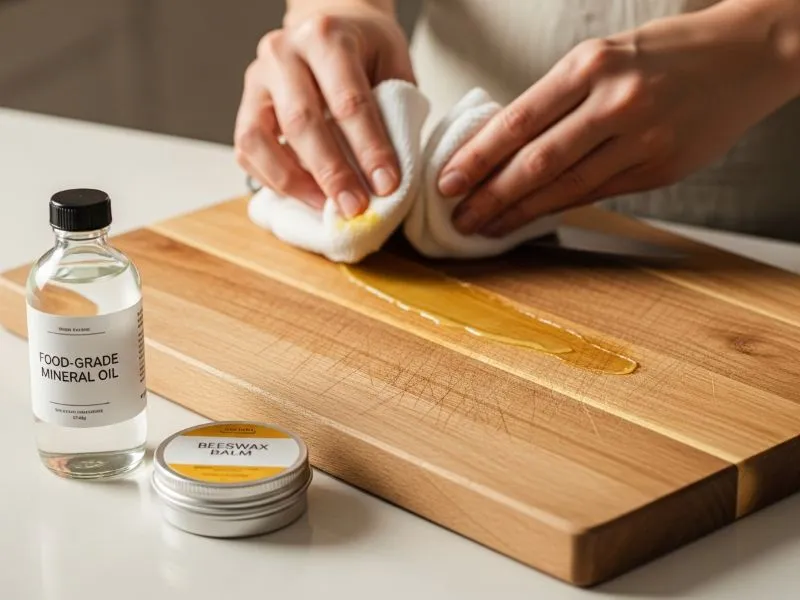
- This dual-care formula locks in hydration and shields cutting boards from stains and moisture
Advantages
- Longer-lasting protection — wax slows oil evaporation, reducing reapplications.
- Extra surface defense — resists minor scratches and food stains.
- Enhanced look — adds a satin sheen and richer grain appearance.
Application Method:
Beeswax + Oil (Nourish & Seal in One Step or Two)
Beeswax care works in two ways. Many products come as a ready-made blend of oil and wax, which you simply warm slightly, rub thinly across the board, let haze for 20–30 minutes, then buff to a smooth satin glow.
If you’re using oil and wax separately, the process is the same—just begin by applying 2–3 coats of a penetrating oil (mineral, tung, or linseed) and letting it cure first. The wax is then added as the final seal, locking in that hydration and creating a moisture-resistant shield.
For best results, use a beeswax + oil blend after several coats of penetrating oil—this locks in moisture and maximizes the wax’s sealing benefits.
Recommended Products
Macy’s Place Wood Butter – 8oz, Mineral Oil & Beeswax Conditioner
Premium Cutting Board Finish Wax – 3.5oz, Beeswax & Carnauba Blend
Fractionated Coconut Oil
Characteristics:
Fractionated coconut oil is made by removing long-chain fatty acids, leaving only medium-chain triglycerides (MCTs). This keeps it liquid in all climates, prevents rancidity, and gives it a light, non-greasy feel. When refined and food-grade, it’s a safe and popular alternative to mineral oil.
Typical Price & Buying Tips:
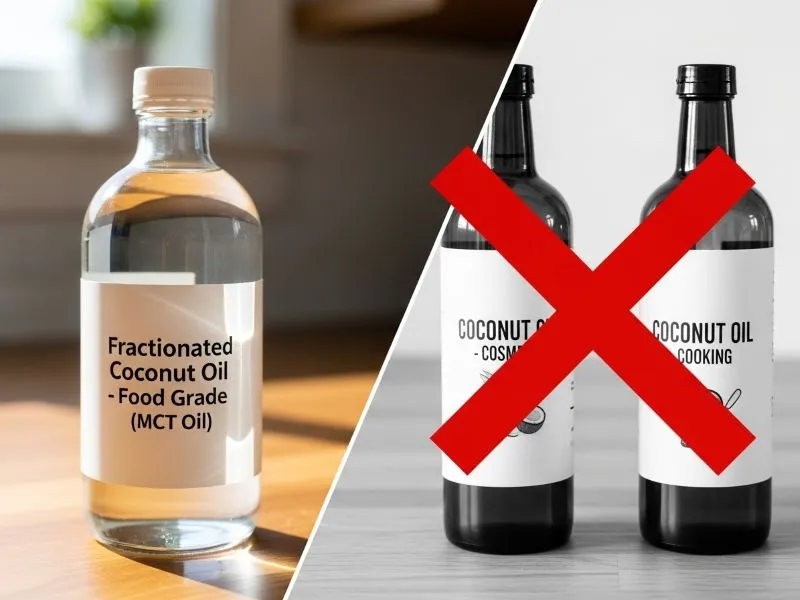
Usually $25–30 for 16 oz. Always choose bottles labeled 100% fractionated, food-grade, or MCT oil. Avoid cosmetic-only grades unless clearly marked as safe for food contact.
- Fractionated coconut oil stays liquid in any climate and conditions wood without turning rancid
Advantages
- Always liquid and easy to use — stays fluid in any climate, no risk of solidifying.
- Stable and rancidity-resistant — won’t develop odors over time.
- User-friendly — spreads smoothly with a light, neutral scent.
Things to Note: As a non-drying oil, it doesn’t form a hard protective film.
Provides moderate water resistance and may need more frequent reapplication than tung or linseed oil.
Application Method:
- Clean and thoroughly dry the cutting board.
- Apply a thin, even coat using a lint-free cloth.
- Allow 20–30 minutes for absorption.
- Wipe off excess with a clean, dry cloth.
- For optimal results, reapply every 3–4 weeks or after heavy washing.
Fractionated coconut oil works best for users who value low-maintenance application and a neutral scent, especially in humid or cold climates where other oils may harden or go cloudy.
Recommended Products
Bees & Coconuts Cutting Board Oil – 16oz, Fractionated Coconut & Beeswax
CLARK’S Coconut Cutting Board Oil – Food Safe, Mineral Oil-Free
Grapeseed Oil (Low Priority)
Characteristics:
Grapeseed oil is a lightweight, fast-absorbing plant-based oil often found in kitchens. While technically safe for food contact, it’s not a top choice for long-term cutting board care due to its susceptibility to rancidity and limited sealing power.
Typical Price & Buying Tips:
Generally costs $6–$12 for a 16 oz bottle. If using, choose cold-pressed or expeller-pressed food-grade versions. Avoid flavored or blended varieties.
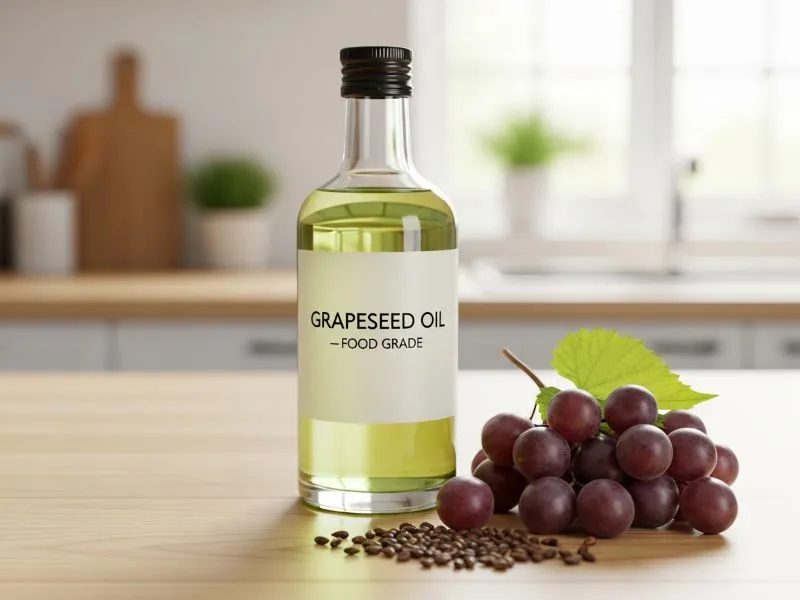
- Grapeseed oil is lightweight and food-safe but prone to rancidity, making it a short-term option for cutting boards
Advantages:
- Affordable and easy to find in grocery stores.
- Minimal impact on wood color, preserving a natural look.
Disadvantages:
- Low water resistance and short-lived protection.
- High risk of rancidity over time, especially in warm kitchens.
Application Method:
Use only as a temporary solution when better options aren’t available. Apply a thin coat, let it absorb for 15–20 minutes, then wipe off excess. Reapply frequently, ideally every 1–2 weeks.
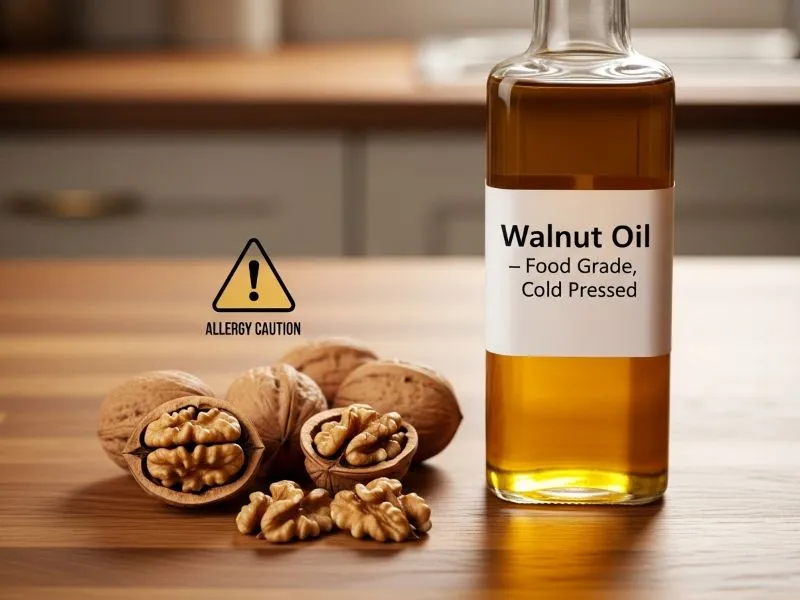
Walnut Oil (Allergy Caution)
Characteristics:
Walnut oil is a natural drying oil that lightly polymerizes, enhancing wood grain with a warm, rich tone. It penetrates deeply to nourish the fibers, but allergy concerns mean it’s not suitable for every household.
Typical Price & Buying Tips:
Usually $10–$18 for an 8–12 oz bottle. Always select pure, cold-pressed, food-grade walnut oil. Avoid blends or roasted varieties, which may contain additives.
- Walnut oil enhances wood grain with a warm tone but should be avoided in households with nut allergies
Advantages:
- Enhances grain with a soft, golden hue.
- Provides moderate water resistance with regular use.
Disadvantages:
- Can trigger severe nut allergies.
- Slower drying time compared to mineral or fractionated coconut oil.
Application Method:
Use only in allergy-safe households. Apply thin coats, wipe off thoroughly after 20–30 minutes, and allow full curing between applications.
Oils to Avoid on Cutting Boards
Selecting the wrong oil leads to rancidity, unpleasant odors, and compromised food safety. Understanding which oils to avoid protects both your board and your health.
Common Kitchen Oils
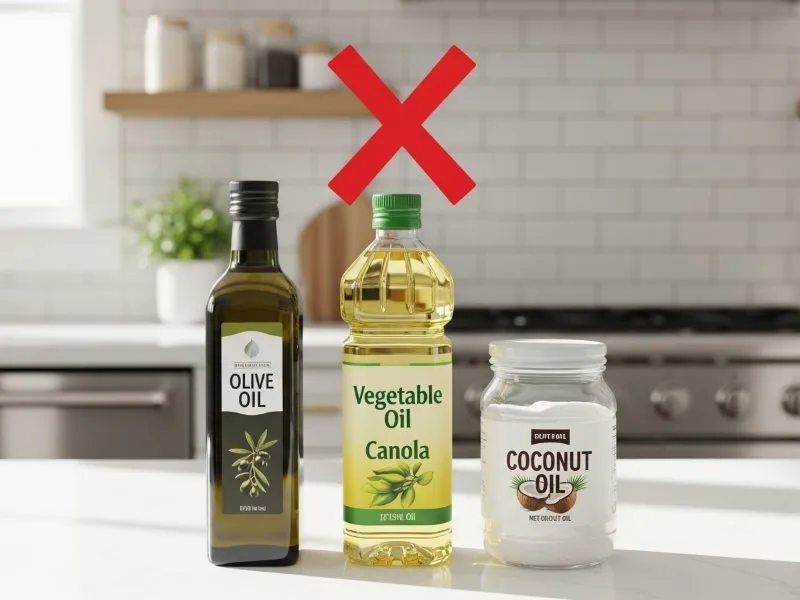
Never use olive, canola, vegetable, or regular coconut cooking oil for board maintenance. These oils oxidize quickly, going rancid in just weeks and leaving a sticky, smelly surface that can trap bacteria and attract pests. Even coconut oil, despite its antimicrobial reputation, can solidify unevenly in wood pores, causing patchy protection and increased risk of spoilage in warm kitchens.
Cooking oils also break down under repeated washing, leaving the wood vulnerable to cracking, warping, and deep stains. For lasting performance, always choose a food-grade, non-oxidizing oil specifically designed for wood care. It will keep your cutting board safe, fresh, and beautiful for years while maintaining the highest food safety standards.
- Olive, canola, vegetable, and regular coconut oils go rancid quickly and should never be used on cutting boards
Industrial/Non-Food-Grade Oils
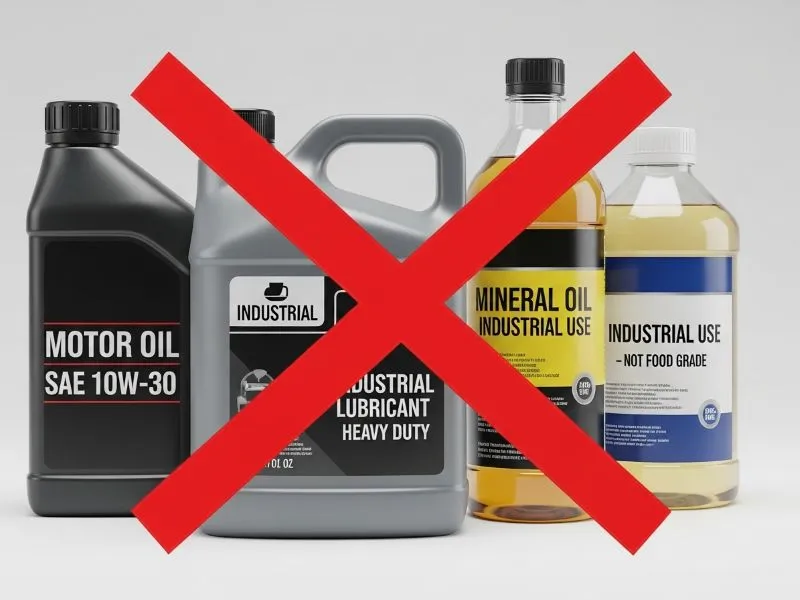
Motor oil, industrial lubricants, and non-food-grade mineral oils contain toxic additives unsafe for food contact. These petroleum products may cause serious health issues through contamination.
- Industrial oils like motor oil or non-food-grade mineral oils contain toxic additives and should never touch food surfaces
Maintenance Schedule
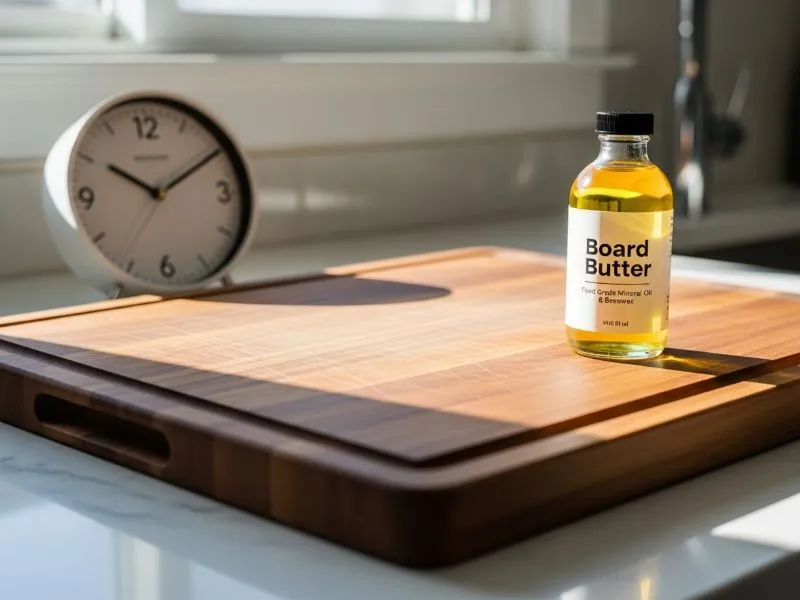
Even the best cutting board oil requires periodic reapplication. Watch for water no longer beading on the surface or wood appearing dry and faded—clear signs it’s time to re-oil.
For average use, inspect your board every 3-4 weeks. Adjust frequency based on usage intensity and local climate conditions. Dry climates require more frequent oiling.
While all wooden boards benefit from food-safe oils like mineral oil, tung oil, or beeswax blends, optimizing by wood species enhances results.
- Re-oil your cutting board every 3–4 weeks or when water stops beading on the surface
Read more: How to Oil a Cutting Board
Conclusion
Selecting the best oil for cutting boards transforms routine maintenance into an investment in your kitchen’s future. Whether you choose traditional mineral oil, premium tung oil, or innovative beeswax blends, consistent care ensures your Koppen cutting board becomes a cherished heirloom.
Remember: proper oiling isn’t just maintenance—it’s preservation of craftsmanship. Each application deepens the connection between natural materials and daily cooking rituals. Your cutting board deserves the same attention you give your finest knives.
Ready to elevate your cutting board care? Explore Koppen’s premium board maintenance collection, featuring food-safe oils and artisan-crafted boards designed for generations of use. Transform your kitchen with sustainable Vietnamese craftsmanship—where tradition meets modern food safety standards.
Read more: How to Clean A Wooden Cutting Board