Wooden cutting boards have long been a favorite in the kitchen. They are durable, gentle on knives, naturally beautiful, and even shown in research by Dr. Dean Cliver from the University of Wisconsin to resist bacterial growth better than plastic when cared for properly. But while wood is one of the best materials for food preparation, many home cooks still wonder about the most convenient way to clean it. One question comes up again and again: can you put a wooden cutting board in the dishwasher?
Can You Put Wooden Cutting Boards in the Dishwasher?
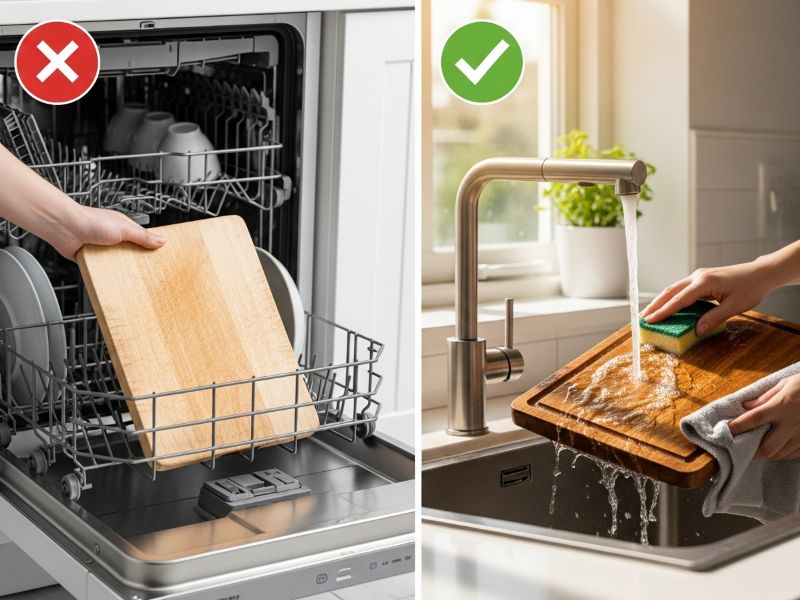
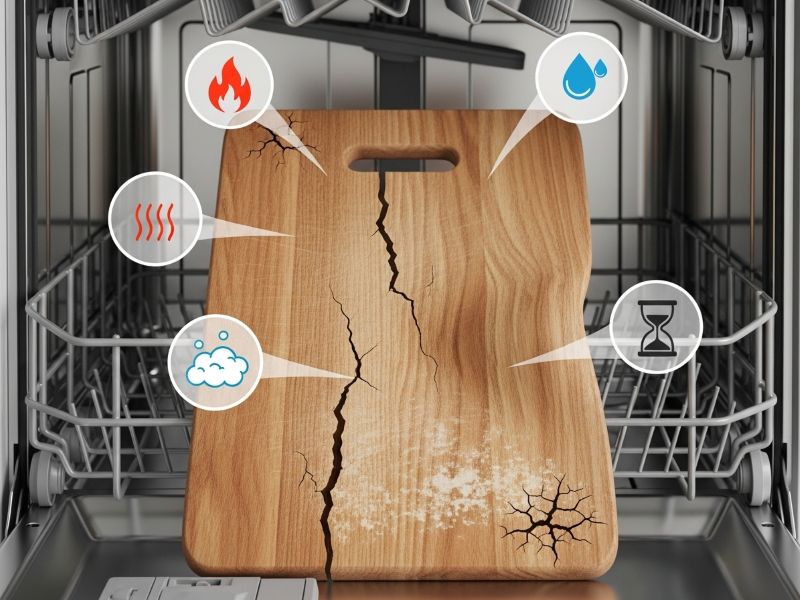
The short answer is no, wooden cutting boards do not belong in the dishwasher. The combination of high heat, pressurized steam, and strong detergents can cause wood to warp, crack, and lose its protective finish. Once the surface is damaged, it becomes harder to keep clean and may even harbor bacteria. Both the USDA and the FDA Food Code recommend hand-washing wooden boards with warm water and mild soap instead of relying on a dishwasher. This simple practice not only protects the natural qualities of wood but also keeps the board safe and long-lasting.
Why Wooden Cutting Boards Don’t Belong in the Dishwasher
The dishwasher environment is hostile to wood in every way. Understanding the specific damage mechanisms helps explain why hand-washing is non-negotiable for wooden boards.
Heat and Steam Damage
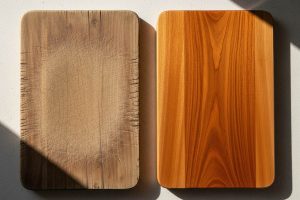
Modern dishwashers reach temperatures of 150–160°F (65–70°C) during their wash and dry cycles. When exposed to these extreme conditions, wood expands and contracts unevenly, creating serious stress within the material. Over time, this leads to deep cracks along the grain, permanent warping that makes the board unstable, and even separation of glued joints in edge-grain boards. In many cases, the heat and moisture cause irreversible damage to the wood’s cellular structure, shortening the board’s lifespan dramatically.
Water Absorption and Warping
Wood is naturally porous, and end-grain boards are especially absorbent. In a typical dishwasher cycle that lasts 1–3 hours, cutting boards stay submerged or saturated much longer than they ever would during proper hand-washing. This prolonged exposure to moisture causes swelling that distorts the board’s shape, followed by uneven drying that leaves permanent curves. The result is an unstable cutting surface that rocks during use, creating potential safety hazards every time you prepare food.
Stripping of Protective Oils
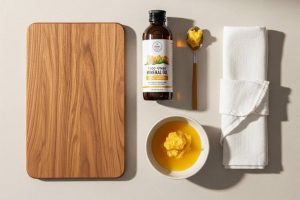
Quality wooden boards are usually treated with mineral oil or beeswax to form a protective barrier on the surface. However, dishwasher detergents are designed to cut through grease and oils – the very elements that keep your board safe. After a dishwashing cycle, the board is often left with a dry, rough surface that easily absorbs stains, making it more susceptible to bacteria. The protective layer breaks down, leading to accelerated wear from knife cuts and leaving the board with a dull, lifeless appearance.
Dramatically Reduced Lifespan
A well-maintained wooden cutting board can last 10–20 years with the right care, but just a few dishwasher cycles are enough to ruin it completely. The repeated exposure to heat, steam, and harsh detergents creates stress fractures that harbor bacteria, leads to permanent warping that makes the board unusable, and eventually causes a complete breakdown of the wood’s structure. Instead of enjoying decades of use, you end up with a total loss of your investment after only a short time.
How to Properly Clean Wooden Cutting Boards
The USDA recommends a simple but effective cleaning process for wooden boards that takes just minutes.
Basic cleaning after each use:
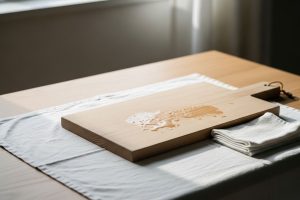
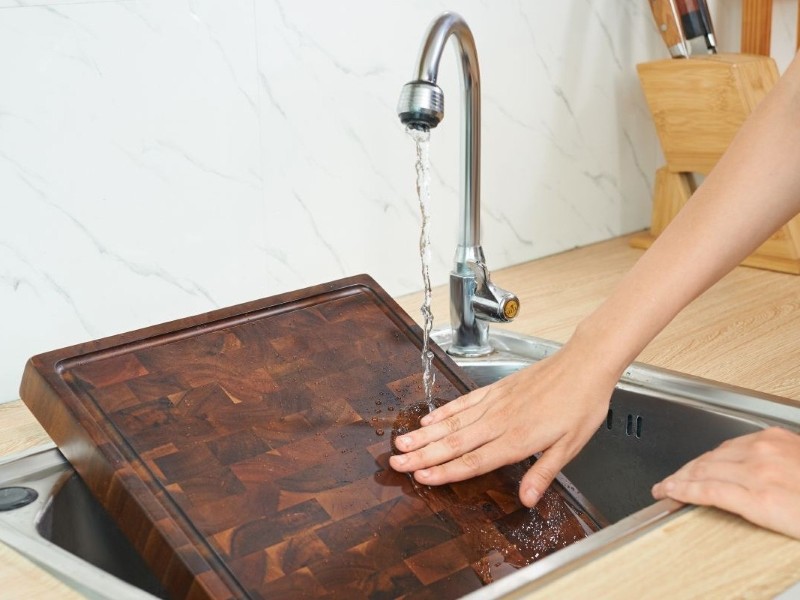
Basic cleaning after each use is quick and effortless. Simply rinse the board under warm water, add a touch of mild dish soap, scrub gently, then rinse and dry it with a clean towel. The whole process takes less than 30 seconds, which means putting a wooden cutting board in the dishwasher is not only unnecessary but also risks damaging the board. By hand-washing right away, you keep the wood clean, safe, and long-lasting with almost no extra effort.
Sanitizing when needed:
Many users are tempted to use the dishwasher when a board picks up strong odors from fish, seafood, garlic, or onions, believing that the hot cycle will remove them more effectively. In reality, there are better ways that both eliminate odors and keep the wood safe. Simple sanitizing methods, such as a diluted bleach solution approved by the FDA Food Code or natural options like vinegar, baking soda, or lemon, can refresh the board without causing damage. Just remember not to soak it or leave it standing in water, since prolonged exposure to moisture weakens the wood and shortens its lifespan.

Read more: How to clean a wooden cutting board
Dishwasher-Safe Cutting Board Alternatives
If dishwasher convenience is essential in your kitchen, there are several alternatives that can handle high heat and detergents better than wood. Each option has clear advantages and disadvantages.
Advanced Bamboo Technology Cutting Boards – Koppen MoistureBlock 3-Layer
Modern bamboo boards like Koppen’s MoistureBlock 3-Layer Cutting Board are engineered with steam treatment at 180–220°C and natural nano-calcium infusion. This process reduces water absorption by 45–60%, increases hardness by 20–30%, and extends lifespan up to three times compared to ordinary bamboo.
Advantages: Superior resistance to moisture and bacteria, long lifespan, stable three-layer construction that resists warping, and maintains the natural look of bamboo.
Disadvantages: Higher cost than standard bamboo and, despite the improved technology.

Plastic Cutting Boards
Plastic boards are widely available, inexpensive, and fully dishwasher-safe. Many are NSF certified for commercial kitchens, making them a common choice for both households and restaurants.
Advantages: Affordable, lightweight, easy to replace, and safe for dishwashers.
Disadvantages: Knife grooves trap bacteria, odors linger, and studies show microplastics can shed into food. They also lack the beauty of natural wood or bamboo.

Titanium Cutting Boards
Titanium boards are designed for ultimate durability. They are non-porous, dishwasher- and autoclave-safe, and will never warp or crack, which makes them appealing in high-demand environments.
Advantages: Extremely durable, completely hygienic, resistant to heat and moisture, and certified for commercial use.
Disadvantages: expensive and tough on knife edges.

Glass Cutting Boards
Glass boards are non-porous, stain-resistant, and can easily be sanitized in the dishwasher. They offer a sleek and modern appearance for some kitchens.
Advantages: Easy to clean, dishwasher-safe, resistant to stains and odors.
Disadvantages: Extremely damaging to knives, slippery when wet, noisy during use, and prone to shattering, making them unsuitable for everyday cutting.

Conclusion
Can you put a wooden cutting board in the dishwasher? The answer is never. Heat, moisture, and detergents will quickly damage the wood, leaving it warped, cracked, and unsafe while cutting short its lifespan. Hand-washing is simple, takes less than a minute, and will keep your board in great condition for years. Treat it with proper care, oil it regularly, and your wooden cutting board can serve you reliably for decades. The dishwasher is best left for materials built to withstand its harsh environment.