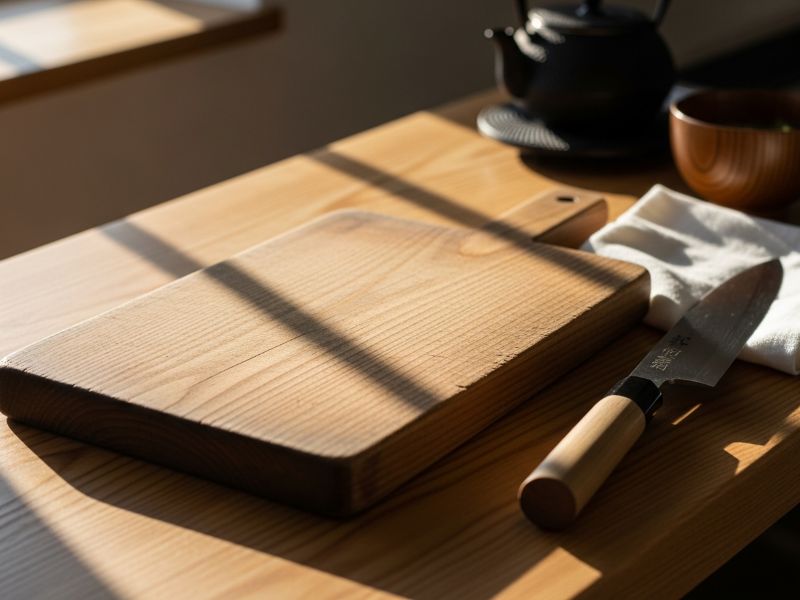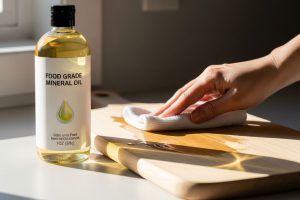
Hinoki cutting board care is rooted in Japanese culinary tradition, where hinoki (Japanese cypress) symbolizes precision and respect for nature. This lightweight, antibacterial wood needs gentle maintenance – regular cleaning, proper drying, and occasional oiling – to preserve its softness and lasting beauty.
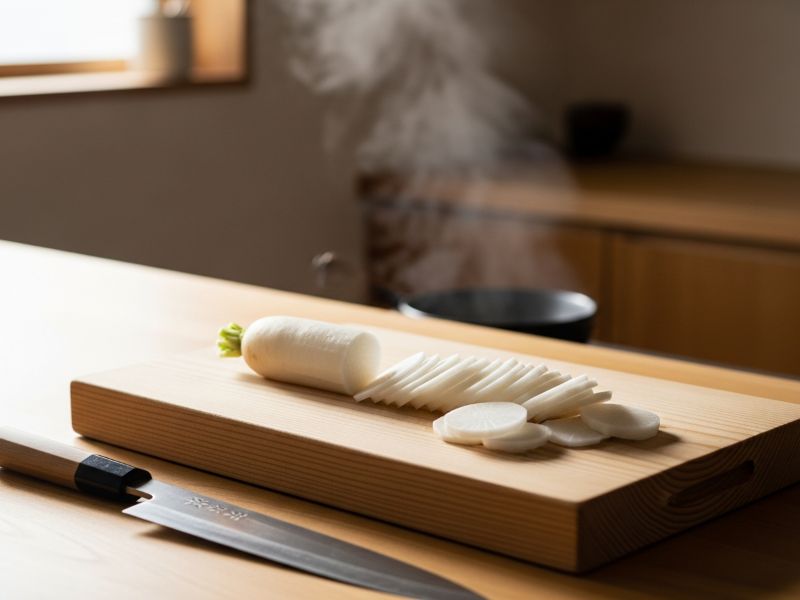
Daily Cleaning for Hinoki Cutting Boards
Wash Immediately After Use:
The most effective way to prevent bacteria buildup and lingering odors starts with prompt cleaning. Hinoki’s open-pore structure absorbs residue faster than denser woods, making immediate attention essential.
Follow this sequence after each use:
- Scrape off food particles using a spatula or bench scraper. Avoid dragging knives across the surface.
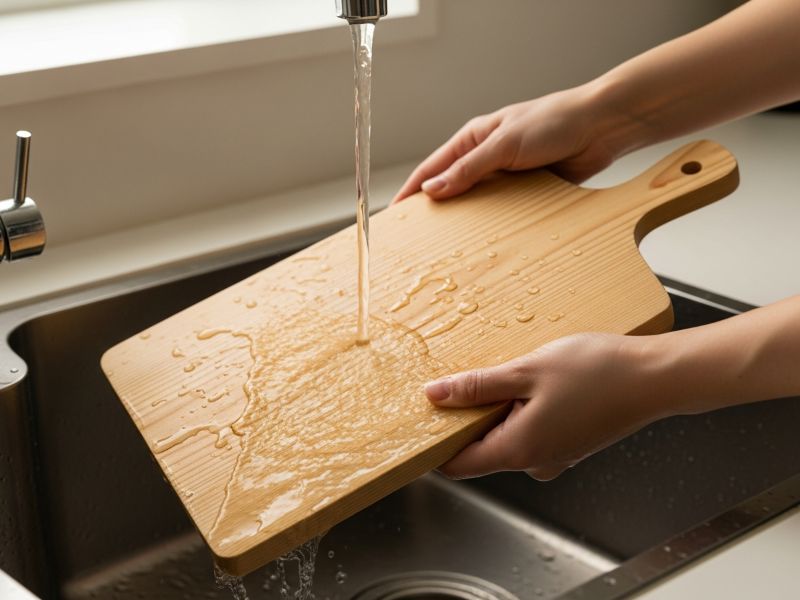
- Rinse with lukewarm water. Never use hot or boiling water – it stresses the fibers and can cause cracking.
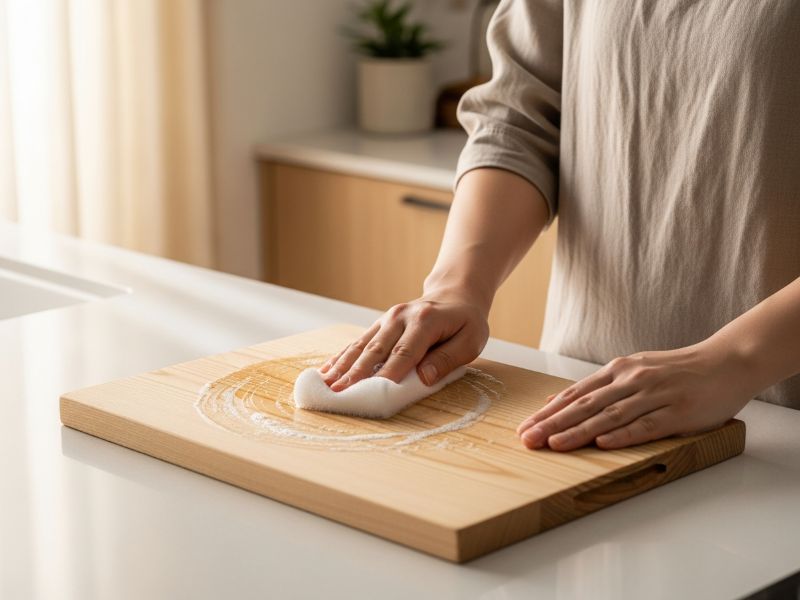
- Apply mild dish soap to a soft sponge or cloth, then wipe the surface using gentle circular motions.
- Rinse thoroughly to remove all soap residue.
- Dry immediately with a clean towel to prevent water from soaking into the grain.
Why this matters: Food proteins can sink into hinoki’s pores within minutes. Cleaning right away lets the wood’s natural antibacterial oils do their job.
Important note: Never use steel wool, rough scouring pads, or boiling water. These can scratch the delicate grain or warp the board. Always stick to soft sponges and moderate water temperature.
Avoid Soaking to Prevent Warping:
Never leave your hinoki board submerged in water, even for a few minutes. The science behind this caution relates to fiber structure. Hinoki, like all softwoods, contains large, hollow cells that absorb moisture rapidly. When one side of the board absorbs more water than the other, the fibers expand unevenly – a process that creates the curved deformation known as cupping.
Science note: Wood fibers expand across their grain when wet. In a soaking situation, one side swells while the other stays stable, creating tension that bends the wood. Over time, this weakens the cell walls permanently.
Here’s how hinoki compares to common hardwoods in moisture absorption:
| Wood Type | Absorption Rate (% increase in 10 minutes) | Warping Risk |
|---|---|---|
| Hinoki | 8–12% | High |
| Maple | 3–5% | Medium |
| Acacia | 2–4% | Low |
Hinoki’s straight grain pattern – the parallel lines visible on your board – reveals how the fibers are oriented. Moisture moves fastest across these fibers, which is why you should rinse quickly and dry immediately after each use.
Read more: How to Clean A Wooden Cutting Board: A Practical Guide (2025)
Dry Upright in a Well-Ventilated Area
After washing, stand the board upright or lean it on a rack so both sides can dry evenly.
Good airflow prevents trapped humidity and keeps the board flat. Laying it flat on the counter traps moisture underneath and increases bacteria growth..
Once dry, your board is ready for the next step – conditioning with oil to keep it smooth and protected.
Oiling and Conditioning Hinoki Boards
When and Why to Oil
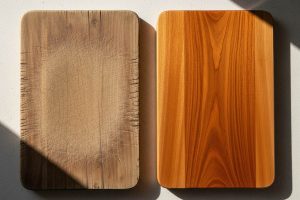
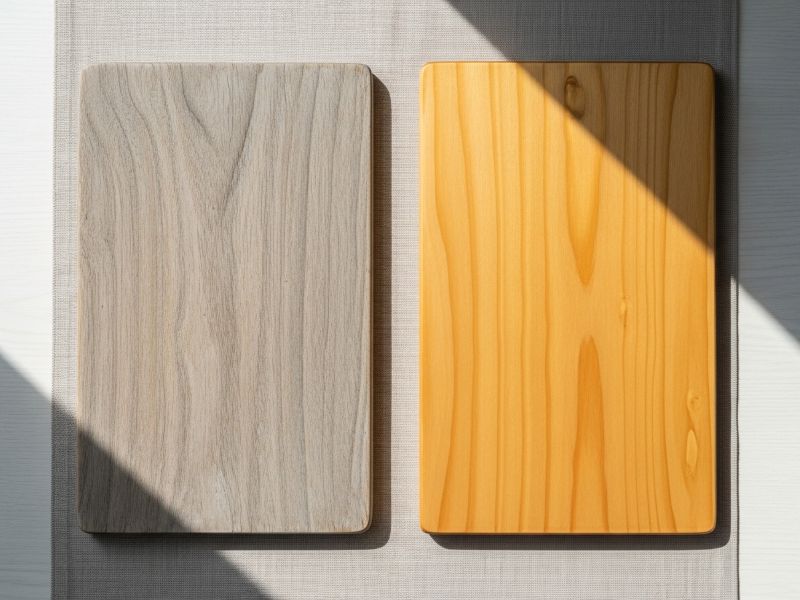
A big part of good hinoki cutting board care is regular oiling. Hinoki wood naturally contains oils that keep it smooth and flexible – but these fade over time, especially in dry or air-conditioned kitchens.
When that happens, the board can feel rough, look dull, or even start to crack.
Signs your board needs oiling:
- Surface looks dry or chalky
- Texture feels rough or raised
- Small hairline cracks appear
- Lost its soft, natural sheen
Oiling helps the board stay hydrated and strong. It keeps wood fibers flexible, prevents cracking, and supports hinoki’s natural antibacterial resin – so the board lasts longer and stays more hygienic.
Best Oils to Use
Not all oils suit hinoki’s specific needs. Some turn rancid, others create sticky residue, and a few actually accelerate deterioration. Choose your conditioning oil based on stability, penetration depth, and safety for food contact.
| Oil Type | Food-Safe | Rancidity Risk | Penetration | Recommended |
|---|---|---|---|---|
| Food-grade mineral oil | ✔️ | None | Deep | ✔️ |
| Camellia (tsubaki) oil | ✔️ | Very low | Medium-deep | ✔️ |
| Beeswax-mineral blend | ✔️ | None | Surface + deep | ✔️ |
| Olive oil | ✔️ | High | Shallow | ✖️ |
| Coconut oil | ✔️ | Moderate | Medium | ✖️ |
Cultural context: Camellia oil has been used in Japan for centuries to protect both knives and wooden boards. It absorbs well and leaves a clean finish, though mineral oil is an easier, cheaper alternative with similar benefits.
Read more: 7 Best Oils for Cutting Boards: Complete Food-Safe Guide (2025 Update)
How to Apply
Conditioning requires patience and proper technique. Rush the process, and you’ll end up with sticky surfaces or uneven absorption.
Follow these steps for effective oiling:
- Ensure the board is completely dry (wait at least 2 hours after washing, or overnight if possible).
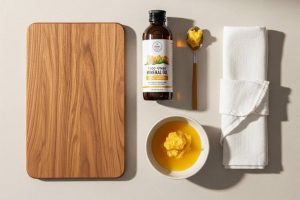
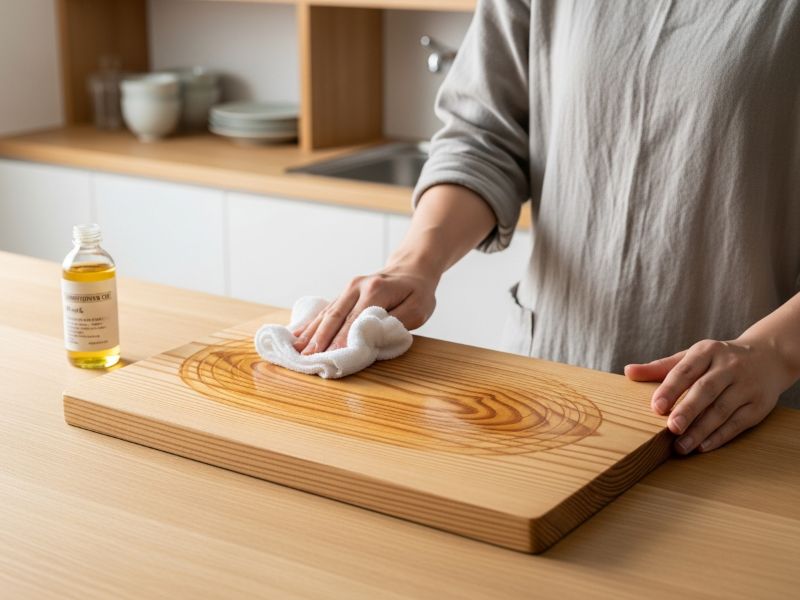
- Pour a small amount of your chosen oil into a clean cloth or paper towel—about one tablespoon for a standard-size board.
- Rub the oil into the wood surface using circular motions, working with the grain direction.
- Cover the entire surface, including edges and any handles, until the wood appears saturated.
- Allow the oil to penetrate for 6–12 hours. The wood will absorb most of it during this period.
- After the waiting period, use a clean cloth to wipe away any excess oil that remains on the surface.
Pro tip: Warm the oil slightly (around 38°C / 100°F) by placing the bottle in warm water before use – it helps the oil soak in deeper.
Read more: How to Oil a Cutting Board: Step-by-Step Guide for Long-Lasting Results
Conditioning Benefits
A well-conditioned hinoki board feels silky, resists cracks, and is easier to clean. Regular oiling keeps the surface hydrated, smooth, and naturally fragrant.
That gentle hinoki aroma and soft texture are signs your board is healthy – just as Japanese chefs have maintained theirs for generations.
Oiling isn’t just maintenance; it’s part of the tradition that makes hinoki cutting board care a mindful ritual, preserving both beauty and function for years.
Special Care Considerations for Hinoki
Caring for a hinoki cutting board means understanding its unique nature. Unlike hardwoods, hinoki is soft, elastic, and alive – it protects your knives but needs gentle handling in return.
- Softness and Knife Interaction:
One reason chefs love hinoki cutting boards is their softness. Hinoki’s fine, springy wood fibers absorb impact instead of dulling your knife, keeping blades sharper for longer.
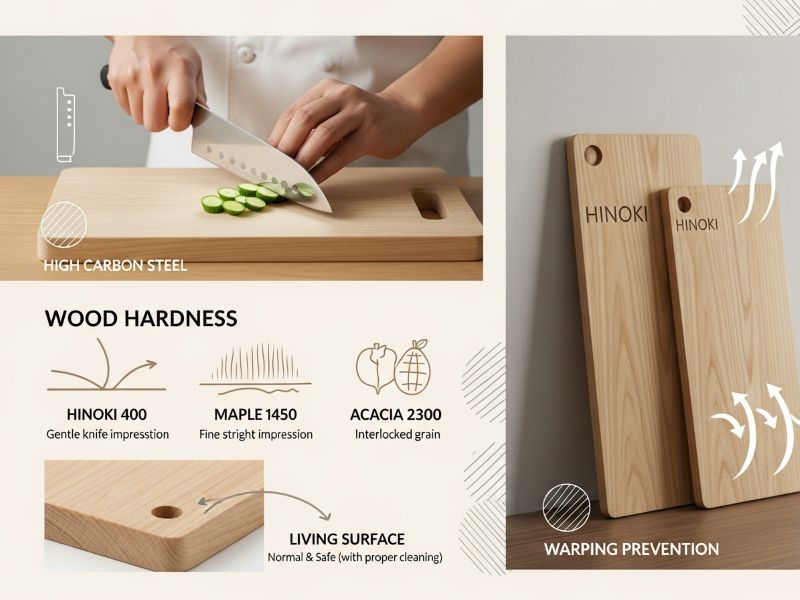
On the Janka hardness scale, hinoki measures only 350–400 lbf, compared to 1,450 for maple and 2,300 for acacia. That softness protects knives – but it also means the board dents more easily.
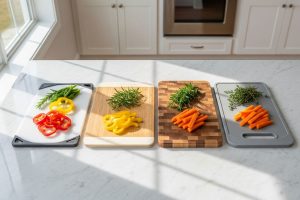
Use your hinoki board for light slicing, fish prep, and vegetable cutting. Avoid heavy cleaver work or bone-in meat that can leave deep marks. If you cook often with both styles, use a harder board for chopping and save hinoki for precision cuts.
- Knife Marks and Normal Aging:
Knife marks are part of the board’s character, not a flaw. Each fine line tells the story of meals prepared – a concept Japanese craftsmen call a “living surface.”
As long as you clean the board properly after each use, shallow knife marks won’t trap bacteria or cause hygiene issues.
When cuts become deeper or the surface feels rough, lightly sand the board to renew it (see maintenance section). With this simple care, a hinoki board can last for many years – even a decade or more.
- Warping Prevention:
Hinoki wood can warp if one side dries faster than the other. The fix is simple: let both sides breathe equally.
After washing, flip the board so each face dries in the air. Storing it the same way every time traps moisture on one side and leads to bending over time.
Think of it like rotating car tires – it keeps wear even. By drying and storing your board upright and alternating sides, you’ll maintain balance and prevent warping through seasonal humidity changes.
Deodorizing and Removing Stains
Even with good daily hinoki cutting board care, strong foods like fish, garlic, or onions can leave odors behind. Luckily, you can remove them easily with a few natural ingredients – no harsh chemicals needed.
Natural Deodorizing Methods:
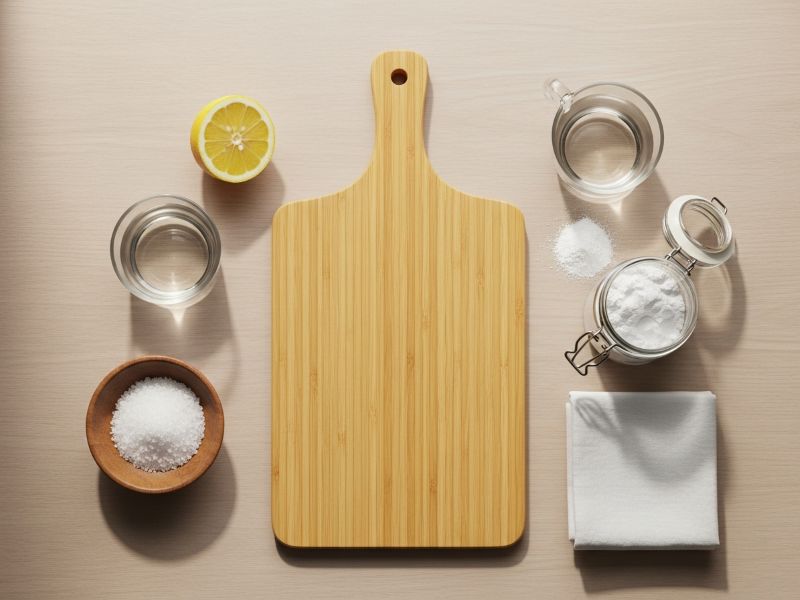
Salt and lemon are the simplest, safest way to refresh your board.
How to do it:
- Sprinkle coarse salt over the board.
- Cut a lemon in half and scrub gently, squeezing as you go.
- Let it sit for 5–10 minutes.
- Rinse with lukewarm water and dry upright.
Why it works: The citric acid in lemon breaks down fish and meat odors, while salt lifts residue from the wood without scratching.
For vegetable-only boards, a mild vinegar rinse (1 part vinegar to 3 parts water) works just as well and adds light antibacterial protection.
For Stubborn Stains:
Pigments from beetroot, turmeric, or berries can stain wood fibers.
To fix this:
- Mix baking soda and water into a paste.
- Spread it over the stain and leave for 10 minutes.
- Wipe gently with a soft cloth, rinse, and dry.
If the stain remains, repeat once more or extend the wait to 20 minutes (Avoid leaving the paste for hours – it can dry out the wood.)
Odor Prevention Routine:
Prevent smells before they start.
Once a week, mist the board with a 1:1 vinegar-water mix, let it sit a few minutes, then rinse and dry.
You can also place your clean board in sunlight for 15–20 minutes – the UV light naturally freshens and disinfects. Don’t overdo it though; too much sun can dry the wood.
With these simple natural methods, your hinoki cutting board will stay clean, fresh, and lightly scented with its natural cypress aroma – never with last night’s dinner.
Storage Tips for Hinoki Cutting Boards
Proper storage is a key part of hinoki cutting board care. Even with perfect cleaning, poor airflow or excess humidity can warp the wood or cause cracks. Storing it correctly keeps your board flat, dry, and long-lasting.
Ideal Storage Conditions:
- Let your board breathe. Store your hinoki upright or on a rack where air can reach both sides.
- Avoid humid areas near the sink, stove, or dishwasher – these zones trap moisture and cause swelling.
- Keep the board away from heat vents or windows where direct sunlight or temperature swings can stress the grain.
Weight and Space Tips:
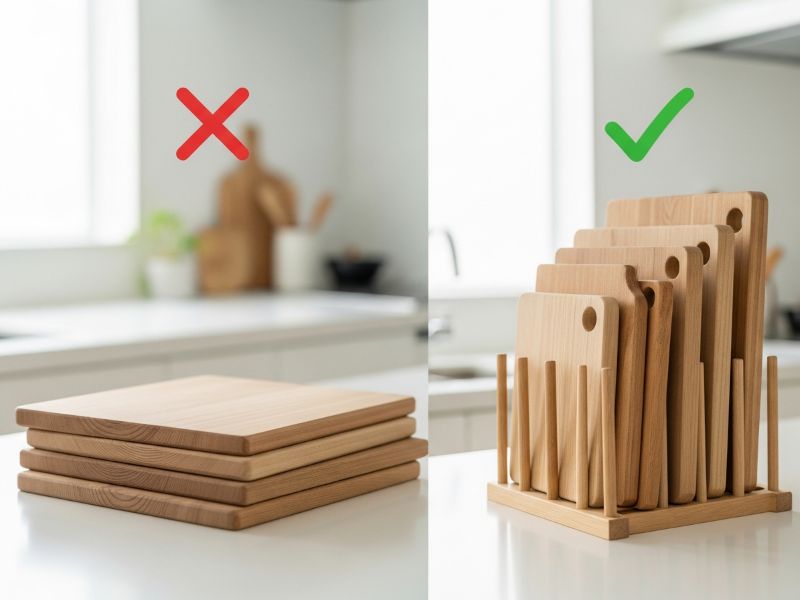
- Don’t stack cutting boards directly on top of each other. Weight from above traps moisture and can bend the board.
- If you need to store several boards, use small spacers between them for airflow.
- When leaning your board, keep it nearly vertical, supported like a book on a shelf – never at a sharp angle.
Seasonal Adjustments
Your storage habits should shift with the seasons:
- In summer: High humidity slows drying. Give your board extra time – about 3–4 hours – to dry completely, and increase ventilation.
- In winter: Indoor heating dries wood faster. Oil your board every 3–4 weeks and consider using a small humidifier to prevent cracks.
Good storage means more than just finding space—it’s about balance. By keeping air flowing and adjusting for seasonal changes, your hinoki board will stay smooth, sturdy, and ready to use for years.
Long-Term Maintenance and Restoration
Even with the best hinoki cutting board care, time and use leave marks, roughness, and stains. Regular restoration keeps your board smooth, safe, and beautiful for years. With simple sanding and deep oiling, you can bring your board back to life.
Surface Renewal by Sanding:
After years of use, light sanding removes scratches, stains, and trapped odors -revealing a fresh surface underneath.
How to do it:
- Start with 120-grit sandpaper to smooth out deep marks (always sand with the grain).
- Move to 220-grit, then finish with 320-grit for a silky texture.
- Wipe away all dust, let the board dry fully, then apply a generous coat of oil.
Sanding not only restores the surface but also exposes new wood cells, helping hinoki’s natural antibacterial properties work effectively again.
Deep Conditioning Cycle:
After sanding – or anytime the board feels dry – apply two coats of oil instead of one.
- Apply the first coat, wait 12 hours, then buff lightly.
- Add a second coat, wait another 12 hours, and wipe off any extra oil.
Do this twice a year – before summer humidity and before winter dryness – for ideal moisture balance. Combine with sanding every 2–3 years to keep your hinoki board in peak condition.
When to Replace Your Board:
Hinoki boards last many years, but replacement is necessary when:
- Cracks deeper than ⅛ inch appear
- Mold returns after cleaning
- Warping exceeds ½ inch
- The board has thinned to less than ¾ inch
When it’s time to replace, recycle responsibly – hinoki is biodegradable and can even be repurposed in the garden.
Restoration is part of the beauty of hinoki cutting board care. With occasional sanding, oiling, and attention to detail, your board can serve faithfully for a decade or more – aging gracefully like a well-loved kitchen tool.
Conclusion
Caring for a hinoki cutting board is simple when you follow a rhythm: clean it right after use, dry it well, oil it often, and store it with airflow. Each step protects the wood’s beauty and strength while honoring Japanese craftsmanship.
With regular care – washing, monthly conditioning, and mindful storage – your board will age gracefully, gaining a smooth patina and gentle knife marks that tell its story. Every use becomes part of a tradition that values quality, respect, and care in cooking.
At Koppen, we believe good tools deserve thoughtful hands – and proper hinoki cutting board care keeps that connection alive for years to come.