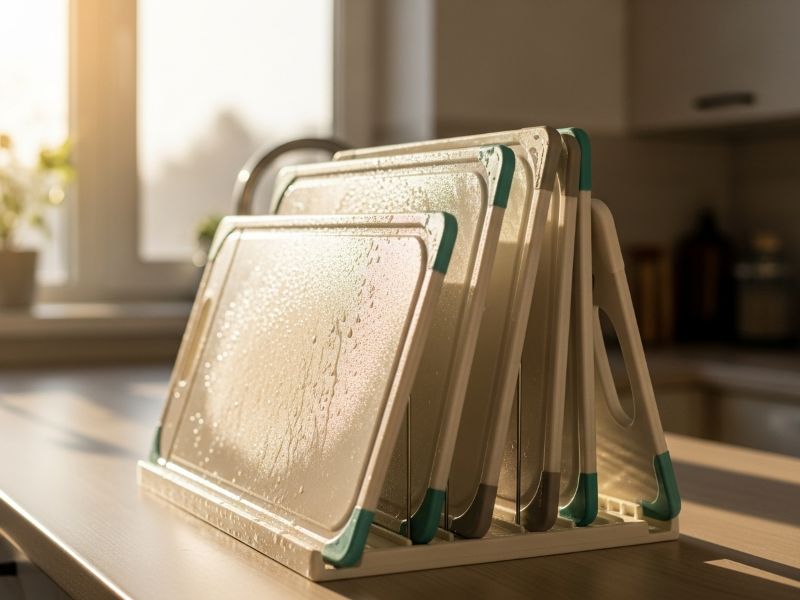
Plastic cutting boards are generally easy to clean. Most can go straight into the dishwasher. However, they still face common problems like deep knife grooves that trap food, stubborn stains from turmeric or tomatoes, lingering odors from garlic and fish, and even black mold if not dried properly. If you’re wondering how to clean stained plastic cutting boards effectively, this guide shows you exactly how to tackle those issues: from removing stains and killing mold to disinfecting and keeping your board safe for daily cooking.

Read more: Top 5 Best Plastic Cutting Boards in 2025: Food-Safe, Dishwasher-Safe & Durable
Common Problems with Plastic Cutting Boards
Stains from Turmeric, Tomato, Beet Juice, and Other Foods
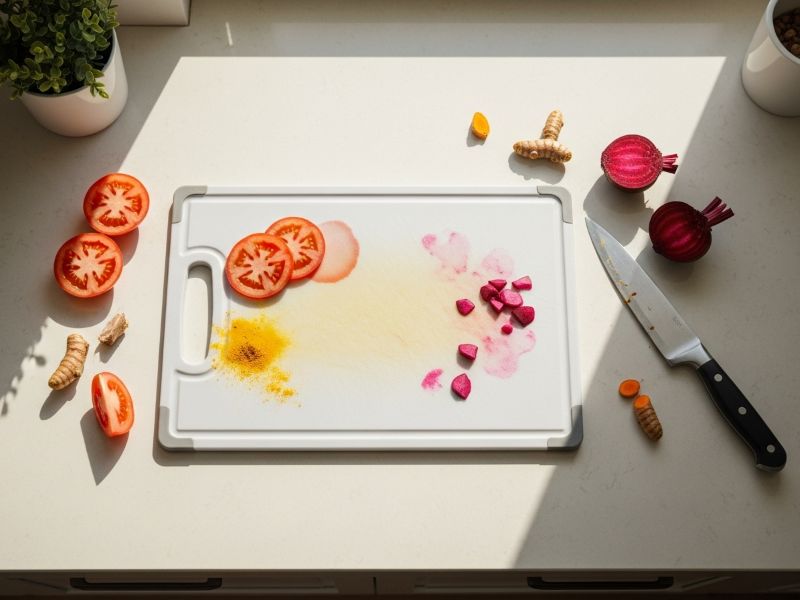
Plastic cutting boards develop visible stains when you cut strongly pigmented foods like turmeric, tomatoes, and beets. These stains easily penetrate deep into knife grooves, making them difficult to remove with regular dish soap alone. Over time, staining makes your board look worn and unhygienic, even if it’s actually clean. The visual aspect matters because a stained board can make you second-guess your kitchen hygiene, and it creates the impression that your board is older than it actually is.
Odors from Garlic, Onions, Fish, and Other Strong-Smelling Foods
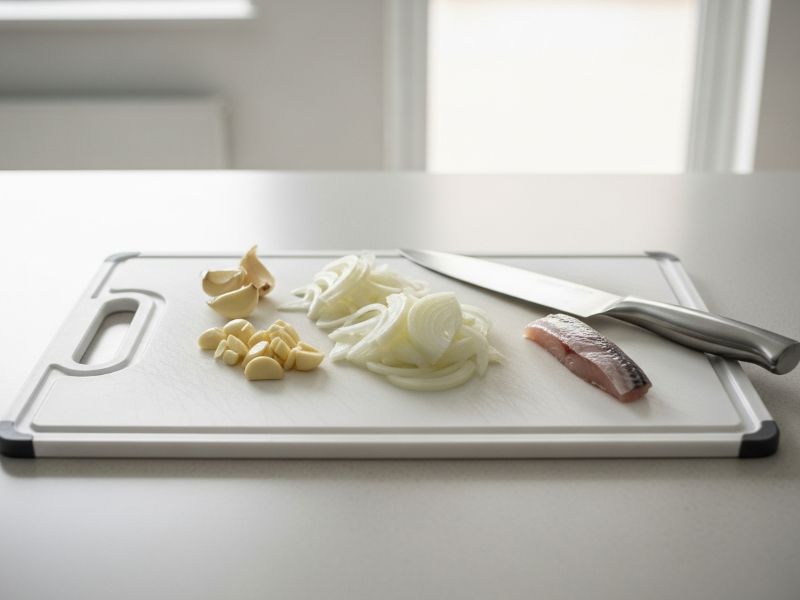
Unpleasant smells come from cutting pungent ingredients like garlic, onions, and fish. These odors get trapped inside the tiny scratches on the plastic surface. If you don’t address them quickly, those smells transfer to other foods the next time you use the board. This is especially frustrating when you’re preparing fruit or bread and detect a faint smell of last night’s salmon.
Mold Growth in Knife Grooves and Black Mold Risks
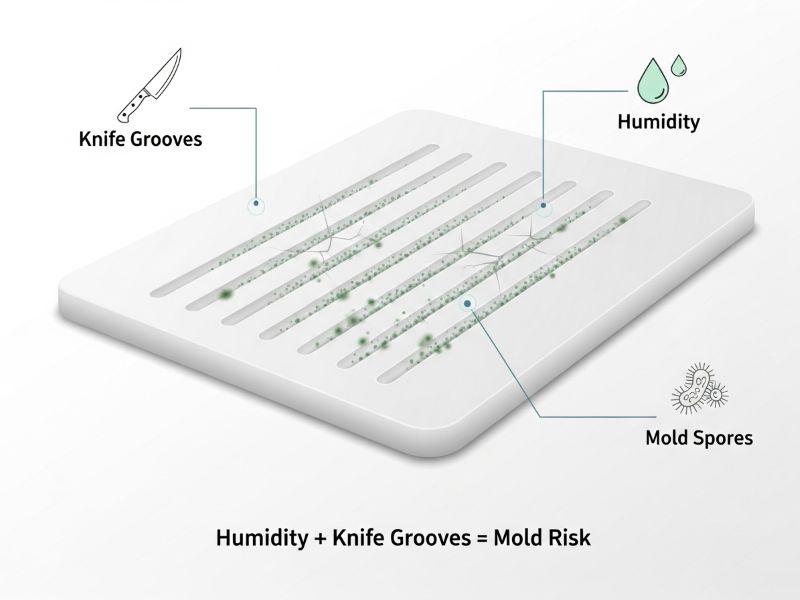
Mold develops when your board isn’t dried completely after washing or when it’s stored in a humid environment. Deep knife cuts create perfect hiding spots where mold spores can settle and multiply. Black mold is the most serious type. It looks terrible and poses genuine health risks, especially for people with respiratory sensitivities or weakened immune systems.
Bacteria Buildup from Raw Meat, Seafood, and Knife Grooves
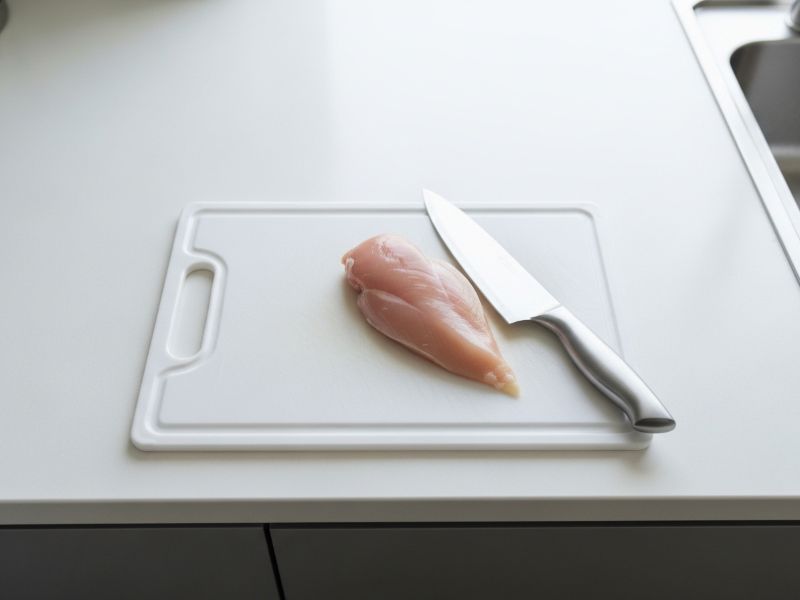
Without proper disinfection, plastic cutting boards can harbor dangerous bacteria like Salmonella and E. coli. The risk increases significantly after cutting raw meat or seafood. Bacteria nestle into knife grooves where regular washing can’t reach them. This is one of the most common causes of foodborne illness in home kitchens, making proper cleaning and sanitization essential for food safety.
How to Clean and Remove Stains from Plastic Cutting Boards
Baking Soda Paste
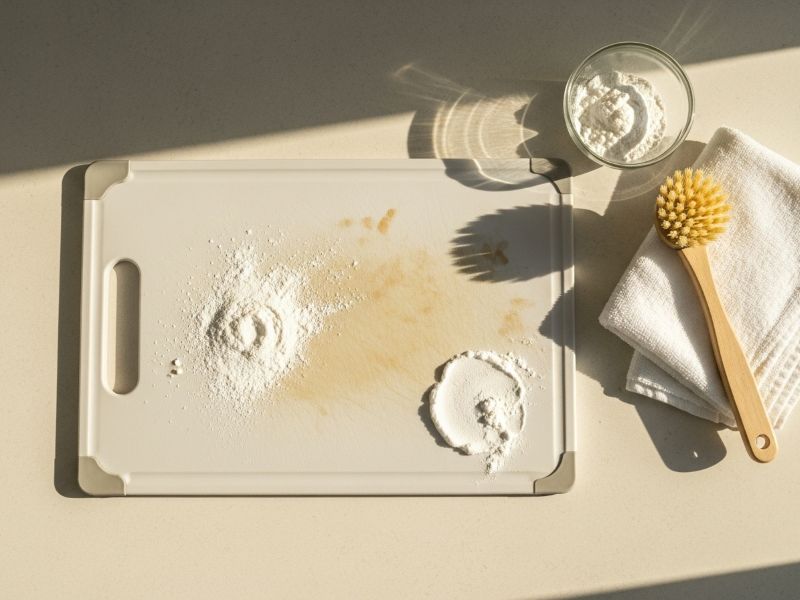
How to do it: Mix baking soda with a small amount of water until you get a thick paste. Apply it directly to stained areas, then scrub gently with a brush or sponge. Let the paste sit for a few minutes before rinsing thoroughly with hot water.
Why it works:
- Baking soda acts as a gentle abrasive that lifts stains out of knife grooves without scratching the plastic surface.
- Its alkaline nature neutralizes acids from foods like tomatoes and beets, helping brighten the board’s appearance.
- Completely safe, non-toxic, and food-friendly.
- Inexpensive and likely already available in your pantry.
- Provides mild deodorizing benefits in addition to stain removal.
When to use it: This method works best for fresh stains or moderate discoloration. For stubborn, set-in stains, you may need to combine baking soda with other methods like lemon or hydrogen peroxide for better results.
Lemon and Salt Scrub
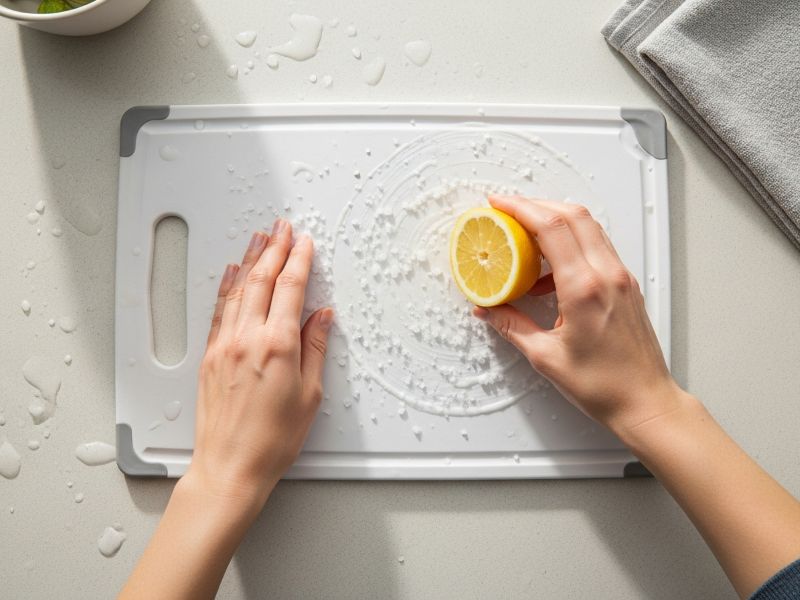
How to do it: Sprinkle a layer of fine salt or sea salt across your board’s surface. Cut a lemon in half and use the cut side to scrub directly over the stained areas. Let the lemon and salt mixture sit for a few minutes before rinsing with hot water.
Why it works:
- Citric acid in lemon juice acts as a natural bleaching agent, quickly fading stains from foods like tomatoes, carrots, and turmeric.
- Salt works as a mild abrasive that lifts stains from the surface and boosts the lemon’s cleaning power.
- The lemon–salt combination has strong deodorizing properties, eliminating garlic, onion, and fish smells effectively.
- Uses only natural ingredients that are completely safe for food contact.
- Leaves no chemical residue on the board.
When to use it: This method is most effective on fresh stains or newly formed odors. Apply it regularly after cutting pigmented or smelly foods to prevent buildup. However, it’s not ideal for old, deeply set stains or black mold that has penetrated deep into knife grooves. For those situations, move on to hydrogen peroxide or bleach solutions.
Hydrogen Peroxide Solution
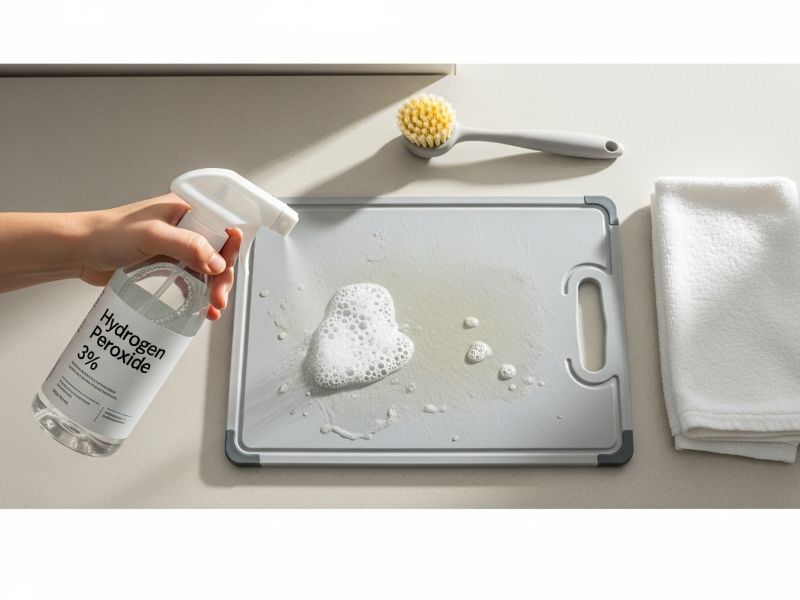
How to do it: Use standard 3% hydrogen peroxide, which you can find at any pharmacy or on Amazon. Pour it directly onto the board’s surface or focus on heavily stained areas. Let the solution bubble for 5 to 10 minutes, then scrub gently with a brush. Rinse thoroughly with hot water and dry completely.
Why it works:
- Hydrogen peroxide has strong oxidizing power that breaks down stubborn stains baking soda or lemon and salt cannot handle.
- Provides mild antibacterial properties, helping kill bacteria left after cutting raw meat or seafood.
- Evaporates quickly and leaves no smell or residue when rinsed properly.
- Widely available in US drugstores and easy to order online.
When to use it: Choose hydrogen peroxide when your plastic board has old, deeply embedded stains. Use it when you need enhanced disinfection after preparing meat, fish, or seafood. Apply it periodically, such as once a week or when you notice heavy staining, but you don’t need to use it after every single use.
How to Remove Mold (Including Black Mold) from Plastic Cutting Boards
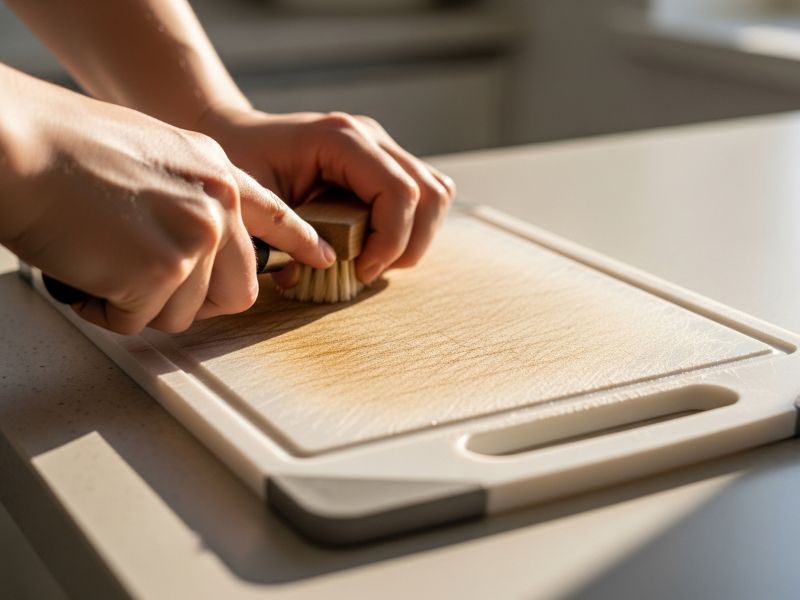
Plastic boards are easy to maintain, but failing to dry them completely after washing creates the perfect environment for mold. Deep knife grooves create pockets where mold spores can settle and grow. Light mold usually appears as white spots on the surface. If left untreated, black mold can develop, which is harder to remove and poses food safety concerns. You need to choose the right treatment method based on how severe the mold problem is.
Vinegar Soak
How to do it: Mix white vinegar with water in a 1 ratio, or use it undiluted for stronger action. Soak the board in this solution for 10 to 15 minutes. Use a brush to scrub thoroughly into knife grooves and moldy areas. Rinse well with hot water and dry completely.
Why it works:
- White vinegar contains acetic acid with natural antifungal properties that remove light mold.
- Also eliminates odors and helps clean the surface.
- Safe for food contact and leaves no chemical residue.
- Inexpensive and readily available in almost every kitchen.
When to use it: Apply this method when you first notice white mold or very light mold growth. Use it as a preventive measure every month or so to stop mold from forming in the first place. If black mold has already penetrated deeply, switch to a bleach solution or replace the board.
Bleach Solution
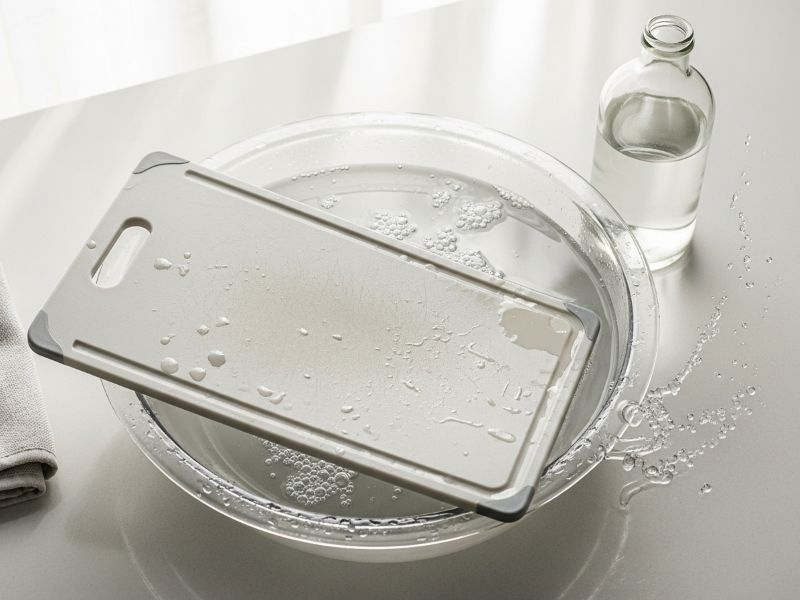
How to do it: Dilute the solution properly: 1 tablespoon of chlorine bleach per 1 gallon (about 3.8 liters) of water. Soak the board in this solution for 5 to 10 minutes. Don’t soak longer than that or you risk discoloring the plastic. Use a brush to scrub into knife grooves where black mold is visible. Rinse multiple times with hot water and dry completely before using the board again.
Why it works:
- Bleach has powerful antifungal properties that kill stubborn black mold that vinegar or hydrogen peroxide cannot eliminate.
- Effectively destroys remaining bacteria on the board.
- Provides a deeper level of sanitation compared to natural methods.
When to use it: Only use bleach when your plastic board has serious black mold or when mold has penetrated deep into knife cuts. Don’t use it routinely for daily cleaning because bleach is harsh and can degrade plastic over time. If mold keeps coming back even after bleach treatment, that’s a clear sign your board is too old and needs replacement.
Deep Scrubbing and Replacement
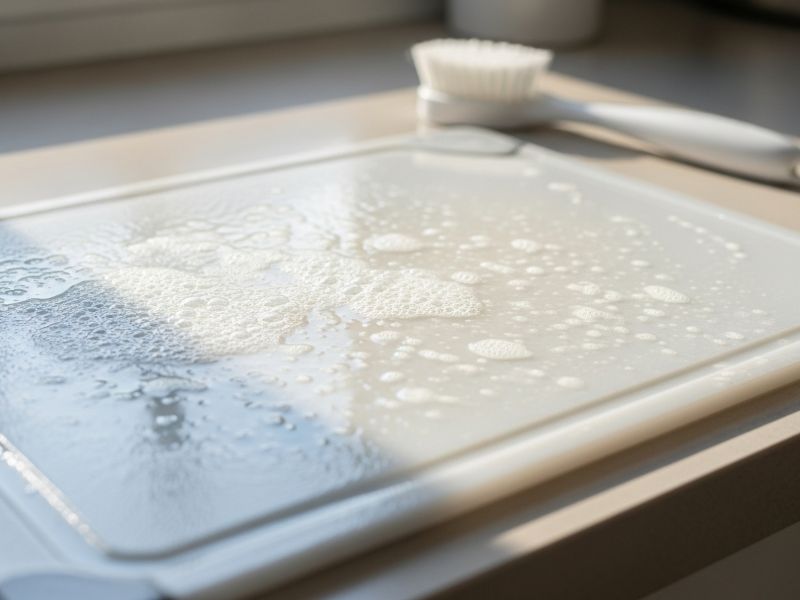
When scrubbing no longer works: Sometimes knife grooves become so deep that brushes can’t reach the bottom. Mold and bacteria hide in these crevices and return quickly after cleaning. Odors become permanently embedded and resist all cleaning attempts.
Signs you should replace your plastic cutting board:
- Black mold keeps reappearing even after bleach treatment.
- Stubborn stains remain no matter what cleaning method you try.
- The surface is heavily scratched with deep grooves and is no longer flat.
- The board is older than 6 to 12 months, depending on usage frequency.
Benefits of replacing your board: A new board ensures food safety by eliminating the risk of bacteria and mold. It gives you peace of mind when preparing raw meat, fish, and seafood. This is a small investment that protects your family’s health.
Read more: Are Plastic Cutting Boards Safe? A Practical Guide for Your Kitchen
How to Disinfect and Sanitize Plastic Cutting Boards
Why It Matters
Washing with soap removes food debris, but it doesn’t kill all bacteria. Salmonella and E. coli can hide in knife grooves and spread to other foods, raising the risk of foodborne illness. Disinfecting and sanitizing go a step further, making your board not just visibly clean but truly safe to use.
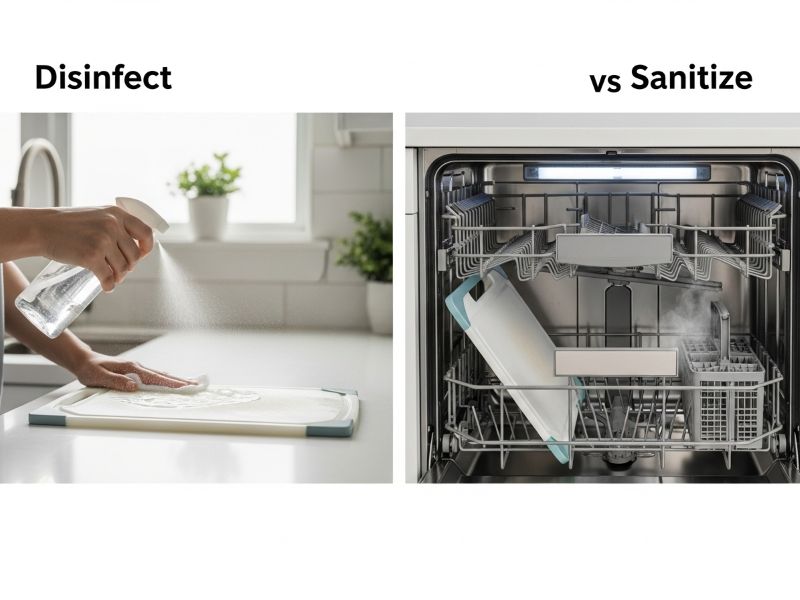
Disinfect vs. Sanitize
Disinfect
Disinfecting means using safe solutions such as vinegar, hydrogen peroxide, or diluted bleach to kill bacteria on contact. It’s the step you take right after handling raw meat, seafood, or poultry to eliminate harmful microorganisms before they spread.
Sanitize
Sanitizing relies on heat, like a dishwasher’s hot cycle, to reduce bacteria to safe levels. It’s less about killing every germ instantly and more about keeping your cutting board safe for everyday use over the long term.
Quick, Easy Process
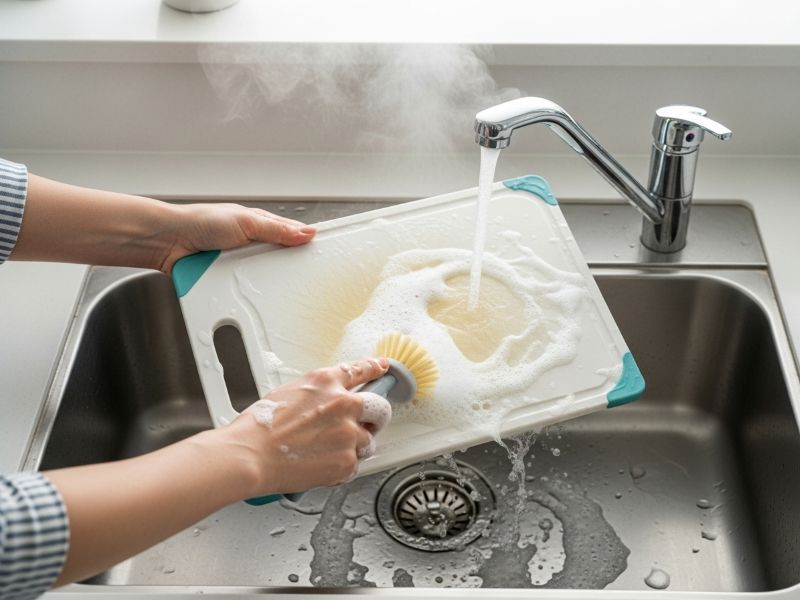
Wash with soap and hot water
- Scrub the board thoroughly with dish soap and hot water to remove grease, food particles, and surface debris.
- Use a brush instead of just a sponge to reach into knife grooves.
Apply a disinfecting solution
- Choose one: vinegar, hydrogen peroxide, or diluted bleach (1 tablespoon bleach per gallon of water).
- Spray the surface evenly or soak the board for a few minutes to kill bacteria.
Rinse thoroughly
- Rinse again with hot water to remove any leftover cleaning solution.
- This step ensures no residue is left on the surface before using the board again.
Sanitize with heat (optional but recommended)
- If your board is labeled dishwasher-safe, place it in the dishwasher on a hot cycle.
- The heat will reduce bacteria to safe levels and give you an extra layer of protection.
Dry completely
- Stand the board upright or place it in a well-ventilated spot so air can circulate.
- Never store it flat or damp, as trapped moisture encourages mold and bacteria growth.
When You Need to Do It
Always disinfect after cutting raw meat, fish, or seafood. Do it when your board smells bad but doesn’t yet show visible mold. Apply a disinfecting routine 1 to 2 times per week to maintain hygiene, even when the board looks clean.
Best Practices for Maintaining Plastic Cutting Boards
Wash immediately after use to prevent staining and mold. Don’t let food residue sit on the board. Rinse it as soon as you finish cutting, then wash with hot soapy water. This simple habit stops stains from setting and prevents bacteria from multiplying.
Dry completely before storing. Moisture is the main cause of mold growth. After washing, either air-dry the board standing upright or wipe it thoroughly with a clean towel. Never stack wet boards or store them flat in a closed cabinet.
Use separate boards for raw meat and produce. This is one of the most important food safety practices. Dedicate one board exclusively to raw meat, poultry, and seafood. Use a different board for vegetables, fruits, and ready-to-eat foods. This prevents cross-contamination.
Replace old boards with deep grooves that harbor bacteria. Even with perfect cleaning habits, plastic boards wear out. When you notice deep knife cuts that trap food and moisture, it’s time to invest in a new board. Regular replacement is part of maintaining a safe, hygienic kitchen.
Following these practices will keep your plastic cutting boards clean, safe, and functional for months. Whether you’re dealing with everyday maintenance or tackling tough problems like how to clean stained plastic cutting boards, these methods give you the tools you need. A well-maintained board protects your family’s health and makes cooking more enjoyable. At Koppen, we believe that good kitchen hygiene starts with understanding your tools and knowing how to care for them properly.