Olive wood is known for its striking grain patterns and Mediterranean roots, making it a popular choice for cutting boards among home cooks. This article explores its performance, evaluating density, maintenance, knife impact, and practical uses. You’ll find comparisons, assessments of trade-offs, and guidance on whether olive wood fits your kitchen needs. Let’s begin by understanding olive wood.
Is Olive Wood Good for Cutting Boards?
Olive wood is a durable option for cutting boards, scoring between 2700 and 3000 on the Janka hardness scale. This density makes it resistant to scratches and wear, allowing it to last for years. However, its hardness can dull knife edges more quickly. If you sharpen your knives often, this might not be an issue, but for those who prefer low-maintenance tools, it could be a concern over time.
Olive wood also has natural oils that help prevent bacterial growth, enhancing its appearance. However, it requires regular conditioning to avoid moisture damage, which can lead to cracks and warps. In summary, olive wood cutting boards are great for specific uses but need upkeep and may wear on knives. Consider these factors to see if they fit your cooking style and maintenance habits.
Understanding Olive Wood’s Properties
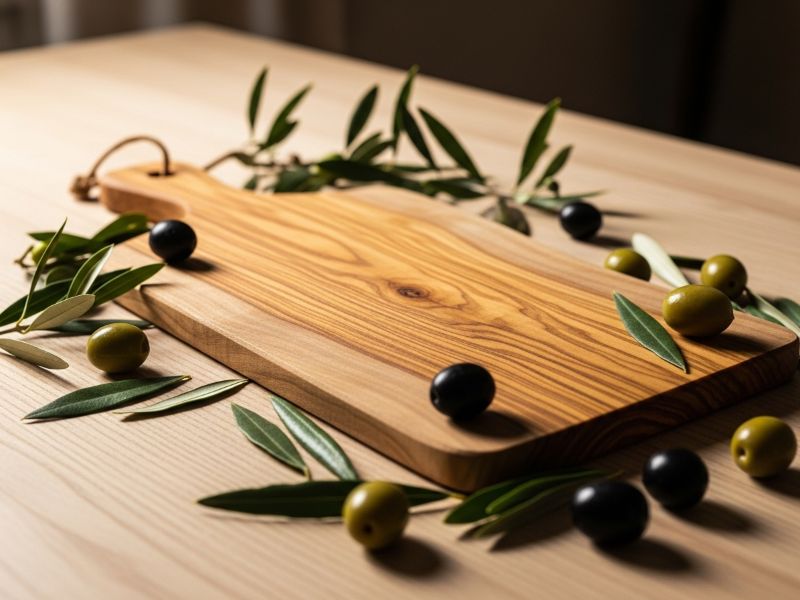
Olive wood comes from retired Mediterranean olive trees, a sustainable material repurposed after fruit production ends. This upcycled source minimizes waste and delivers exceptional hardness and beauty.
It’s tight, closed-grain resists moisture and bacteria better than many open-grained woods, while natural oils help block odor absorption. These same oils give olive wood its signature golden-to-dark streaked pattern, making each board visually distinct.
Performance and Care
With a Janka hardness of roughly 2700-3000, olive wood is harder than maple or walnut. That means excellent surface durability but greater knife wear. Regular oiling maintains the wood’s moisture barrier and appearance.
Studies, including those published in the Journal of Food Protection, confirm that wooden boards can harbor fewer bacteria than plastic after cleaning. Olive wood benefits from this natural antibacterial trait, but still requires proper washing and conditioning to prevent cracking or warping.
Read more: Top 5 Safest Cutting Board Materials for a Safer Kitchen
Advantages and Disadvantages of Olive Wood Cutting Boards
Every material presents trade-offs. Olive wood has unique benefits that appeal to certain cooking styles and aesthetic preferences. However, it also presents challenges that some users find difficult to handle.
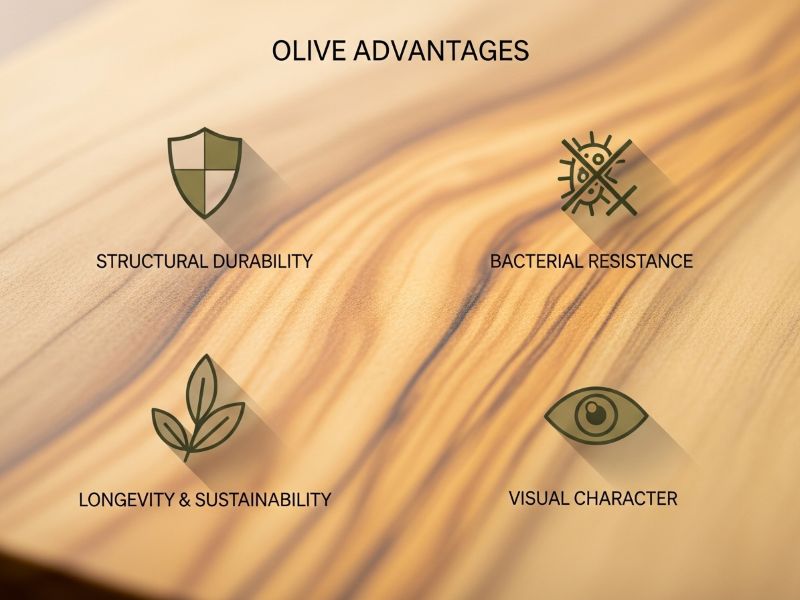
Advantages
Structural Durability
The material resists compression and surface damage that degrades softer woods. Deep knife marks rarely occur during normal use. The board maintains a level surface longer than maple or walnut equivalents, eliminating the low spots that collect moisture and food particles. This durability matters for users who cut frequently and prefer boards that age slowly.
Bacterial Resistance
Natural oils in olive wood create an environment less hospitable to bacterial colonization than untreated surfaces. While this doesn’t replace proper cleaning, it adds a layer of protection during the time between cutting and washing. Combined with the closed grain structure that prevents bacteria from penetrating deep into the material, olive wood offers measurable food safety advantages over porous alternatives.
Visual Character
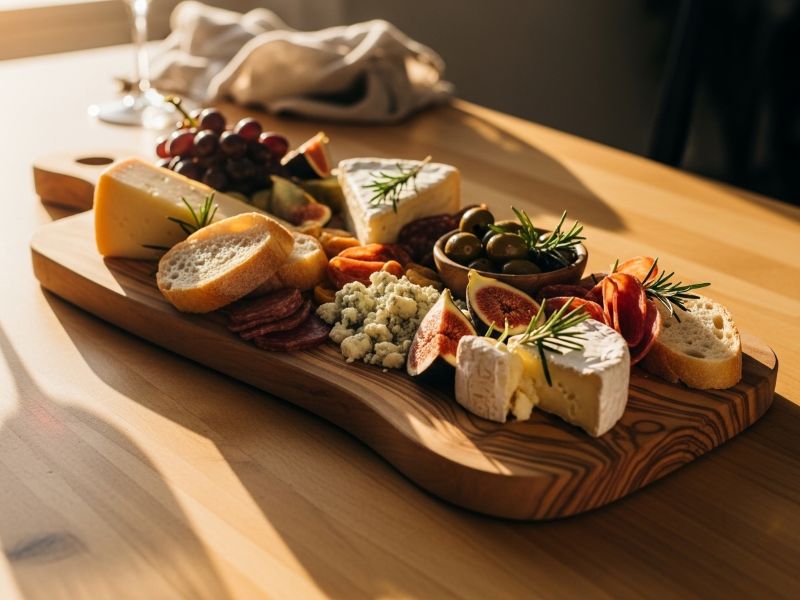
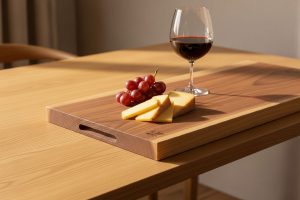
The grain patterns distinguish olive wood from more uniform materials. Each board displays unique coloration. This aesthetic quality elevates the board from pure utility to a presentation piece, suitable for serving cheese, charcuterie, or bread at the table without transferring to separate platters.
Longevity
Olive wood boards balance durability with environmental responsibility. Crafted from trees that no longer bear fruit, no additional logging occurs for their production. Instead of being discarded or burned, this dense hardwood gains a second life in the kitchen.
When maintained properly, olive wood boards can last 15–20 years or more. This combination of upcycled sourcing and extended lifespan makes them a smart, sustainable investment for cooks who value long-term performance over disposable products.
Read more: Best Wood for Cutting Boards: Which Wood is Right for You?
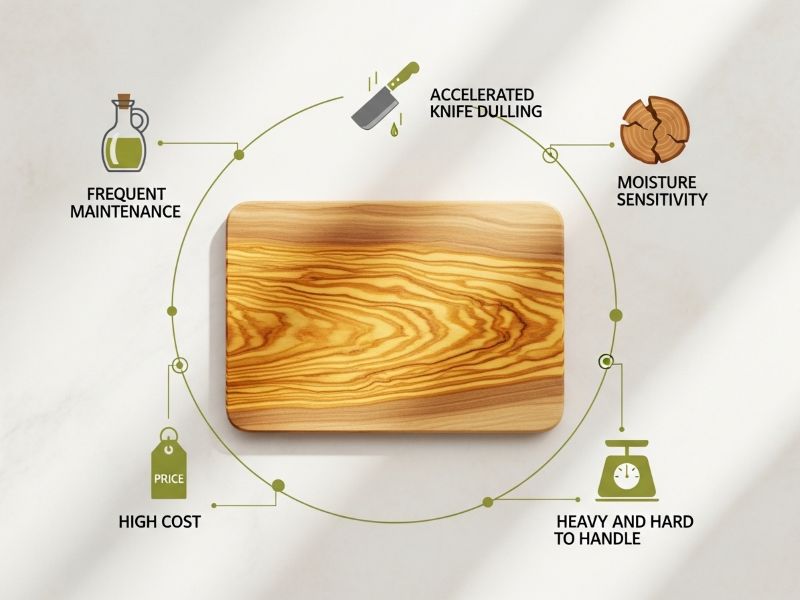
Disadvantages
Accelerated Knife Dulling
The hardness that protects the board works against blade edges. Knives require sharpening more frequently than when used with softer woods. Professional chefs often avoid extremely hard surfaces for this reason. Home cooks who lack sharpening skills or equipment may find this particularly limiting.
Moisture Sensitivity
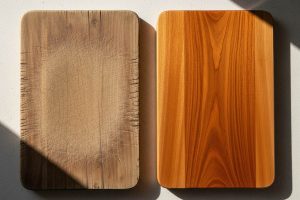
Despite its closed grain, olive wood cracks when exposed to moisture extremes without adequate oil protection. Boards left wet or stored near heat sources develop splits along the grain. Once cracking starts, it typically progresses, eventually rendering the board unusable. This vulnerability requires vigilance that busy cooks may struggle to maintain consistently.
Weight and Handling
Olive wood’s density makes boards heavier than maple or walnut equivalents of the same size. A 12×18-inch olive wood board often weighs 6-8 pounds, compared to 4-5 pounds for maple. This affects daily handling, particularly for users with limited strength or mobility.
Cost Considerations
The material’s scarcity and labor-intensive processing drive prices above common alternatives. Expect to pay $80-150 for quality olive wood boards in standard sizes, versus $40-70 for comparable maple options. This premium makes sense for users who value the material’s specific advantages but represents poor value for those prioritizing basic function.
Maintenance Frequency
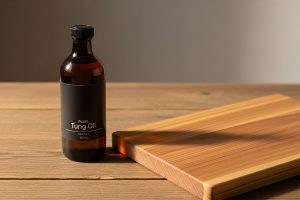
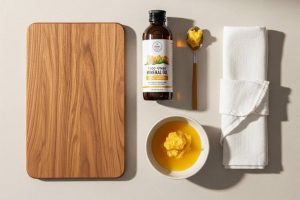
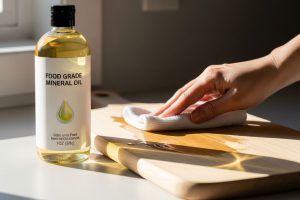
Olive wood requires oiling every 3-4 weeks under normal conditions, more often in dry environments. Each application involves cleaning, drying, applying food-safe mineral oil or board cream, and allowing absorption time. This routine totals 15-20 minutes monthly, which is manageable for dedicated users but burdensome for those seeking minimal-maintenance tools.
The material suits users who view cutting boards as both tools and craft objects worth maintaining. It frustrates those who want reliable function without regular attention.
Best Uses for Olive Wood Boards
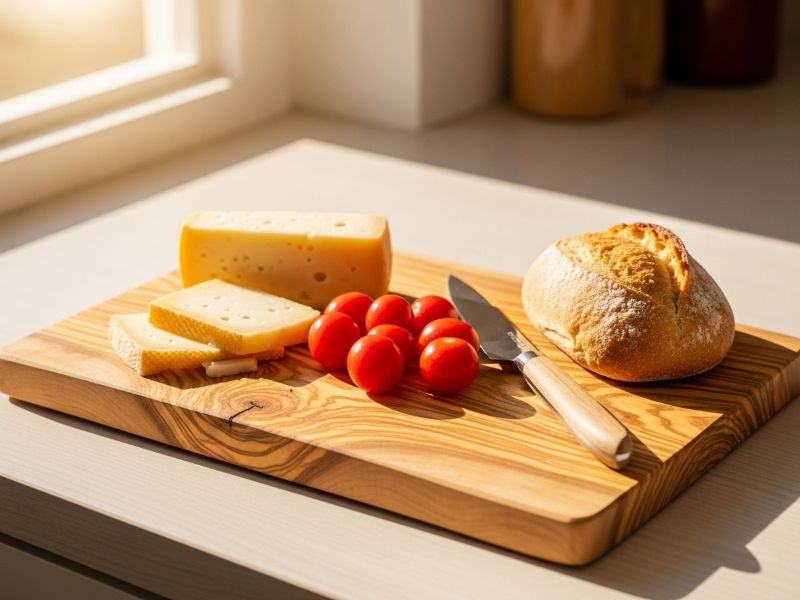
Olive wood excels in applications that leverage its visual appeal while minimizing its impact on knives. The material shines as a serving platform for presenting cheese, cured meats, bread, or appetizers with visual interest that synthetic materials can’t match. The natural grain creates tableside presence, eliminating the need to transfer food from cutting to serving surfaces.
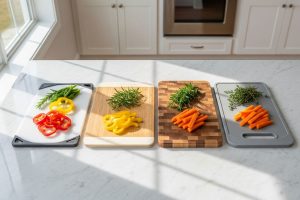
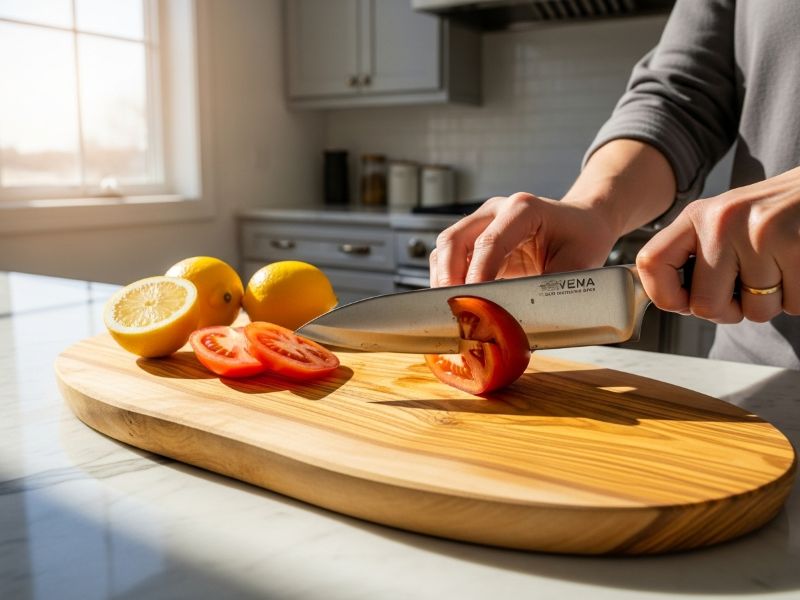
Best for presentation and light prep: For cutting tasks, olive wood handles light to medium work effectively. Slicing tomatoes, cheese, herbs, and cooked proteins causes minimal blade damage while demonstrating the board’s durability. The surface resists staining from acidic ingredients better than maple, maintaining its appearance through varied use.
Performs well for light cutting: Heavy-duty chopping presents problems. Breaking down whole chickens or cutting through bones accelerates both knife dulling and board wear. For these tasks, choose maple or walnut alternatives that protect your knives while handling the workload.
Choose the right size: Consider board size relative to usage. Olive wood’s weight makes large formats (18×24 inches or bigger) cumbersome for daily handling. Smaller sizes (10×14 or 12×16 inches) provide adequate cutting surface while remaining manageable. If you need larger work areas for frequent heavy prep, invest in a maple board for daily tasks and reserve olive wood for its strengths.
At Koppen, we’ve observed that users who treat olive wood as a specialty tool rather than an all-purpose workhorse report high satisfaction. Those expecting it to replace their primary cutting board often encounter frustration with maintenance demands and knife dulling. Understanding intended use before purchase prevents mismatched expectations.
Final Recommendation
Olive wood delivers on its promises but only for users willing to meet its maintenance requirements and accept its impact on blade edges. The material represents thoughtful craftsmanship and environmental responsibility. It also demands regular attention and works best in limited applications.
Choose olive wood if you: value craftsmanship, prioritize aesthetics, and enjoy maintaining your tools. It’s perfect for cheese boards, serving platters, and occasional prep.
The “right” choice depends entirely on how you cook, what you value, and how much attention you’re willing to invest in maintenance. Olive wood rewards users who match its characteristics to appropriate tasks. It frustrates those seeking universal solutions.
Olive wood isn’t overrated. It delivers measurable performance in its intended applications. It’s also not universally superior. Like all materials, it serves certain needs excellently while proving inadequate for others. Understanding these distinctions before purchase leads to satisfaction rather than disappointment.