What are professional cutting boards made of? In restaurant kitchens, chefs rely on durable surfaces that protect knives, meet food safety standards, and withstand heavy daily use. The most common materials are wood, plastic, bamboo, and composite – each chosen for specific tasks. This guide breaks down why professionals trust these materials and how you can apply the same choices at home.

The Role of Cutting Boards in Professional Cooking
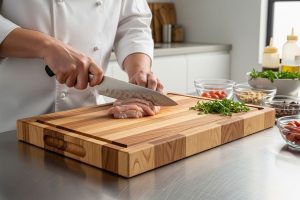
For chefs, a cutting board is more than just a flat surface – it is a foundational tool that influences kitchen speed, food safety, and knife longevity. Professional knives often cost hundreds of dollars, and even the best blade will dull quickly if paired with the wrong board. The right cutting surface helps preserve sharpness, reduce hand fatigue, and ensure consistent, precise cuts service after service.
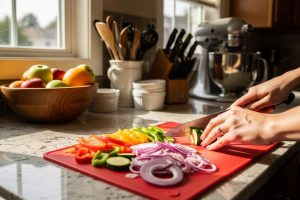
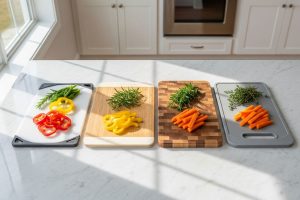
In restaurant kitchens, expectations rise even higher. During peak hours, dozens of dishes are prepped at once, so every station must follow strict hygiene rules. Color-coded cutting boards – red for raw meat, green for vegetables, blue for seafood, and white for ready-to-eat foods – are a standard system that minimizes cross-contamination while keeping workflows organized. This practice isn’t optional; in many regions, it aligns with health department regulations and food safety audits.

These boards must also endure intense conditions: heavy daily use, harsh sanitizing chemicals, and commercial dishwashers. Because of this, restaurants replace cutting boards frequently, making both durability and cost-effectiveness critical when choosing materials.
What Are Professional Cutting Boards Made Of?
Professional kitchens rely on four primary cutting board materials, each engineered for specific applications and performance requirements.
End-Grain Wood (Maple, Acacia, Teak, Walnut)
Why Chefs Value Them
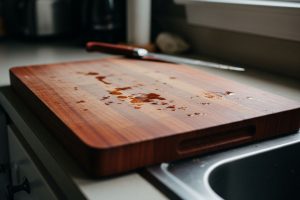
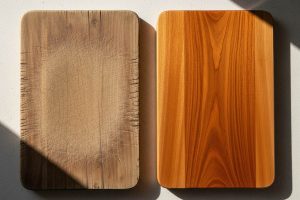
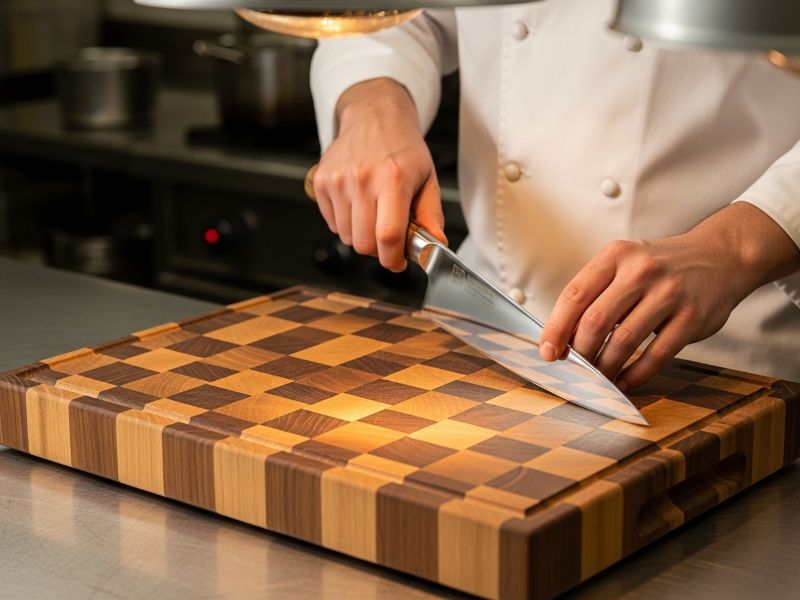
End-grain wooden cutting boards are considered the premium choice for knife-heavy prep work. Their unique grain structure creates a self-healing surface that “closes up” after cuts, preventing deep grooves and extending the board’s lifespan. This construction is much gentler on knife edges compared to plastic or glass, helping chefs preserve the sharpness of their expensive blades.
Common hardwoods for end-grain boards include hard maple, acacia, teak, and walnut – each known for specific advantages:
- Hard maple: dense grain and neutral flavor profile.
- Acacia: distinctive grain patterns that disguise wear marks.
- Teak: natural oils that improve water resistance and limit microbial growth.
- Walnut: slightly softer surface, making it especially gentle on knives, with rich dark tones that add visual appeal.
How They’re Used in Professional Kitchens
Despite their advantages, end-grain wooden boards are heavy, require regular oiling, and are harder to sanitize thoroughly. Under HACCP guidelines, wood is rarely used in raw prep areas because it can trap bacteria and is less compatible with strict sanitizing routines.
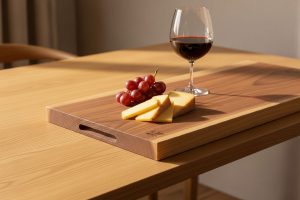
Instead, professional kitchens reserve wooden boards for specific low-risk stations where appearance and performance matter most – bread slicing, charcuterie, cheese, cooked foods, and final plating. In these contexts, walnut and acacia boards add both durability and presentation value, often doubling as serving platters.
Bamboo Boards
Standard bamboo cutting boards are valued for sustainability and affordability, but they are rarely the first choice in professional kitchens. Conventional boards can dull knives due to their natural silica content, and they often absorb water, leading to warping, splitting, or fuzzy textures under heavy sanitizing cycles. These issues limit their reliability in high-volume food prep.
Modern processing has improved bamboo’s performance. For example, the Koppen 3-Layer MoistureBlock™ Bamboo-Tech Cutting Board uses thermally treated bamboo to achieve three times the water resistance of standard boards. The result is a more durable, hygienic surface that is dishwasher safe – something traditional bamboo boards cannot withstand. Kitchens also save time since no oiling or special upkeep is required, making the boards practical for both raw prep and cooked food handling.
That said, chefs who rely on premium knives still approach bamboo with caution. Even advanced versions like MoistureBlock™ are harder than end-grain hardwoods and may wear blades faster over time. As a result, these boards are often positioned as a cost-effective, eco-friendly solution for multi-station use and presentation, rather than the top choice for knife-intensive prep.

Plastic (HDPE, Polypropylene)
Plastic cutting boards dominate commercial kitchens because they combine practicality with strict food safety compliance. High-density polyethylene (HDPE) and polypropylene boards are lightweight, affordable, and can be manufactured in standard sizes that fit every station. They withstand harsh sanitizers, bleach solutions, and repeated runs through commercial dishwashers without warping.
One of their biggest advantages is color coding. Under HACCP guidelines, plastic boards are recommended for raw prep areas since they reduce the risk of cross-contamination. For example, red is used for raw meat, green for vegetables, blue for seafood, and white for ready-to-eat foods. This system helps large kitchen teams maintain hygiene and consistency across shifts.

Still, plastic boards have well-known weaknesses:
- Microplastic concerns – as boards wear down, especially cheaper models, they can shed small plastic particles during cutting. These microplastics may transfer to food and raise safety concerns.
- Knife-unfriendly – the relatively hard, non-resilient surface dulls blades faster than end-grain wood, which increases sharpening costs for chefs who rely on premium knives.
- Limited versatility – unlike wooden or bamboo boards, plastic is purely functional. It doesn’t offer visual appeal for plating or serving, making it unsuitable outside back-of-house prep.
Because knife grooves accumulate quickly, plastic boards become harder to sanitize thoroughly. Commercial operators often treat them as consumables, replacing them monthly or quarterly depending on volume. While this adds recurring costs, it ensures kitchens stay compliant and safe under heavy use.
Composite Boards
Composite cutting boards are made from resin-infused wood fibers or other engineered synthetics, designed to combine the durability of wood with the low-maintenance benefits of plastic. Their dense, non-porous surface resists warping, cracking, and staining, while staying stable under temperature and humidity changes.
In professional kitchens, the main advantage is easy upkeep. Unlike hardwood boards, composites do not require oiling or special maintenance. They can withstand constant sanitizing, exposure to water, and heavy workloads, making them reliable for prep lines, butcher stations, and high-volume operations. Their non-absorbent surface aligns well with HACCP requirements, ensuring compliance with strict food safety standards.
Another factor driving their adoption is cost-effectiveness. Composite boards are generally affordable, often priced closer to quality plastic boards than premium hardwoods. Combined with their durability, this makes them a practical long-term investment for restaurants that need consistency without constant replacements.
The trade-off is that composites are harder than wood, which means they can be less gentle on knife edges. While they perform well for heavy-duty prep and meat cutting, chefs with premium knives may still prefer softer end-grain wood or rubber boards to better protect their blades.

Rubber Cutting Boards
Rubber cutting boards are prized in specialized kitchens for their knife-friendly surface. The slightly cushioned texture preserves razor-sharp edges, making them a favorite among sushi chefs who need precision, as well as butchers and fine-dining chefs who rely on premium knives.
They also offer self-healing properties: shallow cuts close up naturally, reducing grooves that trap bacteria. With a non-slip surface and easy sanitization, rubber boards align well with HACCP standards. Well-known brands such as Hasegawa and Sani-Tuff are NSF-certified and widely used in professional environments.
The downsides are weight, cost, and limited versatility. Heavier and pricier than plastic, and less attractive than wood, rubber boards are not used for serving or presentation. Instead, they remain a practical choice for chefs who prioritize hygiene and blade longevity over aesthetics.

Conclusion
In restaurants, cutting boards are chosen with precision. Chefs don’t follow trends – they select materials that protect knives, comply with safety standards, and keep service running smoothly. Every board has a role: wood for its resilience, plastic for hygiene, bamboo for sustainability, and composites or rubber for specialized demands.
For home cooks, the lesson is clear: your cutting board is more than a piece of kitchen equipment – it is an investment in both your cooking and your health. The right board safeguards expensive knives, prevents cross-contamination, and elevates the way you prepare every meal. It shapes not just efficiency, but also the safety and satisfaction of daily cooking.
That’s why choosing the right material matters. A well-crafted board bridges the gap between professional performance and personal enjoyment. Koppen Home Living brings this balance to the home kitchen – offering boards that deliver restaurant-level durability, natural beauty, and everyday practicality, so every meal begins on the right foundation.

Read more: What Cutting Board Do You Use in a Commercial Kitchen?