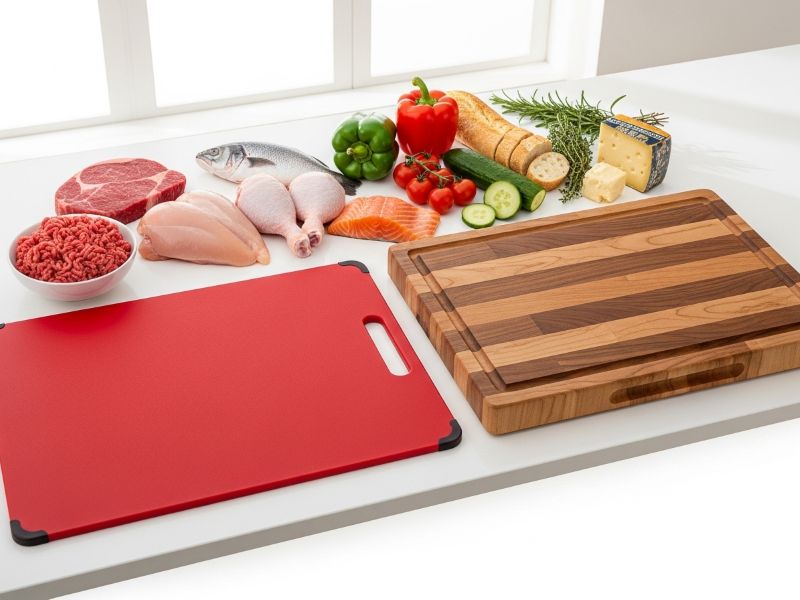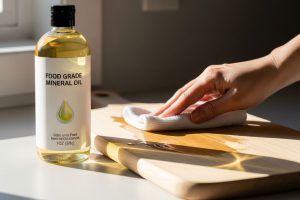
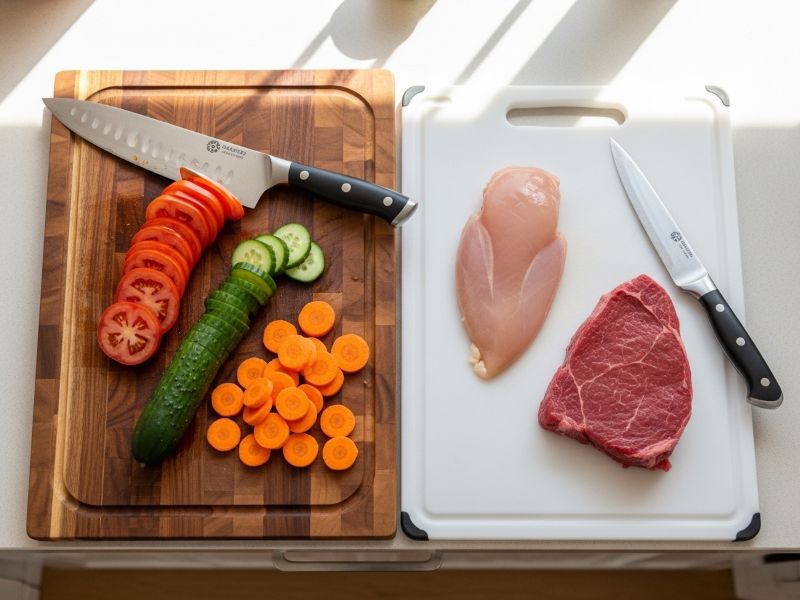
When it comes to food prep, the debate of wood vs plastic cutting boards matters for safety, knife care, and convenience. Wood provides natural antibacterial benefits and blade protection, while plastic excels in easy sanitization for raw meat. This guide breaks down which is best for meat, chicken, and veggies so you can choose wisely.
Pros and Cons of Wood Cutting Boards
Pros of Wood Cutting Boards
Wood cutting boards represent centuries of culinary tradition, yet modern science has revealed surprising benefits beyond their classic appeal. Understanding both advantages and limitations helps determine when wood boards excel and where they fall short in contemporary kitchens.
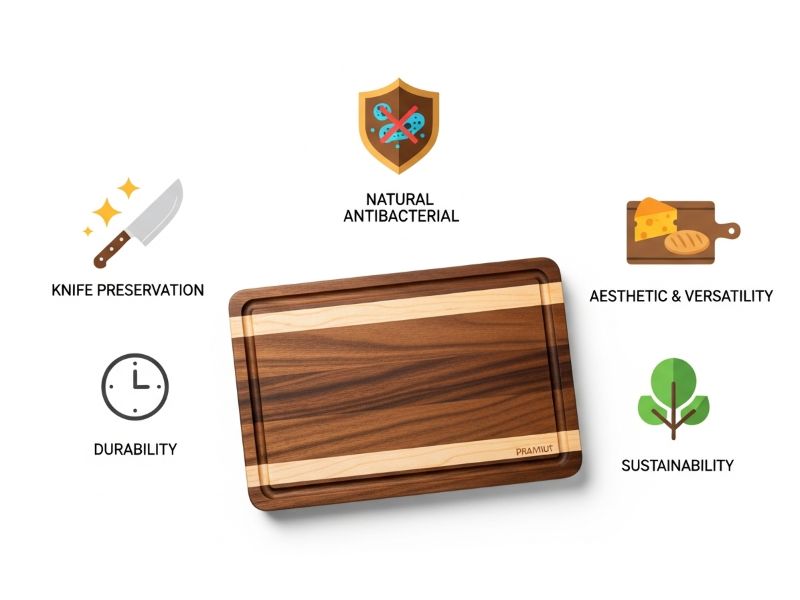
- Natural Antibacterial Properties: Research from the University of Wisconsin, led by Dr. Dean Cliver, showed that bacteria trapped inside wood’s porous surface gradually die off, while plastic often retains higher bacterial counts. Hardwood species like maple and cherry contain natural antimicrobial compounds and tannins that create an environment hostile to pathogens. Wood also wicks away moisture, further limiting bacterial growth.
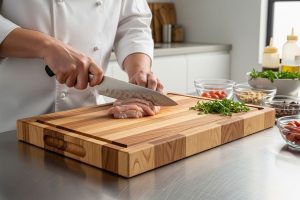
- Knife Preservation: Hardwoods such as maple, walnut, and teak provide the right balance of hardness and flexibility. Unlike glass or plastic, wood gently compresses under the blade, preserving sharpness and reducing the need for frequent honing. End-grain boards even allow knife edges to slide between fibers, offering “self-healing” properties that keep surfaces smooth over time.
- Durability with Care: Well-maintained wood cutting boards can last for decades. They resist deep scoring, and when wear does occur, sanding and re-oiling can restore the surface. Many professional kitchens rely on the same wood boards for years, making them a cost-effective choice despite higher upfront investment.
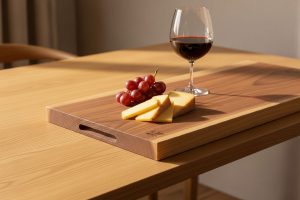
- Aesthetic and Versatility: Beyond performance, wood adds beauty to the kitchen. A single board can serve as a prep tool and elegant platter for cheese, charcuterie, or bread. This versatility reduces clutter while elevating food presentation.
- Sustainability: Responsibly sourced hardwood boards are eco-friendly, renewable, and biodegradable. FSC-certified options ensure sustainable forestry practices. Their long lifespan means fewer replacements, reducing overall kitchen waste compared to cheaper, short-lived alternatives.
Cons of Wood Cutting Boards
Despite their advantages, wood cutting boards present several challenges that limit their universal application in modern kitchens.
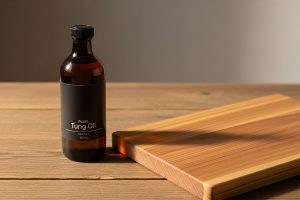
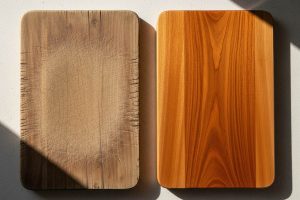
- Maintenance Requirements: Wood boards demand regular oiling with food-safe mineral oil or specialized board conditioners to prevent cracking and maintain water resistance. This monthly maintenance, combined with thorough drying after each use, requires commitment that many busy home cooks find burdensome. Neglected boards crack, warp, and harbor bacteria in damaged areas.
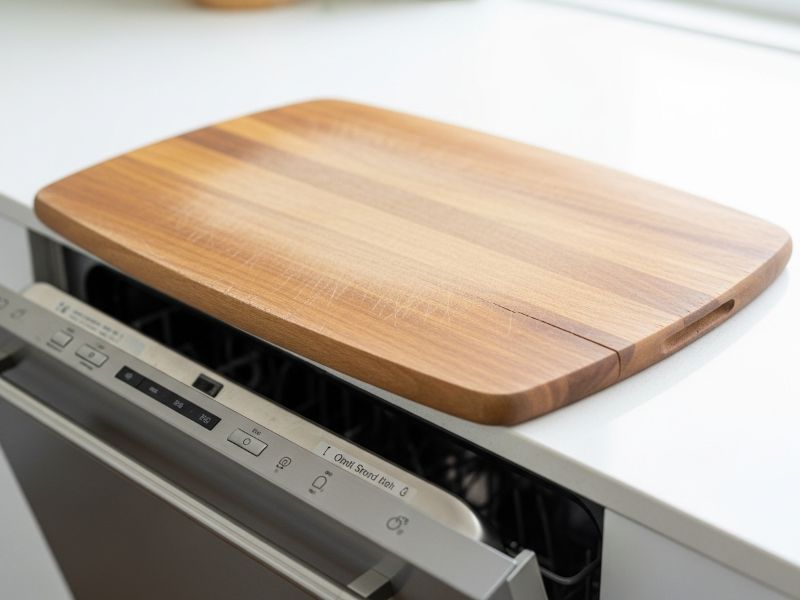
- Dishwasher Incompatibility: High heat and harsh detergents in dishwashers destroy wood boards, causing splitting, warping, and finish degradation. Hand washing becomes mandatory, adding time to cleanup routines and preventing the thorough sanitization that dishwashers provide for other kitchen tools.
- Odor and Stain Absorption: Wood’s porous nature that provides antibacterial benefits also absorbs strong odors and stains. Garlic, onions, and raw meat juices can penetrate wood fibers, creating lingering flavors and discoloration. While proper cleaning minimizes these issues, complete elimination requires professional refinishing or replacement.
- Higher Initial Investment: Quality hardwood boards cost significantly more than plastic alternatives, with premium options ranging from $40-100 depending on size and wood species. This upfront investment deters budget-conscious consumers, despite the long-term value proposition.
- Raw Meat Safety Concerns: While wood’s antibacterial properties work over time, immediate cross-contamination risks remain with raw meat, particularly poultry. USDA guidelines specifically recommend against using wood boards for raw meat preparation, as thorough sanitization cannot be achieved through normal washing. This limitation makes wood boards unsuitable for meat-centric cooking workflows.
Pros and Cons of Plastic Cutting Boards
Plastic cutting boards emerged as the modern solution to traditional wood board limitations, particularly addressing sanitation concerns in professional and home kitchens. Their widespread adoption stems from specific advantages in food safety and convenience.
Pros of Plastic Cutting Boards
Plastic cutting boards excel in areas where wood boards struggle, making them indispensable for certain kitchen tasks.
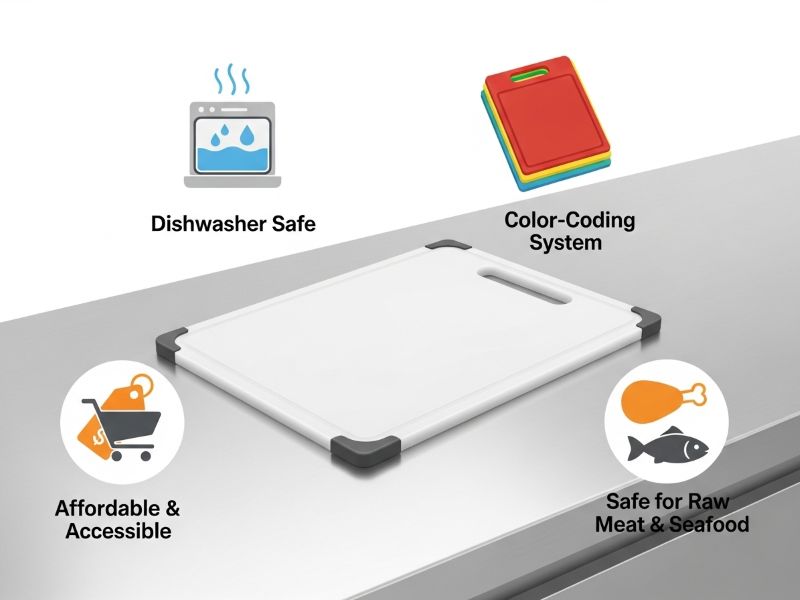
- Complete Dishwasher Compatibility: Plastic boards withstand high-temperature dishwasher cycles, achieving thorough sanitization impossible with hand washing alone. The combination of 160°F+ water temperatures and commercial-grade detergents eliminates bacteria, viruses, and other pathogens completely. This capability makes plastic boards essential for raw meat preparation where maximum sanitization is critical.
- Cost-Effective and Accessible: Basic plastic boards cost $5-15, making them accessible to all budgets. This affordability allows home cooks to maintain multiple boards for different food types without significant investment. Wide availability in grocery stores, department stores, and online retailers ensures easy replacement when needed.
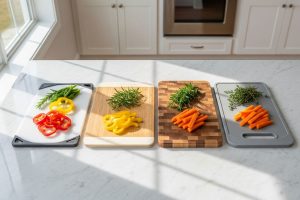
- Color-Coding Systems: Professional kitchens rely on color-coded plastic boards to prevent cross-contamination: red for raw meat, yellow for poultry, blue for seafood, green for vegetables, and white for bread and dairy. This visual system eliminates guesswork and reduces contamination risks, particularly valuable in busy household kitchens where multiple family members cook.
- Optimal for Raw Protein Preparation: Plastic boards excel when preparing raw meat, poultry, and seafood. Their non-porous surface prevents bacteria from penetrating deeply, while dishwasher sanitization ensures complete pathogen elimination. This makes plastic the safest choice for high-risk foods that require maximum hygiene protocols.
Cons of Bamboo Cutting Boards
Despite their practical advantages, plastic cutting boards present significant limitations that affect both performance and sustainability.
- Knife Groove Formation and Bacterial Harboring: Sharp knives create deep grooves in plastic surfaces that trap bacteria and food particles. Unlike wood’s self-healing properties, these grooves deepen over time, becoming increasingly difficult to sanitize. Studies show that heavily grooved plastic boards harbor more bacteria than smooth wood boards, even after dishwasher cleaning.
- Accelerated Knife Dulling: Plastic’s hardness compared to wood causes faster knife edge deterioration. The synthetic material doesn’t compress under blade pressure, creating more friction and edge damage with each cut. Professional chefs report more frequent sharpening requirements when using plastic boards regularly.
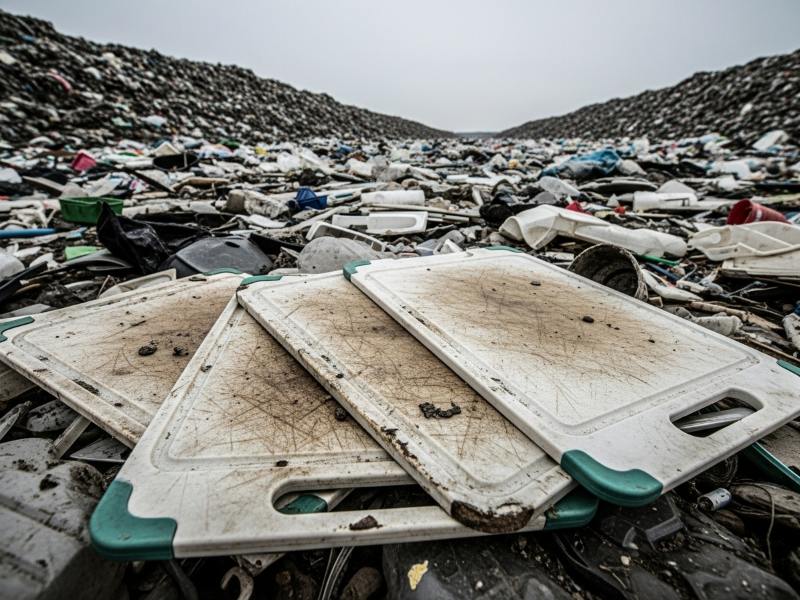
- Limited Lifespan and Frequent Replacement: Most plastic boards require replacement every 6-12 months with regular use, as grooves become too deep for effective cleaning and the surface becomes increasingly rough. This frequent replacement cycle increases long-term costs and contradicts the initial affordability advantage.
- Environmental Impact and Health Concerns: Plastic boards contribute to landfill waste through frequent replacements and potential microplastic formation as surfaces degrade. Many cheaper boards contain BPA and other chemicals that may leach into food, particularly when exposed to heat or acidic ingredients. The manufacturing process creates additional environmental burden through petroleum-based materials and energy-intensive production.
How to Choose the Right Cutting Board
Selecting appropriate cutting boards requires balancing food safety, practicality, and personal cooking habits. The optimal solution often involves multiple boards rather than searching for a single perfect option.
Food Safety Considerations
Food safety remains the primary concern when selecting cutting boards, with different materials excelling for specific food types based on contamination risks and cleaning requirements.
USDA guidelines emphasize using separate boards for raw meat and ready-to-eat foods, regardless of material choice. However, material selection significantly impacts the effectiveness of this separation strategy.
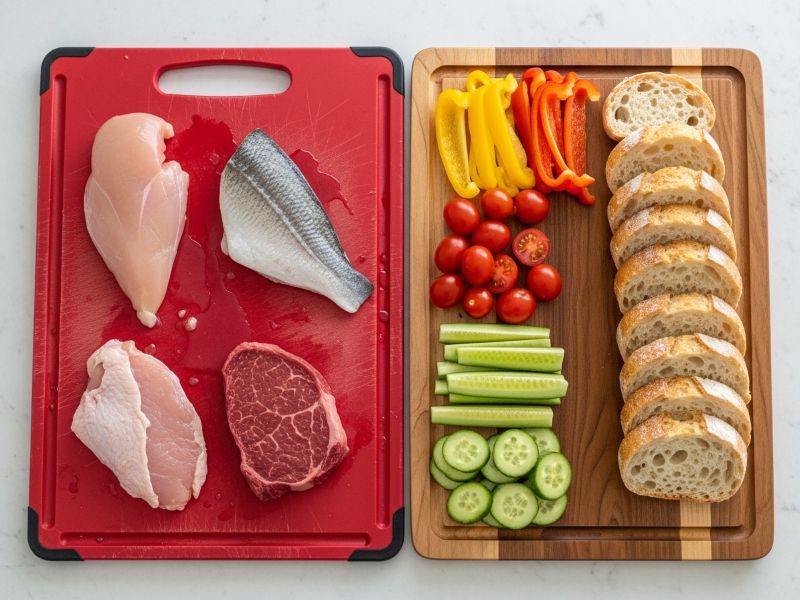
- Meat and Poultry Preparation: Plastic boards provide superior safety for raw meat and poultry preparation due to dishwasher sanitization capabilities. The high temperatures and commercial detergents achieve pathogen elimination levels impossible with hand washing. Color-coding systems in plastic boards further reduce cross-contamination risks through visual identification.
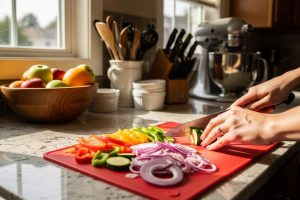
- Vegetable and Fruit Processing: Wood boards excel for produce preparation, where their natural antibacterial properties and knife-friendly surface benefit both food quality and blade longevity. The lower contamination risk with fresh produce makes thorough sanitization less critical, allowing wood’s advantages to outweigh its cleaning limitations.
- Bread and Dairy Tasks: Wood boards provide optimal surfaces for bread cutting and cheese preparation, where their aesthetic qualities and gentle cutting action preserve food texture while enabling direct serving from the board.
| Food Type | Recommended Material | Primary Reason |
|---|---|---|
| Raw Meat | Plastic | Dishwasher sanitization |
| Raw Poultry | Plastic | Maximum pathogen elimination |
| Raw Seafood | Plastic | Easy cleaning of oils and odors |
| Fresh Vegetables | Wood | Natural antibacterial properties |
| Fruits | Wood | Knife preservation and aesthetics |
| Bread | Wood | Gentle cutting and serving capability |
| Cheese | Wood | Visual appeal and multi-use function |
The minimum recommended setup includes two boards: plastic for raw proteins and wood for produce and prepared foods. Three boards provide optimal safety and convenience.
Durability, Cost, and Maintenance
Understanding long-term costs and maintenance requirements helps determine true value beyond initial purchase price.
- Initial Investment Comparison: Quality wood boards range from $40-80 for standard home sizes, while basic plastic boards cost $10-20. However, this upfront difference diminishes when considering replacement frequency and total cost of ownership.
- Longevity Analysis: Well-maintained hardwood boards last 10-20 years with periodic refinishing, while plastic boards typically require replacement every 1-2 years depending on usage intensity. This longevity difference significantly impacts lifetime costs and environmental footprint.
- Knife Impact Considerations: Wood boards preserve knife sharpness longer, reducing professional sharpening costs and extending blade life. Professional knife sharpening costs $5-10 per blade, occurring 2-3 times annually with plastic boards versus once yearly with wood boards.
| Factor | Wood Board | Plastic Board |
|---|---|---|
| Initial Cost | $40-80 | $10-20 |
| Lifespan | 10-20 years | 1-2 years |
| Maintenance | Monthly oiling | Replacement only |
| Knife Preservation | Excellent | Poor |
| Total 10-Year Cost | $60-100 | $50-100 |
Long-term value analysis shows comparable costs, with wood boards providing superior performance and sustainability despite higher upfront investment.
Sustainability and Environmental Impact
Environmental impact plays a major role in today’s kitchen choices, with many cooks seeking eco-friendly alternatives.
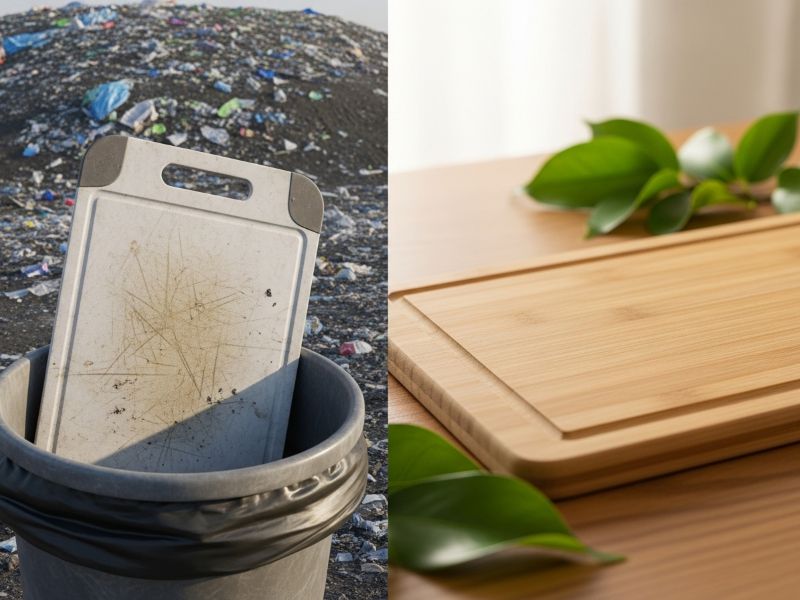
- Plastic cutting boards pose a significant burden. They are petroleum-based, energy-intensive to manufacture, and often replaced frequently. Discarded boards add to landfills and may release microplastics as they degrade, while production processes affect air and water quality.
- Wood cutting boards by contrast, are renewable and biodegradable. When sourced from FSC-certified forests, they support sustainable harvesting while providing durable products that can last decades. Their longevity means one well-made board may replace 10–20 plastic ones, reducing waste and transport emissions despite higher initial resources.
- Bamboo boards stand out as a fast-growing, eco-friendly alternative. Maturing in just 3–5 years compared to decades for hardwood, bamboo offers rapid regeneration and sustainable harvesting practices.
Overall, wood and bamboo boards significantly reduce environmental impact compared to plastic, combining durability, renewability, and natural biodegradability with sustainable sourcing options.
Practical Kitchen Recommendations
Professional kitchens often use a hybrid approach that home cooks can replicate: plastic boards for raw proteins where sanitization is critical, and wood boards for produce, bread, and serving where performance and aesthetics matter.
- Minimum setup: Every home kitchen should have at least two boards—one plastic board for meat, poultry, and seafood (dishwasher-safe for sanitization) and one quality wood board for fruits, vegetables, and prepared foods.
- Optimal setup: A three-board system improves workflow: a large plastic board for raw proteins, a medium wood board for general prep, and a small wood board for bread, cheese, and serving.
- Organization tips: Store boards vertically for air circulation, designate specific storage spots to avoid cross-contamination, and clean immediately after use. Replace plastic boards once knife grooves trap food particles. For better hygiene, professional kitchens use board racks or magnetic systems—home cooks can adopt simple vertical storage or wall-mounted solutions.
4. Final Verdict – Balancing Safety, Cost, and Sustainability
The wood vs plastic cutting board debate ultimately points to a hybrid approach that uses each material where it performs best.
For raw meat and poultry: Plastic boards remain the safest choice thanks to dishwasher sanitization, which eliminates bacteria at high temperatures. Color-coded sets further reduce cross-contamination risks.
For vegetables and serving: Wood boards excel with their natural antibacterial properties, knife-friendly surfaces, and attractive appearance. They double as serving platters, adding both function and style.
Hybrid solution: Professional kitchens combine plastic for raw proteins and wood for produce and serving—a system home cooks can easily adopt for maximum food safety and efficiency.
Cost and sustainability: Over time, wood and plastic balance out in expenses. However, wood’s durability, renewable sourcing, and biodegradable disposal give it clear environmental advantages. Bamboo alternatives extend this eco-friendly appeal with rapid renewability.
The best choice depends on your priorities, but most households benefit from keeping both types on hand. With proper care and workflow, you’ll achieve safer food preparation, longer knife life, and a more sustainable kitchen.