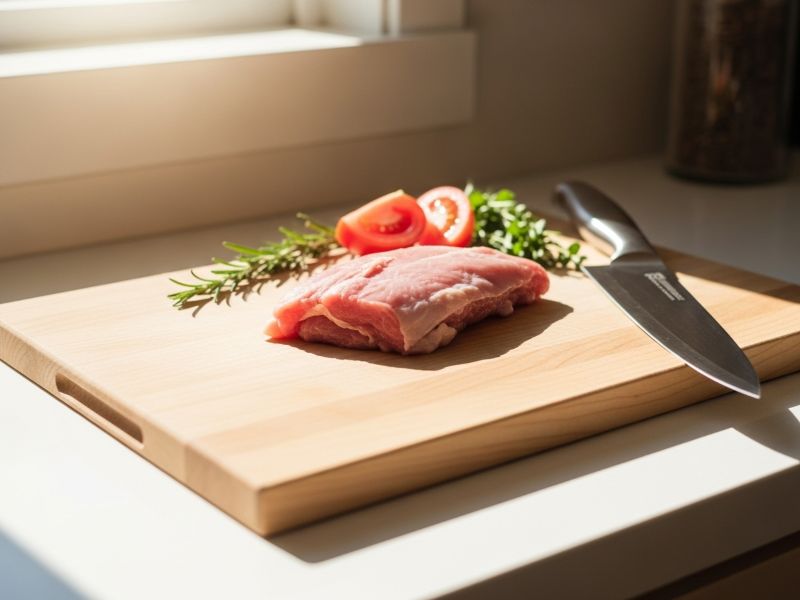
Can You Cut Meat on a Wood Cutting Board? It’s a question that sparks debate in kitchens everywhere. Some cooks praise wooden boards for their durability and beauty, while others caution against them due to concerns. The truth is, outdated assumptions about wood’s porosity have fueled much of the confusion. In reality, you can safely cut meat on wood if you choose the right type, clean it thoroughly, and maintain it properly. This guide explores the science, highlights pros and cons, and shares best practices for safe use.

Can You Cut Meat on a Wooden Cutting Board?
Yes, wooden cutting boards can be safe to use, but certain conditions apply. Contrary to past beliefs that wood traps harmful bacteria from raw meat, recent studies from the University of Wisconsin show that specific hardwoods have natural antimicrobial properties that help reduce bacteria over time. Here’s what you need to know immediately:
- Wood boards are safe for meat when cleaned properly after each use
- Hardwoods like maple, walnut, and teak perform better than softwoods
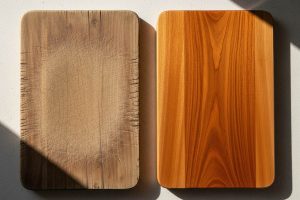
- Boards must be replaced when deep grooves, cracks, or permanent staining appear
Understanding why this matters requires examining how contamination occurs. Raw meat contains bacteria such as Salmonella, E. coli, and Campylobacter. When you cut meat, juices seep into knife grooves and board surfaces. Without thorough cleaning, bacteria transfer from the board to your knife, then to your hands, and potentially to other foods – particularly ready-to-eat items like salad vegetables or bread.
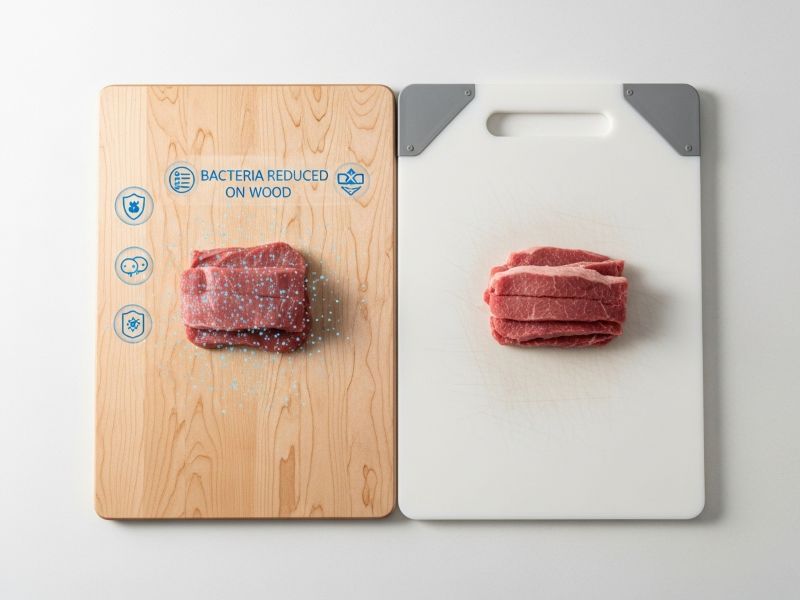
Wood cutting boards present a unique case in food safety. Although their surface porosity once raised concerns, research shows that bacteria drawn into wood’s grain rarely multiply and often die within hours – unlike plastic boards, where bacteria can persist in knife scars. The USDA and FDA do not prohibit using wooden boards for raw meat; they emphasize proper cleaning for all materials. University extension studies from Cornell, Michigan State, and Illinois confirm that wood is safe when sanitation protocols are followed, with recommendations grounded in laboratory evidence and real-world data, not speculation.
Read more: Wood vs Plastic Cutting Boards: What’s Best for Meat, Chicken, and Veggies?
Advantages of Using Wood Cutting Boards for Meat
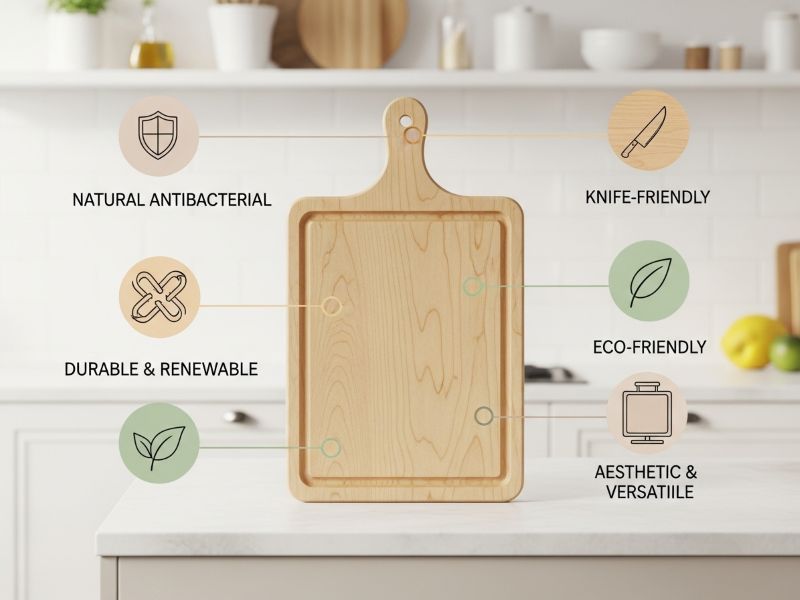
Natural antibacterial surface:
Hardwoods like maple, teak, and acacia naturally resist bacteria. Studies show bacterial counts on maple boards drop by over 99% within hours, while plastic boards show no such reduction. Proper cleaning and drying further enhance safety.
Gentle on knife edges:
Wood slightly yields under pressure, helping knives stay sharp up to 20–30% longer than when used on plastic or composite boards.
Durable and renewable:
A quality hardwood board can be resurfaced and resealed for years of use – unlike plastic, which must be replaced once scarred. End-grain boards even “self-heal” around knife marks.
Eco-friendly choice:
Wood is renewable, biodegradable, and requires less energy to produce than plastic. Choosing FSC-certified boards supports responsible forest management.
Aesthetic and versatile:
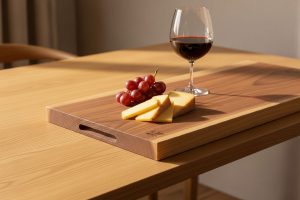
Beautiful wood grain turns a cutting board into a serving piece for cheese, meats, or charcuterie – combining practicality with timeless design.
Read more: Top 5 Safest Cutting Board Materials for a Safer Kitchen
Disadvantages of Using Wood Cutting Boards for Meat
While wooden cutting boards offer many benefits, they also demand consistent care and attention to remain safe and functional.
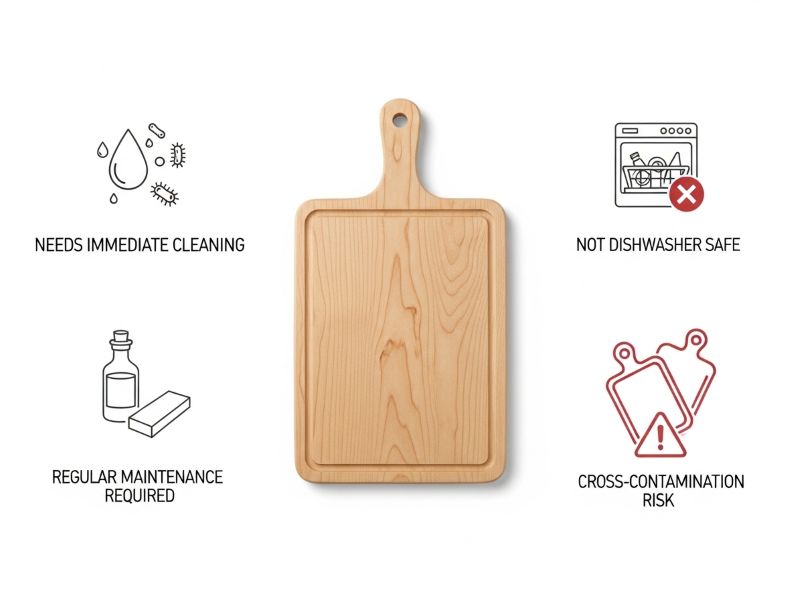
Porous surface needs prompt cleaning:
Wood’s grain can absorb meat juices if not cleaned right away. Once moisture seeps in, bacteria may grow in knife grooves or worn areas. Leaving meat residue for even half an hour can increase contamination risk – so quick washing is key.
Not dishwasher-friendly:
Hot water and steam can warp or crack wood, stripping away its protective oils. Even boards labeled “dishwasher safe” lose durability over time. Hand washing with hot soapy water and proper drying is the safest approach.
Cross-contamination risks:
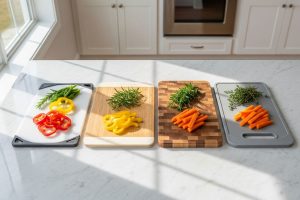
Using one board for both meat and produce can spread bacteria. Either keep separate boards for different foods or clean and sanitize thoroughly between uses. Professional kitchens often use color-coded systems to avoid confusion.
Regular maintenance required:
Wood boards need monthly oiling, immediate drying, and occasional sanding to stay smooth and sealed. Ignoring these steps leads to warping, cracks, and deep grooves that harbor bacteria – shortening the board’s lifespan.
Best Practices for Cutting Meat on a Wood Cutting Board
With proper habits, a wooden board can be a safe, durable tool for meat preparation.
Choose the right board:
Opt for hardwoods like maple, walnut, teak, or acacia – all dense, food-safe, and naturally antimicrobial. Avoid softwoods like pine or cedar, which are too porous and can splinter.
End-grain boards are the most durable and self-healing, while edge-grain versions are practical for everyday use. Choose a board at least 1.5 inches thick for stability and the ability to resurface over time.
Clean immediately after use:
Scrape off food debris, then wash with hot, soapy water for about 30 seconds using a stiff brush. Rinse well and dry upright to allow even airflow. Avoid leaving moisture on the surface – it can raise the grain or harbor bacteria.
Sanitize effectively:
After washing, disinfect using one of the following:
- Bleach solution: 1 tbsp per gallon of water, let sit 1–2 minutes, rinse, and dry.
- Hydrogen peroxide (3%): Pour and spread evenly for 1 minute before rinsing.
- Food-safe sanitizers: Follow product directions.Vinegar or lemon juice help with odor but are not strong enough to kill bacteria after raw meat contact.
Prevent cross-contamination:
Use separate boards for meat and produce, or at least prepare raw meat last. If reusing one board, clean and sanitize thoroughly between foods. This simple discipline greatly reduces bacterial transfer.
Maintain regularly:
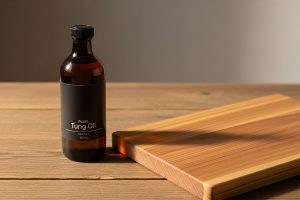
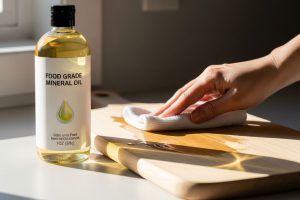
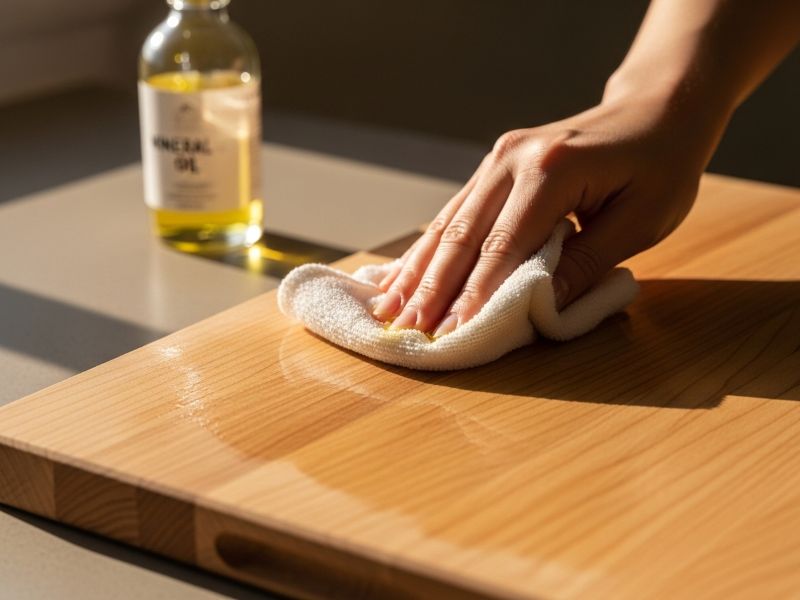
Oil monthly with food-grade mineral oil to prevent drying and cracking. Sand lightly every 6-12 months to remove deep knife marks and reseal the surface.
Inspect often and replace if cracks, stains, or warping appear – these flaws trap moisture and compromise food safety.
Read more: The 7+ Best Cutting Board for Meat in 2025
Final Thoughts on Cutting Meat on Wooden Cutting Boards
Modern research confirms that wooden cutting boards, when properly maintained, are just as safe as plastic or composite alternatives. Quality hardwoods like maple, walnut, and teak naturally resist bacteria, protect knife edges, and can last for years through simple upkeep. Their renewable nature also makes them a sustainable and beautiful choice for conscious home cooks.
However, wood requires consistent care – hand washing, drying promptly, monthly oiling, and occasional resurfacing. It’s not dishwasher-safe, and it demands attention to hygiene and cross-contamination prevention. For cooks who value durability, knife sharpness, and responsible materials, a well-made hardwood board from Koppen remains a safe, lasting, and rewarding tool in the kitchen.