How Thick Are Butcher Block Countertops? Thickness is one of the most important factors affecting durability, cost, and design. This guide explains standard options, pros and cons, and how to choose the right size for your kitchen.
Standard Thickness of Butcher Block Countertops
The butcher block industry has established three primary thickness standards that dominate the market. Manufacturers typically produce countertops in 1.5-inch, 2-inch, and 3-inch thicknesses, with each serving distinct purposes and offering different benefits.
These standardized measurements emerged from practical considerations including structural integrity, manufacturing efficiency, and consumer preferences. Most suppliers stock these three options as their core offerings, though custom thicknesses remain available for specific projects.
Common Butcher Block Thickness Options:
- 1.5 inches: Entry-level option for light use and decorative applications
- 2 inches: Most popular choice balancing durability and cost
- 3 inches: Premium thickness for heavy-duty use and statement design
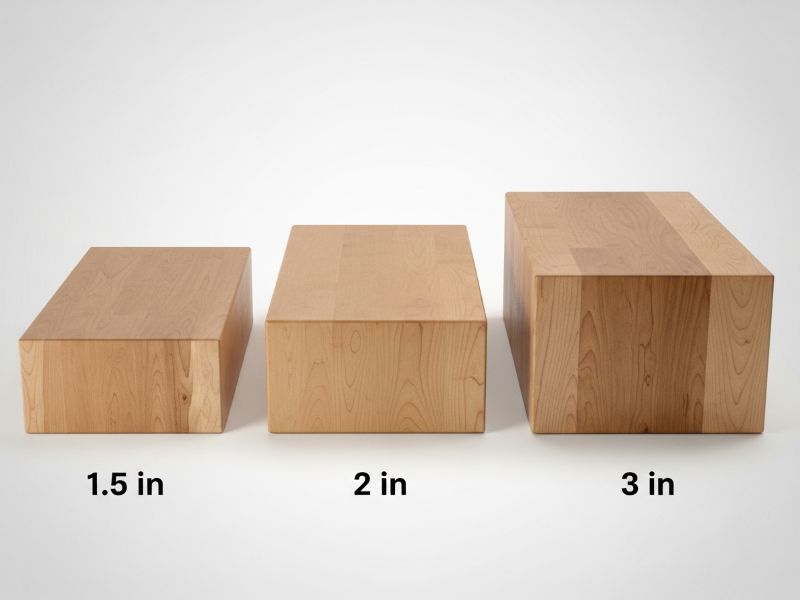
Each thickness category delivers different performance characteristics. The 1.5-inch option provides basic functionality while keeping costs manageable. Two-inch slabs offer the sweet spot between strength and affordability that appeals to most homeowners. Three-inch countertops represent the premium tier, delivering maximum durability and visual impact.
| Thickness | Durability | Stability | Best Use |
|---|---|---|---|
| 1.5″ | Moderate | Good | Light prep, decorative |
| 2″ | High | Excellent | Daily cooking, general use |
| 3″ | Maximum | Superior | Heavy prep, statement piece |
Understanding these standard options helps narrow your selection process. Most kitchen projects will find their ideal solution within these three thickness ranges, each engineered to meet specific performance and aesthetic requirements.
Factors That Influence Butcher Block Thickness
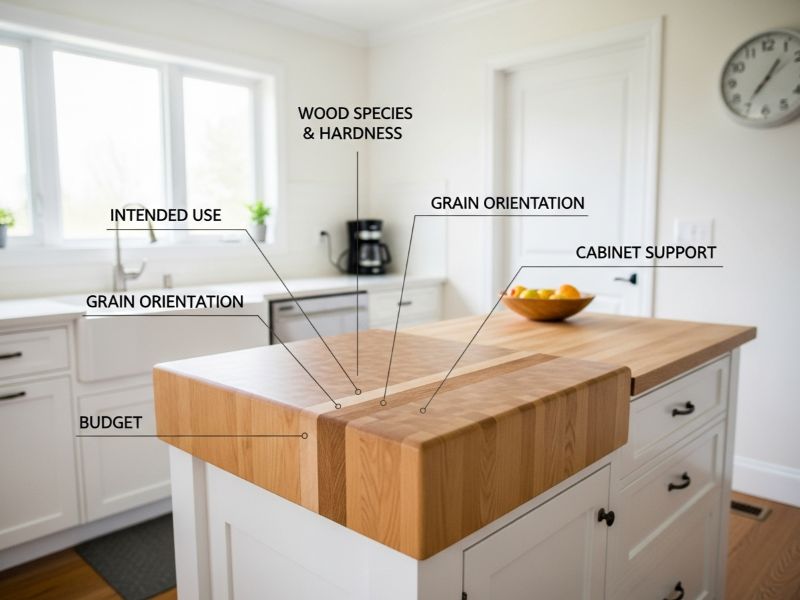
Several key factors determine the optimal thickness for your butcher block countertops. Understanding these variables helps explain why different applications require different thickness specifications and guides your selection process.
Wood Species and Hardness: Wood type significantly impacts thickness requirements. Hardwoods like maple, oak, and walnut provide superior strength and can perform well in thinner profiles. These dense species resist dents and scratches better than softwoods, allowing for more flexibility in thickness selection. Softwoods like pine require greater thickness to achieve comparable durability, making them less suitable for thin applications.
Intended Use and Application: Heavy chopping and food preparation demand thicker slabs to withstand repeated impact and knife work. Countertops used primarily for light meal prep or decorative purposes can function effectively with thinner profiles. Professional or commercial applications typically require maximum thickness for extended lifespan under intensive use.
Grain Orientation Impact:
- Edge grain: Most common orientation, moderate thickness requirements
- End grain: Superior durability but requires greater thickness for stability
- Face grain: Least expensive but needs adequate thickness for strength
End grain construction exposes the wood fibers’ ends, creating a self-healing surface ideal for chopping. However, this orientation requires thicker slabs to prevent warping and ensure long-term stability.
Budget Considerations: Thickness directly correlates with cost per square foot. Thicker slabs require more raw material and additional processing, increasing both material and installation costs. Budget-conscious projects often benefit from selecting the minimum thickness that meets functional requirements rather than upgrading unnecessarily.
Cabinet Support Capacity: Existing cabinetry must support the countertop’s weight. Thicker slabs weigh considerably more, potentially requiring cabinet reinforcement or structural modifications. Standard kitchen cabinets typically handle 2-inch thickness without issues, while 3-inch slabs may need additional support brackets or reinforced mounting systems.
These interconnected factors explain why kitchens require different thickness specifications. Evaluating each variable helps identify the optimal balance between performance, aesthetics, and practical constraints.
Read more: Best Wood for Butcher Block: Complete Guide
Thin Butcher Block Countertops (1-1.5 Inches)
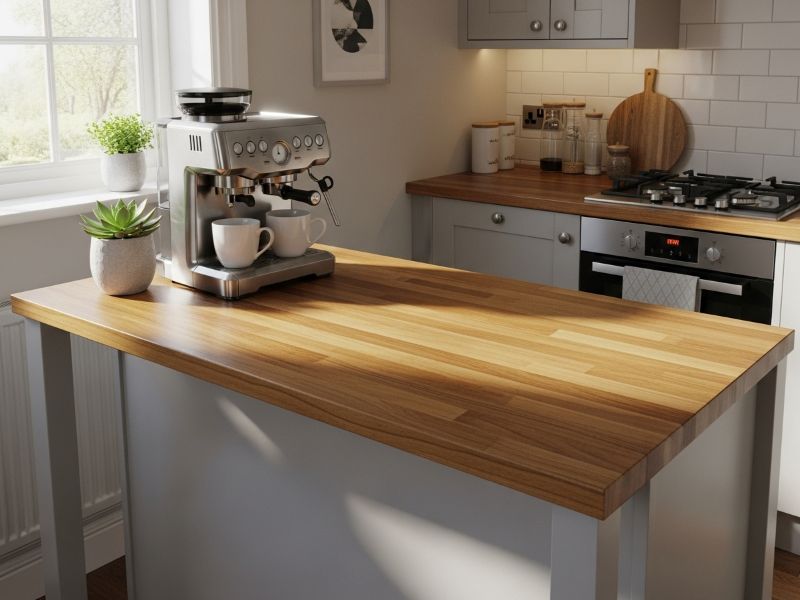
Thin butcher block countertops serve specific applications where weight, cost, or installation constraints make thicker options impractical. These slabs offer genuine wood beauty at accessible price points while maintaining sufficient functionality for appropriate uses.
The lightweight nature of thin butcher blocks simplifies installation and reduces structural requirements. Most standard kitchen cabinets easily support these countertops without reinforcement. DIY installation becomes more manageable due to reduced weight and easier handling during positioning.
Key Benefits:
- Cost-effective: Lowest material cost per square foot
- Lightweight: Easier installation and reduced cabinet stress
- Versatile mounting: Compatible with most existing cabinet structures
- Quick replacement: Less investment if changes become necessary
Limitations to Consider:
- Reduced durability: More susceptible to dents and damage
- Limited refinishing: Fewer sanding cycles before reaching core layers
- Visual impact: Less substantial appearance than thicker options
- Structural constraints: May require more frequent maintenance
Thin butcher blocks excel in specific scenarios. Small kitchens benefit from the space-saving profile and reduced visual weight. Rental properties often use thin slabs for temporary upgrades without major investment. Secondary prep areas like coffee stations or bar tops work well with these thinner profiles.
Ideal Applications:
- Decorative countertops with minimal food preparation
- Small apartment kitchens with weight restrictions
- Budget renovations requiring cost control
- Temporary installations or rental properties
When selecting thin butcher blocks, choose harder wood species to maximize durability. Proper sealing and maintenance become especially important to protect the reduced material thickness. Consider these countertops as entry-level options that provide wood benefits while acknowledging their limitations for heavy-duty use.
Medium Thickness Butcher Block Countertops (2 Inches)
Two-inch butcher block countertops are the industry standard, offering the best balance of strength, cost, and versatility. They handle daily cooking tasks well, fit most budgets, and allow multiple refinishing cycles, giving them a longer lifespan than thinner options.
Why 2 Inches Dominates the Market: Most kitchen activities fall within the performance range that 2-inch thickness handles comfortably. Regular meal preparation, moderate chopping, and typical kitchen tasks don’t stress these countertops beyond their capabilities. The thickness provides adequate protection against water damage while offering enough material depth for proper edge treatments.
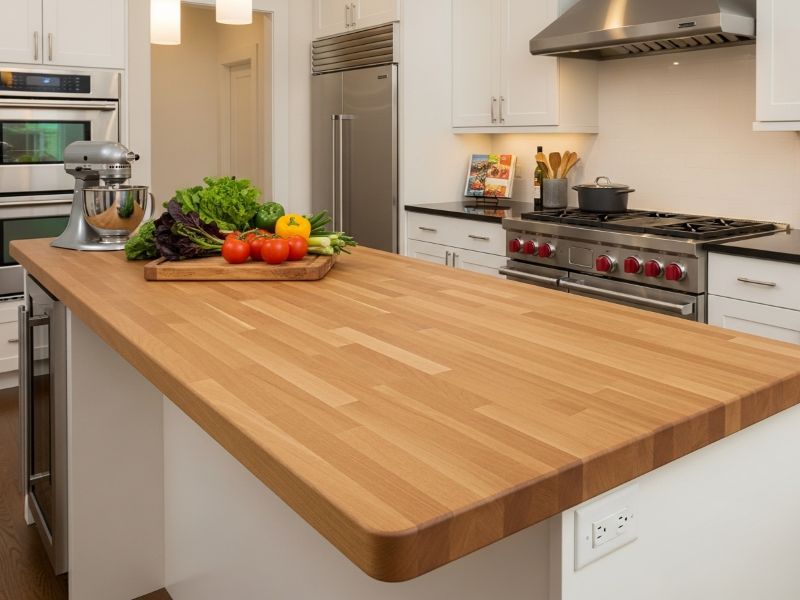
Strength and Weight Balance: Two-inch slabs deliver substantial durability without becoming unwieldy. The weight remains manageable for standard installation procedures while providing enough mass to feel solid and stable. Cabinet support requirements stay within normal parameters, avoiding costly structural modifications.
Design Compatibility: This thickness works across multiple design styles. Modern kitchens appreciate the clean lines without excessive bulk. Traditional settings benefit from the substantial feel without overwhelming other elements. Transitional designs find the perfect middle ground that complements both contemporary and classic features.
Cost Performance: The 2-inch option provides the best value proposition in most scenarios. While more expensive than thin slabs, the increased durability and refinishing potential justify the additional investment. Compared to 3-inch options, the cost savings often make this thickness more practical for average homeowners.
Versatile Functionality: These countertops accommodate both food preparation and design functions effectively. The thickness supports cutting boards and small appliances without concern while maintaining the visual presence expected from quality countertops. Edge treatments like roundover or chamfer profiles work well with this material depth.
When comparing options, 2-inch butcher blocks consistently emerge as the practical choice for general kitchen use. They avoid the limitations of thin slabs while sidestepping the premium costs and installation challenges of thick options.
Thick Butcher Block Countertops (3 Inches and Above)
Three-inch and thicker butcher blocks enter premium territory, delivering maximum performance and creating substantial visual statements. These countertops represent long-term investments designed for demanding applications and luxury kitchen projects.
Premium Performance Characteristics: Thick butcher blocks handle intensive use that would challenge thinner options. Commercial kitchens, serious home cooks, and professional applications benefit from the enhanced durability. The additional material provides extensive refinishing potential, often lasting decades with proper maintenance.
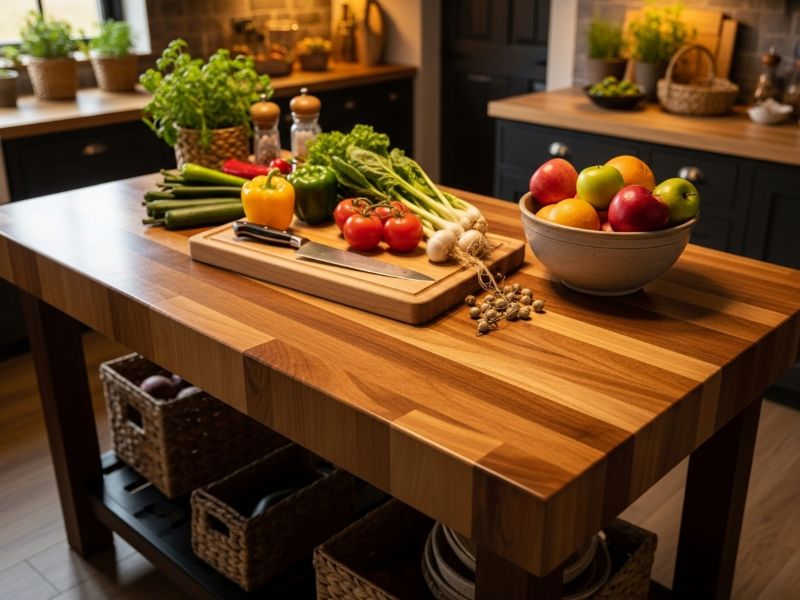
Heavy-Duty Applications: Kitchen islands frequently utilize thick butcher blocks to create focal points that can withstand heavy use. The substantial thickness supports large appliances, provides ample work surface, and creates the visual weight needed to anchor large kitchen spaces effectively.
Investment Considerations: Cost Factors:
- Higher material costs per square foot
- Increased transportation and handling fees
- Specialized installation requirements
- Custom fabrication often necessary
Installation Challenges:
- Requires reinforced cabinet support systems
- Professional installation typically recommended
- Special lifting equipment may be needed
- Precise measurements critical due to weight
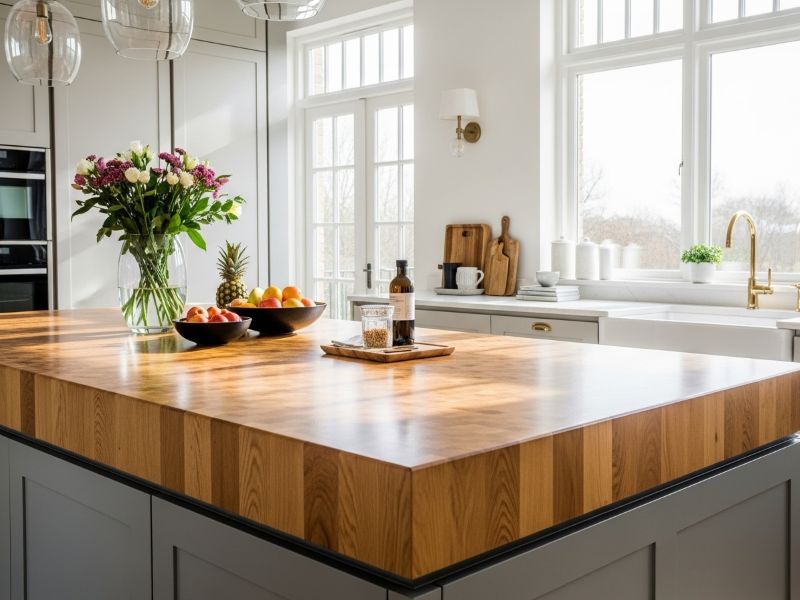
Structural Requirements: Standard kitchen cabinets may require reinforcement to support thick butcher blocks safely. The significant weight can stress cabinet frames, potentially causing sagging or structural damage over time. Professional evaluation of existing cabinetry becomes essential before installation.
Long-term Value: Despite higher initial costs, thick butcher blocks often provide superior long-term value. The extensive refinishing potential means these countertops can last for decades with proper care. The durability reduces replacement needs, making the premium investment worthwhile for permanent installations.
Luxury Appeal: Thick butcher blocks create unmistakable luxury appeal. The substantial presence elevates kitchen design and provides the premium feel expected in high-end installations. For homeowners seeking maximum impact and performance, these countertops deliver both aesthetic and functional benefits.
Consider thick options when durability, longevity, and visual impact take priority over cost considerations. These countertops suit serious cooking enthusiasts and luxury kitchen projects where performance justifies the premium investment.
Choosing the Right Thickness for Your Kitchen
Selecting the optimal thickness requires evaluating your specific kitchen needs, design preferences, and practical constraints. Different scenarios call for different thickness specifications, and understanding these applications guides your decision process.
Everyday Use: Most family kitchens work best with the 2-inch standard—durable, practical, and reasonably priced.
Light or Decorative Use: Thinner 1.5-inch tops suit coffee bars, beverage stations, or secondary prep areas where cost and appearance matter more than durability.
Professional & Statement Kitchens: Serious cooks, commercial use, or large kitchen islands benefit from 3-inch+ slabs for strength, longevity, and impact.
Design Style Influence:
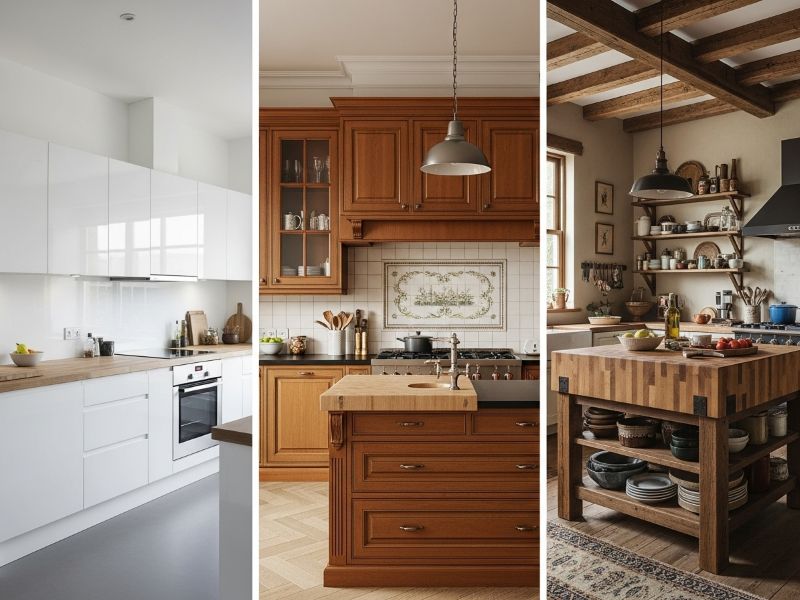
- Modern and Contemporary: Often prefer cleaner, thinner profiles (1.5-2 inches)
- Rustic and Farmhouse: Embrace thicker, more substantial options (2-3+ inches)
- Traditional: Work well with standard 2-inch thickness
- Transitional: Benefit from the versatility of 2-inch options
Budget Guide:
- Thinner saves money for rentals, small kitchens, or light-use areas.
- Thicker pays off for permanent homes, primary cooking surfaces, and high-impact islands.
Cabinet Strength Evaluation: Before selecting thickness, evaluate your existing cabinetry. Standard kitchen cabinets typically support 2-inch countertops without issues. Thicker options may require:
- Additional support brackets
- Cabinet frame reinforcement
- Professional structural assessment
- Potential cabinet modifications
Decision Framework: Consider these questions when selecting thickness:
- How frequently will you perform food preparation?
- What’s your total project budget including installation?
- Do your cabinets require reinforcement for thicker options?
- How long do you plan to keep these countertops?
- Does your design style favor substantial or minimal thickness?
This systematic evaluation helps identify the thickness that best matches your specific requirements and constraints.
Read more: Butcher Block Countertop Maintenance: Complete Guide to Cleaning, Oiling, Repair & Long-Term Care
Final Recommendations: Finding the Perfect Thickness
Understanding butcher block thickness options empowers informed decision-making for your kitchen project. The standard range of 1.5 to 3 inches covers most residential applications, with each thickness serving specific needs and preferences.
Most homeowners find their ideal solution within these established parameters. The key lies in matching thickness specifications to your actual requirements rather than simply choosing the thickest option available.
Ultimately, the best countertop is the one matched to your specific needs—not simply the thickest or cheapest. With quality butcher block from trusted makers like Koppen, you can achieve lasting performance and style across any thickness when chosen thoughtfully.
Read more: How to Oil a Butcher Block: Best Oils, Step-by-Step Guide & Maintenance