The sharp smell of onions can linger on wooden cutting boards, frustrating many home cooks. Fortunately, removing these odors is possible with the right methods. This guide outlines five effective techniques recommended by professional chefs and food safety experts to eliminate stubborn smells while protecting your board.
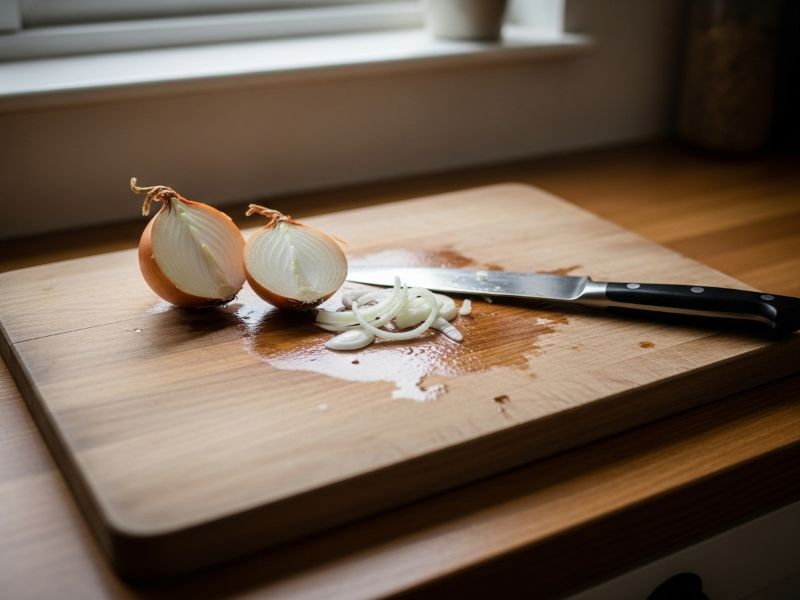
Why Do Wood Cutting Boards Hold Odors?
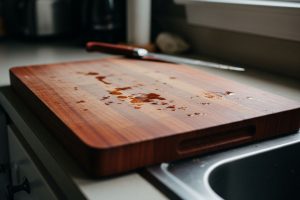
Wood cutting boards can trap odors because their porous structure absorbs liquids and food compounds. When cutting strong-smelling ingredients like garlic or onions, their sulfur compounds seep into the wood’s microscopic channels instead of staying on the surface, making ordinary washing ineffective.
Moisture worsens the issue – a damp board retains odors and can even harbor bacteria. Quick rinses or poor drying leave residues sealed inside the fibers. Thorough cleaning and complete air-drying are key to preventing smells from settling deep into the wood.
Is Odor a Hygiene Risk? Yes – a lingering smell often signals trapped residue and potential bacterial buildup. When food particles stay inside the wood’s pores, they can feed bacteria like Salmonella or E. coli. The USDA and FDA note that boards with persistent odors or stains should be deep-cleaned or replaced, since these signs reflect poor sanitation and hidden contamination.
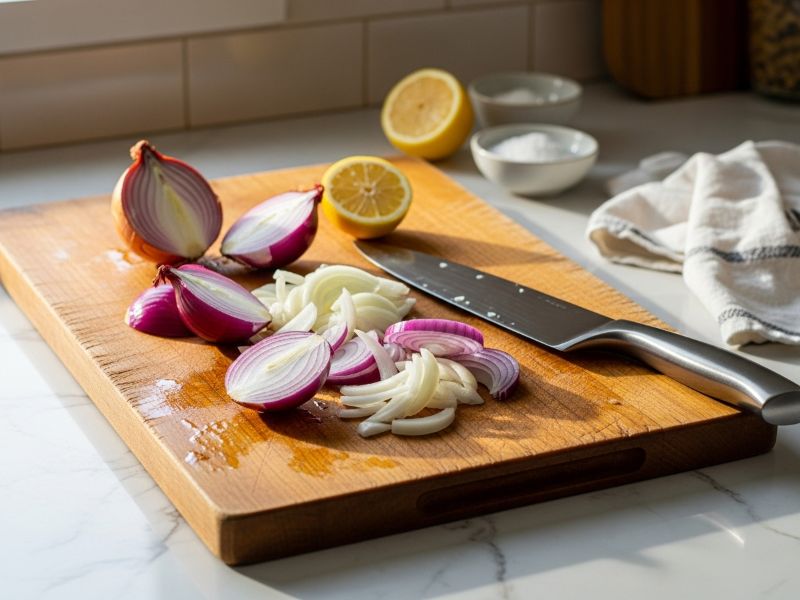
Step-by-Step Methods to Remove Odors from Wood Cutting Boards
These five methods attack odor molecules through different mechanisms – mechanical abrasion, chemical neutralization, oxidation, and UV sterilization. Each approach offers distinct advantages depending on odor severity and wood type. The techniques progress from gentle daily maintenance to deeper interventions for stubborn smells. You can use these methods individually or combine them for enhanced results.
Method 1 – Lemon and Salt Scrub
Best for: Everyday odor removal – especially after cutting onions, garlic, or fish. This method is gentle, chemical-free, and ideal for regular maintenance of your wooden board.
Ingredients
- 1 lemon (halved)
- Coarse kosher salt or sea salt
- A clean towel for drying
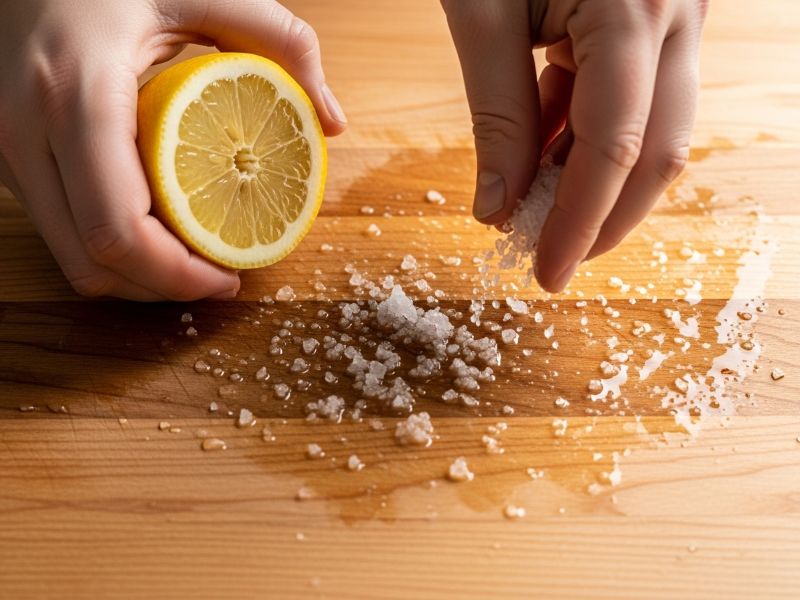
Step 1 – Prepare the Cleaning Ingredients: Cut a fresh lemon in half and sprinkle coarse kosher salt or sea salt on your wooden cutting board. The lemon’s natural acidity, combined with the salt, will help deodorize and sanitize.
Step 2 – Scrub the Board Thoroughly: Use one lemon half to scrub the board in slow, circular motions, focusing on knife marks and end-grain areas. Scrub with the grain to avoid scratches.
Step 3 – Understand the Science Behind It: The citric acid in the lemon breaks down sulfur compounds that cause onion odors, while the salt lifts food particles, providing effective cleaning without damaging the wood.
Step 4 – Let the Mixture Work: After scrubbing for 2-3 minutes, let the mixture sit for 5 minutes. This allows the citric acid to penetrate deeper and fully deodorize the board.
Step 5 – Rinse and Dry Properly: Rinse the board with cool water to remove residue, dry immediately with a clean towel, and let it air-dry standing up or at an angle to avoid moisture buildup.
Step 6 – Repeat if Needed for Deep Odors: For persistent onion odors, repeat this process over consecutive days to achieve deeper odor removal without harming the wood.
Read more: How to Clean A Wooden Cutting Board: A Practical Guide (2025)
Method 2 – Baking Soda Paste
Best for: Neutralizing strong, persistent odors – especially when lemon and salt aren’t enough. Ideal after cutting onions, garlic, or handling raw meat. Baking soda eliminates smells by adjusting pH rather than just masking them.
Ingredients
- 3 tablespoons baking soda
- 1 tablespoon water
- Soft cloth or sponge
- A clean towel for drying
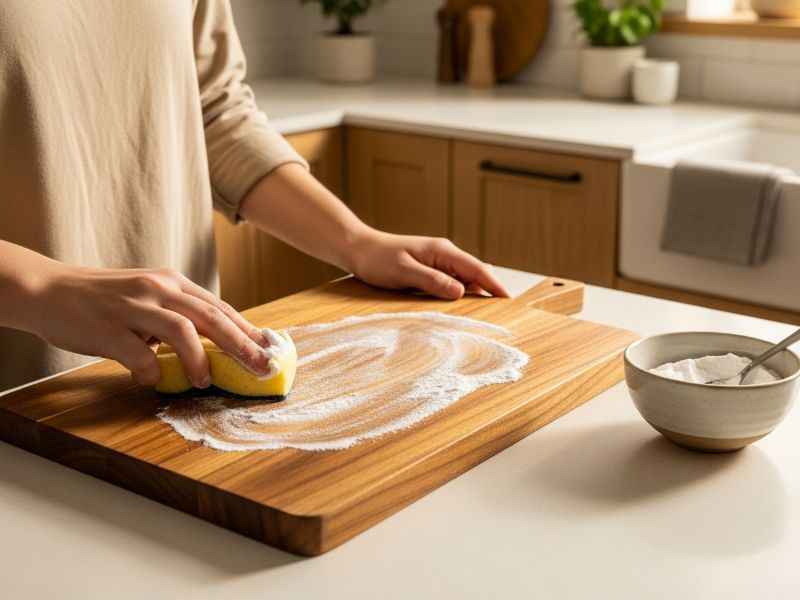
Step 1 – Mix the Baking Soda Paste: Combine three tablespoons of baking soda with one tablespoon of water in a small bowl. Stir until you form a thick, spreadable paste.
Step 2 – Apply Paste Evenly: Spread the paste across the entire cutting board surface using your hands or a soft cloth. Focus extra attention on heavily used or stained areas where odor molecules tend to accumulate.
Step 3 – Let the Paste Rest: Allow the mixture to sit for 5-10 minutes so the baking soda can react with any acidic residues. You may notice gentle fizzing, which indicates that the chemical neutralization is taking place.
Step 4 – Scrub and Rinse Thoroughly: After the resting period, use a damp sponge to scrub the paste across the board’s surface. This gentle abrasion removes loosened particles and remaining odor compounds. Rinse thoroughly with cool water to ensure all baking soda residue is removed.
Step 5 – Dry Completely: Pat the board dry with a clean towel, then stand it upright or prop it at an angle to promote airflow on both sides.
Important consideration: Avoid aggressive scrubbing with baking soda on softer woods like pine or cedar. The abrasive particles can scratch these surfaces despite being gentle on harder woods. For bamboo and composite boards, reduce the resting time to three minutes to prevent over-drying.
Method 3 – Vinegar Solution
Best for: Eliminating strong, lingering odors and disinfecting boards used for meat, seafood, or garlic. White vinegar is a natural deodorizer and mild antibacterial cleaner safe for wood when used properly.
Ingredients
- White distilled vinegar
- Water
- Spray bottle
- Clean cloth or sponge
- Towel for drying
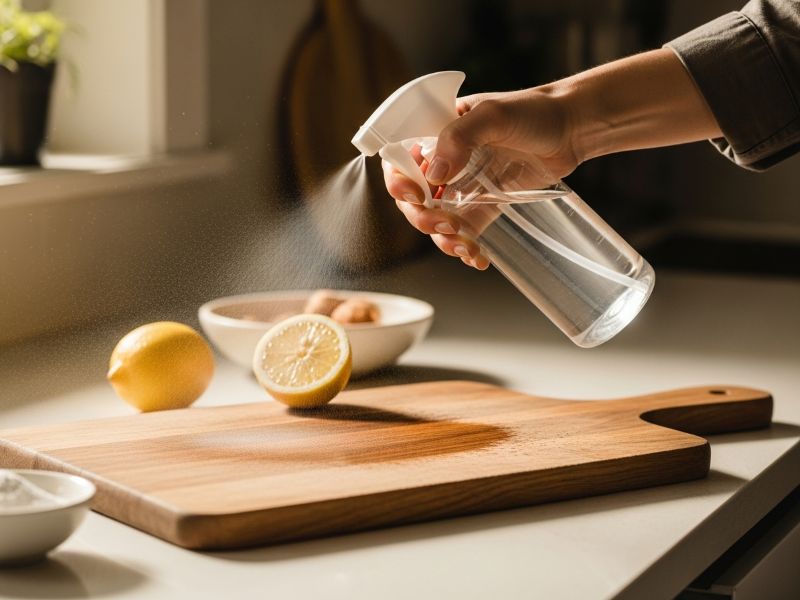
Step 1 – Prepare the Vinegar Solution: Mix one part white distilled vinegar with three parts water in a spray bottle. This dilution ensures effective odor removal without over-saturating the wood.
Step 2 – Apply the Solution Evenly: Spray the vinegar mixture liberally across the cutting board surface, covering it completely but avoiding puddles. The even mist allows for consistent contact with odor-causing compounds and helps prevent areas of overexposure that could warp the wood.
Step 3 – Let the Vinegar React: Allow the solution to sit for three to four minutes. During this time, the acetic acid in vinegar reacts with alkaline odor compounds, creating neutral, non-smelling salts.
Step 4 – Wipe, Rinse, and Dry: After the brief contact period, wipe the surface with a clean cloth to remove excess solution. Rinse the board with plain water to clear any remaining vinegar, then dry thoroughly with a towel. Stand the board vertically or prop it on its edge to allow full air circulation.
Safety note: never soak wood cutting boards in vinegar or any liquid. Extended exposure to moisture compromises the wood’s structural integrity. The goal is surface contact that allows acetic acid to interact with odor molecules without saturating the wood fibers underneath.
Method 4 – Sunlight and Air Drying
Sunlight’s natural UV radiation effectively breaks down organic compounds and eliminates odor-causing bacteria on cutting boards. After washing your board with soap and water, place it outdoors or by a sunny window, angled to avoid water pooling. Indirect sunlight works best.
A 20 to 30-minute exposure is usually sufficient for odor removal, but avoid prolonged direct sunlight in hot conditions to prevent warping. This method works well as a final step after cleaning with lemon, baking soda, or vinegar. Regular outdoor drying will help maintain freshness and prevent odor buildup.
Method 5 – Hydrogen Peroxide (Optional Deep Clean)
Best for: Occasional deep sanitation when odors persist after other treatments – especially after cutting raw meat, fish, or when boards develop a sour smell. Hydrogen peroxide both deodorizes and disinfects, making it ideal for periodic refreshes.
Ingredients
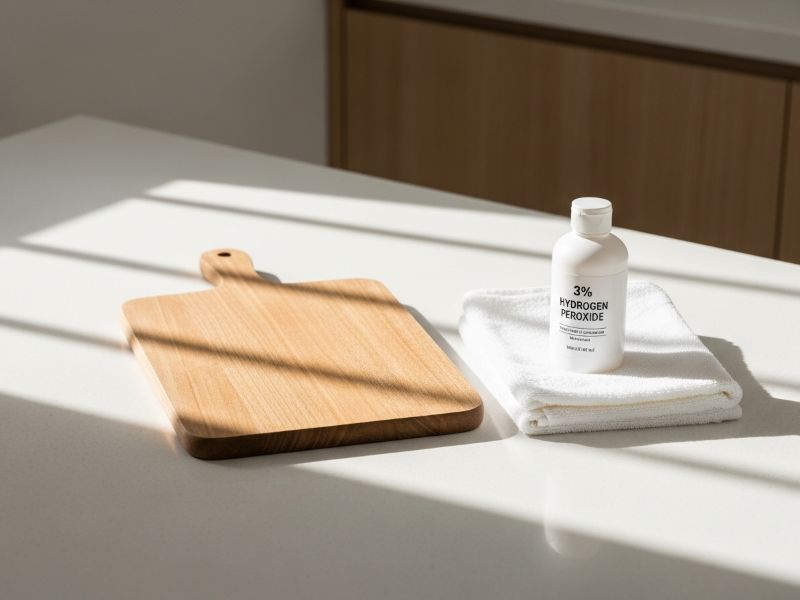
- 3% hydrogen peroxide solution
- Spray bottle (optional)
- Clean sponge or cloth
- Towel for drying
Step 1 – Apply Hydrogen Peroxide Evenly: Pour a small amount of 3% hydrogen peroxide directly onto your cutting board or use a spray bottle for even distribution. Spread the liquid across the surface so it forms a thin layer without soaking into the wood.
Step 2 – Let the Solution Work: Allow the hydrogen peroxide to sit for three to five minutes. During this time, it begins an oxidation reaction, which introduces oxygen molecules that break apart organic odor compounds.
Step 3 – Observe the Reaction: You may notice light bubbling or foaming – a clear sign that the oxidation is actively working. This reaction indicates that the hydrogen peroxide is breaking down odor molecules and disinfecting the surface simultaneously, killing bacteria, mold, and other microorganisms responsible for unpleasant smells.
Step 4 – Rinse and Dry Thoroughly: After the contact time, rinse the cutting board thoroughly with cool water to remove any remaining hydrogen peroxide. Wipe it dry with a clean towel, then stand the board upright or at an angle for full air circulation.
Important caution: hydrogen peroxide can lighten dark wood species like walnut or cherry. Test a small inconspicuous area first if you have a valuable or aesthetically important cutting board. The lightening effect is usually minimal but becomes more noticeable with repeated applications. For darker woods, consider this method as a last resort after trying gentler alternatives.
Read more: How to Clean, Disinfect, and Remove Stains from Plastic Cutting Boards (Complete Guide)
How to Prevent Odors in Wood Cutting Boards
Clean Immediately After Use Wash your cutting board right after cutting strong-smelling foods like onions or garlic. Use hot water and dish soap, scrubbing all sides, edges, and corners. Quick, thorough cleaning prevents liquids and odor compounds from soaking into the wood’s pores.

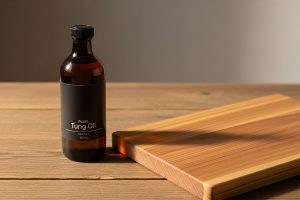
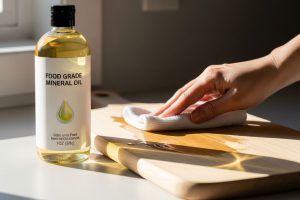
Oil Regularly for Protection Apply food-grade mineral oil or a board conditioner every 4–6 weeks to create a moisture-resistant barrier. Well-oiled boards repel liquids, reducing odor absorption and preventing cracking or drying over time.

Read more: How to Oil a Cutting Board: Step-by-Step Guide for Long-Lasting Results
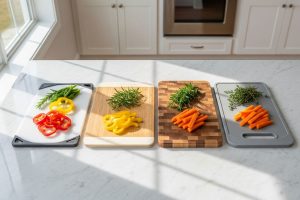
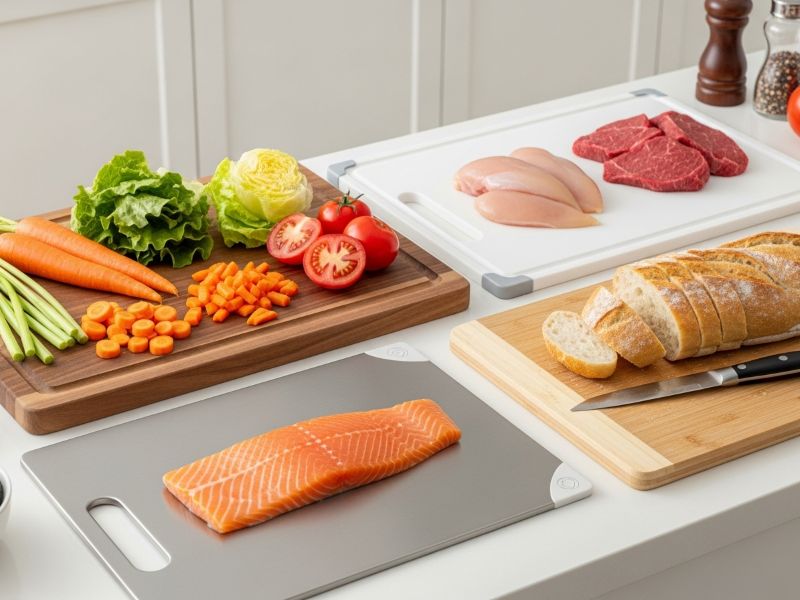
Separate Boards by Food Type Avoid cross-contamination by assigning different boards for meats, vegetables, and strong-flavored foods. For example, keep one board for alliums (onions, garlic) and another for fruits or bread to preserve neutral flavors.
Read more: Can You Cut Meat on a Wood Cutting Board? Pros, Cons & Best Practices
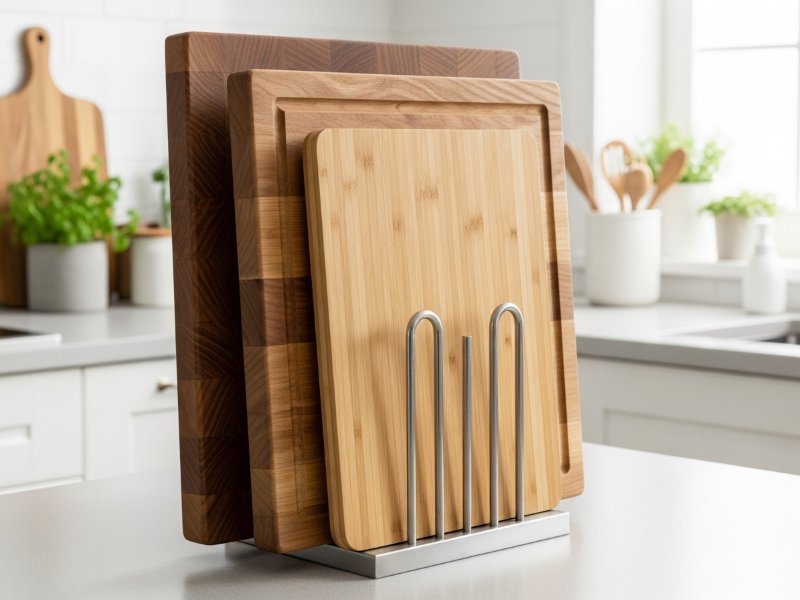
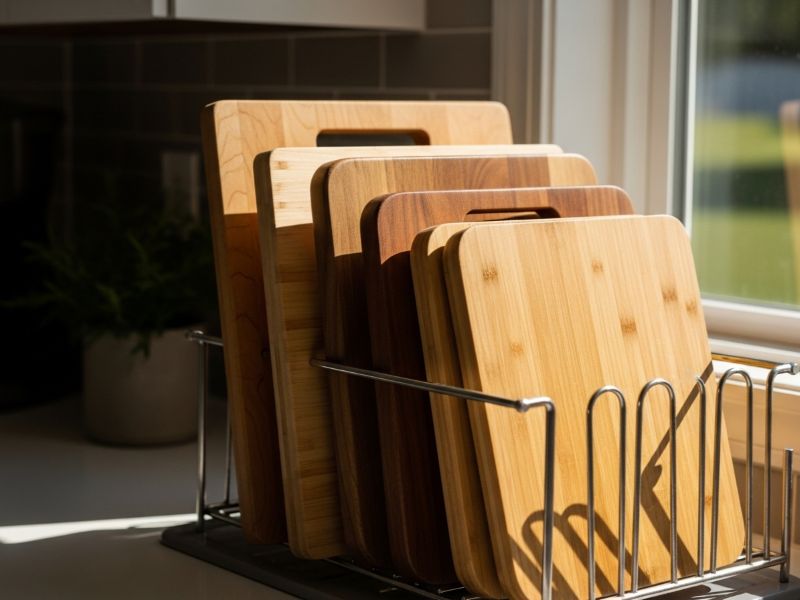
Store in a Dry, Ventilated Area Always air-dry boards vertically and store them in open, well-ventilated spaces. Never trap moisture by stacking damp boards or placing them in closed cabinets – it encourages bacterial growth and odors.
Use Natural Deodorizers Before cutting odor-heavy foods, rub the board with a lemon wedge or light vegetable oil. This creates a thin protective layer that makes cleanup easier and minimizes lingering smells. Reapply oil when water stops beading on the surface – a sign your board’s barrier needs renewal.
Final Thoughts
Wood cutting boards combine durability, knife-friendliness, and natural antimicrobial benefits – but odor control requires proper care. Simple remedies like lemon and salt, baking soda, or vinegar effectively remove smells without harming the wood, while sunlight or hydrogen peroxide handle tougher cases.
Prevention is key: wash immediately, oil regularly, and store dry to stop odors from forming. At Koppen, we believe that caring for your tools preserves both hygiene and craftsmanship – keeping your cutting board fresh, clean, and built to last.

Read more:
Mold on Wooden Cutting Boards: Causes, Safe Removal Methods, and Prevention Guide
Can You Cut Meat on a Wood Cutting Board? Pros, Cons & Best Practices
How to Fix a Warped Wooden Cutting Board: Causes, Solutions, and Prevention Guide